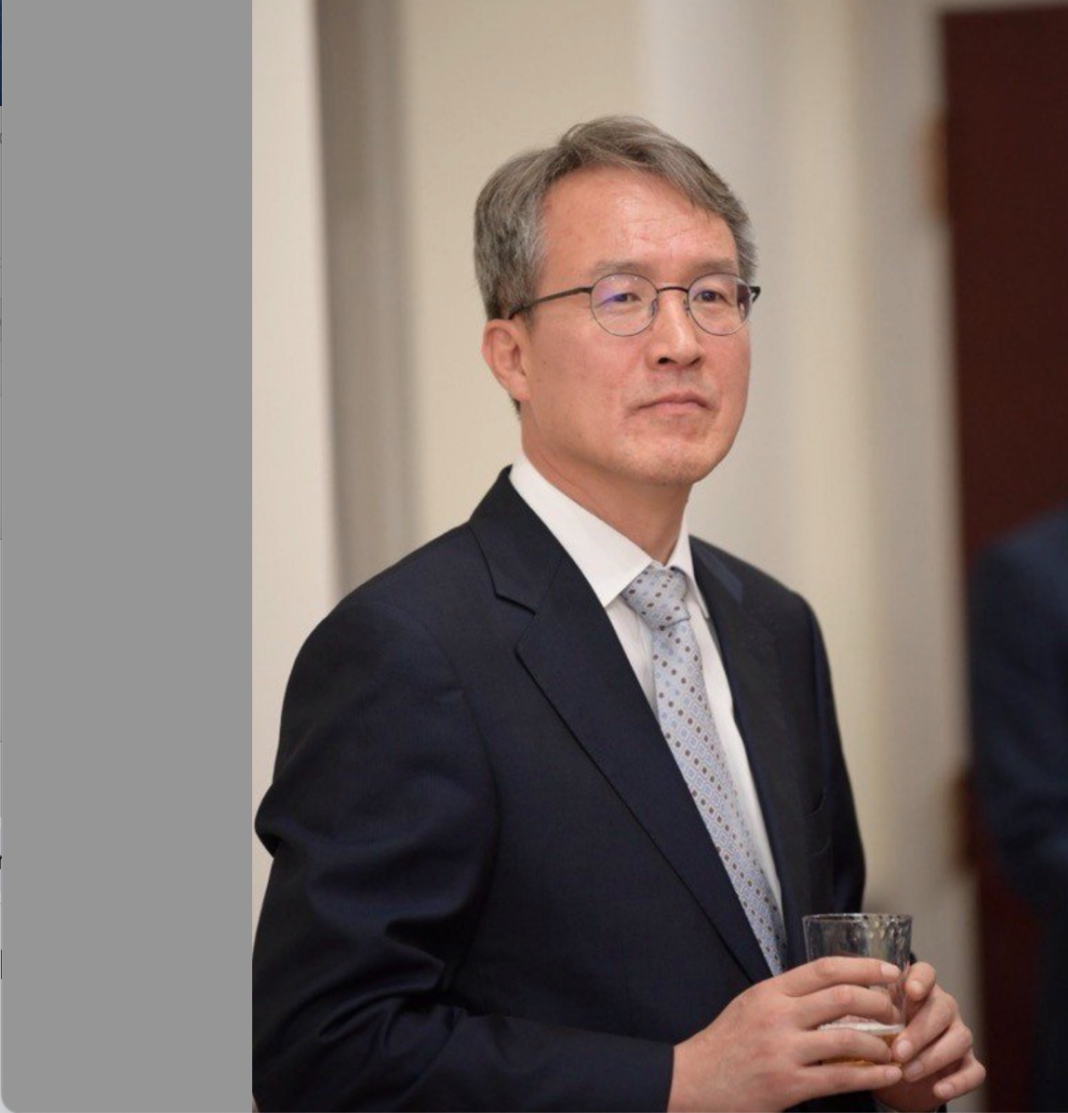

By H.E. Mr. Seok In Hong, Ambassador of South Korea
In the early 1970’s, The Orange Legion – the Dutch National Team – caused a shift in the global football paradigm through their infamous “Total Football”. With the players moving fluidly across the field, the result of the game was determined by the performance of the systematic strategy rather than an individual player’s prowess. The modern semiconductor industry, the “oil of the twenty-first century”, is no different. It reaches its highest level of competitiveness when materials, equipment, design, and manufacturing come together a synergistic ecosystem. Due to complex processes and intertwined nature of supply chains, it is virtually impossible for any single country to create a complete ecosystem. In today’s turbulent geopolitical environment, Total Cooperation with the Netherlands, our trustworthy ally, is the best path to success.
In stark contrast to the idyllic scenery of windmills and tulip fields, the Netherlands is also home to ASML, the world’s sole manufacturer of EUV lithography equipment. As such, the Netherlands is an indispensable partner for Korea, as we aim to evolve from a memory chip giant into an AI powerhouse. In December 2023, our countries declared a semiconductor alliance, laying the institutional foundation for a total cooperation system. Building upon the well-established interconnected system between ASML, Samsung Electronics, and SK Hynix, our governments declared their partnership on the semiconductor supply chain resilience and technological collaboration.
Korea and the Netherlands shared policy approaches on semiconductors, economic security, and strategic material through consistent dialogue while actively searching for avenues of cooperation on R&D, talent development, and supply chain stability. Since February 2024, Korean universities and research institutes have taken part in the “Korea-NL Advanced Semiconductor Academy” alongside global companies. Every year, over 100 students and engineers visit the Netherlands to experience the frontier of semiconductor innovation. Furthermore, the Foreign Ministers and Trade Ministers held the inaugural “2+2 Foreign and Industry High-Level Dialogue” in February, reaffirming their commitment to maintain and strengthen strategic cooperation between our respective semiconductor ecosystems as expressed in the joint statement.
To guard against the fierce geopolitical winds sweeping across the globe, our countries are also strengthening cooperation in diplomacy and security. Our leaders have maintained close communication on the highest level, including a phone call on the inauguration of the new Korean government in August 2025 and the Dutch Prime Minister’s participation in the UN Security Council Open Discussion on AI chaired by the Korean President in September of the same year. Notably, the Netherlands plans to dispatch a naval vessel to the Indo-Pacific this April, contributing to the region’s peace and stability.
Today, the world is engaged in an unprecedented, holistic competition – not only in semiconductors but across multiple sectors, such as new technologies, cyber, and supply chains. This further necessitates close cooperation with a trusted partner, coordinating a well-equipped posture to analyze the field from every angle while being prepared. The organic cooperation of 20th century ‘Total Football’ was once enough to take on the world from within a single nation. Now heading into the mid-21st century, we need collaboration that transcends national borders. Korea and the Netherlands are strategic partners that complement each other’s semiconductor supply chains seamlessly, and together we look forward to establishing the ‘Total System’ that stretches from Busan to Rotterdam.