
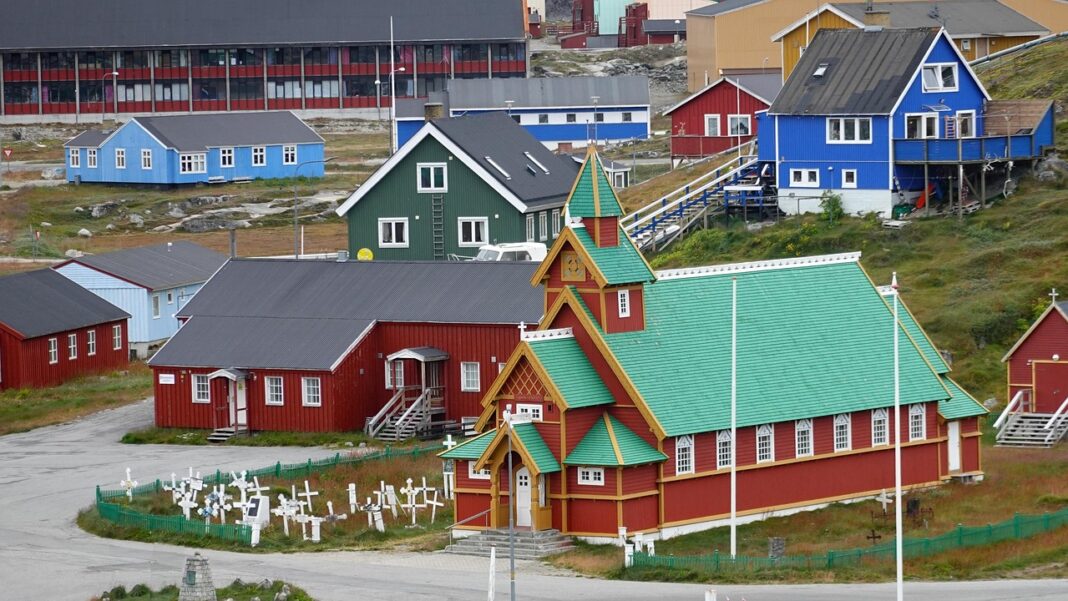

Greenland’s special status is not exception in Europe
By Ingelise de Boer / Vandaagenmorgen.nl
Greenland is not a member of the European Union—in fact, the country left the EU in 1985 after a referendum. But even though they are no longer part of it, Greenlanders remain connected to the EU as part of the Kingdom of Denmark. Greenland is not the only territory outside of continental Europe that has such a special relationship with the EU. The Caribbean islands that are part of the Kingdom of the Netherlands have a similar status.
Not in the EU, but with a special status
In European jargon, these are Overseas Countries and Territories (OCTs). These countries have varying degrees of ties to an EU member state—Denmark, France, or the Netherlands—but are not part of the EU. They usually have considerable autonomy, for example, in economic and healthcare matters. The OCTs do have a special bond with the EU and receive funding based on multiannual cooperation plans, including in areas such as renewable energy and water management. Despite their small size and population, the OCTs play a crucial role as strategic outposts of the EU. They are therefore of great political importance.
The Kingdom of the Netherlands has six OCTs: the Caribbean countries (Aruba, Curaçao, and Sint Maarten) and the special municipalities (Bonaire, Saba, and Sint Eustatius). France has six overseas territories, including New Caledonia in the Pacific Ocean. For Denmark, this is Greenland.

In the EU, but outside Europe
In addition, there are islands and territories that lie outside continental Europe, yet are fully part of the EU. The euro is used there, and all European rules and laws apply. These areas, formally called “outermost regions,” are home to approximately five million EU citizens. They are also entitled to the same benefits as countries on the European mainland, such as regional development subsidies and support for farmers. EU support there addresses challenges related to, among other things, remoteness, small size, or economic dependence on a limited number of products.
Examples of these areas include the Canary Islands, well-known to Dutch holidaymakers and belonging to Spain, and the Portuguese islands of Madeira and the Azores. France also has several of these regions, such as Réunion in the Indian Ocean and Saint-Martin, the French part of the island of Sint Maarten, which is part of the Dutch province of Sint Maarten.