


Escalating U.S.–Israel–Iran Tensions, Commodity Inequality, and the Quiet Cost of Geopolitics
By Sheikh Mohammed Belal, Managing Director, Common Fund for Commodities (CFC), Amsterdam
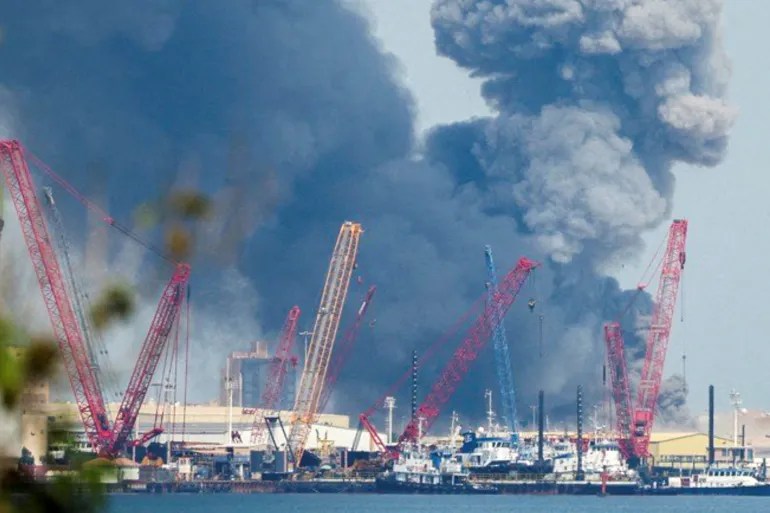
As I write, the world is witnessing a dangerous escalation involving Iran, Israel, and the United States, raising fears of a wider regional conflict across the Gulf. Energy markets have reacted immediately. Oil prices have surged, shipping risks in the Strait of Hormuz have intensified, and global markets are bracing for disruption to one of the world’s most critical energy corridors — a passage through which nearly one-fifth of globally traded oil normally flows.
For many observers, the immediate concern is whether oil prices will again cross the threshold of USD 100 per barrel, reigniting inflation and slowing economic recovery in advanced economies. Financial markets debate growth forecasts, central banks reassess policy paths, and governments calculate strategic risks.
But from the perspective of commodity-dependent developing countries — and from where I sit at the Common Fund for Commodities (CFC) — a different and far more human question emerges:
What happens to the world’s poorest producers when global powers go to war?
Here in The Hague, a city built upon the ideals of international law and peaceful dispute resolution, it is worth recalling that modern wars rarely remain regional events. Their consequences travel silently through supply chains, freight costs, fertilizer prices, insurance premiums, and financing conditions. Long before diplomacy finds resolution, economic shockwaves reach rural economies thousands of kilometres away.
When Stability Itself Feels Fragile
For many of us engaged in international cooperation, the current escalation carries an additional emotional dimension. Countries such as Saudi Arabia, the United Arab Emirates, and Kuwait — valued Member States of the Common Fund for Commodities — together with close regional partners such as Qatar, Oman and Bahrain, have long served as anchors of stability, economic cooperation, and humanitarian engagement within the global system. All have been struck by missiles or drones, even though none of these countries had launched attacks on Iran from their territory.
For decades, these nations have functioned as safe crossroads of trade, energy security, and development partnerships linking continents. To witness tensions surrounding a region that has helped sustain global economic stability evokes a profound sense of concern among those committed to multilateral cooperation. When regions long regarded as pillars of stability come under threat, confidence in the broader international economic order itself begins to tremble.
A Lesson the World Has Already Learned
The current crisis echoes an earlier moment many developing countries remember vividly. The Iraq War reshaped not only geopolitics but global economic conditions, and its effects reached the farm gate with striking speed.
Between 2003 and 2008, global oil prices surged from roughly USD 25–30 per barrel to nearly USD 147 per barrel,[1] triggering sharp increases in fuel and agricultural input costs worldwide. Fertilizer prices followed quickly: urea—the world’s most widely used nitrogen fertilizer—rose from about USD 280 per ton in early 2007 to roughly USD 815 per ton at its 2008 peak (about a 191% increase).[2] DAP climbed from around USD 200 per ton in 2007 to over USD 1,200 per ton by 2008.[3]
As former Chairman of the U.S. Federal Reserve, Ben Bernanke, observed, “sharp increases in oil prices act like a tax on consumers and businesses worldwide.”[4] For developing economies dependent on energy imports, that tax proved even heavier.
For farmers across Africa, Asia, and other commodity-dependent regions, higher energy prices translated directly into rising planting costs, reduced fertilizer use, and declining productivity. What began as a geopolitical conflict ultimately appeared at the farm gate through higher food prices and growing economic pressure on already vulnerable economies.
Conflict, in effect, became a global economic tax — paid disproportionately by countries that neither initiated nor influenced the war. Today, the risk of repeating that pattern is real.
Already Marginalized Before Crisis Begins
Even in stable times, commodity-producing countries operate from structurally disadvantaged positions within global trade.
Across agricultural value chains, primary producers often receive as little as 1 percent,[5] reflecting a troubling long-term trend in which the incomes of smallholders have steadily declined rather than improved, even as their production costs continue to rise. Over the years, farmers have faced increasing expenses for fuel, fertilizer, compliance, transport, and climate adaptation, while a growing share of value has shifted downstream to processing, branding, logistics, finance, and retail activities largely concentrated outside producing economies.
Globally, more than 3 billion people depend on agrifood systems for their livelihoods,[6] spanning farmers, fishers, processors, transporters, traders, and small enterprises across commodity value chains. For many developing countries, these systems are not only sources of income but the foundation of food security, employment, and social stability.
Yet producers remain positioned at the most vulnerable end of global markets — exposed to price volatility, climate risks, and rising input costs while capturing only a small share of the value generated. When geopolitical shocks disrupt energy and trade flows, these already fragile livelihoods become the first to feel the strain.
When Geography Becomes Destiny: Landlocked Economies
The consequences are particularly severe for landlocked developing countries.
Consider Uganda, a major coffee exporter. Every increase in fuel prices raises inland transport costs from farms to ports in Kenya or Tanzania. When oil prices surge because of distant conflict, logistics absorb a growing share of export value, leaving farmers poorer even when global prices rise.
In Niger and Chad, livestock and agricultural exports depend on long overland trade corridors crossing multiple borders. Higher fuel prices increase trucking costs, border transit expenses, and food inflation simultaneously. Export competitiveness declines while domestic prices rise — a double economic shock.
In the Central African Republic, already among the world’s most geographically disadvantaged economies, transport costs can determine whether exports remain viable at all. Energy shocks linked to distant wars can effectively isolate producers from global markets.
For these countries, geography already imposes an economic penalty. Conflict elsewhere magnifies it.
The View from the Common Fund for Commodities
At the Common Fund for Commodities, we already face a long and growing queue at our doorstep. SMEs (small and medium enterprises), cooperatives, and developing countries seek concessional finance to stabilize livelihoods, invest in value addition, and remain competitive in volatile markets.
The question we increasingly confront is deeply practical:
Where will these countries go now?
Demand for concessional and catalytic finance rises precisely when global resources risk being redirected toward security expenditures and geopolitical competition. Development institutions cannot indefinitely compensate for a world investing more in confrontation than cooperation.
Development at Risk: The SDG Setback
At a time when the international community is already struggling to keep the 2030 Agenda for Sustainable Development on track, a widening conflict risks pushing global progress even further off course. United Nations assessments show that most Sustainable Development Goals are already significantly behind schedule, with poverty reduction slowing and hunger rising again after years of progress.
A prolonged energy and trade shock would compound these setbacks — increasing food prices, tightening development finance, and forcing vulnerable governments to divert scarce resources away from education, health, climate adaptation, and rural investment toward immediate crisis management.
For commodity-dependent economies, this could mean millions more people falling into poverty and food insecurity, not because development policies have failed, but because global instability repeatedly erodes gains faster than they can be rebuilt.
Peace as an Economic Public Good
Commodity-producing countries supply the raw materials that sustain global prosperity — food, fibers, and natural resources essential to modern economies. Yet they remain the most exposed when geopolitical instability disrupts markets.
Peace, therefore, must be understood not only as a diplomatic aspiration but as an economic necessity.
When diplomacy weakens, markets destabilize.
When markets destabilize, inequality deepens.
And when inequality deepens across vulnerable economies, global instability ultimately returns in new and unpredictable forms.
A Final Reflection from The Hague
In the end, the true cost of war is rarely confined to the nations engaged in it. It is borne quietly by farmers deciding whether they can afford fertilizer for the next planting season, by traders navigating longer and more expensive transport routes, and by families already living at the edge of food insecurity.
The world’s smallholders and commodity-producing nations do not sit at negotiating tables where conflicts begin, yet they repeatedly absorb their economic consequences.
Standing in The Hague — a city that symbolizes humanity’s commitment to law, dialogue, and peaceful resolution — this moment should remind us that safeguarding peace is inseparable from safeguarding development itself.
Because when war raises prices, the Global South ultimately pays the bill.
Disclaimer: The views expressed in this article are solely those of the author in his personal capacity and do not necessarily reflect the official view or positions of the Common Fund for Commodities (CFC), its Governing Bodies, or its Member States.
References
- Wikipedia contributors. (n.d.). 2000s energy crisis. Wikipedia. Retrieved March 2, 2026, from https://en.wikipedia.org/wiki/2000s_energy_crisis#cite_note-tfc-charts.com-1
- International Fertilizer Development Center (IFDC). (2008, December 16). World fertilizer prices drop dramatically after soaring to all-time highs. EurekAlert! https://www.eurekalert.org/news-releases/879968
- Ibid. (Same source as Reference 2.)
- Bloomberg News. (2012, March 21). Bernanke says Europe must aid banks even as strains ease. Bloomberg. https://www.bloomberg.com/news/articles/2012-03-21/bernanke-says-europe-must-aid-banks-even-as-strains-ease
(If you prefer a non-paywalled primary source for the same remarks: Bernanke, B. S. (2012, March 21). “The European Economic and Financial Situation” (testimony). Federal Reserve Board.) - Riley, J. (2022, November 30). Food prices: Why farmers get the smallest share and how to change it. Farmers Weekly. https://www.fwi.co.uk/business/food-prices-why-farmers-get-the-smallest-share-and-how-to-change-it
- Food and Agriculture Organization of the United Nations (FAO). (2023, April 3). Almost half the world’s population lives in households linked to agrifood systems. FAO Newsroom. https://www.fao.org/newsroom/detail/almost-half-the-world-s-population-lives-in-households-linked-to-agrifood-systems/en
[1] https://en.wikipedia.org/wiki/2000s_energy_crisis#cite_note-tfc-charts.com-1
[2] https://www.eurekalert.org/news-releases/879968
[3] Ibid.
[4] https://www.bloomberg.com/news/articles/2012-03-21/bernanke-says-europe-must-aid-banks-even-as-strains-ease
[5] https://www.fwi.co.uk/business/food-prices-why-farmers-get-the-smallest-share-and-how-to-change-it#:~:text=The%20report%2C%20Unpicking%20Food%20Prices,Share
[6] https://www.fao.org/newsroom/detail/almost-half-the-world-s-population-lives-in-households-linked-to-agrifood-systems/en