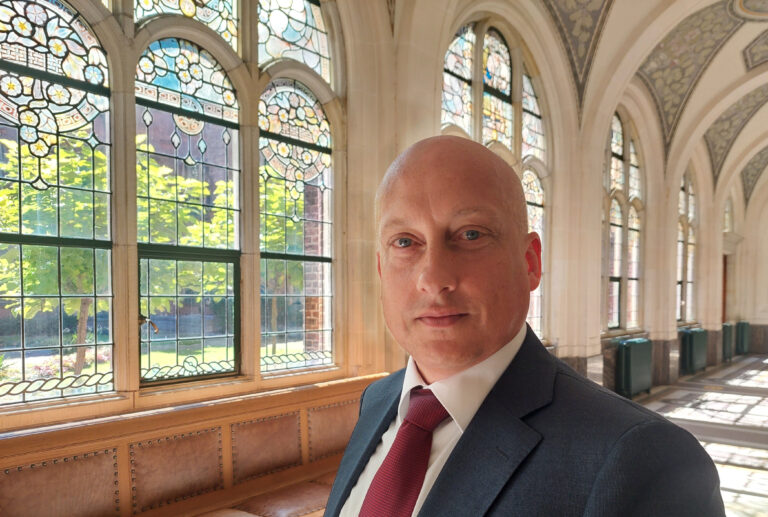
The Board of the Carnegie Foundation, the owner and manager of the Peace Palace in The Hague, has appointed Iljan van Hardevelt as Director with effect from 1 October 2023. With this appointment the Foundation is preparing for the various renovation projects that will be undertaken in order to prepare the Peace Palace for the future.
The Peace Palace The Peace Palace, which opened its doors 110 years ago, houses the International Court of Justice of the United Nations, the Permanent Court of Arbitration, The Hague Academy of International Law and a renowned library on international law. As owner of the Peace Palace, the Carnegie Foundation manages and maintains this monumental heritage site and facilitates the two Courts and the Academy. The Library of the Peace Palace is also part of the Carnegie Foundation.
A building of this scale and age necessarily requires maintenance. In the years ahead the Carnegie Foundation, in cooperation with external parties, will be carrying out renovation works. Included in these will be an extensive asbestos investigation followed by the systematic removal of asbestos. As the Courts will continue to use the working palace throughout the duration of these projects, they will have to be housed satisfactorily. In the coming years both the Peace Palace and the Carnegie Foundation must evolve into future-proof organisations.
Expertise with monumental property Iljan van Hardevelt, who will commence duty as the new Director on 1 October, has extensive experience with both the maintenance and further development of monumental buildings as well as with project and organisational planning. After completing his engineering studies at the Delft University of Technology in 2000, Van Hardevelt was employed by organisational consultancy firm TwynstraGudde. From 2012, in the role of Managing Partner. During more than 20 years with the firm, Van Hardevelt was involved with, amongst other things, the renovation of the Dutch House of Representatives’ premises (Binnenhof) and, as project leader, the renovation, sustainability and expansion of the Groningen City Hall and the construction of the Forum Groningen. In addition, Van Hardevelt filled various management positions within TwynstraGudde.
Piet Hein Donner, Chairman of the Board of the Carnegie Foundation: “Iljan van Hardevelt brings with him extensive knowledge regarding the (re)development of societal property. He can lead complex property projects in a politico-administrative environment whilst, at the same time, being experienced in steering large and diverse organisations. We are pleased he is joining us and are looking forward to working together.”
Knowledge and affinity with the art collection In addition to his expertise in the area of monumental heritage and project management, Van Hardevelt also has an affinity with the Peace Palace’s art collection of more than forty works of art and interior objects from around the world. He is a member of the Supervisory Board of Museum Het Schip, was formerly a board member of the Netherlands Association of Corporate Art Collections (VBCN) and was the chairman of TwynstraGudde’s art commission.
Van Hardevelt is enthusiastically looking forward to his new workplace: “My driving force has always been to create impact within the spatial domain; a lasting improvement or innovation. That I may now use my expertise, together with the Board and colleagues of the Carnegie Foundation, to work on the further professionalisation of the organisation and to pilot the Peace Palace to a sustainable future makes me incredibly proud. I am very much looking forward to this great challenge.”
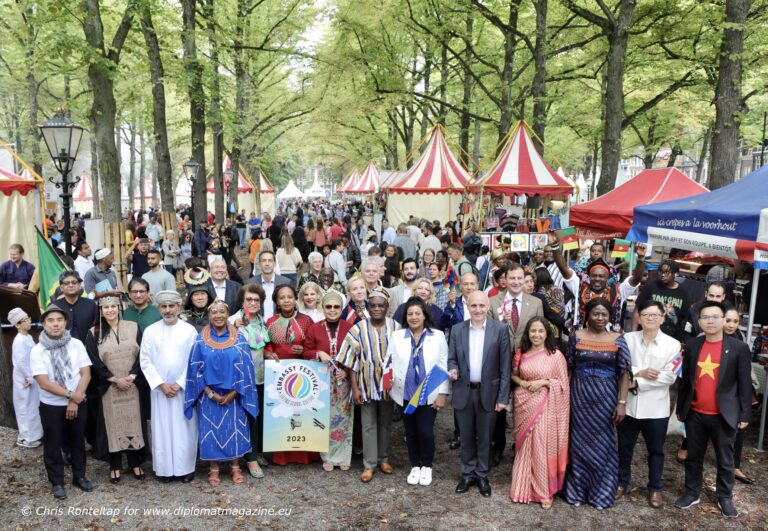
The Embassy Festival is a vibrant and colourful annual event where various embassies showcase their countries. This festival brings people from different backgrounds together to share their knowledge and ideas, celebrating global culture and what connects us all.
You can explore a world of music and dance, including performances by artists such as Harmoni Rasa from Malaysia, Irene Sanga from Tanzania, Dardanet from Kosovo, and Grupo Cultural Ritmo Dominicano, among others.
In the center of the photo, the Kenyan ambassador H.E. Ms. Margaret Shava, accompanied by two people dressed in traditional Kenyan attire.
Furthermore, individuals from diverse cultures exhibit their cuisines, clothing, accessories, and other objects at this event. This unique and special occasion underscores the shared interests and experiences that unite us as global citizens.
It generates a sense of traversing the world without physically departing The Hague, fostering a spirit of togetherness as we revel in global culture collectively.
Israel parading in the Cultural Parade of the Embassy Festival.
A decade ago, an event was inaugurated as a part of the annual International Open Day in September, held at the World Forum. At that time, it was referred to by a different name.
However, today, it has evolved into a highly renowned activity that embassies eagerly anticipate. Moreover, it is an honour to mention that the esteemed Mayor of The Hague will support the 2023 festival.
The Ambassador of Bosnia & Herzegovina, H.E. Mr. Almir Sahovic with part of his delegation.
The festival takes place on the first Saturday of September. The mayor of The Hague, Mr. Jan van Zanen, is one of the regular Embassy Festival attendees. Several Ambassadors and diplomats participated in the event in person.
The opening ceremony of this year’s festival was marked by a magnificent Cultural Parade that took place on the fairgrounds. Participants were adorned in traditional attires, waving their national flags and banners and joyously dancing to the melodious tunes. The parade was graced by the esteemed presence of several ambassadors, which undoubtedly added to its grandeur and success. Therefore, it is highly recommended that this parade be included as the festival’s central activity.
A Samurai, from the prestigious hereditary military nobility of Japan. (12 century)
The 2023 festival saw participation from over fifty embassies representing different parts of the world. It would be even better if more countries joined as participants. We warmly welcome countries like Belgium, Germany, Brazil, and many others.
Embassy Festival, colourful and dazzling
Ambassador of Bangladesh, H.E. Mr. Riaz Hamidullah, his wife Sazia Ahmed and Ms. Archi Mutsuddi.
The Embassy Festival came and went in splendour, a truly tremendous celebration. Bravo!
After nine years, it is finally clear to whom the Crimean treasures should go. According to the Supreme Court of the Netherlands, they should go to the state of Ukraine, the owner and custodian of the archeological objects that were on loan to the Allard Pierson Museum in Amsterdam in 2014. How did the Supreme Court reach its verdict?
The Supreme Court ruled on the Crimea gold three months earlier than announced. It leaves intact the Amsterdam Court of Appeal’s ruling that the Crimean treasures should be given to Ukraine. This ends the legal battle between four museums in Crimea and the state of Ukraine over who owns the archeological objects after nine years. With this ruling, the Supreme Court follows the opinion of Advocate General P. Vlas, which we wrote about earlier.
The Crimean gold
The legal battle over the Crimean treasures started when Russia occupied the Ukrainian peninsula of Crimea in 2014. At the same time, the Allard Pierson Museum hosted the exhibition “Crimea – Gold and Secrets from the Black Sea” which included objects on loan from four museums in Crimea.
The question was where should those objects be returned to after the exhibition: to the museums in Russia-controlled Crimea or to Ukraine? The museums argued that, according to the agreement, the loans had to go back to the lender, i.e. to them. Ukraine claimed the objects as cultural heritage of the state of Ukraine and argued that the museums were only custodians, a custodianship that, moreover had been temporarily taken away from them. The Allard Pierson Museum therefore kept the objects for the time being.
Both Ukraine and the lending museums claimed surrender of the objects. The Amsterdam District Court assigned the objects to Ukraine. They were Ukraine’s cultural heritage and because they had been illegally exported – because not returned on time – the state could claim restitution. On appeal, the Amsterdam Court of Appeal also assigned the objects to Ukraine, albeit for different reasons. The museums in Crimea did not own the objects, but only managed this cultural heritage of Ukraine. And that management had been taken away from them by an order of the Ukrainian government.
Objections by museums in Crimea
The museums in Crimea the appealed the Amsterdam Court of Appeal’s decision. This was their last chance to still get the objects. To this end, they raised a large number of objections. Of these, the Supreme Court only addressed the one concerning the status of the order by which Ukraine took away from the museums the management of Ukrainian property on loan.
According to the museums, a fundamental right as the right in rem of operational management cannot be removed on the basis of a temporary measure. After all, the first article of the first protocol to the European Convention on Human Rights (ECHR) protects the right to undisturbed enjoyment of property even for legal persons. The museums also argued that under the rules governing private international law, the order is not a rule that takes precedence over their rights.
Supreme Court Ruling on Crimean Gold
No infringement of property rights
The Supreme Court makes short work of both points in the ruling. According to the article cited by the museum, the right of ownership is not unlimited. In particular, states may intervene in it, for example in the public interest or for levying taxes. That the court considers that Ukraine’s order meets the conditions for such intervention is also sufficiently reasoned.
Cultural property management order is mandatory law
On the question of whether the order has the status of mandatory law, the Supreme Court indicates that this partly requires a substantive assessment of Ukrainian law, for which it does not have jurisdiction. However, the Supreme Court can assess whether the Amsterdam District Court took the right steps to reach the opinion that the order is mandatory law. It did. Therefore, the order outweighs the agreements in the loan agreements, which state that the objects must be returned to the museums in Crimea.
Other contentions of the museums are not addressed by the Supreme Court, either because they concern the interpretation of Ukrainian law – which the Supreme Court is therefore not entitled to give an opinion on – or because the Supreme Court considers that the complaints in question are not “relevant to the unity or development of the law”.
No ruling on illegal export
As the judgment is upheld, the Supreme Court also does not need to address Ukraine’s incidental cassation appeal. This is particularly unfortunate because it argued that the Allard Pierson Museum had illegally exported protected cultural goods because it had not returned the loans in time, as the Amsterdam District Court had previously ruled. This would make the procedure for returning them subject to the Heritage Act and simpler for the lending state.
How to continue?
Now the Allard Pierson Museum has clarity to whom it must return the treasures, namely to Ukraine. Both the Amsterdam District Court and the Amsterdam Court of Appeal have ruled that Ukraine must pay the Allard Pierson Museum the costs of storage and insurance. At the end of 2016 – after two years – this was already over € 110,000. Given the situation in Ukraine, we can imagine that the state currently prefers to spend the money on other priorities. Perhaps the Dutch government could make a nice gesture here?
Art lawyer
Do you have any questions about art and law, such as art lending, or buying and selling paintings and sculptures? Or would you like to submit to us an issue about the authenticity or ownership of a work of art? We will be happy to help you with any question about art. Please contact us: info@russell.nl
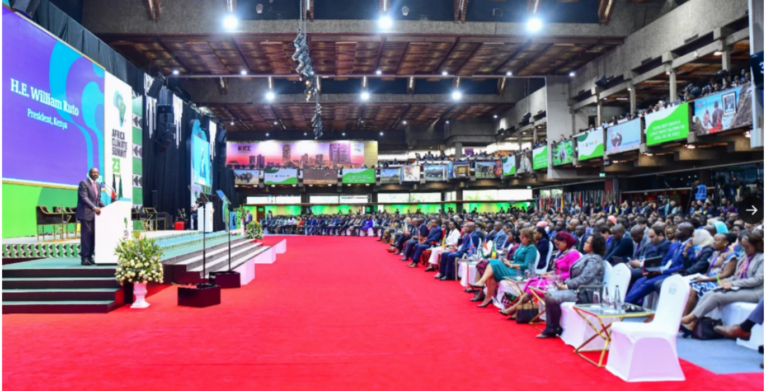
At the beginning of September 2023 (4th– 6th), the African Heads of State and Government gathered in Nairobi, Kenya for the Africa Climate Summit (ACS).
In the presence of other global leaders, intergovernmental organizations, Regional Economic Communities, United Nations Agencies, private sector, civil society organizations, indigenous peoples, local communities, farmer organizations, children, youth, women and academia the summit ended with a common declaration on climate change.
H.E. President William Ruto, the host of the summit, presented the conclusions of the fruitful high level gathering, which provided a unified approach and political leadership on an African vision that simultaneously pursues climate change and development agenda.
The African leaders called in the common declaration for the full implementation of all COP27 decisions, mentioning the need to cut global emissions by 43% during this decade, in order to achieve the ‘Paris agreement’ climate target, while highlighting that Africa is currently warming faster than the rest of the world and, if unabated, climate change will continue to have adverse impacts on African economies and societies, and hamper growth and wellbeing.
Climate change is the single greatest challenge facing humanity and the single biggest threat to all life on Earth.
Many African countries face disproportionate burdens and risks arising from climate change-related, unpredictable weather events and patterns, including prolonged droughts, devastating floods, wildfires, which cause massive humanitarian crisis with detrimental impacts on economies, health, education, peace and security, among other risks.
In 2023, 600 million people in Africa still lack access to electricity while 970 million lack access to clean cooking. African cities and urban centers are growing rapidly, and by 2050 would be home to over one billion people.
The President of Rwanda, Paul Kagame.
Despite the fact that Africa has an estimated 40 percent of the world’s renewable energy resources, in the last decade only 60 billion USD renewable energy investments have come to Africa.
The continent possesses both the potential and the ambition to be a vital component of the global solution to climate change. As home to the world’s youngest and fastest-growing workforce, coupled with massive untapped renewable energy potential, abundant natural assets and entrepreneurial spirit, Africa has the fundamentals to spearhead a climate compatible pathway as a thriving, cost-competitive industrial hub with the capacity to support other regions in achieving their net zero ambitions.
The declaration also mentioned the important role of forests in Africa, in particular the Congo Basin rainforest, in regulating global climate change, while further recognizing the critical importance of the oceans in climate action and commitments made on ocean sustainability in multiple fora such as the Second UN Oceans Conference in 2022 and the Moroni Declaration for Ocean and Climate Action in Africa in 2023.
Collective actions are needed: accelerated efforts to reduce emissions, providing 100 billion USD in annual climate finance, as promised 14 years ago at the Copenhagen conference, a fair and accelerated process of phasing down coal and abolishment of all fossil fuel subsidies, while developing and implementing policies, regulations and incentives aimed at attracting local, regional and global investment in green growth and inclusive economies.
The African leaders emphasized that strengthening continental collaboration is essential to enabling and advancing green growth, including but not limited to regional and continental grid interconnectivity, and further accelerating the operationalization of the Africa Continental Free Trade Area (AfCFTA) Agreement.
Advancing green industrialization across the Continent should prioritize energy-intense industries to trigger a virtuous cycle of renewable energy deployment and economic activity, with a special emphasis on adding value to Africa’s natural endowments. Sustainable agricultural practices should also be a priority, in order to enhance food security while minimizing negative environmental impacts, enhancing drought resilience systems to shift from crisis management to proactive drought preparedness and adaptation, to significantly reduce drought vulnerability of people, supporting smallholder farmers, indigenous peoples, and local communities in the green economic transition given their key role in ecosystems stewardship.
The final summit declaration highlighted the importance of building effective partnership between Africa and other regions, to meet the needs for financial, technical and technological support, and knowledge sharing for climate change adaptation.
The declaration was a call upon world leaders to appreciate that decarbonizing the global economy is also an opportunity to contribute to equality and shared prosperity, and meanwhile an invite for partners from both the global south and north to align and coordinate their technical and financial resources directed toward Africa to promote sustainable utilization of Africa’s natural assets for the continent’s progression toward low carbon development. It was a call for access to and transfer of environmentally sound technologies, including technologies that consist of processes and innovation methods to support Africa’s green industrialization and transition, while redesigning global and regional trade mechanisms in a manner that enables products from Africa to compete on fair and equitable terms.
The decision 31/ COP27 that a global transformation to a low-carbon economy is expected to require investment of at least 4 to 6 trillion USD per year was reiterated. Delivering such funding in turn requires a transformation of the financial system and its structures and processes, engaging governments, central banks, commercial banks, institutional investors and other financial actors. No country should ever have to choose between development aspirations and climate action.
The African leaders proposed for consideration a new SDR issue for climate crisis response of at least the same magnitude as the Covid19 issue (650b USD), new debt relief interventions and instruments to pre-empt debt default, including a 10-year grace period, inclusive and effective international tax cooperation at the United Nations (Resolution A/C.2/77/L.11/REV.1)– with the aim to reduce Africa’s loss of 27 billion USD in annual corporate tax revenue through profit shifting, by at least 50 percent by 2030 and 75 percent by 2050.
A multilateral finance reform is necessary but not sufficient to provide the scale of climate financing that the world needs, in order to achieve 45 percent emission reduction by 2030, without which keeping global warming to 1.5° would be in serious jeopardy. However, the scale of financing required to unlock Africa’s climate-positive growth is beyond the borrowing capacity of national balance sheets. Africa’s borrowing costs, typically 5 to 8 times higher than what wealthy countries pay are a root cause of recurring developing country debt crisis and an impediment to investment in development and climate action.
World leaders are urged to rally behind the proposal for a global carbon taxation regime, including a carbon tax on fossil fuel trade, maritime transport and aviation, that may also be augmented by a global financial transaction tax (FTT)) to provide dedicated, affordable, and accessible finance for climate-positive investments at scale. A new financing architecture that is responsive to Africa’s needs is desired, including debt restructuring and relief, while developing a new Global Climate Finance Charter through UNGA and COP processes by 2025.
In the end, African leaders decided that the Africa Climate Summit should be a biennial event convened by African Union and hosted by AU Member States, to set the continent’s new vision taking into consideration emerging global climate and development issues.
August 6th is the date that marks the anniversary of the independence of Bolivia in 1825. On this special occasion, ambassador of Bolivia to the Kingdom of the Netherlands, H.E. Mr. Roberto Calzadilla Sarmiento, welcomed other ambassadors and fellow diplomats, representatives of international organizations, Dutch state officials and also native Bolivians to the national day reception.
Presentation of a diversity of good Bolivian wines of altitude and traditional sweet and savory foods were served, while the lovely summer day was brightened by the colorful traditional dancing group, Alma Latina and a classical music ensemble called La Plata. The guests could admire a special photography exhibition by Fransisco Claure “Ajayu” and paintings of Elizabeth Lizaso.
In his welcome speech, the ambassador said to his guests: ‘Today, we are only two years away to celebrate our Bi-centennial, in 2025. We are working for the good relations between Bolivia and the Netherlands but, also in the framework of our multilateral organizations based here in The Hague, the capital of peace and justice.
The Ambassador of Bolivia, H.E. Mr. Roberto Calzadilla Sarmiento, the Ambassador of Rwanda, H.E. Mr. Olivier J.P. Nduhungirehe and the Ambassador of Estonia, H.E. Mr. Lauri Kuusing.
The Bolivian State is promoting the principles and values of culture of peace and diplomacy of living well’. He mentioned that Bolivia is actively promoting human, economic, social, cultural, ethnic and environmental rights, with repudiation of all forms of racism and discrimination, harmony with nature, protection of biodiversity and promotion of food security and sovereignty.
‘Bolivia, as a pacifist and peace supporting country, considers that the only alternative to guarantee a just and lasting peace in various conflicts must be carried along by the use of dialogue and negotiation. Bolivia rejects every war of aggression as a means of resolving differences and conflicts between states.’
The ambassador appreciated the new approach and enhanced attention in the relations between Europe and Latin America, mentioning the recent EU CELAC summit of Heads of State in Brussels (the first in the last 8 years).
Group of attendees, in the centre H.E. Mr. Francois Alabrune, H.E. Mr. Arnoldo Brenes Castro, Ambassador of Costa Rica and the Ambassador of Bolivia.
Dayana Perez Fernandez, Charge d’affaires of fthe Dominican Republic, H.E. Ms. Maria Isabel Gomes de Resende Encoge, Ambassador of Angola and H. E. Mr. Álvaro González Otero, the Ambassador of Uruguay.
‘Today we are experiencing profound changes at the global level, with great risks and challenges, but also with opportunities. We firmly believe that we can and must build better relationships: fairer, more balanced and cooperative, to improve the lives of our people. Bolivia recognizes the important cooperation work developed by the Netherlands in Bolivia during the last decades and this also constitutes an important basis to continue towards a positive and fruitful relationship that has been undertaken in many sectors.
We have started a renewed dialogue and agenda on alternative energy, critical raw materials trade, water, promoting processes of sustainable integral development for life and the promotion of harmony with nature and Mother Earth. During last year it was decided to continue the dialogue for cooperation on energy issues and the importance of lithium, and it was agreed to carry out a process of joint work to establish a reference framework through an updated Agreement that includes synergies between the two countries’.
Bolivian wines, celebration of Bolivia National Day, The Hague.
Illimani at the celebration of Bolivia Independence Day, The Hague.
While mentioning the twenty-fifth anniversary of the adoption of the Rome Statute, the ambassador said that Bolivia finally ended, 7 months ago, at the International Court of Justice, the dispute regarding the status and use of the Silala Waters, initiated by Chile in 2016.
Bolivia has been working together with the Organization for the Prohibition of Chemical Weapons to implement the provisions of the Chemical Weapons Convention. The last chemical weapons from the stockpiles declared by all States Parties were destroyed on July 7th 2023 in Kentucky, a major achievement for a peaceful world and also a historic success of multilateralism in the field of disarmament, as work of a full generation of diplomats and experts, over the past 26 years.
When talking about Bolivia’s economic achievements, Mr. Calzadilla Sarmiento proudly mentioned Bolivia’s exports of natural gas, silver, zinc, lead, tin, gold, quinoa, soybeans, lithium carbonate and potassium chloride, which reached almost 14 billion USD, attaining record levels.
The Social Community Productive Economic Model and the measures that have been implemented and have made it possible to return to the path of economic grouwth with social justice.
In this sense, it is important to highlight the following data: the growth of the Bolivian economy in 2022 reached 3.5%. The Nominal GDP increased from $US40,703 in 2021 to US$ 44.315 in 2022. GDP per capita reached $US 3,691 the highest in Bolivia’s history.
Bolivia National Day, The Hague.
With 23 million tonner, Bolivia has become the world’s largest lithium reserve of the planet. For the next few years, the Government is guaranteeing an accelerated investment of around 3 billion dollars.
As President Arce at the recent Summit of the European Union and the Community of Latin American and Caribbean States (CELAC), Bolivia is open to foreign investment, but on the basis of a sovereign model that guarantees control of resources and industrialization in our country for the fair distribution of fincome in favour of the whole country.
There are times of commemoration and celebration, but, above all, of commitment to the deepening of democracy, social justice, the rule of law and the search for developement, and better days for all.
On little more time, in just two years, on August 6 2025, Bolivia will celebrate the bicentenary of its independence with the challenge of building a country for all, more inclusive, participatory, participative and all, more plural, diverse, without exclusions, divisions, confrontations, social polarisation, and racism. It its 200 years of independence life, we will have to reflect on what country we want for all of us, for our children and to guarantee a sustainable future, with a fairer access to Vivir Bien to rights, to natural resources and in harmony with Mother Earth.”
The evening was a nice and merry celebration of international friendship. Cheers to you, Bolivia.
By Yi Wang, Head of Global Development Program at ANBOUND
The month of August showed a hectic diplomatic schedule for both the American, the Britain and China. In the last week of this month, the U.S. Secretary of Commerce Gina Raimondo and British Foreign Secretary James Cleverly were visiting China for high-level talks. Climate change is one of crucial issues in the interest of all parties and requires their cooperation with the Chinese government.
Gina Raimondo’s trip to China followed the July’s visits from the U.S. special envoy for climate John Kerry, U.S. Treasury Secretary Janet Yellen and U.S. Secretary of State Antony Blinken, while former U.S. Secretary of State Henry Kissinger undertook his own trip to the country. Additionally, Frans Timmermans, the Executive Vice-President of the European Commission, embarked on a visit for the Fourth China-EU High-Level Environment and Climate Dialogue. Fatih Birol, the Director of the International Energy Agency (IEA), also journeyed to China in July. Despite the scorching heat, these significant individuals gathered from distant corners of the world, showcasing not only their physical resilience but also their shared determination to collaborate in order to enhance the well-being of people globally, when it comes to the issue of climate change.
Starting from the 1990s, the effects of global warming-induced heat waves have led to trillions of dollars in losses across the globe. The International Labour Organization (ILO) predicts that by 2030, extreme heat will reduce global working hours by over 2%, equivalent to the loss of 80 million full-time jobs and costs of USD 2.4 trillion.
While the effects of climate change on economic activities are readily apparent, its impact on social systems is considerably more severe. Precisely gauging the direct and indirect social costs of the climate crisis remains challenging.
The influence of weather on human emotions is a subject of interest to researchers and scientists. One prominent theory is seasonal affective disorder (SAD), which suggests that changes in meteorological conditions not only impact our physical well-being but also significantly influence our psychological state. These psychological well-being concerns underscore the heightened susceptibility of individuals exposed to severe weather conditions. This not only serves as a prompt for national public health authorities to remain attentive but also underscores the necessity for bolstered assistance in disaster prevention and mitigation within the domain of social welfare.
World widely, the state governors have been aware of hardness tackling with significant challenges from young unemployment to social isolation caused by social media. Climate crisis makes anxiety sentiment exacerbated. Given the upheaval that climate changes bring to human society, if left unaddressed, it will yield not just physical afflictions and psychological distress on an individual level but also breed communal unease, psychological ailments, and widespread social unrest. Consequently, the strain on healthcare, education, and social support systems will escalate substantially, profoundly disrupting the customary operation of social foundations.
On November 30 – December 12, the 28th Conference of the Parties to the United Nations Framework Convention on Climate Change (COP28) is set to convene in the United Arab Emirates. This pivotal gathering will center on four pivotal themes: expediting the worldwide shift towards renewable energy sources, navigating the complexities of climate financing, elevating the safeguarding of human lives and sustenance, and fostering a spirit of inclusivity. Notably, existing disparities in climate action between the developed countries (Global North) and developing countries (Global South) have engendered persisting debates over the mobilization of resources and the allocation of funding.
I believe that to enhance efficiency, climate policies and action plans should underscore the subsequent fundamental aspects. By prioritizing these factors, all stakeholders can delve into viable innovative strategies and expedite the establishment of mutually advantageous multilateral accords. A collaborative approach to combat climate change is presented for actions.
1. Climate risks transcend conventional geographic boundaries and possess the potential to swiftly escalate on a global scale, giving rise to interconnected worldwide crises.
In formulating financial risk regulation policies, it is crucial to bolster the exchange of climate information among entities of both the public and private sectors. This helps to improve market transparency, uphold financial stability, and adequately address the escalating requirement for climate-related investments.
Effectively preventing and managing climate risks relies heavily on the transparent sharing of information, and this should be above any geopolitical rivalry. A lack of awareness among the general population about these risks could hinder the implementation of proactive preventive measures. Therefore, it is crucial to promote the widespread dissemination of climate-related information and encourage increased cooperation among various stakeholders. This encompasses a wide array of aspects, including data on risk exposure, carbon assets, methodologies for stress testing, and practical experience in scenario analysis. All these components should be easily accessible. Through the collaborative exchange of information and the exploration of best practices, stakeholders can enhance their problem-solving capabilities, ultimately contributing to both localized and global financial stability.
2. Promoting collaborative efforts among climate technology-oriented enterprises to establish a “Climate Joint Fund” stands as an important step in advancing scientific development and fostering global innovation.
Global tech firms and investors share a collective responsibility to actively support worldwide initiatives addressing climate risks through diverse funding avenues. This proactive approach not only secures long-term financial gains but also underscores commitment to corporate social responsibility. The investor spectrum for the “Climate Joint Fund” encompasses enterprises, business leaders across nations, international banks, investment funds, insurance companies, and philanthropic organizations. In the asset allocation process, a collaborative partnership between the fund, professional bodies, industry associations, and societal partners can provide policymakers with invaluable insights for advancing climate technology. Examples encompass efficient waste systems, smart grids, electric vehicle charging, energy-efficient buildings, and lighting technology.
3. The Global North and Global South should actively foster comprehensive exchanges focused on climate change education. This includes expanding the global pool of talents and skills and enhancing the capacity for the implementation of climate projects.
Climate change affects every single person on the globe, thereby demanding adaptations within national economic frameworks. This challenge transcends environmental considerations, entailing a multidimensional complexity spanning interdisciplinary expertise and technologies. These encompass climate science, economics, sociology, public policy, international relations, journalism, and beyond. Augmenting collaboration among international academic and research institutions is pivotal for a more nuanced grasp of both domestic and international advancements in climate-focused research. This interaction facilitates a clearer comprehension of the unique hurdles encountered during climate negotiations.
To secure societal consensus on climate change goals and strategies, substantial backing from the general public and local communities is of utmost importance. This need is evident across nations of the world, where limited awareness prevails regarding the societal implications of climate change. This gap impedes proactive involvement. Promoting climate-focused education from early schooling to vocational training is crucial. Enabling community-based environmental and mental health support, along with fostering international urban connections, is vital. Nurturing the next generations with comprehensive perspectives and enhanced capacities to address climate change will collectively drive sustainable environmental progress and methodical economic transition, and this is an effort that requires international cooperation where no country should be left out.
The progression of human civilization relies on our ability to consistently reflect on our experiences and learn from them. It is crucial for every individual, as well as every nation, to adopt an environmentally conscious perspective and partake in endeavors aimed at combating the effect of climate change.
With Mr. Wopke Hoekstra becoming European Commissioner for Climate Action in October 2023, previously Minister of Foreign Affairs and Minister of Finance 2017-2022, the Dutch cabinet needed a replacement. With Hanke Bruins Slot (CDA political party) a military veteran was chosen for this high office.
Mrs. Hanke Bruins Slot, born Apeldoorn in 1977, studied state and administrative law at University of Utrecht and 2005-2007 post academic study at the Royal Military Academy at Breda. Amongst others she was a platoon commander at Tarin Kowt in Afghanistan in 2008 ending her military career as Artillery captain in 2010 when she was elected to the Second Chamber of States-General (parliament). In parliament she was the CDA spokesperson for defense, domestic governance, medical-ethical issues and sports policy.
In 2019 she left Dutch parliament to become a member of Utrecht Province executive board (Gedeputeerde Staten) in charge of nature, agriculture, soil and water, sports, recreation and tourism and administration.
Three years later – January 2002- she was called to the government to become Minister of the Interior and Kingdom Relations in the Cabinet Rutte IV. As Kingdom Relations minister she dealt with the partnership with Curacao, St Maarten and Aruba in the Caribbean. As of 5 September 2023 King Willem-Alexander appointed Mrs. Hanke Bruins Slot to Ministry of Foreign Affairs.
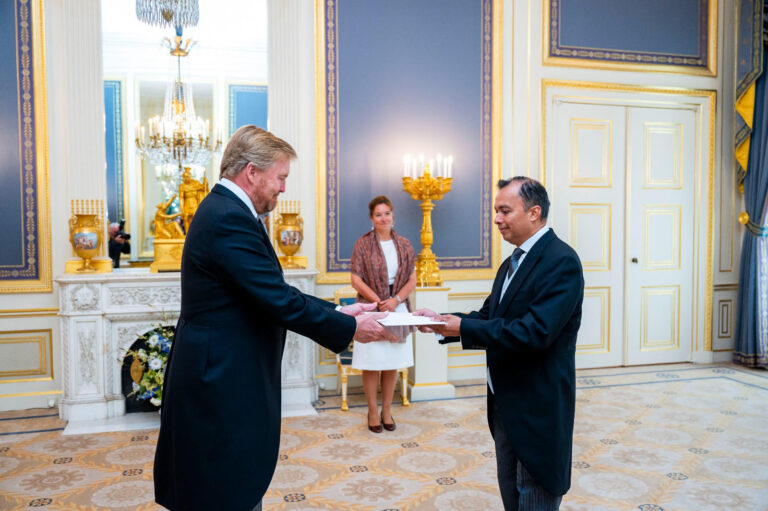
The Hague, 30 August 2023 – The Ambassador of the Republic of El Salvador in the Netherlands Agustín Vásquez Gómez, presented his letters of credence to His Majesty King Willem Alexander of the Kingdom of the Netherlands. The Ambassador described the ceremony as momentous. Officers of the Embassy of El Salvador attended the presentation ceremony.
Ambassador Agustín Vásquez Gómez is not new to the Netherlands Diplomatic Corps. In November 2017, he presented his credentials to HM King Willem Alexander.
Following the presentation ceremony at the Noordeinde Palace, Ambassador Agustín Vásquez Gómez held a Vin d’honneur, celebrating the presentation of his letters of credence. Attendees included Ambassadors and diplomats of various Embassies and a Netherlands Ministry of Foreign Affairs representative.
In a brief statement Ambassador Agustín Vásquez Gómez, a career diplomat and former Lieutenant, expressed his gratitude for representing his country in the Netherlands. He lauded El Salvador’s achievements namely in the fields of crime fighting. Vásquez Gómez will perpetuate the excellent cooperation between the Republic of El Salvador and the Kingdom of the Netherlands.
We wish Ambassador Agustín Vásquez Gómez, a successful tenure.
Presentation of Credentials – Ambassador Agustin Vasquez Gomez. El SalvadorFollowing the presentation ceremony at the Noordeinde Palace, Ambassador Agustín Vásquez Gómez held a Vin d’honneur, celebrating the presentation of his letters of credence.
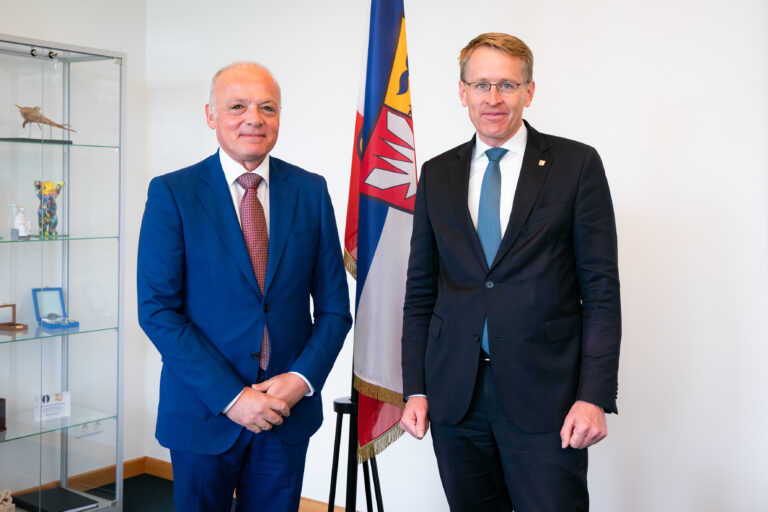
In an ongoing effort to strengthen the relationship between the German Federal States and Malta, Dr. Vanni Xuereb, Malta’s Ambassador to Germany, continued his series of official visits by travelling to the Free and Hanseatic City of Hamburg and Schleswig-Holstein.
On August 29th, Ambassador Xuereb was warmly received at Hamburg’s City Hall, where he engaged in a productive dialogue with Almut Möller, the State Councillor and Plenipotentiary of the Free and Hanseatic City of Hamburg for the Federal Government, the European Union, and Foreign Affairs. The conversation encompassed crucial topics, such as the post-pandemic landscape and Russia’s war on Ukraine. Economic dynamics within both Malta and Germany were also thoroughly explored. Central to this exchange were shared concerns, particularly the unique challenges faced by smaller nations and the pivotal role of renewable energy in shaping a sustainable future.
The following day, on August 30th, in Kiel, Ambassador Xuereb visited the renowned German Naval Yards. During his visit, he met with Rino Brugge, the Chief Executive Officer, and other senior officials of the company. Ambassador Xuereb received a comprehensive briefing on the shipyard’s endeavours and had the privilege of a personal guided tour of the facilities. This immersive experience provided valuable insights into the shipyard’s operations, unveiling futuristic projects aimed at enhancing renewable energy capacity through wave power harnessing. Through the well-rounded presentation, the Ambassador gained a deeper understanding of the shipyard’s commitment to innovation and sustainable energy solutions.
Ambassador Dr Vanni Xuereb & State Secretary Dr. Almut Möller – Picture by Hamburger Senatspressestelle
Later that day, Ambassador Xuereb was received by Daniel Günther, the Minister President of Schleswig-Holstein. The discussions were marked by a shared enthusiasm to cultivate a meaningful partnership across various sectors, with a specific focus on education and renewable energy. Ambassador Xuereb highlighted Malta’s unwavering dedication to providing world-class education to students worldwide, emphasising the island nation’s role as a sought-after hub for language learners. Beyond the classroom, Malta’s rich cultural heritage and hospitable environment offer immersive experiences that enrich the educational journey.
As the meeting concluded, Ambassador Xuereb reiterated Malta’s steadfast commitment to a more sustainable future, showcasing ongoing initiatives that exemplify the nation’s dedication. Recognizing Schleswig-Holstein’s commendable progress in the realm of renewable energy, the Ambassador emphasized the potential for a robust partnership that would mutually benefit both regions.
Ambassador Xuereb was accompanied by Mr. Johann Stefan Reith, Honorary Consul responsible for Hamburg, Schleswig-Holstein, and Mecklenburg-Western Pomerania, as well as Mr. Mark Abela, Deputy Head of Mission.
Every time when passion for excellence and hard work meet, the result is an exceptional product. Kaandorp Cheese is certainly one of that.
A family business since 1929, with its 3rd generation (2 brothers, Matthijs and Stefan Kaandorp) now in charge, this cheese company expanded from a traditional local Dutch wholesaler to an international company. The cheese is left to ripen into the hands of specially equipped companies, and then a special attention is given to cutting and packaging. Responsibility for expanding distribution is in the hands of Carla Bos (Commercial Director Europe) and Humphry van Hesse (Export Director Overseas).
Mr. Humphry van Hesse talked to Diplomat Magazine about Kaandorp Cheese history and its future prospective.
‘Customers feel at home at our organization due to the orientation towards service. The words ‘family business’ say it all. The two owners, two brothers, give everything for this company. Through their way of leadership, they take their staff with them in their love for their profession but also in their pursuit of perfection. In other words, everyone is on the same page, and people step in where necessary. There is no thinking and working in boxes; that is one of the secrets of this well-oiled machine’.
Humphry van Hesse, Kaandorp Cheese’s Export Director Overseas.
Mr. Van Hesse talked about the variety of cheese and how it may be accompanied by the right kind of wine, in order to enhance its given pleasure. ‘Each type of milk gives the cheese its own taste and adds diversity to the total cheese shelf.
Cow cheese has by far the largest share. The other variants are also considerably more expensive in terms of price. For people with cow milk intolerance, it is a Godsend that there is also goat cheese, for example. In the last 10 years, however, we have seen the sales of goat cheese in particular rise enormously.
A dinner can be accompanied by various wines: white, red, port, etc. Different kinds of meat go well with different wines. It works the same way with cheese. A cheese board is often served for dessert at dinner, accompanied by a selected glass of wine’.
You can certainly feel the passion for his job in his words. He just loves what he does!
‘Gouda cheese is a typical Dutch product in which no concessions are made. However, there are possibilities to adjust production processes in order to give the cheese the predicate of Kosher, Halal, or Organic, for example. By adding certain herbs, a taste can be created that is accessible or widely used in certain countries. Organic cheeses are an important part of Kaandorp Cheese’s organization.
Kaandorp moves along with the changing world. Certifications such as IFS (last year, Kaandorp had that and achieved a score of 97.71 %.), SKAL (organic), Halal, FDA, Cifer, and BPOM are part of its expertise now. All audits have been successfully completed. We are always very cautious about sharing information about innovative products and new markets.
The basic selection is always based on the highest demand worldwide. The difference between processed cheese and naturally ripened cheese is something we like to explain in order to get a better idea about taste, shelf life, and food safety. As real cheese connoisseurs, we know what people like. The real Gouda cheese is praised all over the world’.
Kaandorp Cheese’s export brand: Pure & Passion.
In recent years the company expanded worldwide and is now present on markets far away from the native Netherlands.
‘Because I already had a reasonable network from my international advertising and marketing background, I was able to contact and negotiate our entry on the Chinese dairy market. The expansion to Florida was a test phase for Kaandorp, in which it was able to test brands and concepts on a small scale. Based on these findings, the company is now on the verge of rolling out these concepts. COVID has caused some delay, but this also had some advantages. The time we have gained has given us some new contacts and relationships with the prospect of long-term commitment’.
Mr. Van Hesse clearly has a very good eye for business. ‘As export director, I am always looking for new ways to bring our products to other local markets. I often work with embassies in order to find out more about the corporate culture of each country in advance and to be able to reach the right people. Sometimes embassy members even join me on my first economic trip to a new country. Because I have been visiting the various embassies for years, it is therefore not surprising that we are present at such diplomatic events, as ‘Diplomat after Summer Party’ organized by Diplomat Magazine at Leonardo Royal Hotel in The Hague. We wish to present our products and have them tasted by those who are not yet familiar with them. People can also visit our website or stay in touch through our regular newsletters’
And for sure, people will definitely want to follow more of the Kaandorp Cheese story, after first tasting their marvelous varieties of cheese.