“Portrait of Don Diego de Acedo” by Velázquez will be exhibited in The Hague.1 October – 29 November 2015 Mauritshuis / Prince William V Gallery
The Mauritshuis presents in the Prince William V Gallery in The Hague a masterpiece of a painter whose work is not usually on display in The Netherlands.
After Caravaggio and Titian in the previous two years, the renowned Spanish painter, Diego Velázquez, will be featured this year with his painting, “Portrait of Don Diego de Acedo”, loan from the Prado Museum in Madrid. This masterpiece will be presented from 1 October through 29 November 2015.
As court painter to Spanish king Philip IV, Velázquez produced a great number of portraits. His series of portraits of little people and court jesters is extraordinary, and this portrait of Diego de Acedo is a beautiful example of this group of paintings.
More information can be found at the website of The Prince William V Gallery.
On the picture Ambassador Piragibe Tarragô welcomes the Managing Director of Petrobras Netherlands BV, Mr. Samir Awad.The 7 September, which marks the official date of the independence of Brazil from Portugal, was celebrated in The Hague, with a reception at the Embassy’s official residence, in Wassenaar. Ambassador Tarragô greets the Deputy Secretary-General of the Permanent Court of Arbitration, Mr. Brooks Daly, and Assistant Legal Counsel, Mr. Tulio di Giacomo Toledo, also a Brazilian national.Regaling the 193 years of Brazil’s independence, about 250 guests were present, including representatives of the Dutch government, diplomatic corps, Brazilian community in the Netherlands, business, cultural and academic sectors.Ambassador Tarragô and the Mayor of Wassenaar, Mr. Jan Hoekema.Overview of the diplomatic reception.Following more than three centuries under Portuguese rule, Brazil by far the largest and most populous country in South America, gained its independence in 1822.
On the picture Malcolm Turnbull (left) and Tony Abbott (right) .By Baron Henri Estramant.
Australia has a new Prime Minister after former head of government Tony Abbott was ousted as leader of the Liberal Party by Cabinet Minister Malcolm Turnbull on 14 September 2015.
In the hastily-arranged party leadership ballot, Prime Minister Abbott, who had been plagued by poor opinion polls, received 44 votes vis-à-vis Turnbull’s 54. Liberal MPs also voted for Foreign Minister, Julie Bishop, to remain deputy leader of the party.
Mr Turnbull was sworn in on 15 September as 29th Prime Minister of the Commonwealth of Australia after Mr Abbott handed in his resignation to the Governor General Sir Peter Cosgrove, personal representative of Australia’s monarch, Queen Elizabeth II.
Turnbull shall serve as Australia’s fourth prime minister since 2013.
Labor Prime Minister Julia Gillard was ousted by rival Kevin Rudd in a leadership vote in June 2013; months before a general election that Tony Abbott’s Liberal Party won. Ms Gillard herself had ousted Mr Rudd as prime minister in 2010.
The Commonwealth of Australia is a realm whose Head of State is HM The Queen of Australia, Queen Elizabeth II, who is represented by a governor general based in Canberra.
In the Benelux countries the country holds two diplomatic missions. In The Netherlands the mission which is likewise accredited to the OPCW is headed by Ambassador Dr Brett Mason since 2 September 2015.
Dr Brett Mason presenting credentials to HM The King of the Netherlands.
The mission based in Brussels is accredited to Belgium, Luxembourg, the EU and NATO. Head of Mission since September 2015 is Dr Mark Higgie.
Dr Higgie is a former foreign policy adviser for Tony Abbott, speaks several European languages, and previously was ambassador to Hungary he also held postings in Vienna and Belgrade.
HE Dr Mark Higgie.Prime Minister Malcolm Turnbull:
◾Served as Minister for Communications under Abbott, before resigning to launch a leadership challenge
◾He supports climate change action and same-sex marriage
◾Led the Liberal Party in opposition from 2008-2009; yet lost a leadership challenge to Abbott by one vote
◾Previously worked as a successful lawyer and businessman (defending former British spy Peter Wright in the “Spycatcher” case in the 1980s)
For more information
Australian Prime Minister’s Office: www.pm.gov.au
Mission of Australia to the EU, NATO, Belgium and Luxembourg: http://eu.mission.gov.au/bsls/home.html
Embassy to The Netherlands and the OPCW: http://netherlands.embassy.gov.au/thag/home.html http://dfat.gov.au/about-us/our-people/homs/Pages/ambassador-to-netherlands.aspx
Department of Foreign Affairs and Trade: http://dfat.gov.au/pages/default.aspx
On the picture the Chargé d’affaires of the Indonesian Embassy, Mr. Ibnu Wahyutomo together with Elvi Zubaidah, Ai Syarief , Anita Winata, Leo Mokodompit and Mrs. Wahyutomo.By Roy Lie A Tjam and Anna Maria Mistretta.On Monday, September 7, the Charge d’Affaires of the Indonesian Embassy, Mr. Ibnu Wahyutomo, opened a dazzling animated fashion to showcase Indonesia’s rich tradition of batik, in commemoration of the 70th anniversary of the Republic of Indonesia’s Independence in the Netherlands. He warmly welcomed the many guests present for the occasion, including the guest of honor Henriette van Artsen, spouse of the Mayor of The Hague, journalists, Dutch officials, Dutch designers and other distinguished guests.Warna Indonesia dancer group.Mr. Harry Rahmat Darajat (owner of the fashion house Ai Syanef 1965) and Ms. Anita Winata (founder of the fashion house Tjantingkoe) presented their latest (batik) collections. Ai Syarief, the multi-talented young Indonesian fashion designer, producer, choreographer, dancer, stylist, coach and artist, presented several elegant batik dresses designed for formal occasions. Fourteen fashion models demonstrated the collection, featuring traditional and contemporary batik motifs from various regions in Indonesia.Leo Mokodompit and Elvi Zubaidah sang Indonesia pop songs and three contemporary dances were performed by Warna Indonesia. Guests were also treated to a selection of Indonesian foods and beverages.Elvi Zubaidah, Ai Syarief , Anita Winata and Leo Mokodompit.You enter the Grote Kerk with a sense of sacredness and expectations, you walk along the naves: silence.You enter the high altar and something happens: an explosion of color, music and captivating dances.You are in another world: Indonesia. You can say that it is a miracle. You are captured first by the music, then by the atmosphere and most of all by the colors.Then you see the collections: a unique esthetic syncretism of cultures. The Indonesian magnificent explosion of colors has turned into European clothes to warm up our hearts and souls.Indonesia’s Fashion Show 2015.
On the picture Ambassador Amado greeting Mexican ambassador to the EU, Belgium and Luxembourg Juan José Gómez Camacho.ByBaron Henri Estramant.Brazil’s independence was celebrated with much style at the Residence of the Ambassador of Brazil to Belgium and Luxembourg on Monday, 7 September 2015.
Albeit the reception was held at noon, a couple of hundreds of ambassadors, diplomats, business people and aristocrats found the time to attend the prestigious event co-hosted by the bilateral Ambassador to Belgium and Luxembourg, HE André Amado and the Head of Mission to the EU, HE Vera Machado.
Ambassador Amado greeting Qatari ambassador to the EU, Belgium and Luxembourg, Sheikh Ali bin Jassim bin Thani Al Thani and spouse Sheikha Iman bint Hamad Al Kuwari.
Portugal claimed the territory of today’s Brazil in the year 1500, however, the first European settlers arrived firstly 30 years later. Independence was declared on 7 September 1822 by then Royal Prince, Dom Pedro de Bragança from the United Kingdom of Portugal, Brazil and the Algarves; thereby ending 322 years of Portuguese rule. Nevertheless King João VI was still recognised as the legitimate monarch of Brazil by a large number of Brazilians. It wasn’t until three years later, and after the Brazilian war of independence, that an official treaty with Portugal recognised the country’s independence under the reign of Dom Pedro I in capacity as “Emperor and Perpetual Defenser of Brazil”.
In the South American country the holiday is popularly known as “Sete de setembro”.
Prinsjesdag is not only the opening of the Dutch parliamentary year, on the third Tuesday of September, but has also become the culmination of the hat-wearing season in The Hague.
Most female guests at the various Prinsjesdag events wear hats. And over the years, Berry Rutjes Jr. has designed a significant number of them, including several for royal heads.
From 19th September till 11th October, Museum Escher in het Paleis dedicates a colourful, elegant and interesting exhibition to Berry’s 25 years as one of the country’s leading milliners.
Contact Berry for an appointment, she will take ample time to help you decide which shape, model, colour and materials would best suit your personality.
www.berryrutjes.com ,www.escherinhetpaleis.nl
On the picture Ambassador Belal with wife, Dutch entrepreneurs and seminar’s moderator.
The road to the Asian Century shall traverse Bangladesh.
By Roy Lie A Tjam.Within the framework of the Dutch-Bangla Chamber of Commerce and Industry, in conjunction with the Embassy of Bangladesh in the Netherlands, an agribusiness seminar was held at the Hilton Hotel Den Haag on 7 September. A trade delegation of twelve top entrepreneurs from Bangladesh visited The Hague, as part of a 5-day tour to the BENELUX countries. The group visited The Hague for a total of 48 hours. The focus was on strategies to incentivise investors to come to Bangladesh. The Netherlands was chosen for the visit due to its long-standing expertise in agriculture, dairy products and for being a delta country as Bangladesh is. The delegation included Hassan Khaled, Shahriar Taha, Aminur Rashid, Biswajit Roy, Mohammad Monwar Hossain, Mohammed Khorshed Khastagir, Build Asia, Anwar Shawkat and others.
For a photo-album on the Bangladesh agribusiness seminar, please open the following link: https://www.flickr.com/photos/121611753@N07/albums/72157658587291842In his welcome remarks, H.E. Sheikh Mohammed Belal, Ambassador of Bangladesh to the Netherlands, urged Dutch investors to come and invest in the forthcoming Asian Century. Bangladesh, he said, is the gateway to the Asian Century. The fact that Bangladesh is a duty free and quorum free country makes it a highly attractive investment and business destination.During the two session seminar, Mr. Shariar Taha gave a presentation in which he introduced Bangladesh and provided attendees with an overview of the country’s investment opportunities and policies. There was also time for discussion, questions and personal meetings. The DBCCI president Mr. Hasan Khaled disclosed that a single country trade show will be taking place in the Netherlands in April 2016. Subsequently, Mr. Mohammad Monwar Hossain (CerebralLink Ltd) and Mr. Aminur Rashid (Edison) made their own contributions, promoting the potential of agro- and food processing, as well as the leather and footwear sectors in Bangladesh. Ms. Annette Weijman (MVO) represented the Dutch Ministry of Economic Affairs. H.E. Sheikh Mohammed Belal, Ambassador of Bangladesh with Dutch entrepreneur.
Members of the delegation later had the opportunity for one-to-one meetings with interested Dutch counterparts.Feedback from the visitors after the seminar was extremely positive. Attendees were very impressed with the opportunities Bangladesh has to offer, and returned home with an improved understanding of the country. Such events provide a welcome opportunity for potential international investors and partners to find out more about the country, free of negative cliché and with a positive vision for the future.As a conclusion, Ambassador Belal hosted a reception and dinner at his residence (Bangladesh House) for the visiting DBCCI delegation and invitees. A successful promotion day indeed.
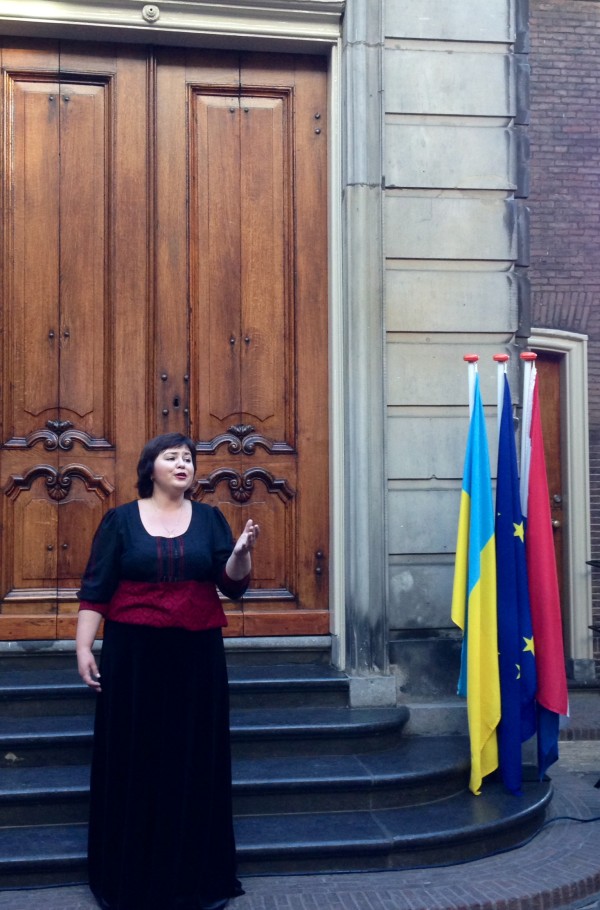
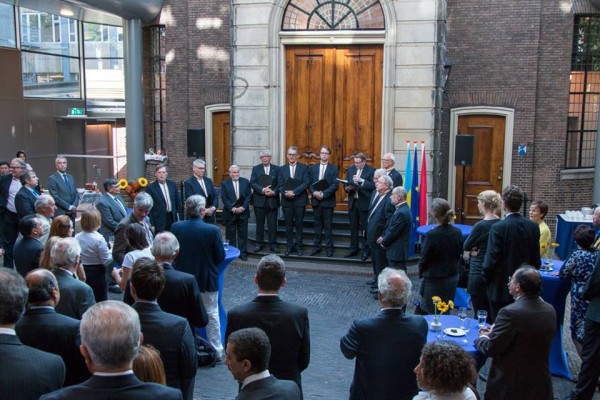
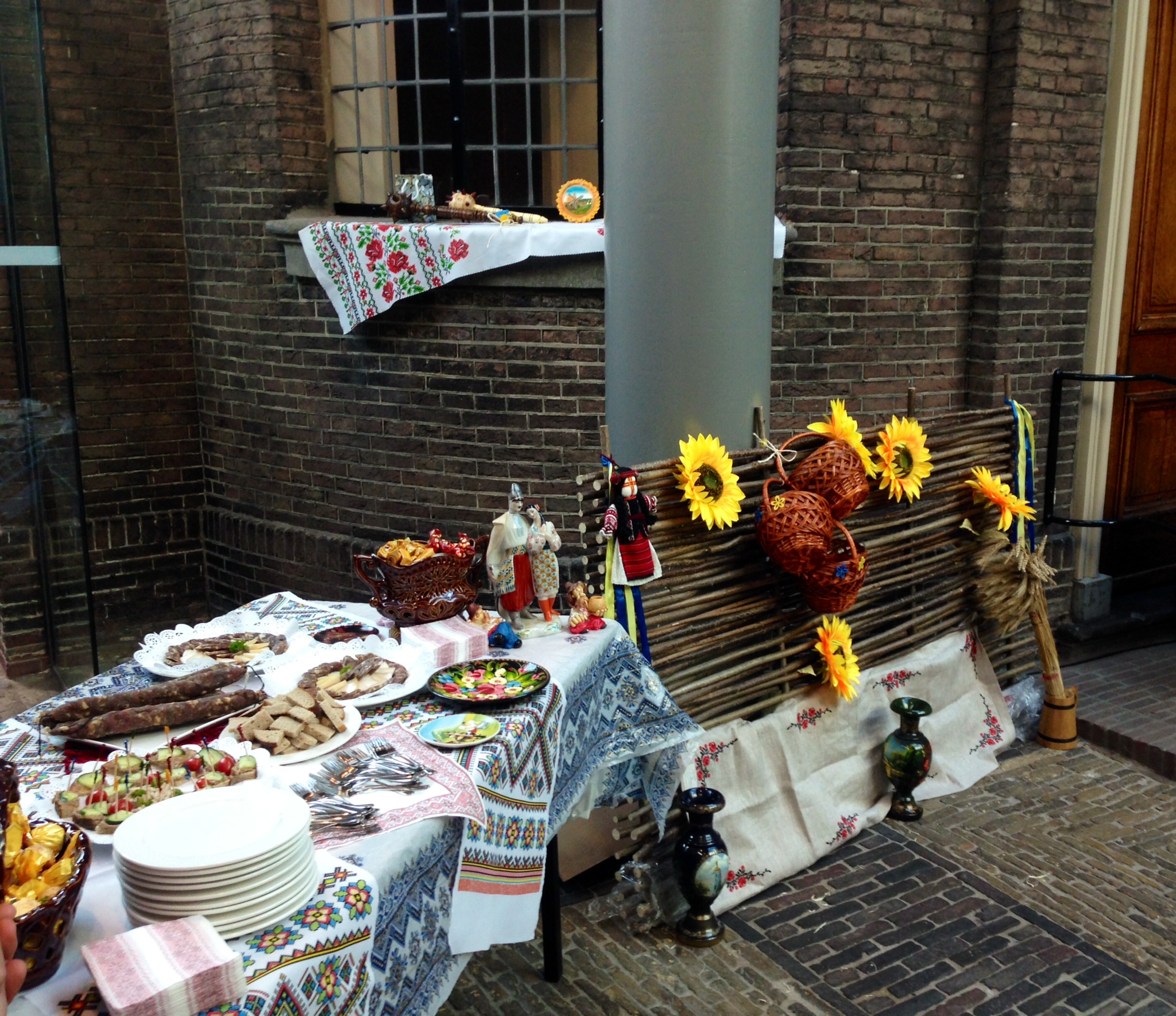
On the picture H.E. Olexander Horin.Celebration of the Independence Day of Ukraine in The HagueBy Lyudmila Palamar.On the 10th of September 2015 Embassy of Ukraine in the Kingdom of The Netherlands hosted an event to celebrate Independence Day of Ukraine. 24 years ago on the 24th of August Parliament of Ukrainian Soviet Socialist Republic proclaimed independence of Ukraine, a country that continues its fight for independence, democracy and freedom till the present day. During the celebration of the Independence Day of Ukraine in The Hague all guests were generously treated with traditional Ukrainian dishes, including stuffed fish, potato dumplings and wide selection of meat that was delivered from Ukraine. Authentic decorations and Ukrainians in colourful traditional costumes created a unique atmosphere of hospitable Ukrainian village.The reception was opened by a speech of H.E. Mr. Olexander Horin. In his speech the Ambassador of Ukraine expressed his gratefulness to “all friends for the solidarity and assistance, which is provided to Ukraine today”.The De Glazen Zaal was full of people and a large number of diplomats attended among them Ambassadors from Chima, India, Senegal, Romania, Cuba, Tunisia, Egypt, Venezuela and Pakistan. After the speech honorable guests had an opportunity to enjoy performances of Ukrainian songs by a Dutch choir from Utrecht and a talented Ukrainian singer.
On the picture Prof. Dr. Surachai Jewcharoensakul with H.E. Ittiporn Boonpracong and his wife .By Roy Lie A Tjam.
H.E. Mr. Ittiporn Boonpracong, Royal Thai Ambassador in The Hague, hosted an exclusive Thai cooking demonstration and dinner at his residence on Friday 4 September.
The demonstration and dinner was conducted by Associate Prof. Dr. Surachai Jewcharoensakul who holds a PhD degree in Thai cooking science and art. Prof. Jewcharoensakul is the Dean of the Faculty of Education of the Kasetsart University Thailand.
He is an expert in Thai Cuisine, restaurant business management, and is renowned for his versatility and talent.
Prof. Dr. Surachai Jewcharoensakul.
For a photo-album of Thai cooking demonstration, please click here: https://www.flickr.com/photos/121611753@N07/albums/72157657936226408.Nathalia Timoshenko, spouse of Ukraine’s Ambassador with Prof. Dr. Surachai Jewcharoensakul .
He has gained official recognition from the Thai Government for his Chef Training Programme, available to Thai restaurants overseas. In 2006, the Iron Chef award was bestowed upon him by the Austin-Texas Culinary Academy. Dr. Surachai Jewcharoensakul is also known for his many contributions to charity.
As one of the Ambassadors present at the soiree observed: Surachai Jewcharoensakul is a most remarkable man. The Chef prepared a variety of specialities for the guests, including Lab kai, soups and noodles. Many reached for their notebook to jot down the golden tips and tricks the chef offered to onlookers during his exposé.
Thai cooking leson by Prof. Dr. Surachai Jewcharoensakul in the Thai residence in Wassenaar.
Thereafter, a lavish diner was served in a relaxed atmosphere. The following day, at the annual Embassy Festival, a much larger audience had the opportunity to sample the culinary creations of this genius chef from Thailand.
HE Janet Lowe Ambassador of New Zealand, HE Igor Popov Ambassador of the Republic of Macedonia and Prof. Dr. Surachai Jewcharoensakul .
On the picture HE Jaime Ledda with wife Gina.By Roy Lie A Tjam.
Ambassador Jaime Ledda and his lovely spouse Gina hosted a cocktail reception which took place at their residence on the 3rd of September, highlighting the Philippines cuisine. Featuring, Chefs Amy Besa and Romy Dorotan and their team, all of Purpure Yam, a Filipino restaurant chain with branches in Manila and New York.
The event appealed to many and served as what Ambassador Ledda fondly termed as ‘a degustacion to the launching of the Filipino week’, September 7-13 at the Michelin star restaurant De Karpendonkse Hoeve in Eindhoven. There Filipino cuisine will be in the limelight, customers will get to enjoy dishes prepared by the two renowned chefs. They will be making use of authentic artisanal ingredients form the various regions of the Philippines.
Chef Romy Dorotan and his team.
Ambassador Ledda warmly welcomed his guests. A welcome drink was then served, prepared under the supervision of Mr. Michel Dame, an importer of spirits. He came all the way from Amsterdam, the Rum-Punch made of seven-year-old Don Papa Rum in combination with ginger beer. The rum-punch was excellent. However, in the Caribbean we generally take rum with coconut water or Coca-Cola.
The Ambassador subsequently introduced Chef Amy Besa an authority on Philippines cuisine. She delivered an expose full of splendor, she elaborated on signature dishes such as adobo, pacit and their origin. Amy Besa travels the country in search of authentic ingredients. For instance from Maguindanao, used by the Muslim community.
Guests came from different countries to watch the chefs perform: Belgium, Italy and the Netherlands.
Gina Ledda and Philippine’s chefs.Chef Amy Besa.
The culinary artworks by the composite chefs went down very well with the hearty eaters. The evening not only celebrated Filipino cuisine but also accentuated the role farmers play in the Filipino food chain. It has been a soirée with ambiance, impressive indeed.



 Leo Mokodompit and Elvi Zubaidah sang Indonesia pop songs and three contemporary dances were performed by Warna Indonesia. Guests were also treated to a selection of Indonesian foods and beverages.


 Leo Mokodompit and Elvi Zubaidah sang Indonesia pop songs and three contemporary dances were performed by Warna Indonesia. Guests were also treated to a selection of Indonesian foods and beverages.


 Most female guests at the various Prinsjesdag events wear hats. And over the years, Berry Rutjes Jr. has designed a significant number of them, including several for royal heads.
From 19th September till 11th October, Museum Escher in het Paleis dedicates a colourful, elegant and interesting exhibition to Berry’s 25 years as one of the country’s leading milliners.
Contact Berry for an appointment, she will take ample time to help you decide which shape, model, colour and materials would best suit your personality.
www.berryrutjes.com ,www.escherinhetpaleis.nl
Most female guests at the various Prinsjesdag events wear hats. And over the years, Berry Rutjes Jr. has designed a significant number of them, including several for royal heads.
From 19th September till 11th October, Museum Escher in het Paleis dedicates a colourful, elegant and interesting exhibition to Berry’s 25 years as one of the country’s leading milliners.
Contact Berry for an appointment, she will take ample time to help you decide which shape, model, colour and materials would best suit your personality.
www.berryrutjes.com ,www.escherinhetpaleis.nl

 Most female guests at the various Prinsjesdag events wear hats. And over the years, Berry Rutjes Jr. has designed a significant number of them, including several for royal heads.
From 19th September till 11th October, Museum Escher in het Paleis dedicates a colourful, elegant and interesting exhibition to Berry’s 25 years as one of the country’s leading milliners.
Contact Berry for an appointment, she will take ample time to help you decide which shape, model, colour and materials would best suit your personality.
www.berryrutjes.com ,www.escherinhetpaleis.nl
Most female guests at the various Prinsjesdag events wear hats. And over the years, Berry Rutjes Jr. has designed a significant number of them, including several for royal heads.
From 19th September till 11th October, Museum Escher in het Paleis dedicates a colourful, elegant and interesting exhibition to Berry’s 25 years as one of the country’s leading milliners.
Contact Berry for an appointment, she will take ample time to help you decide which shape, model, colour and materials would best suit your personality.
www.berryrutjes.com ,www.escherinhetpaleis.nl


 In his welcome remarks, H.E. Sheikh Mohammed Belal, Ambassador of Bangladesh to the Netherlands, urged Dutch investors to come and invest in the forthcoming Asian Century. Bangladesh, he said, is the gateway to the Asian Century. The fact that Bangladesh is a duty free and quorum free country makes it a highly attractive investment and business destination.
During the two session seminar, Mr. Shariar Taha gave a presentation in which he introduced Bangladesh and provided attendees with an overview of the country’s investment opportunities and policies. There was also time for discussion, questions and personal meetings. The DBCCI president Mr. Hasan Khaled disclosed that a single country trade show will be taking place in the Netherlands in April 2016. Subsequently, Mr. Mohammad Monwar Hossain (CerebralLink Ltd) and Mr. Aminur Rashid (Edison) made their own contributions, promoting the potential of agro- and food processing, as well as the leather and footwear sectors in Bangladesh. Ms. Annette Weijman (MVO) represented the Dutch Ministry of Economic Affairs.
In his welcome remarks, H.E. Sheikh Mohammed Belal, Ambassador of Bangladesh to the Netherlands, urged Dutch investors to come and invest in the forthcoming Asian Century. Bangladesh, he said, is the gateway to the Asian Century. The fact that Bangladesh is a duty free and quorum free country makes it a highly attractive investment and business destination.
During the two session seminar, Mr. Shariar Taha gave a presentation in which he introduced Bangladesh and provided attendees with an overview of the country’s investment opportunities and policies. There was also time for discussion, questions and personal meetings. The DBCCI president Mr. Hasan Khaled disclosed that a single country trade show will be taking place in the Netherlands in April 2016. Subsequently, Mr. Mohammad Monwar Hossain (CerebralLink Ltd) and Mr. Aminur Rashid (Edison) made their own contributions, promoting the potential of agro- and food processing, as well as the leather and footwear sectors in Bangladesh. Ms. Annette Weijman (MVO) represented the Dutch Ministry of Economic Affairs.
 H.E. Sheikh Mohammed Belal, Ambassador of Bangladesh with Dutch entrepreneur.
Members of the delegation later had the opportunity for one-to-one meetings with interested Dutch counterparts.
Feedback from the visitors after the seminar was extremely positive. Attendees were very impressed with the opportunities Bangladesh has to offer, and returned home with an improved understanding of the country. Such events provide a welcome opportunity for potential international investors and partners to find out more about the country, free of negative cliché and with a positive vision for the future.
As a conclusion, Ambassador Belal hosted a reception and dinner at his residence (Bangladesh House) for the visiting DBCCI delegation and invitees. A successful promotion day indeed.
H.E. Sheikh Mohammed Belal, Ambassador of Bangladesh with Dutch entrepreneur.
Members of the delegation later had the opportunity for one-to-one meetings with interested Dutch counterparts.
Feedback from the visitors after the seminar was extremely positive. Attendees were very impressed with the opportunities Bangladesh has to offer, and returned home with an improved understanding of the country. Such events provide a welcome opportunity for potential international investors and partners to find out more about the country, free of negative cliché and with a positive vision for the future.
As a conclusion, Ambassador Belal hosted a reception and dinner at his residence (Bangladesh House) for the visiting DBCCI delegation and invitees. A successful promotion day indeed.
 In his welcome remarks, H.E. Sheikh Mohammed Belal, Ambassador of Bangladesh to the Netherlands, urged Dutch investors to come and invest in the forthcoming Asian Century. Bangladesh, he said, is the gateway to the Asian Century. The fact that Bangladesh is a duty free and quorum free country makes it a highly attractive investment and business destination.
During the two session seminar, Mr. Shariar Taha gave a presentation in which he introduced Bangladesh and provided attendees with an overview of the country’s investment opportunities and policies. There was also time for discussion, questions and personal meetings. The DBCCI president Mr. Hasan Khaled disclosed that a single country trade show will be taking place in the Netherlands in April 2016. Subsequently, Mr. Mohammad Monwar Hossain (CerebralLink Ltd) and Mr. Aminur Rashid (Edison) made their own contributions, promoting the potential of agro- and food processing, as well as the leather and footwear sectors in Bangladesh. Ms. Annette Weijman (MVO) represented the Dutch Ministry of Economic Affairs.
In his welcome remarks, H.E. Sheikh Mohammed Belal, Ambassador of Bangladesh to the Netherlands, urged Dutch investors to come and invest in the forthcoming Asian Century. Bangladesh, he said, is the gateway to the Asian Century. The fact that Bangladesh is a duty free and quorum free country makes it a highly attractive investment and business destination.
During the two session seminar, Mr. Shariar Taha gave a presentation in which he introduced Bangladesh and provided attendees with an overview of the country’s investment opportunities and policies. There was also time for discussion, questions and personal meetings. The DBCCI president Mr. Hasan Khaled disclosed that a single country trade show will be taking place in the Netherlands in April 2016. Subsequently, Mr. Mohammad Monwar Hossain (CerebralLink Ltd) and Mr. Aminur Rashid (Edison) made their own contributions, promoting the potential of agro- and food processing, as well as the leather and footwear sectors in Bangladesh. Ms. Annette Weijman (MVO) represented the Dutch Ministry of Economic Affairs.
 H.E. Sheikh Mohammed Belal, Ambassador of Bangladesh with Dutch entrepreneur.
Members of the delegation later had the opportunity for one-to-one meetings with interested Dutch counterparts.
Feedback from the visitors after the seminar was extremely positive. Attendees were very impressed with the opportunities Bangladesh has to offer, and returned home with an improved understanding of the country. Such events provide a welcome opportunity for potential international investors and partners to find out more about the country, free of negative cliché and with a positive vision for the future.
As a conclusion, Ambassador Belal hosted a reception and dinner at his residence (Bangladesh House) for the visiting DBCCI delegation and invitees. A successful promotion day indeed.
H.E. Sheikh Mohammed Belal, Ambassador of Bangladesh with Dutch entrepreneur.
Members of the delegation later had the opportunity for one-to-one meetings with interested Dutch counterparts.
Feedback from the visitors after the seminar was extremely positive. Attendees were very impressed with the opportunities Bangladesh has to offer, and returned home with an improved understanding of the country. Such events provide a welcome opportunity for potential international investors and partners to find out more about the country, free of negative cliché and with a positive vision for the future.
As a conclusion, Ambassador Belal hosted a reception and dinner at his residence (Bangladesh House) for the visiting DBCCI delegation and invitees. A successful promotion day indeed.

 During the celebration of the Independence Day of Ukraine in The Hague all guests were generously treated with traditional Ukrainian dishes, including stuffed fish, potato dumplings and wide selection of meat that was delivered from Ukraine.
Authentic decorations and Ukrainians in colourful traditional costumes created a unique atmosphere of hospitable Ukrainian village.
During the celebration of the Independence Day of Ukraine in The Hague all guests were generously treated with traditional Ukrainian dishes, including stuffed fish, potato dumplings and wide selection of meat that was delivered from Ukraine.
Authentic decorations and Ukrainians in colourful traditional costumes created a unique atmosphere of hospitable Ukrainian village.
 The reception was opened by a speech of H.E. Mr. Olexander Horin. In his speech the Ambassador of Ukraine expressed his gratefulness to “all friends for the solidarity and assistance, which is provided to Ukraine today”.
The De Glazen Zaal was full of people and a large number of diplomats attended among them Ambassadors from Chima, India, Senegal, Romania, Cuba, Tunisia, Egypt, Venezuela and Pakistan.
After the speech honorable guests had an opportunity to enjoy performances of Ukrainian songs by a Dutch choir from Utrecht and a talented Ukrainian singer.
The reception was opened by a speech of H.E. Mr. Olexander Horin. In his speech the Ambassador of Ukraine expressed his gratefulness to “all friends for the solidarity and assistance, which is provided to Ukraine today”.
The De Glazen Zaal was full of people and a large number of diplomats attended among them Ambassadors from Chima, India, Senegal, Romania, Cuba, Tunisia, Egypt, Venezuela and Pakistan.
After the speech honorable guests had an opportunity to enjoy performances of Ukrainian songs by a Dutch choir from Utrecht and a talented Ukrainian singer.

 During the celebration of the Independence Day of Ukraine in The Hague all guests were generously treated with traditional Ukrainian dishes, including stuffed fish, potato dumplings and wide selection of meat that was delivered from Ukraine.
Authentic decorations and Ukrainians in colourful traditional costumes created a unique atmosphere of hospitable Ukrainian village.
During the celebration of the Independence Day of Ukraine in The Hague all guests were generously treated with traditional Ukrainian dishes, including stuffed fish, potato dumplings and wide selection of meat that was delivered from Ukraine.
Authentic decorations and Ukrainians in colourful traditional costumes created a unique atmosphere of hospitable Ukrainian village.
 The reception was opened by a speech of H.E. Mr. Olexander Horin. In his speech the Ambassador of Ukraine expressed his gratefulness to “all friends for the solidarity and assistance, which is provided to Ukraine today”.
The De Glazen Zaal was full of people and a large number of diplomats attended among them Ambassadors from Chima, India, Senegal, Romania, Cuba, Tunisia, Egypt, Venezuela and Pakistan.
After the speech honorable guests had an opportunity to enjoy performances of Ukrainian songs by a Dutch choir from Utrecht and a talented Ukrainian singer.
The reception was opened by a speech of H.E. Mr. Olexander Horin. In his speech the Ambassador of Ukraine expressed his gratefulness to “all friends for the solidarity and assistance, which is provided to Ukraine today”.
The De Glazen Zaal was full of people and a large number of diplomats attended among them Ambassadors from Chima, India, Senegal, Romania, Cuba, Tunisia, Egypt, Venezuela and Pakistan.
After the speech honorable guests had an opportunity to enjoy performances of Ukrainian songs by a Dutch choir from Utrecht and a talented Ukrainian singer.


 The Ambassador subsequently introduced Chef Amy Besa an authority on Philippines cuisine. She delivered an expose full of splendor, she elaborated on signature dishes such as adobo, pacit and their origin. Amy Besa travels the country in search of authentic ingredients. For instance from Maguindanao, used by the Muslim community.
Guests came from different countries to watch the chefs perform: Belgium, Italy and the Netherlands.
The Ambassador subsequently introduced Chef Amy Besa an authority on Philippines cuisine. She delivered an expose full of splendor, she elaborated on signature dishes such as adobo, pacit and their origin. Amy Besa travels the country in search of authentic ingredients. For instance from Maguindanao, used by the Muslim community.
Guests came from different countries to watch the chefs perform: Belgium, Italy and the Netherlands.


 The Ambassador subsequently introduced Chef Amy Besa an authority on Philippines cuisine. She delivered an expose full of splendor, she elaborated on signature dishes such as adobo, pacit and their origin. Amy Besa travels the country in search of authentic ingredients. For instance from Maguindanao, used by the Muslim community.
Guests came from different countries to watch the chefs perform: Belgium, Italy and the Netherlands.
The Ambassador subsequently introduced Chef Amy Besa an authority on Philippines cuisine. She delivered an expose full of splendor, she elaborated on signature dishes such as adobo, pacit and their origin. Amy Besa travels the country in search of authentic ingredients. For instance from Maguindanao, used by the Muslim community.
Guests came from different countries to watch the chefs perform: Belgium, Italy and the Netherlands.

