

From Grexit and economic collapse to the heart of the Eurozone, Eurogroup Presidency Marks Greece’s Full European Rehabilitation
By Eleni Vasiliki Bampaliouta
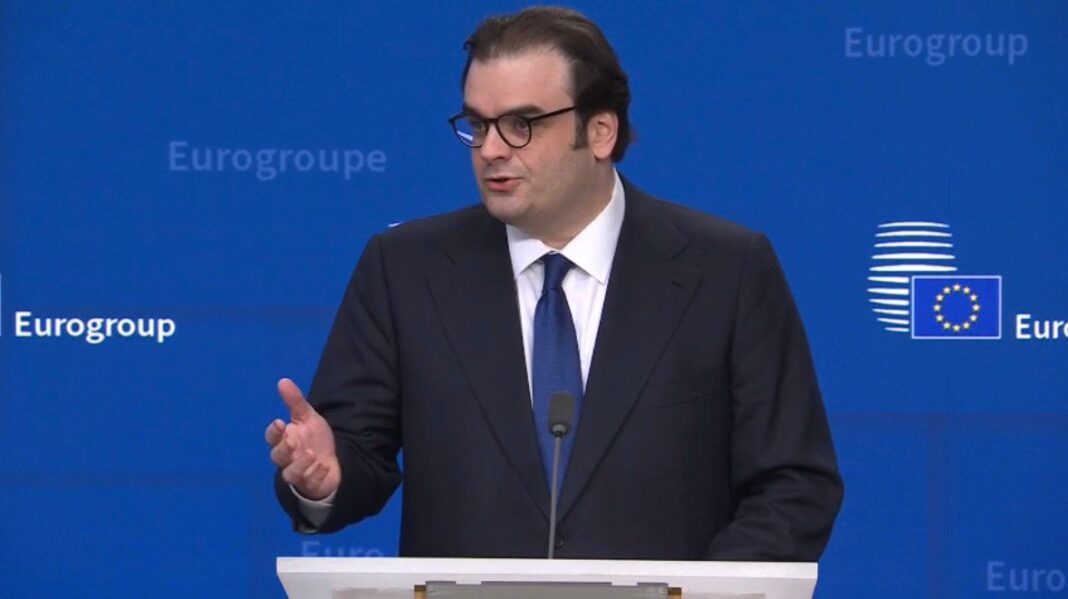
Kyriakos Pierrakakis was unanimously elected President of the Eurogroup for the next two and a half years, confirming earlier predictions and significantly strengthening Greece’s position within the European Union. The election of the Greek Minister of Economy and Finance followed the withdrawal of the candidacy of his Belgian counterpart, Vincent Van Peteghem, a development that rendered Mr Pierrakakis’s election both particularly positive and highly symbolic.
This new role places Greece closer than ever to the centre of EU economic decision-making, at a time when Europe is entering a period marked by profound challenges and critical policy choices. As President of the Eurogroup, the Greek minister will have the opportunity to shape and influence the direction of European economic policy, contributing to the management of issues such as economic recovery and the repercussions of ongoing international crises.
The election of Mr Pierrakakis without a formal vote also sends a strong political signal regarding Europe’s renewed confidence in Greece, reinforcing the country’s credibility and influence at the core of European decision-making.
The role of frozen Russian assets
Considerable attention has focused on the future use of frozen Russian assets, an issue that appears to have played a role in the election process. In statements made shortly before the vote, the Belgian Finance Minister indicated that steps would be taken towards the utilisation of these assets, in what was widely seen as a final attempt to strengthen his candidacy. However, this move did not prove sufficient.
Earlier, the German Finance Minister had publicly stated, upon arriving at the Eurogroup meeting, that he would support Kyriakos Pierrakakis—an endorsement that further underscored the broad support for the Greek candidate.
The Eurogroup’s official announcement
The Eurogroup today elected Kyriakos Pierrakakis, Minister of Economy and Finance of Greece, as President of the Eurogroup, in accordance with Protocol No. 14 to the EU Treaties.
The new President took office on 12 December 2025 and will serve a term of two and a half years.
The first Eurogroup meeting under the presidency of Kyriakos Pierrakakis is scheduled for 19 January 2026.
What is the Eurogroup?
The Eurogroup is an informal body in which the ministers of the euro area member states discuss matters of common interest related to the use of the euro as a single currency. Its main task is to ensure close coordination of economic policies within the euro area. It also seeks to promote conditions for stronger economic growth, prepares Eurozone summits, and monitors their outcomes.
The Eurogroup usually meets once a month, on the eve of the Economic and Financial Affairs Council (ECOFIN) meeting. The first Eurogroup meeting was held on 4 June 1998 in Luxembourg. Its presidents have included Jean-Claude Juncker, Jeroen Dijsselbloem, Mario Centeno and Pascal Donohoe.
From Grexit fears to Eurozone leadership
The assumption of the Eurogroup presidency by a Greek minister carries strong symbolism. A decade after the peak of the debt crisis—when Greece stood on the brink of exiting the euro—the country is now widely regarded as a model of fiscal adjustment, stability and rapid debt reduction.
According to European sources, Mr Pierrakakis’s selection reflects not only “the restoration of Greece’s credibility” but also his ability to balance differing political and economic currents within the EU. Notably, Germany publicly supported his candidacy, alongside countries aligned with both the European People’s Party and the Social Democrats—an unusual convergence that highlights the broad acceptance of the Greek proposal.
Congratulations from European officials
The outcome was swiftly welcomed by European officials. Latvia’s Finance Minister was among the first to offer congratulations, emphasising that the Eurogroup “needs a clear strategy, a defined goal and collective commitment for the period ahead”. Former Eurogroup President Jeroen Dijsselbloem remarked that “Greece is now an example for many member states”, highlighting the country’s remarkable transition from fiscal instability to economic credibility.
A position of increased influence: what Greece gains
The presidency is not merely symbolic; it allows Greece to play a more active role in shaping the Eurogroup’s agenda, including issues closely linked to national priorities:
- strengthening the debate on insularity within the EU
- migration management and the security of Europe’s external borders
- responses to geopolitical challenges from the East
- participation in discussions at G7 and G20 level, where Greece will now have a stronger voice
The leadership change comes at a time of major European challenges, including the need to enhance competitiveness, manage trade tensions with the United States, address China’s growing influence, and meet obligations for increased defence spending within the NATO framework.
Pierrakakis’s four priorities for Europe
The Greek Minister has already outlined a clear roadmap for Europe’s economic future. In a detailed 1,500-word letter sent to Eurozone finance ministers to formally present his candidacy, Kyriakos Pierrakakis described a Eurogroup that is more cohesive, more effective and more focused on Europe’s deep strategic challenges. His programme is built around four key pillars:
- Strengthening economic convergence and cohesion within the Eurozone
- Deepening the Savings and Investment Union to channel more European capital into productive investment
- Integrating technological progress into European fiscal policy to safeguard EU competitiveness
- Protecting Europe’s economic foundations through fiscal responsibility and by addressing structural challenges such as demographics, productivity and financial stability
This election opens a new chapter for Greece. For the next two and a half years—and potentially beyond—the country will lead the body that shapes the fiscal trajectory of the Eurozone. It marks not only Greece’s return to the forefront of the European economic landscape, but also broad recognition of the stability and credibility it has built over the past decade.