
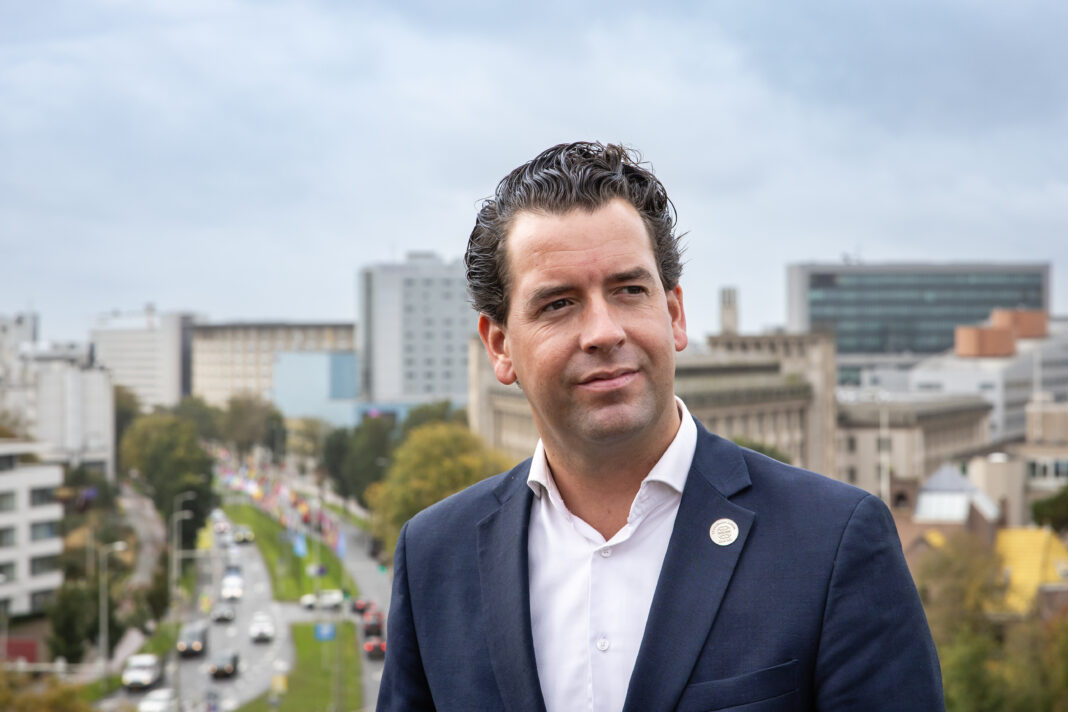

By Thomas Kortleve
The Hague has long stood at the crossroads of diplomacy, international law, and global cooperation. As Chairman of the Hague Hotel Consultation (Haags Hoteloverleg), I have had the privilege of experiencing first-hand how deeply our hospitality sector is intertwined with this international ecosystem. It is a role I have come to value not only professionally, but personally.
Over the years, I have genuinely enjoyed building relationships with the many embassies based in our city. What began as practical cooperation has grown into something far more meaningful. There is a shared understanding that hospitality in The Hague is not just about offering rooms, but about facilitating dialogue, trust, and connection. Working closely with embassy teams—often under time pressure and with high expectations—has shown me the strength of collaboration when mutual respect and clarity are in place.
Hotels in The Hague have become reliable partners to the diplomatic community. We provide spaces for meetings, quiet negotiations, and moments of informal exchange that often prove just as valuable as formal discussions. These interactions have reinforced my belief that our sector plays a subtle yet essential role in supporting the city’s diplomatic mission.
This role was never more visible than during the NATO Summit in 2026. For me, it was not only a professional milestone, but also a moment of pride. Welcoming heads of state, ministers, and international delegations required an extraordinary level of coordination. What stood out most was the spirit of collaboration—between hotels, embassies, government institutions, and security services. The success of the summit confirmed that The Hague can operate at the very highest international level, and that our hospitality sector is ready to meet that responsibility.
At the same time, experiences like these also highlight the work that still lies ahead. The Dutch hospitality sector, and particularly that of The Hague, is facing increasing pressure. Rising costs, labour shortages, and regulatory complexity such as the increase on vat on overnight stays from 9% to 21%, continue to challenge our ability to remain competitive. Meanwhile, other European cities are moving quickly, investing heavily in infrastructure and positioning themselves effectively in the international market.
For The Hague, the challenge is also one of focus. We are globally recognized as the city of peace and justice, yet we have not fully translated that identity into a strong and consistent position as a leading conference and business destination. Our facilities are excellent, but not yet sufficient in scale or integration to capture the full potential of the international market.
This is why the coming years will be decisive. With new policymakers shaping the future of our city, we have a clear opportunity to make strategic choices that will define our long-term success. One of my key wishes is the development of a stronger and more coherent international zone. Such an environment would not only benefit embassies and international organizations, but also create a more attractive ecosystem for global companies.
Equally important is the expansion of our conference capacity. The World Forum remains an iconic venue with enormous potential. By investing in its growth and better connecting it with surrounding hotels and infrastructure, we can position The Hague once again as a leading European congress city. This is not simply about prestige—it is about creating sustainable economic value and ensuring that we remain relevant in an increasingly competitive landscape.

At the same time, we must strengthen our efforts beyond the city itself. Our lobbying—both nationally and internationally—needs to become more focused and effective. If we want to attract corporates, international organizations, and (b)leisure visits, we must tell a clearer and more compelling story about what The Hague and Scheveningen have to offer. This requires alignment between public and private stakeholders, and a willingness to invest in long-term positioning.
Ultimately, a strong hospitality sector is inseparable from a strong economy. When we succeed in attracting international visitors and events, the benefits extend far beyond our hotels. They support local businesses, cultural institutions, and the broader urban economy.
Looking ahead, I remain optimistic. The relationships we have built with embassies, the experience gained during events such as the NATO Summit, and the commitment within our sector provide a solid foundation. What we need now is ambition and direction.
By strengthening our international zone, expanding our conference infrastructure, and sharpening our global positioning, The Hague can continue to grow—not only as a centre of diplomacy, but as a vibrant, competitive, and internationally connected city.