
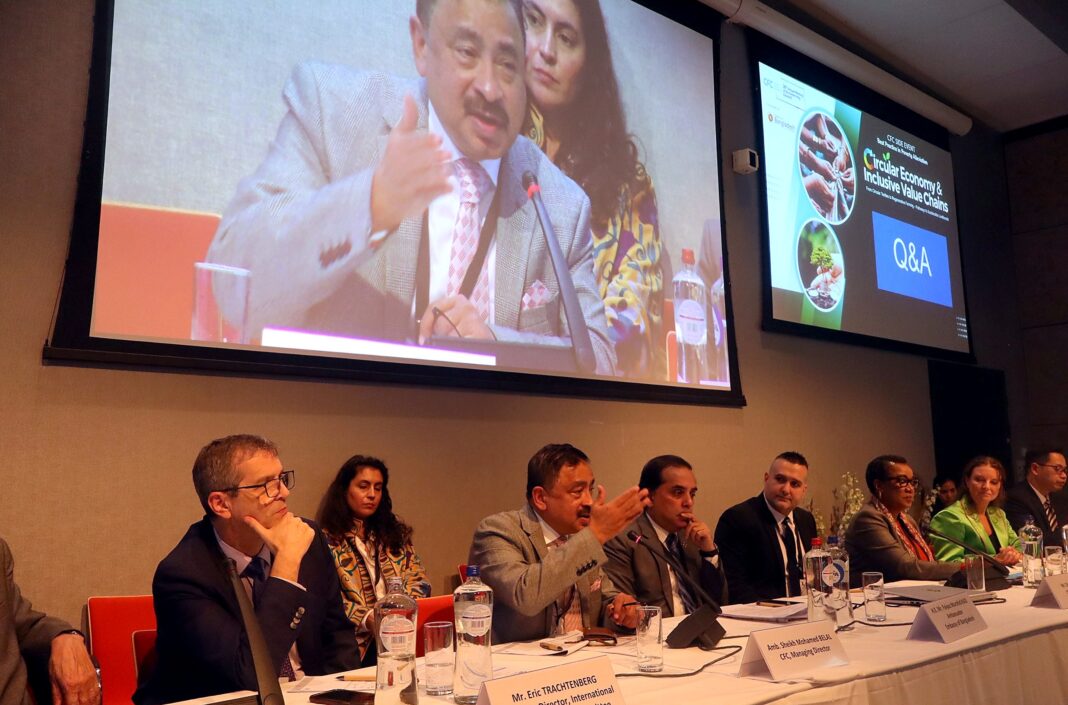

The Hague, 16 November 2026. The Common Fund for Commodities (CFC), in collaboration with the Embassy of Bangladesh to the Netherlands, organised a side event entitled Best Practices in Poverty Alleviation: Circular Economy and Inclusive Value Chains on 16 November, alongside the 38th Annual Meeting of the CFC Governing Council in The Hague.
The event brought together representatives of Member States, international organisations, development institutions and the private sector to discuss how circular economy practices, sustainable agriculture and inclusive business models can improve livelihoods and expand economic opportunities for smallholders, workers and small and medium-sized enterprises (SMEs).
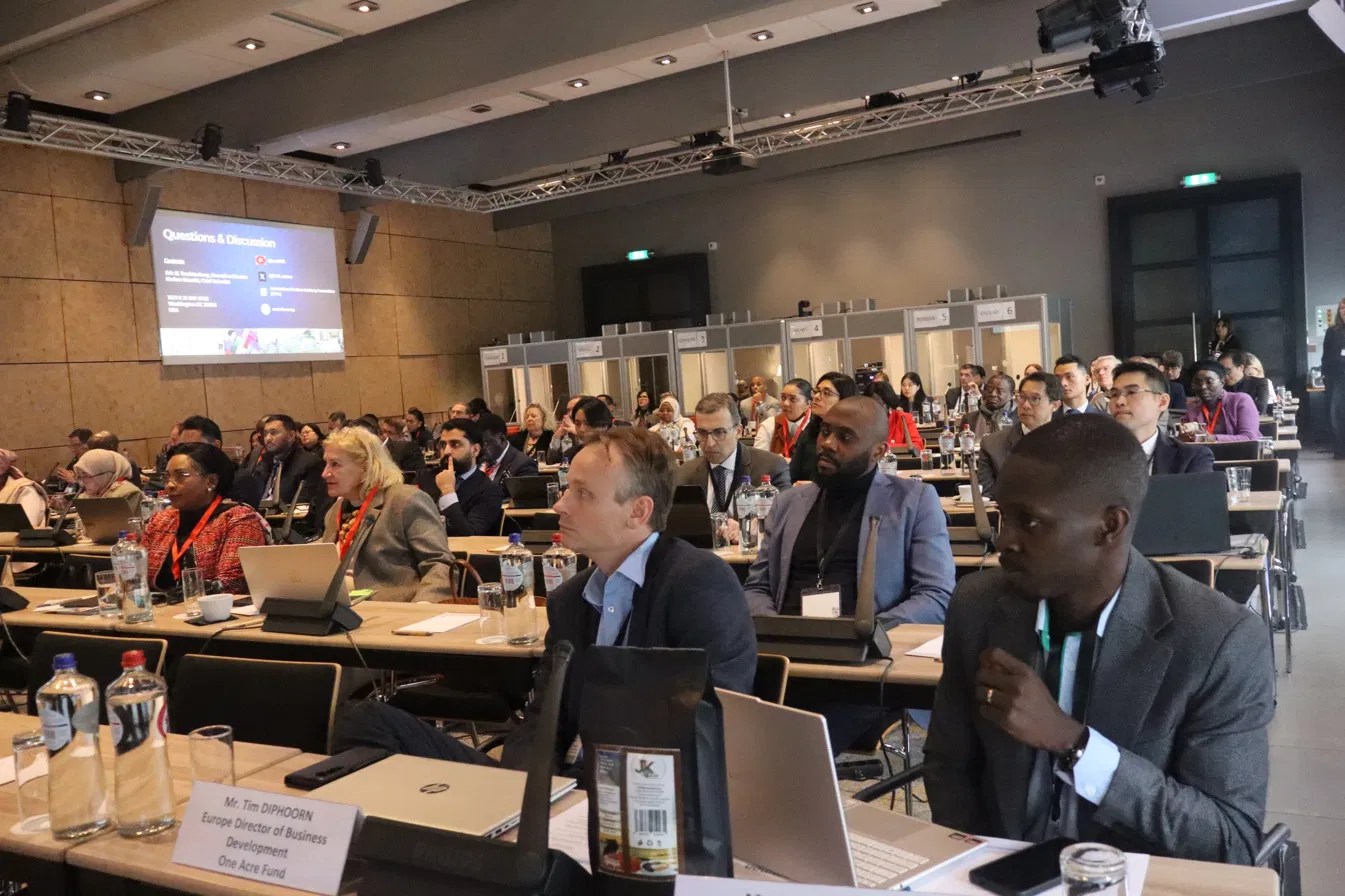
Discussions focused on ensuring that circular economy approaches do more than reduce waste and conserve resources. They should also generate economic value and ensure that a greater share of that value reaches the communities involved in producing the world’s commodities.
Building Fairer Global Value Chains
The event was chaired by H.E. Mr. Faiyaz Murshid Kazi, Ambassador of Bangladesh to the Netherlands.
In his introductory remarks, Ambassador Gerben de Jong, former Ambassador of the Netherlands to Bangladesh, recalled his experience with the establishment of the CFC and reflected on the lessons of the 2013 Rana Plaza collapse in Bangladesh. He stressed the importance of decent working conditions, fair wages and accountability in global supply chains. He also cautioned that increasing sustainability requirements should not place disproportionate burdens on producers in developing countries.
Delivering the keynote presentation, Mr. Eric Trachtenberg, Executive Director of the International Cotton Advisory Committee (ICAC), highlighted the importance of cotton to the livelihoods of approximately 24 million farmers worldwide, 43 per cent of whom are women. He identified opportunities to increase incomes through regenerative agriculture, local textile processing and South–South cooperation, particularly between African cotton-producing countries and textile-manufacturing countries such as Bangladesh. He also emphasised that sustainability standards and compliance costs should not prevent smallholders from accessing international markets. He noted that processing commodities in their countries of origin allows producers to retain a greater share of the value.

Experiences from Member States
Presentations from the Netherlands, Tanzania and Thailand illustrated how institutional support, market access and agricultural innovation can contribute to more inclusive commodity economies.
Drs. Heidy van der Ploeg of CBI Netherlands presented the organisation’s work supporting SMEs in developing countries seeking access to international markets. Through technical assistance, market intelligence and connections with European buyers, CBI helps businesses understand market requirements, adapt their products and establish commercial relationships. She also highlighted the importance of an enabling business environment for SMEs.
Mr. Asangye N. Bangu, Managing Director of Tanzania’s Warehouse Receipts Regulatory Board, introduced by H.E. Ambassador Caroline Kitana Chipeta, outlined the development of Tanzania’s warehouse receipt system, which received early support from the CFC in 1999. Today, the system facilitates structured trade in 18 commodities across 23 regions. Approximately 1.12 billion kilograms of produce were marketed through it during the 2025/26 financial year.
The system improves price transparency, facilitates access to finance and gives farmers greater flexibility in deciding when to sell their produce. In response to a question from the Chair about the wider adoption of this model, Tanzania and Kenya were identified as countries where the system is in operation. Tanzania’s experience also raised the question of how similar CFC-supported initiatives could be extended to other countries.
Dr. Songkhla Chulakasian, Minister (Agriculture) at the Royal Thai Embassy in Brussels, presented Thailand’s Sufficiency Economy Philosophy, developed by the late King Bhumibol Adulyadej (Rama IX). Based on moderation, reasonableness and prudence, guided by knowledge and morality, the philosophy encourages responsible decision-making and long-term economic resilience.
He illustrated its application through the experience of a rice farmer in Nakhon Sawan. Soil testing, crop rotation, the reuse of rice straw and locally developed organic preparations helped reduce agricultural waste, improve soil health and strengthen household resilience.
Coffee Production and Regenerative Agriculture
The contributions of private enterprises and development organisations demonstrated how local processing, farmer support and the reuse of agricultural by-products can translate into economic and environmental benefits.
Mr. Julius Kalulu, Founder and CEO of JKCC General Supplies Limited, described the growth of his Ugandan coffee-processing and export business, which expanded from an operation valued at approximately US$130,000 in 2017 to nearly US$79 million by 2026. The company now works with more than 14,000 farmers across 33 districts.
Through farmgate pricing, farmer training, local processing and regenerative agriculture initiatives, JKCC seeks to improve farmers’ earnings while restoring soil health. Its development illustrates the potential of adding value closer to the source of production.
Mr. Tim Diphoorn, Europe Director of Business Development at One Acre Fund, presented examples of circular agriculture in Africa. These included converting avocado-processing waste into organic fertiliser in Rwanda and agricultural residues into biochar in Kenya. Such practices turn by-products into useful resources, reducing waste while improving soil conditions and creating additional economic opportunities.

Bangladesh Showcases the Potential of Jute
Alongside the discussions, the Embassy of Bangladesh organised a jute exhibition at the venue, presenting the versatility of this natural fibre.
Biodegradable, renewable and recyclable, jute offers alternatives to synthetic materials in applications including packaging and textiles. The exhibition also highlighted Bangladesh’s longstanding tradition of jute production and opportunities for developing higher-value products.
Linking Sustainability with Workers’ Livelihoods
In his closing remarks, Ambassador Sheikh Mohammed Belal, Managing Director of the CFC, called for commodity value chains that use resources efficiently while ensuring that producing communities retain a greater share of the economic benefits. He underlined the need for affordable finance and technical assistance to support regenerative agriculture, local processing and fair market access.
Referring to wage protests in Bangladesh’s garment sector, he observed that factories may receive larger orders while earning less per garment, restricting their capacity to increase workers’ wages. Citing the report Squeezed Dry, published by Public Eye and the Clean Clothes Campaign, he recalled its conclusion: “Sourcing prices are the bottleneck for better wages.”
He called for sustainability audits to examine the relationship between brands’ wage commitments, the prices paid to suppliers and the wages ultimately received by workers.
Ambassador Belal concluded that circular economy policies must address environmental sustainability and poverty reduction together. He thanked the Embassy of Bangladesh for co-hosting the event and acknowledged the contributions of the speakers and participants.