

By Silas Cooper
Looking ahead to 2026, the country’s economic trajectory is shaped by the convergence of tourism recovery, maritime expansion, and fiscal recalibration. For European stakeholders assessing Caribbean engagement, key considerations include macroeconomic stability, climate vulnerability, demand concentration, security perception, and infrastructure capacity. The Bahamas presents a distinctive case: a tourism-driven economy reinforced by strategic maritime positioning, close proximity to the United States, and a long-standing tax-neutral framework.
Positioned along critical Atlantic routes and deeply integrated into North American travel flows, The Bahamas occupies a unique role within the wider transatlantic economic space. As European actors seek diversified partnerships in the Caribbean, the country offers a combination of established demand, geographic advantage, and evolving fiscal discipline.
Tourism as a Structural Economic Anchor
Tourism remains the central pillar of the Bahamian economy, contributing approximately 50–60% of GDP and accounting for the majority of foreign exchange earnings. Visitor numbers have rebounded strongly in the post-pandemic period, supported by sustained cruise growth and stable stopover demand.
The country’s proximity to Florida, extensive airlift connectivity, and mature resort infrastructure continue to underpin its competitive position within the Caribbean. This dynamic reflects not short-term recovery, but structural demand rooted in geography, income levels, and established travel patterns.
Beyond hospitality, tourism activity supports a broader ecosystem of services, including marina operations, cruise-linked retail, logistics, and security infrastructure, creating layered economic value across multiple sectors.
Maritime Positioning and Atlantic Connectivity
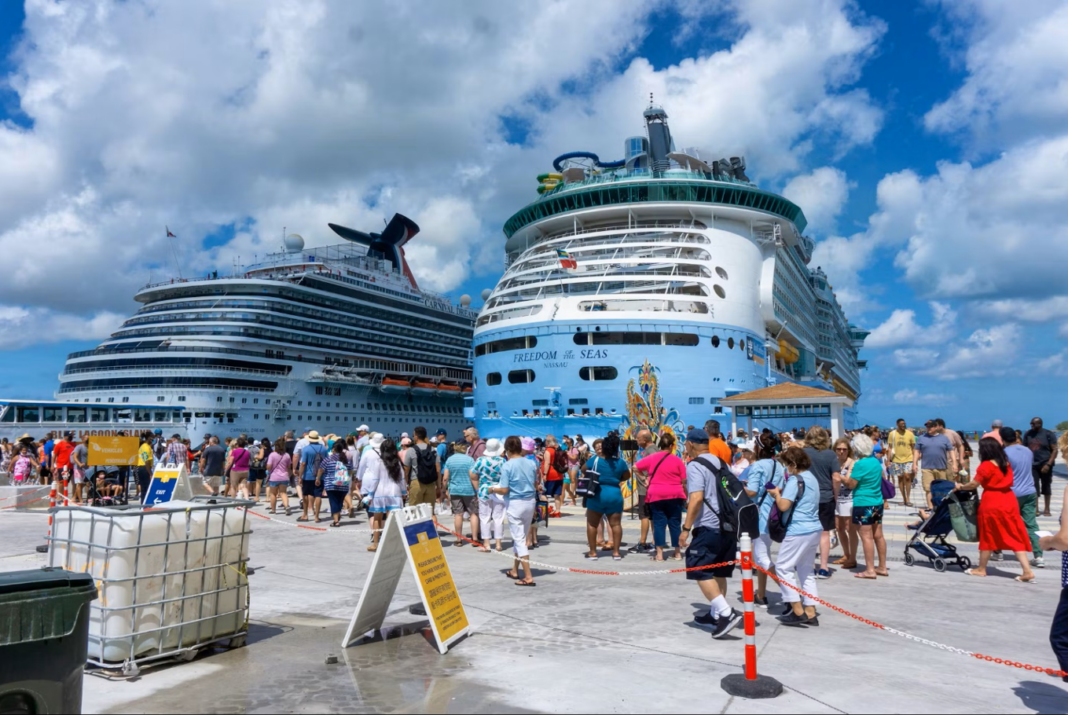
In parallel with its tourism sector, The Bahamas holds a strategic position along major Atlantic shipping and cruise corridors. Key hubs such as Nassau and Freeport serve as important nodes for cruise throughput, container transshipment, and maritime services.
Ongoing port redevelopment and capacity expansion reflect confidence in long-term growth in both passenger and cargo flows. These developments extend the country’s economic relevance beyond tourism, reinforcing its role within regional logistics networks and global maritime trade.
For European stakeholders, this position aligns with broader interests in secure, efficient Atlantic supply chains and resilient port infrastructure.
Fiscal Adjustment and Macroeconomic Direction
Public debt rose significantly in the aftermath of Hurricane Dorian and the COVID-19 pandemic. However, recent assessments by the International Monetary Fund indicate a return to fiscal consolidation, including primary surplus recovery and improved debt management.
Although debt-to-GDP levels remain elevated, the overall trajectory has stabilized. The direction of fiscal policy, characterized by gradual adjustment and institutional commitment, suggests a framework of managed recovery rather than systemic imbalance.
This evolving macroeconomic environment reflects a broader effort to strengthen credibility and maintain investor confidence while supporting long-term growth.
Transatlantic Demand and Market Concentration
Tourism flows remain heavily linked to the United States, reflecting geographic proximity, strong transport connectivity, and longstanding economic ties. While this concentration introduces exposure to U.S. economic cycles, it also provides a stable and predictable demand base.
Short travel times and high disposable income among U.S. travelers continue to support premium positioning within the hospitality sector. Historically, this corridor has underpinned consistent visitor volumes and maritime activity, reinforcing the resilience of the tourism model.
At the same time, there is gradual scope for diversification, particularly through targeted engagement with European and other international markets.
Climate Risk and Resilience Strategy
As a low-lying archipelago, The Bahamas faces significant exposure to hurricanes, sea-level rise, and climate-related infrastructure stress. These risks are structural and must be incorporated into long-term planning and development strategies.
In response, resilience has become increasingly embedded in national policy and investment frameworks. Climate adaptation financing, infrastructure reinforcement, and sustainability-focused redevelopment are gaining momentum, supported in part by international partnerships, including those with institutions such as the World Bank.
This evolving approach positions resilience not only as a necessity, but as a defining feature of future development across tourism and maritime infrastructure.
Security Perception and Economic Performance
Security concerns, particularly in urban areas such as Nassau, continue to feature in international discourse. However, tourism data indicates that visitor growth has remained resilient despite periodic negative perceptions.
Tourism zones and major resort areas typically operate with structured security frameworks and coordinated oversight. This distinction between national perception and sector-specific performance highlights the importance of localized, asset-level analysis.
Effective security integration remains a central component of sustaining confidence and ensuring operational continuity within key economic zones.
Infrastructure Capacity and Growth Pressures
Rising visitor volumes and expanding cruise operations have increased pressure on ports, airports, utilities, and urban infrastructure. While this presents operational challenges, it also reflects underlying demand strength.
Managing this growth will require continued investment in capacity expansion, modernization, and sustainability. Areas such as port development, transport systems, marina infrastructure, and energy integration represent important avenues for future development.
In this context, infrastructure pressure signals economic momentum, provided it is matched by coordinated planning and investment.
Strategic Outlook
The Bahamas occupies a distinctive position at the intersection of tourism-driven liquidity and maritime connectivity. Its role within Atlantic travel and trade routes, combined with ongoing fiscal adjustment and resilience planning, reinforces its relevance in a shifting global economic landscape.
For European partners, the country offers a platform for deeper engagement in sectors linked to infrastructure, sustainability, and services supporting international mobility and trade.
The Bahamas does not present a risk-free environment. However, it offers a combination of structural demand, geographic advantage, and policy evolution that distinguishes it within the Caribbean. As global attention increasingly turns toward resilient infrastructure, sustainable tourism, and secure maritime networks, The Bahamas is positioned to remain an important node within both regional and transatlantic systems.
About the author
Silas Cooper is Honorary Consul of the Commonwealth of The Bahamas in the Netherlands, focusing on economic diplomacy, bilateral relations, and strategic investment engagement.