
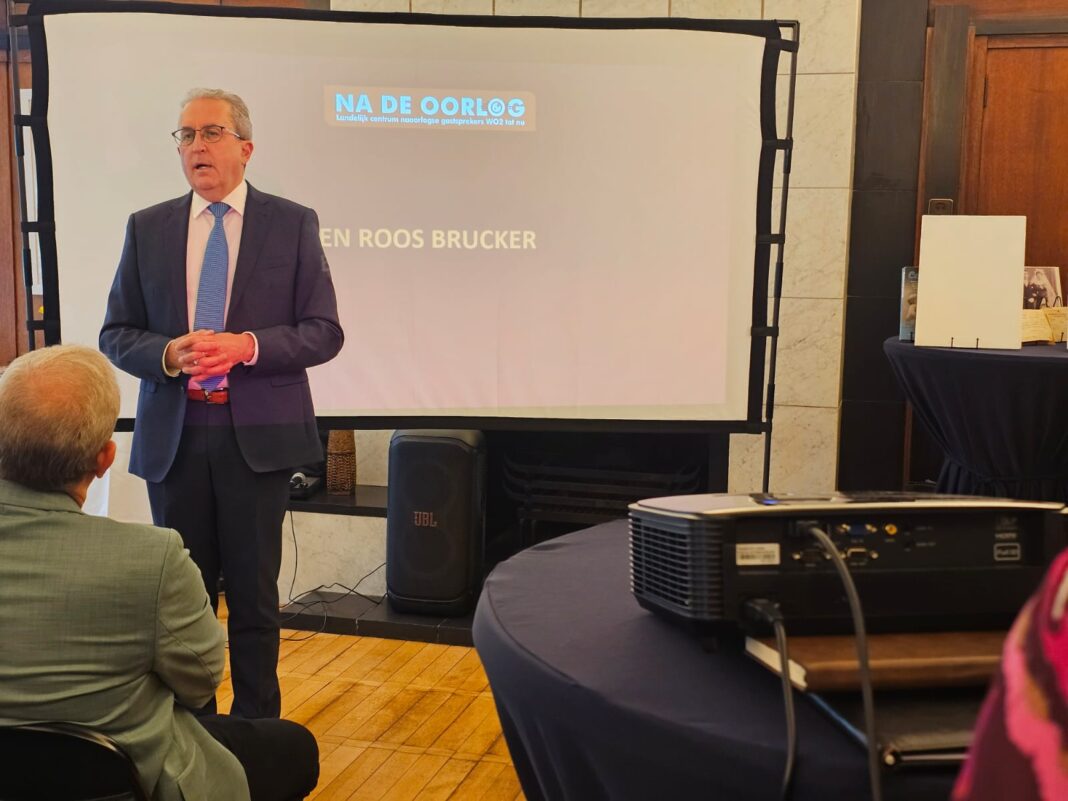

The Ambassador of the State of Israel to the Netherlands, H.E. Mr. Zvi Aviram Vapni, hosted a Zikaron BaSalon commemoration at his residence, attended by ambassadors, members of parliament, representatives of various organizations, and friends of Israel who gathered to reflect on personal histories and collective memory.
Zikaron BaSalon, meaning “Remembrance in the Living Room,” was founded in Jerusalem in 2011 with the aim of creating a more intimate and meaningful form of Holocaust remembrance. By bringing Holocaust testimonies into homes and small gatherings, the initiative encourages open dialogue and personal engagement with history.
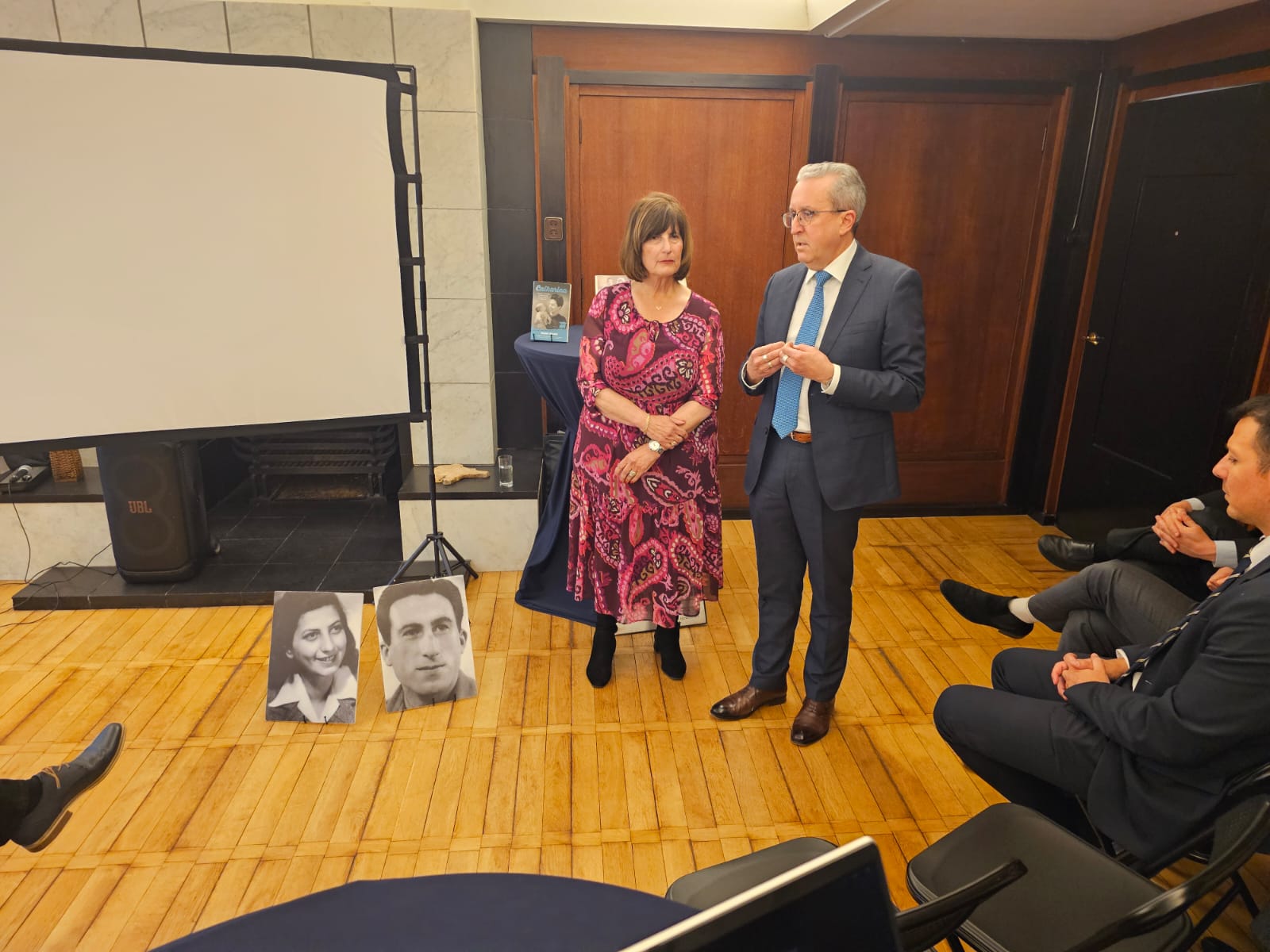
The evening featured the testimony of Ellen Roos Brucker, daughter of Holocaust survivors, who shared the remarkable story of her parents’ survival during the Second World War. Separated during the Holocaust, they were reunited after liberation and went on to rebuild their lives and raise a family.
“In this dignified and intimate setting, we honour the memory of the victims of the Nazi regime and reaffirm our shared commitment to preserving their stories and passing them on to future generations,” Ambassador Vapni said.
Reflecting on the origins of the initiative, the Ambassador emphasized the need to find new ways of remembering the Holocaust as the number of living survivors continues to decline.
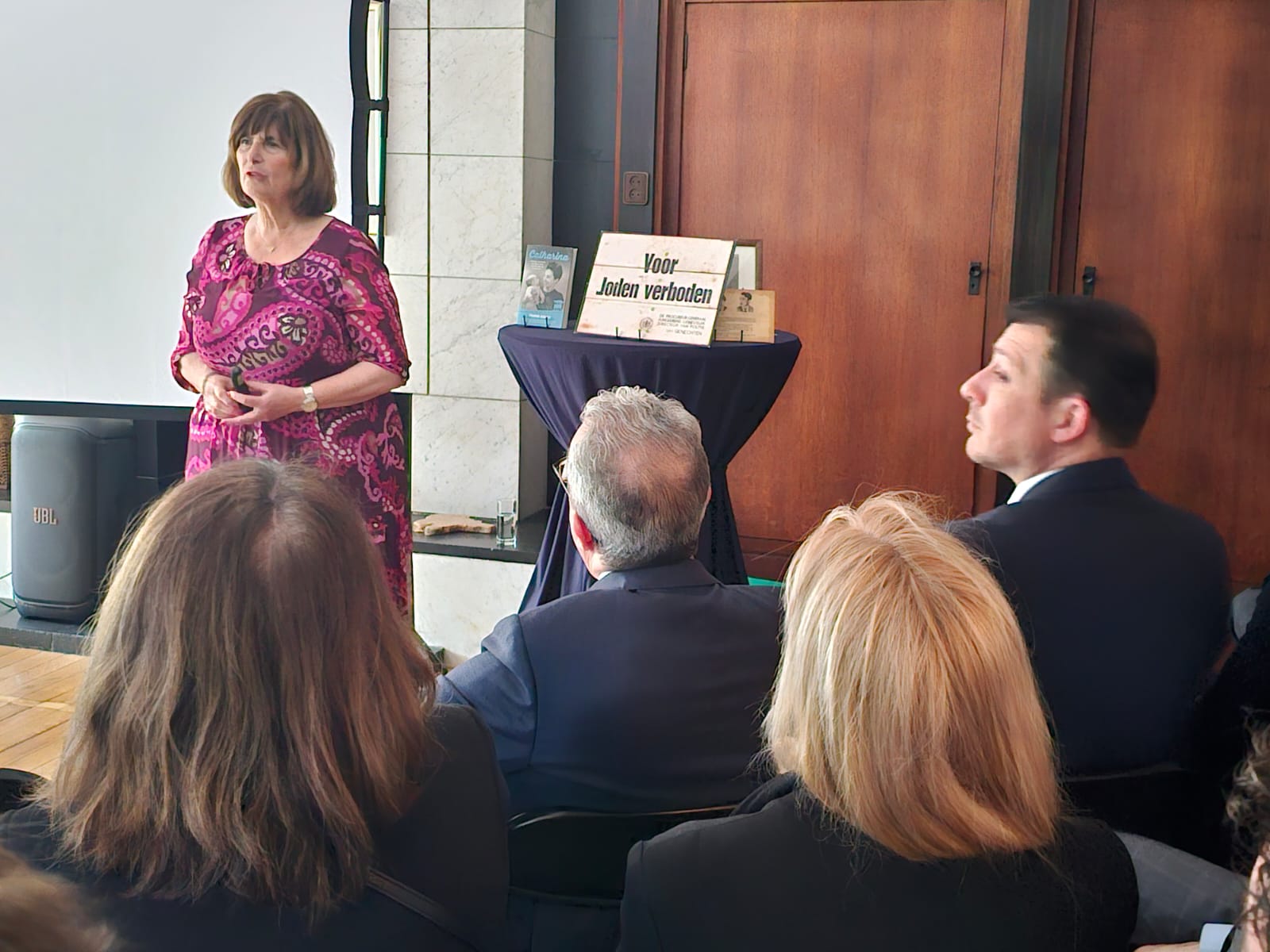
“This initiative began with a simple idea: how can we add another layer to Holocaust remembrance? Survivors are becoming fewer every year, and the Holocaust is moving further away in time. We must find new ways to keep these stories alive,” he noted.
The concept behind Zikaron BaSalon is to create an informal environment where participants can listen to survivors or their descendants, ask questions, view photographs, and engage in meaningful conversations about memory and history.
Since its establishment, the initiative has grown into a global movement. Today, more than two million people worldwide participate in Zikaron BaSalon events, held in private homes, community centres, educational institutions, and diplomatic missions.
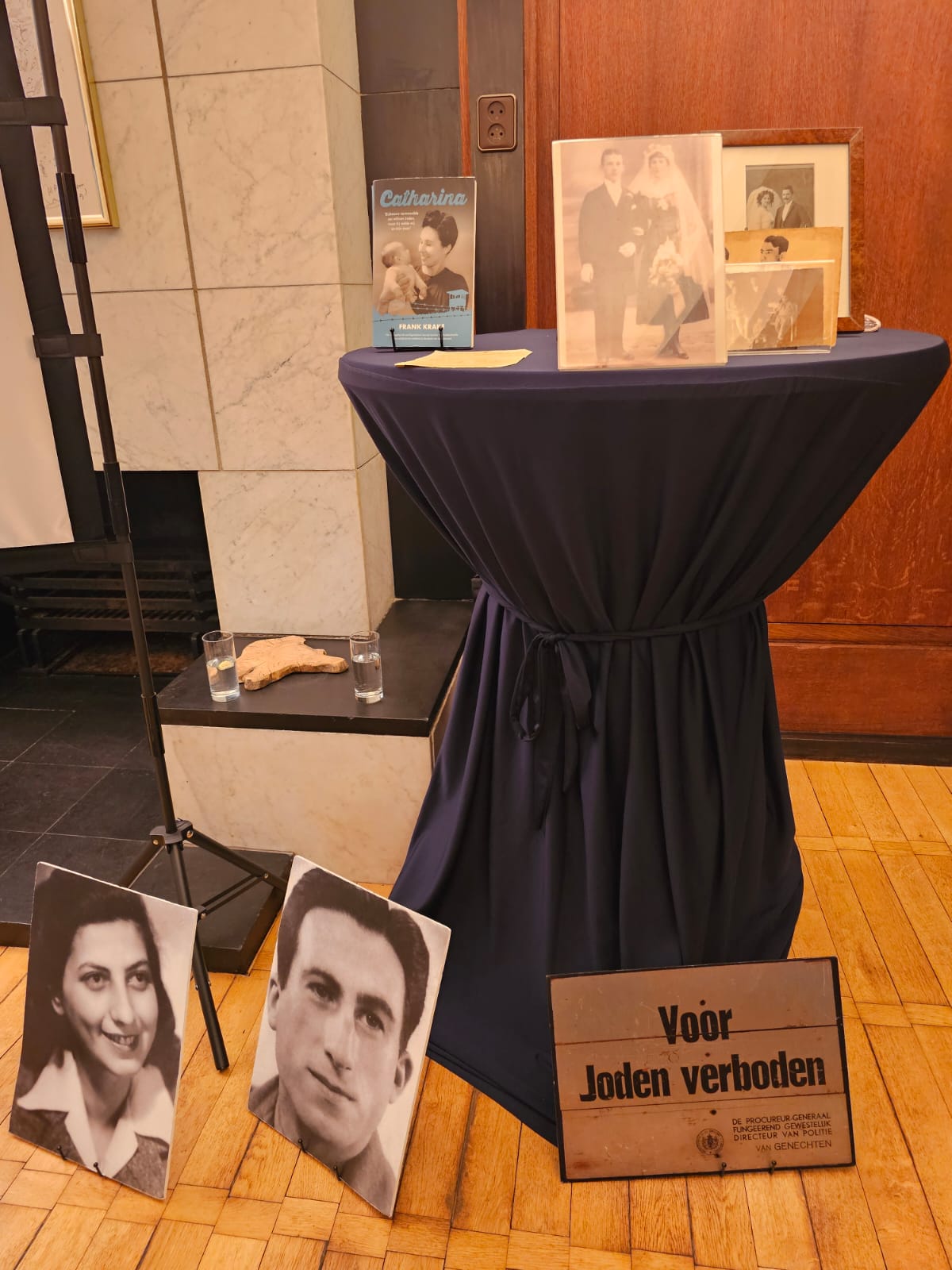
Ambassador Vapni also highlighted the important role of the second generation in preserving Holocaust memory.
“Many survivors found it difficult to speak openly about their experiences. Their children grew up carrying the weight of stories that were often only partially told. As fewer survivors remain with us, the responsibility of remembrance increasingly rests with the next generations,” he said.
Ms. Brocker’s testimony offered a poignant example of that responsibility. Through her parents’ experiences and her own recollections, she demonstrated how personal stories continue to connect present and future generations with one of history’s darkest chapters.
The commemoration concluded with a shared commitment to ensuring that the lessons of the Holocaust remain relevant and that the memories of its victims and survivors continue to be preserved for generations to come.