
The first historical Royal Palace of modern Greece, where Cultural and Political Diplomacy meet
By Eleni Vasiliki Bampaliouta
How has cultural diplomacy embraced Greece’s political diplomacy under the same roof for nearly two centuries? In the heart of Athens, just a few steps from Syntagma Square, stands a place where history is not merely displayed behind glass cases—it continues to live. The Athens City Museum is far more than a museum dedicated to the political, social, and urban evolution of the Greek capital. It is the building where the newly established Greek state first came to life: the original royal residence of King Otto and Queen Amalia, where the first political decisions of modern Greece were made and the foundations of the modern Greek nation were laid.
Nearly two centuries later, this historic site continues to serve as a meeting point between Greece’s political and cultural history and the present day. Through its collections, international partnerships, digital applications, and educational initiatives, the Museum demonstrates that cultural diplomacy is not merely an abstract concept but a living instrument that connects peoples, cities, and cultures. Political history, the urban development of Athens, and the contemporary museum experience coexist within a space that is rightly regarded as one of the capital’s best-kept cultural treasures.

Where the Heart of the Greek State First Beat
The Athens City Museum – Vouros-Eutaxias Foundation was established in 1973 by the politician and collector Lambros I. Eutaxias, who chose to honor both his own name and that of his uncle, the distinguished diplomat Alexandros Vouros. Housed in two of the oldest surviving buildings in the historic center of Athens, the Museum opened its doors to the public in 1980.
Dedicated to the historical evolution of Athens, the Museum presents documentary evidence spanning from the Frankish period to the early twentieth century. Its core collections focus on the nineteenth century, when Athens, designated the capital of the newly established Greek state in 1834, emerged as an important political, social, cultural, and urban center.
Through paintings, sculptures, furniture, everyday objects, rare books, manuscripts, and archival documents, visitors can follow the city’s transformation across successive decades, tracing the changing lives of its inhabitants alongside the development of modern Athens itself. In recognition of its outstanding contribution to preserving and promoting the history of Athens—including its modern urban heritage—the Museum received an award from the Academy of Athens in 1990.
The older of the Museum’s two buildings was constructed between 1833 and 1834 according to the designs of architects Gustav-Adolph Lueders and Joseph Hoffer as the residence of the banker Stamatios Dekozis Vouros, the great-grandfather of Lambros Eutaxias.
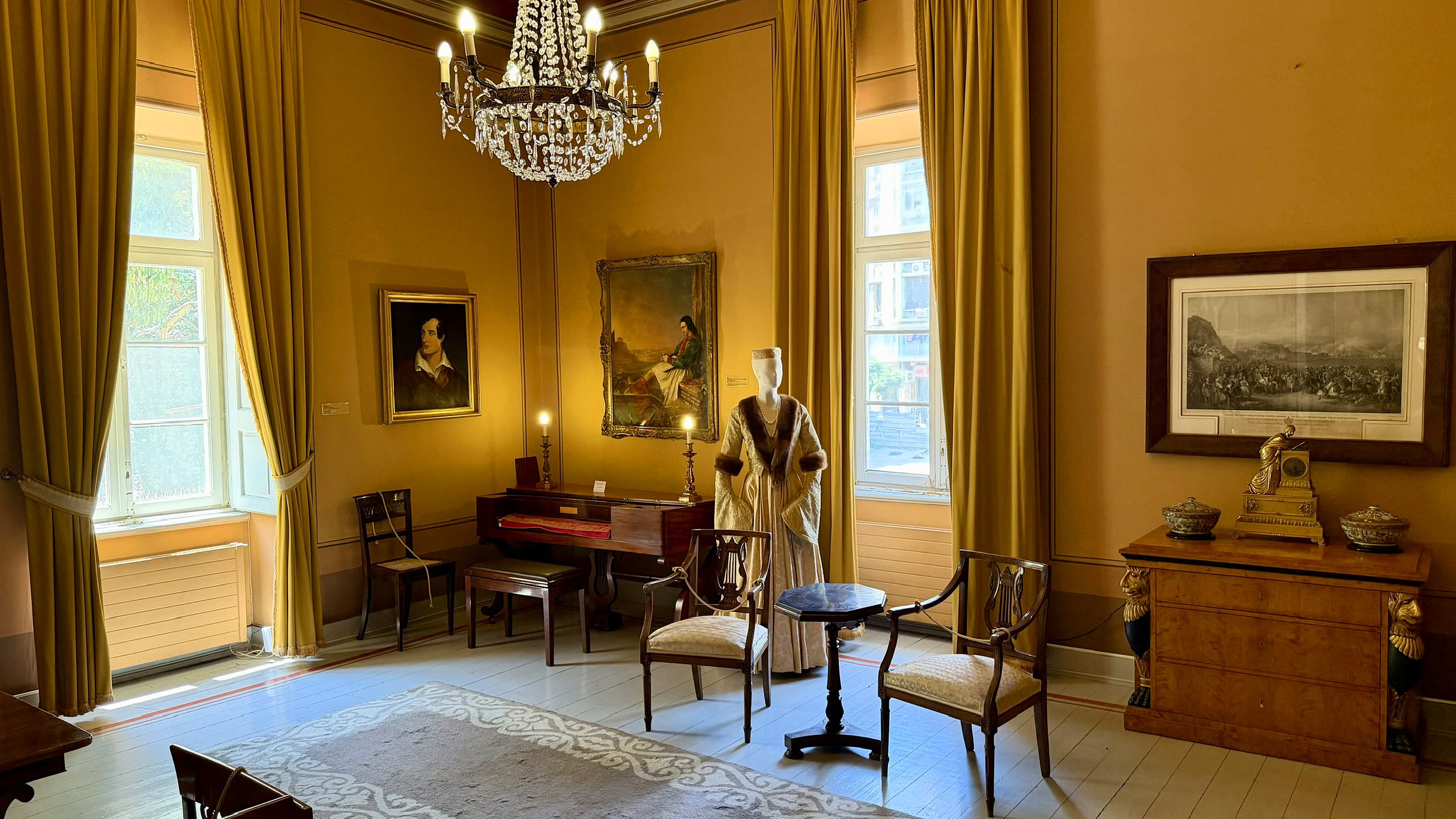
This historic building occupies a unique place in both Athenian and Greek history. Together with an adjoining residence, it was leased to serve as the royal palace of Greece’s first monarchs, King Otto and Queen Amalia, from 1837 until the spring of 1843, when the newly completed Royal Palace—today’s Hellenic Parliament—became the royal residence.
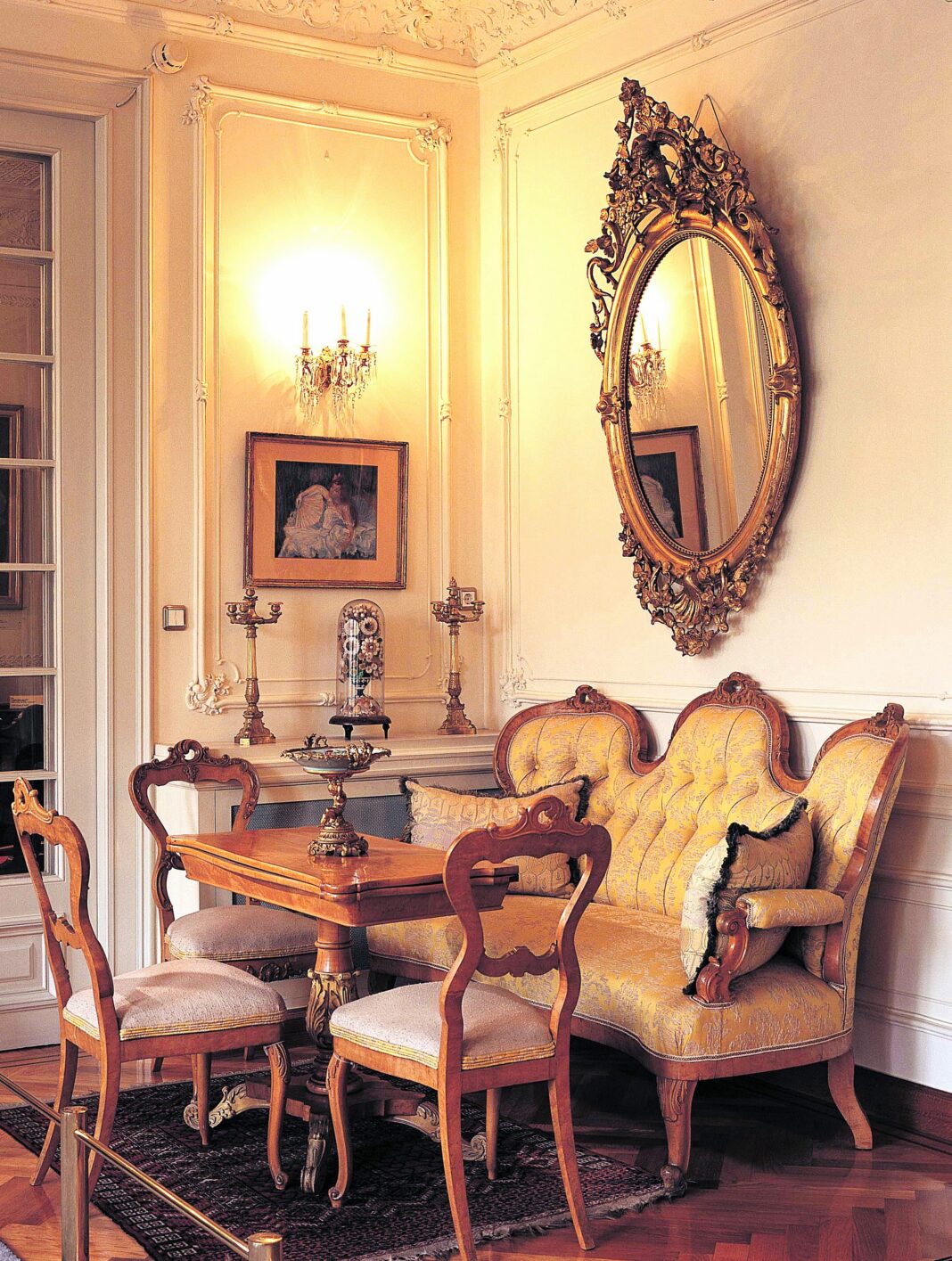
Known today as the Old Palace, the building features a lush garden at the rear and preserves an exceptional collection of personal belongings and furnishings associated with the royal couple, including King Otto’s reception salon, Queen Amalia’s piano, and numerous other objects that vividly evoke the atmosphere of the period.
The Museum’s second building, completed in 1859 and internally connected to the Old Palace, houses works of art, period furniture, and decorative objects belonging to the Vouros family and other prominent Athenian bourgeois families. Together, these collections illustrate the evolution of urban life and bourgeois culture in Athens during the nineteenth and early twentieth centuries.
Athens’ Cultural Ambassador: A Museum in Dialogue with the World’s Leading City Museums
The Athens City Museum has established a distinguished position within the international museum community through its longstanding commitment to international collaboration and cultural exchange. A significant milestone was reached in 2005, when the Museum became one of the founding members of the International Committee for the Collections and Activities of Museums of Cities (CAMOC) in Moscow, alongside the city museums of London, Moscow, and New York.
CAMOC is one of the specialized international committees of the International Council of Museums (ICOM) and serves as a global platform for museums dedicated to urban history and culture. Its mission is to strengthen the role of city museums in preserving historical memory, interpreting contemporary social developments, and contributing to the sustainable future of cities around the world.
Through its active participation in this international network, the Athens City Museum continues to promote the history of Athens while fostering dialogue with institutions that share a common commitment to preserving and interpreting urban heritage.

Polykarpos Kominis: “The History of Athens Can Become the Strongest Form of Cultural Diplomacy”
For the past year, Polykarpos Kominis has served as Director of the Athens City Museum. Born in Athens in 1994, he belongs to a new generation of museum professionals who combine academic excellence with extensive experience in cultural heritage management, archaeology, and cultural diplomacy.
He graduated with highest honors from the Department of Social Policy at Panteion University of Social and Political Sciences in 2017 and subsequently earned a second degree from the Department of History and Archaeology of the National and Kapodistrian University of Athens, specializing in Archaeology and History of Art (2021).
In 2025, he completed a Master’s degree in Monument Management at the National and Kapodistrian University of Athens, specializing in the protection, management, and promotion of cultural heritage.
His professional career reflects an interdisciplinary approach that bridges archaeology, museum studies, diplomacy, and public history.
He served at the Permanent Delegation of Greece to UNESCO in Paris, where he worked on matters relating to World Cultural and Natural Heritage. He later joined the Directorate for Educational and Cultural Affairs (E1) of the Diplomatic Academy of the Hellenic Ministry of Foreign Affairs, focusing on issues of cultural diplomacy and international cultural relations.
He has also worked at the Numismatic Museum of Athens, contributing to the identification, documentation, and cataloguing of archaeological material.
As an archaeologist, he served at the Holy and Great Monastery of Vatopedi on Mount Athos, where he supervised archaeological excavations and rescue excavations associated with the preservation of cultural heritage.
In 2024, he joined the Parliamentary Archives Department of the Library of the Hellenic Parliament, where he worked on archival documentation and the development of educational and museological programmes.
During his military service, he was assigned to the Historical Archives and Publications Office of the Hellenic Air Force History Museum, contributing to the preservation and documentation of military historical records.
He has also participated in archaeological excavations at Ancient Tenea in Corinthia and in Rafina, while remaining actively engaged in research and heritage management projects.
Fluent in both English and French, he has served as Director of the Athens City Museum – Vouros-Eutaxias Foundation since October 2025.
Leading a Historic Institution into a New Era
In the following interview at the Diplomat Magazine of Netherlands, Polykarpos Kominis discusses the Museum’s unique identity, its role within the international museum community, the challenges facing museums in the twenty-first century, and his vision of transforming one of Athens’ most historic landmarks into a vibrant centre for culture, education, innovation, and international dialogue.
1. How does the Athens City Museum connect the history of political and cultural diplomacy with the history of the Greek nation?
The establishment of the modern Greek state through the London Protocol of 1830, together with the selection of Prince Otto of Bavaria, a member of the House of Wittelsbach, as the first King of Greece by the Great Powers of the time—Great Britain, France, and Russia—constituted the first formal act of international diplomacy recognizing Greece as an independent kingdom. This historic decision laid the foundations for the country’s future diplomatic relations with Europe and the wider international community.
As the official residence of King Otto and Queen Amalia, the building that now houses the Athens City Museum occupies a unique place in the history of the Greek state. It served as the first political and administrative centre of the newly established Kingdom of Greece, where the country’s earliest governmental decisions were made and the institutions of the modern state began to take shape.
King Otto maintained close diplomatic relations with the royal courts of Europe, regularly receiving diplomats and ambassadors in the Throne Room—today one of the Museum’s most significant historic spaces. His reign sought to align Greece with the dominant political models of nineteenth-century Europe while simultaneously promoting the country’s rich cultural heritage, which continued to inspire European intellectual and artistic circles through the flourishing Philhellenic movement.
Queen Amalia, meanwhile, developed a remarkable passion for landscape design, botany, and horticulture. One of her first initiatives was the creation of the gardens surrounding the royal residence, including the landscaped square in front of the palace—today’s Klafthmonos Square, then known as Palace Square—as well as the private royal garden at the rear of the building.
It was in these gardens that the anniversary of the Greek War of Independence was officially celebrated for the first time on 25 March 1838, following King Otto’s decree establishing the date as Greece’s national holiday.
To enrich her gardens, Queen Amalia imported both native and exotic plant species from countries including Italy, Egypt, Lebanon, Brazil, and the United States. Many of these specimens were presented to her as diplomatic gifts by foreign monarchs, giving rise to what could be described as an early and informal form of “plant diplomacy”—a symbolic exchange in which botanical collections became instruments of international goodwill and cultural exchange.
The royal couple also left a lasting mark on nineteenth-century fashion and court culture. They consciously incorporated elements of traditional Greek dress into the royal court’s ceremonial attire while blending them with contemporary Western European styles. The most celebrated example remains the elegant court costume introduced by Queen Amalia, which became an enduring symbol of the newly established Greek monarchy and of the country’s evolving national identity.
2. What role does the Athens City Museum play within the international museum community, and how has it contributed to it? Has the Museum collaborated with comparable institutions abroad?
The Athens City Museum plays a significant role within the international museum community thanks to its long-standing commitment to international cooperation and professional exchange.
A defining milestone came in 2005 in Moscow, when the Museum became one of the founding members of the International Committee for the Collections and Activities of Museums of Cities (CAMOC), together with the city museums of London, Moscow, and New York. CAMOC is one of the specialised international committees of the International Council of Museums (ICOM) and serves as a global forum for museums devoted to the history and development of cities.
Its mission extends beyond preserving urban history. CAMOC encourages museums to interpret the social transformations shaping contemporary cities while contributing to their sustainable future through research, dialogue, and public engagement.
Within this framework, the Athens City Museum maintains an active presence at international conferences and professional meetings, keeping pace with developments in museum studies while sharing its own expertise and experience with colleagues from around the world.
The Museum has also developed an extensive network of international partnerships through exhibition exchanges and collaborative projects with city museums abroad. Reciprocal temporary exhibitions have been organised with the city museums of Moscow, Warsaw, Düsseldorf, and Nicosia, while professional exchange visits have taken place with the city museums of Seoul and Shanghai.
These collaborations have enabled important works from the Museum’s collections—including historical documents, paintings, and artefacts—to travel abroad for temporary exhibitions, introducing international audiences to the history of Athens and the formation of the modern Greek state.
At the same time, these exchanges offer residents and visitors of Athens the opportunity to discover the history, culture, and urban identity of other great cities around the world, encouraging intercultural dialogue through museum collections.
Beyond exhibitions, the Museum regularly organises conferences, scholarly symposia, lectures, book presentations, and musical performances. Through these initiatives, it promotes not only Greek cultural heritage but also the artistic traditions, histories, and contemporary cultures of other cities and nations, reinforcing its role as an active institution of cultural diplomacy.
3. Does the Museum offer interactive educational programmes? If so, what do they involve?
Education has always been one of the Athens City Museum’s core missions. Today, the Museum is particularly well known for its diverse range of interactive educational programmes, which combine digital technologies with objects from its permanent collections to introduce young visitors to the history of modern Athens through experiential learning.
Among the most popular is “The Pirates of Monfort,” inspired by the 1837 painting Greek Pirates by the French artist Antoine-Alphonse Montfort. Using the painting as a starting point, children explore the phenomenon of piracy from antiquity to the present day, compare the finished work with the artist’s preparatory sketches, and then embark on an interactive treasure hunt throughout the Museum’s galleries.
Another highly successful programme is “The Constitution of 1844,” centred on the Museum’s handwritten copy of Greece’s first Constitution, one of the most significant documents relating to the organisation of the modern Greek state. Participants examine its principal provisions before comparing them with those of Greece’s current Constitution, encouraging discussion about democracy, citizenship, and constitutional development.
The Museum also offers “Carnival in Greece,” inspired by the celebrated painting of the same title by Nikolaos Gyzis. Through this programme, students become acquainted with the artist, discover the customs and traditions of the Greek Carnival, and participate in a theatrical interpretation of the painting, transforming a work of art into a lively educational experience.
One of the Museum’s most innovative and socially relevant initiatives is “I Am Not a Doll” (IamNotADoll), an educational programme built around a series of six contemporary sculptures. These artworks invite children to interact with them by creating drawings or writing messages, encouraging empathy and creative expression.
The programme is inspired by the United Nations Sustainable Development Goals, particularly SDG 5 (Gender Equality) and SDG 16.2 (Ending Violence Against Children), while also drawing upon the principles of the Universal Declaration of Human Rights. Its aim is to raise children’s awareness of violence, discrimination, and harmful social practices, fostering respect, equality, and human dignity from an early age.
The Museum also offers younger visitors, aged six to fourteen, the opportunity to wear meticulously reproduced costumes of King Otto and Queen Amalia and to be photographed within the historic interiors of Greece’s first royal palace. This immersive experience enables children to engage with history in a memorable and enjoyable way.
4. How has the Museum incorporated new technologies into its exhibitions? Can visitors also explore the Museum digitally?
Over the past decade, digital technologies have transformed museums worldwide, reshaping how collections are interpreted and responding to the evolving expectations of contemporary audiences.
In keeping with these developments, the Athens City Museum has embraced digital innovation to enrich the visitor experience through immersive, multi-sensory interpretation.
One of its most remarkable digital installations is a three-dimensional virtual reconstruction of Athens in 1842, developed from an exceptionally detailed historical scale model of the city.
Through interactive visualisations, visitors can explore the most important monuments and buildings of ancient, Byzantine, and nineteenth-century Athens while learning about their historical significance. The application enables audiences to experience the city as it appeared during King Otto’s reign, discovering its public buildings, private residences, streets, and historic squares through an engaging combination of three-dimensional animation and historical interpretation.
Within King Otto’s historic reception salon in the Old Palace, visitors encounter another innovative digital experience. Using advanced projection technologies and animated “living paintings,” life-sized three-dimensional holographic representations of King Otto and Queen Amalia appear before them.
Queen Amalia reads excerpts from one of her letters describing everyday life in nineteenth-century Athens, while King Otto is shown reading his newspaper, creating the impression that the royal residence remains alive and inhabited.
The experience continues in the dining room of the Vouros residence, where visitors meet a holographic representation of Lambros Eutaxias, founder of the Museum. Presented at life size, the digital figure comes to life, recounting his own story as well as the history and mission of the institution he created.
The Museum’s commitment to accessibility also extends beyond its physical walls. Through its official website, visitors anywhere in the world can enjoy a 360-degree virtual tour, exploring the galleries digitally, examining selected objects from the permanent collections in high resolution, and learning about their historical context.
This online experience makes the Museum accessible to individuals who may be unable to visit in person due to distance or health considerations, while also allowing prospective visitors to familiarise themselves with the collections before arriving in Athens.
In addition, the website hosts an interactive digital timeline covering the history of Athens between 1921 and 1941, presenting the most significant political, social, and cultural events of this pivotal period in chronological order.
5. You assumed the directorship of the Museum in 2025 at the age of just thirty-two, following an impressive academic and professional career. What are the challenges of leading an institution with such a distinguished history, and what is your vision for its future?
Leading a museum of such historical significance is both an immense honour and a profound responsibility—particularly for someone of my generation. It requires respect for the institution’s legacy, for the work of those who came before me, and for the vision of its founder, while at the same time developing a new strategic direction capable of responding to the challenges of the twenty-first century.
One of our foremost priorities is digital transformation: reimagining a traditional museum as a dynamic, interactive cultural hub that appeals to younger generations without ever compromising scholarly integrity or historical authenticity.
At the same time, global challenges—including economic uncertainty and the growing demand for sustainable cultural institutions—require museums to rethink both their financial resilience and their environmental and social responsibilities.
Perhaps my greatest personal challenge is demonstrating that youth should never be equated with inexperience. On the contrary, it can bring fresh perspectives, creativity, and the courage to rethink established practices. I hope to challenge long-standing stereotypes, encourage confidence in younger professionals, and create opportunities for them to develop their ideas, fulfil their potential, and contribute meaningfully to society.
My academic studies and professional experience in Greece and abroad have given me an international perspective on the transformative role that culture can play in contemporary societies. My specialisation in Monument Management has provided the foundations for directing a historic institution such as the Athens City Museum, a protected heritage monument whose collections tell not only the history of a city but also the everyday stories, memories, and lived experiences of its people.
Too often, city museums become confined to nostalgia. My ambition is to move beyond a static presentation of the past and transform the Museum into a living institution at the heart of contemporary Athens—one that demonstrates how nineteenth-century architecture, urban life, and everyday customs have shaped the identity of today’s city and its inhabitants.
My vision extends beyond preserving the Museum’s remarkable heritage. I want the Athens City Museum to become a leading international destination for anyone seeking to understand the history of Athens and the people who have shaped it.
I firmly believe that the history of Athens can become one of Greece’s most powerful instruments of cultural diplomacy.
Digital technologies—including augmented reality, interactive exhibitions, and innovative educational programmes for children and young people—allow us to present the past in ways that resonate with contemporary audiences, transforming historical knowledge into personal experience.
Equally important is strengthening the Museum’s international presence through strategic partnerships, travelling exhibitions, collaborative research projects, and long-term cooperation with leading cultural institutions across the world.
Local heritage has the power to acquire global significance. The story of Athens deserves to enter into dialogue with the histories of the world’s other great cities.
Ultimately, I envision an open, inclusive museum where residents and visitors alike—regardless of age, background, or ability—can engage freely with history and culture.
Museums derive their true value only when they remain connected to the people they serve. That is precisely the connection I hope to strengthen in Athens.
My age is not an obstacle; it is my greatest advantage. It gives me the energy to view challenges as opportunities and the determination to build a bridge between the Museum’s remarkable past and an ambitious, internationally connected future.