

By Matti Below, Sofie Babaian, and Kira Berger
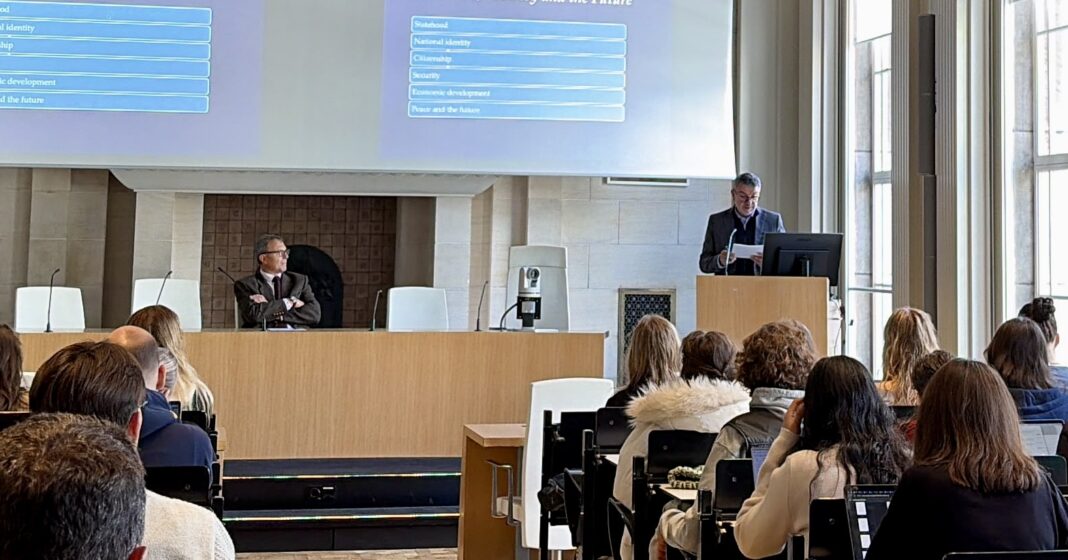
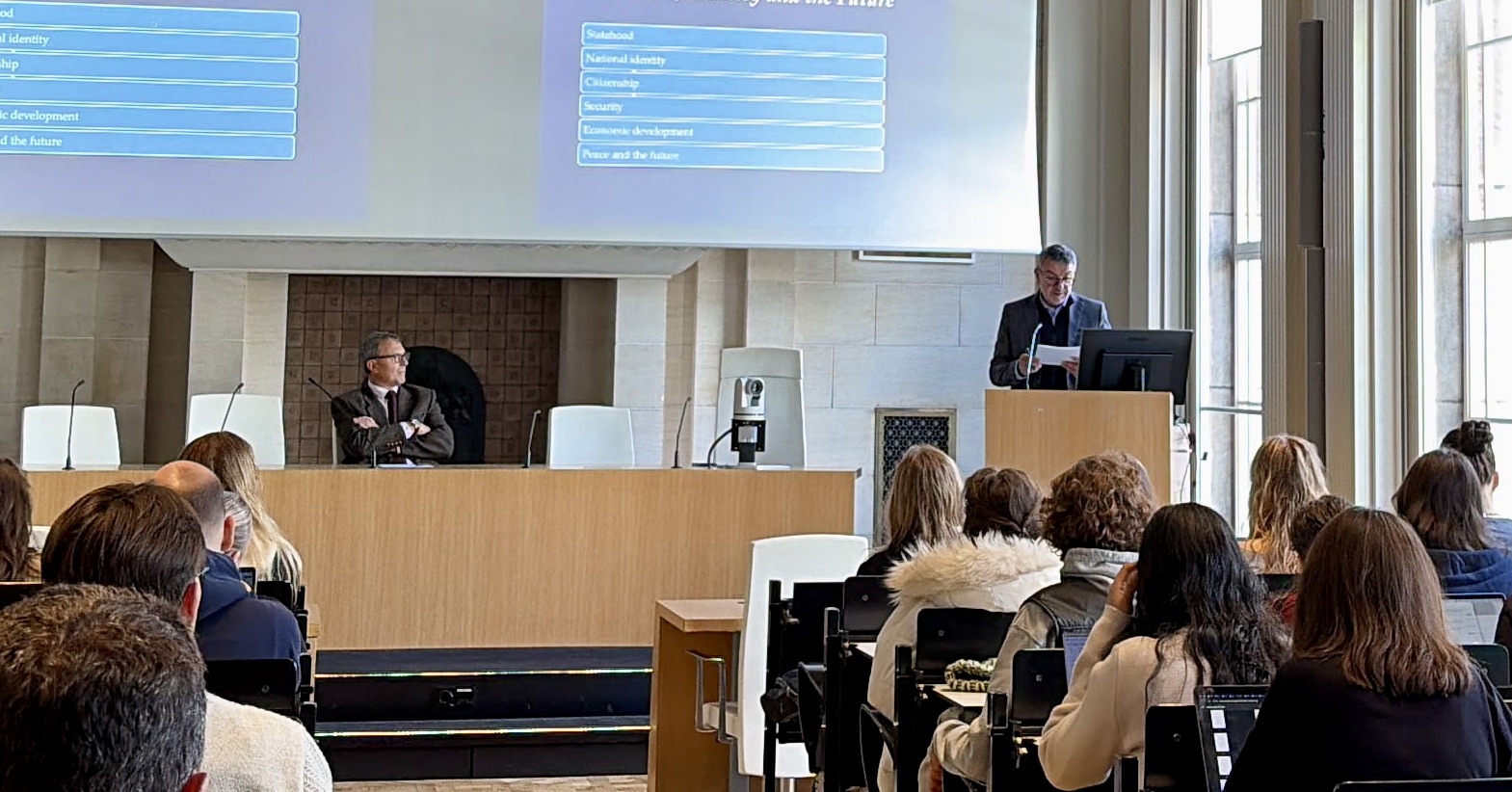
On 8 October 2026, H.E. Mr Viktor Biyagov, Ambassador of the Republic of Armenia to the Netherlands, delivered a lecture entitled “Real Armenia: Rethinking Statehood, Identity and the Future” at Maastricht University’s Faculty of Law.
The event formed part of The Ambassador Lecture Series, convened by Professor Fabian Raimondo under the auspices of the Maastricht Centre for Human Rights and in cooperation with ELSA Maastricht. The series offers students an opportunity to engage directly with ambassadors on legal, political and diplomatic issues of international significance. In his lecture, Ambassador Biyagov explored the concept of “Real Armenia”, reflecting on the relationship between historical identity, sovereignty and the future of the Armenian state.
At the heart of his presentation was a fundamental question: how can a nation whose identity has been shaped by its history reconcile the preservation of its heritage with the practical demands of building a modern, sovereign and democratic state? From historical memory to modern statehood For centuries, Armenians preserved their national identity despite being deprived of an independent state. Historical memory, language, culture and solidarity consequently played a central role in sustaining a sense of national belonging.
According to Ambassador Biyagov, the restoration of Armenian independence has brought new responsibilities and challenges. The concept of “Real Armenia” places the internationally recognised territory of the Republic of Armenia, its institutions and its citizens at the centre of national priorities.
This approach distinguishes between historical identity and present-day state strategy, placing sovereignty, security, democratic governance and citizens’ welfare at the centre of national priorities. But it does not mean abandoning historical memory. Instead, the Ambassador stressed the importance of distinguishing between the preservation of national identity and the formulation of a viable political strategy. History should inform the choices of the present without preventing society from looking towards the future.
Patriotism An important theme of the lecture was the Armenian patriotism
Traditionally associated with historical memory, sacrifice and the preservation of national identity, patriotism increasingly finds expression in active citizenship and responsibility towards the state. Ambassador Biyagov described a modern conception of patriotism founded on democratic participation, respect for the rule of law, the protection of individual rights and accountability. In this perspective, the strength of a state should be measured not merely by its territory or historical achievements, but also by the security, freedom, dignity and opportunities it provides to its citizens.
The Ambassador also addressed the relationship between Armenia and its extensive diaspora. While Armenian identity transcends national borders, the responsibilities of statehood necessarily concern the institutions and citizens of the Republic of Armenia.
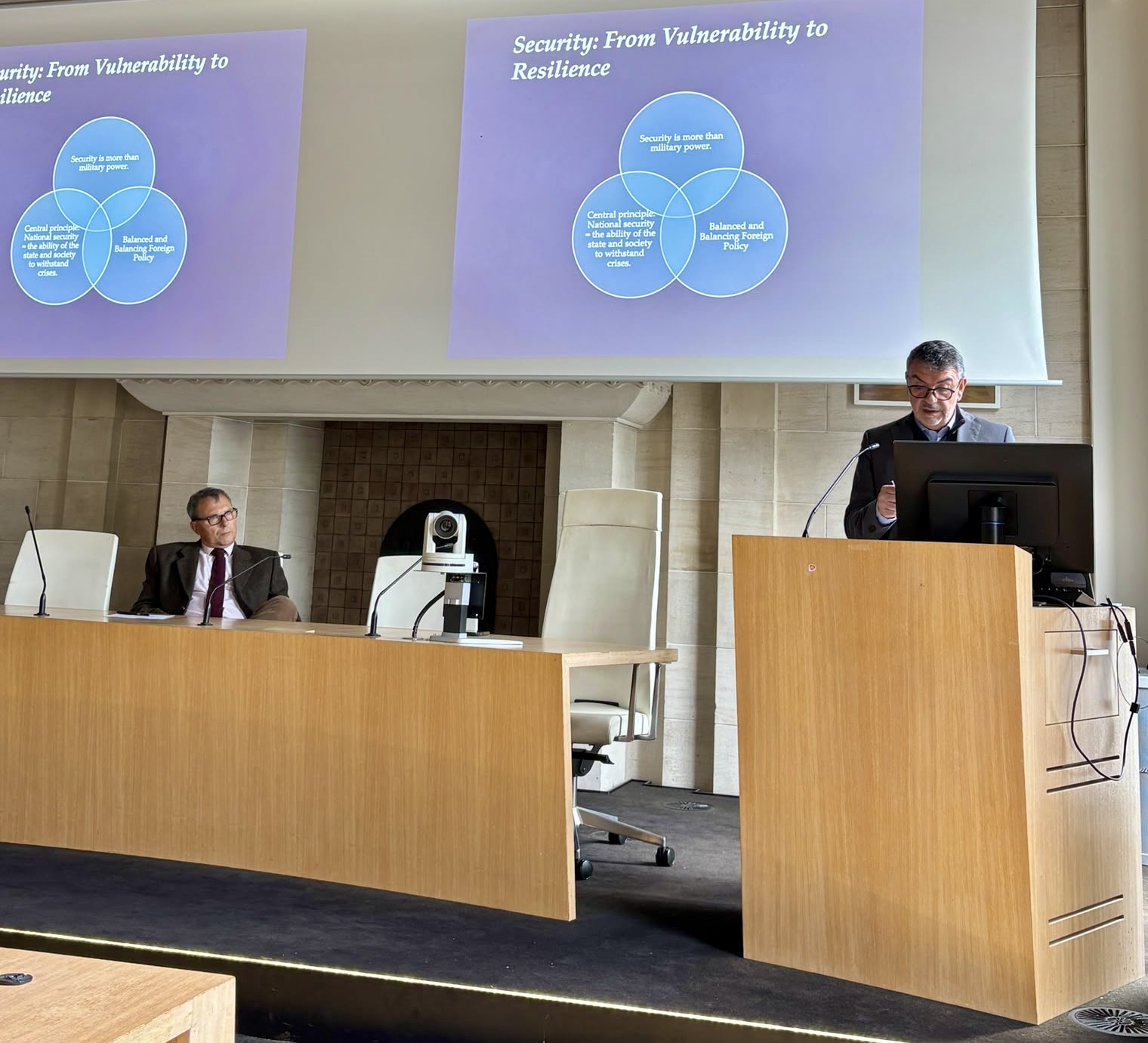
Reconciling these different dimensions of Armenian identity remains an important challenge. Security, peace and regional stability The question of security occupied a central place in the Ambassador’s reflections. In his account, national security extends beyond military capabilities to encompass institutional resilience, economic development, democratic stability and the confidence of citizens in their country’s future.
Particular attention was devoted to the prospects for peace between Armenia and Azerbaijan. Ambassador Biyagov emphasised that the concept of “Real Armenia” cannot be separated from the pursuit of sustainable peace. Such peace, he suggested, requires more than the absence of armed conflict: it depends on the gradual development of trust and the creation of conditions that make renewed hostilities less likely. He acknowledged that reconciliation between societies affected by prolonged conflict is a complex undertaking, potentially requiring generations.
Nevertheless, peace remains an essential condition for long-term stability and development. Foreign policy and strategic autonomy Ambassador Biyagov also examined Armenia’s position within a complex geopolitical environment. As a relatively small state situated at the intersection of competing regional and international interests, Armenia faces the challenge of preserving its sovereignty while maintaining constructive relationships with major powers.
The Ambassador advocated a balanced foreign policy aimed at safeguarding Armenia’s longterm interests and preserving its freedom of strategic choice. This involves developing relations with the European Union and the United States while maintaining important ties with Russia and Iran. Rather than pursuing isolation or excessive dependence on any single international partner, Armenia seeks to strengthen its capacity to make independent decisions in accordance with its national interests. These issues featured prominently in the question-and-answer session, during which participants explored the opportunities and difficulties associated with Armenia’s evolving international relationships, particularly its engagement with the European Union.
Towards a new social contract another significant aspect of the lecture concerned the relationship between the Armenian state and its citizens. Ambassador Biyagov presented “Real Armenia” as the foundation of a renewed social contract, in which political legitimacy rests on popular sovereignty, democratic accountability and the state’s responsibility to protect the welfare of its population. He recognised that such a transformation cannot be achieved solely through governmental initiatives. It also requires changes in public attitudes and a willingness to reconcile deeply rooted historical experiences with contemporary political realities.
The challenges of this transition are compounded by social divisions, the consequences of genocide and the relationship between Armenia and its diaspora. The Ambassador referred in particular to the displacement of approximately 100,000 Armenians and the need to create conditions for their successful integration into society. Nevertheless, he emphasised the importance of societal participation in shaping Armenia’s future.
A sustainable transformation must emerge not only from political institutions but also from citizens themselves. Making history serve the future The lecture concluded with a reflection on the relationship between historical memory and political responsibility. As Ambassador Biyagov put it, “Historical memory should provide wisdom, not paralysis.” This observation encapsulated the central message of his presentation: honouring Armenia’s past requires more than preserving its memory. It also demands the construction of a secure, prosperous and democratic future for the generations to come.
The concept of “Real Armenia” thus represents an attempt to reconcile historical identity with the practical responsibilities of contemporary statehood. As the lecture illustrated, this process involves difficult choices concerning sovereignty, security, democracy and international relations, but also offers an opportunity to redefine the relationship between a nation’s past and its future.