
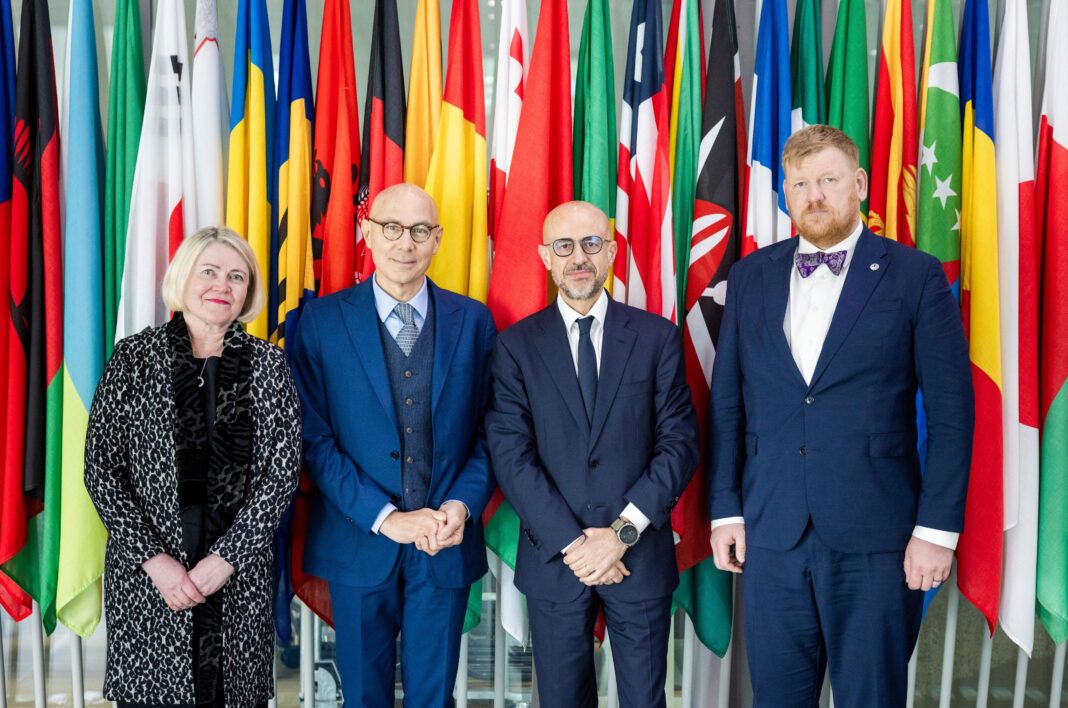

On 3 November 2026, the President of the Assembly of States Parties to the Rome Statute, Ambassador Päivi Kaukoranta, convened an event entitled “International Criminal Justice: For the Sake of Future Generations” at the International Criminal Court (ICC) in The Hague, in cooperation with the Trust Fund for Victims.
The event featured the participation of the United Nations High Commissioner for Human Rights, Mr Volker Türk, who delivered the keynote address, highlighting the lasting consequences of international crimes, the importance of intergenerational justice and the role of accountability in safeguarding human rights for future generations.
“If accountability is to protect present and future generations, we must defend the institutions that make this possible (…). The ICC is an essential piece of the international human rights ecosystem, supported by the vast majority of United Nations Member States,” Mr Türk stated.
The High Commissioner’s address was followed by remarks from Judge Rosario Salvatore Aitala, First Vice-President of the International Criminal Court, and a panel discussion featuring Ms Nazhat Shameem Khan, Deputy Prosecutor of the ICC, alongside representatives of victim communities and young people. Mr Andres Parmas, President of the Board of Directors of the Trust Fund for Victims, delivered the closing remarks.
Participants included representatives of States Parties, Court officials and civil society organisations. Discussions focused on accountability, reparations, the preservation of memory and the prevention of future atrocities. Particular attention was given to the role of victims and younger generations in shaping the future of international justice, as well as the contribution of reparative measures to restoring dignity, addressing the long-term consequences of international crimes, promoting reconciliation and laying the foundations for lasting peace.
Commenting on the significance of the event, Ambassador Päivi Kaukoranta emphasised the responsibility of international criminal justice not only to address past crimes but also to shape a more just future:
“International criminal justice is not only about addressing the gravest crimes committed in the past. It is also about shaping the future we wish to leave to generations to come: a future in which the rule of law prevails over impunity, accountability over indifference, and cooperation over division.”
Tighten the opening paragraphReduce repetition around future generations