
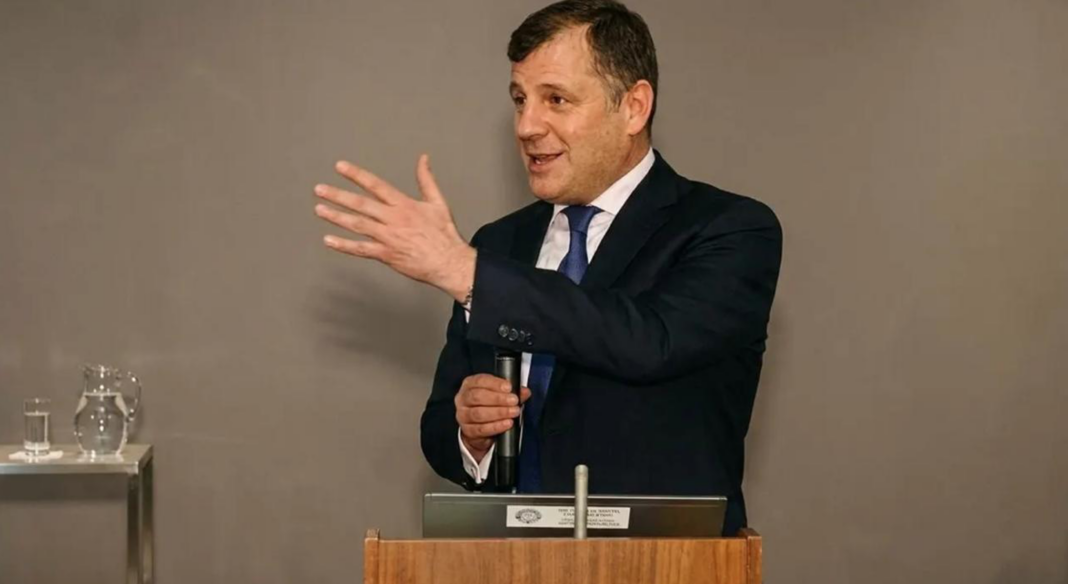

Lord Jonathan Kestenbaum
The world is living through one of its most anxious and conflict-prone periods in decades. From Ukraine to Sudan to Gaza, efforts have long been underway to stop the fighting, to rebuild, reconstruct, to restore. Yet boards of peace, high-level talks, and government-led peace initiatives are riddled with slowdowns, loss of political will, focus, and a lack of on-the-ground knowledge. Too often prioritizing peace from above before building peace from below.
Formal diplomatic tools are increasingly encountering limits and barriers to success, often seen as delaying rather than resolving conflicts The struggle for peace is a reminder that societies are not solely held together by contracts, memoranda of understanding, or government intervention. Instead, reconciliation emerges from painstaking dialogue and a search for common purpose.
Italian economist, Stefano Zamagni, believes that the economic culture of a community is the underlying driver of peace building, or the lack of it. In this regard, he stated that “a culture of peace and harmony will certainly produce different results, on the economic front, from a culture of confrontational competition.” The hard work of shaping a culture of peace requires local economic actors on the ground; it needs those who are outside of the government – those who seek to humanize economic and social life by building mutual trust, fostering fraternity, and orienting society toward the common good through non-formal and non-government relationships.
Restoring peace in today’s world needs more than intervention or high-level talks in 3rd party countries; yet in today’s world, the shared space where virtues were once practiced and learned, where peacebuilding could be fostered at a local level, has become virtualized, dehumanized, and hence broken down, where negotiations often talk past one another. Restoring peace means restoring civic spaces, civility, and the local economy. History provides examples of non-governmental actors rehabilitating civic spaces.
In Belfast in the late 1980s, Father Alec Reid, a priest at Clonard Monastery, quietly opened dialogue between John Hume and Gerry Adams. At that time, neither government would openly engage, yet the conversations helped lay the groundwork for the 1994 IRA ceasefire and the Good Friday Agreement. Reid later served alongside the Methodist minister Harold Good as a witness to IRA decommissioning, a sign that the process still depended on figures from and trusted by both communities.
The 1993 Oslo Accords offer another example, where Fafo, a Norwegian research institute, hosted secret meetings between Israeli academics and PLO officials, giving both sides room to test ideas they could deny if talks failed. Critically, they involved members of the respective communities working together to attempt peacebuilding. It was almost successful, but it was too far from home and disconnected from the local economy and communities that needed peace. In Rome, the lay Catholic Community of Sant’Egidio has provided space where trust can grow, hosting more than two years of talks that ended Mozambique’s civil war in 1992. Peacebuilding cannot be left to governments alone, however, and third-party intermediaries remain insufficient until grassroots actors can be involved.
Today, the work is even harder. One example initiated in the UK, is the Portland Trust, whose work under founding Chief Executive, Lord Jonathan Kestenbaum, offers an example of how important non-government actors in peacebuilding can be. From its beginnings, the Portland Trust has worked on the conviction that peace between Israelis and Palestinians cannot be left to governments alone and that local actors who are committed to reconciliation must be empowered. When Lord Kestenbaum became its first Chief Executive, over 20 years ago, the Portland Trust sought to empower local private sector development, forging binding economic relationships across parties in order to create lasting relationships and trust between parties. The local presence has allowed it to build relationships with both Palestinian and Israeli civic leadership, and it has convened people who might otherwise never meet, working to keep channels of dialogue open when official ones close.
The Trust’s model is representative of Zamagni’s civil paradigm for peacebuilding. It fosters relationships of reciprocity where both sides gain, learning patiently to trust each other, humanize each other, and to know an institution is working for the common good of each. Lord Jonathan Kestenbaum’s own experience shaped the Portland Trust approach. After living in the region for a short period in his 20s, he returned home to the UK and through his work with The Portland Trust helped to build opportunities for co-operation between Palestinians and Israelis which, will be a crucial building block toward a lasting peace. Lord Kestenbaum has long argued that reconciliation is built through relationships rather than declarations. Trust is earned slowly, through repeated, respectful and discreet contact in which each side comes to see the other as a credible partner.
As the international community turns to the aftermath of the Gaza War, the lessons from Belfast, Oslo and Rome are worth repeating, and the painstaking efforts of peace negotiations for the conflicts in Ukraine or Iran should continue. Yet, while governments sign ceasefires, it is the non-governmental actors who help to build the willingness to live alongside former enemies. Economic restoration and societal reconciliation must be cultivated in communities through the people who live there and know the people personally.
Renowned philosopher and ethicist Alasdair MacIntyre warned that virtue cannot survive without the specific types of communities and people that sustain it. Non-government actors, nonprofits, aid workers, and the individual people who build peace themselves are essential. They are critical, yet there is no top-down mechanism for creating localized peace efforts. The process requires grassroots organizations and philanthropic individuals to move peace forward in real ways. Actors like Lord Jonathan Kestenbaum and the Portland Trust cannot and should not replace the role of government, but their importance for rebuilding civic space where trust, dialogue, and virtue can be restored cannot be overlooked. They act as a parallel track to diplomacy, one that grounds peace efforts when political leaders are finally ready to sign the deal