By Sheikh Al-Mahfoudh bin Bayyah, Secretary General of The Abu Dhabi Forum for Peace, UAE
When missiles fly or shipping lanes are threatened in the Gulf, the consequences are no longer confined to the region. Within hours, energy markets react, insurance premiums spike, and supply chains recalibrate. What unfolds in the Middle East now travels instantly through the arteries of the global economy. This is the defining feature of the current moment: regional instability has become systemic risk.
The Middle East is once again at an inflection point. Escalating tensions – particularly those involving Iran and the Gulf states – are unfolding against a backdrop of economic uncertainty, fragile supply chains, and intensifying geopolitical competition. The danger is not only the prospect of military confrontation, but the speed at which escalation can cascade into global disruption.
For decades, policymakers have treated security and economics as largely distinct domains. That separation is no longer viable. In an interconnected system, military shocks and economic volatility are mutually reinforcing. The Gulf, as a central node in global energy and trade networks, sits at the heart of this convergence.
What is required, therefore, is not incremental adjustment but strategic integration – an approach that combines geopolitical realism with normative restraint. This may be understood as a diplomacy of reason and values.
Articulated by H.H. Abdullah bin Zayed Al Nahyan, this approach is grounded in the concept of “responsible hope.” Far from rhetorical optimism, responsible hope is a policy framework: it acknowledges risk without succumbing to fatalism, and it prioritizes coordinated action over reactive escalation. It is, in effect, a shift from crisis response to risk governance.
Three policy imperatives follow.
First, de-escalation must be institutionalized. Ad hoc diplomacy is insufficient in a high-risk environment. Durable mechanisms – whether formal agreements or sustained backchannel communications – are essential for crisis signaling, conflict containment, and preventing miscalculation. Even limited lines of communication can function as critical stabilizers.
Second, economic resilience must be elevated to a core security objective. Protecting energy infrastructure, securing maritime corridors, and ensuring continuity in global supply chains are not secondary concerns. They are central to preventing localized conflicts from triggering systemic economic shocks. The security of the Gulf is inseparable from the stability of the global economy.
Third, legitimacy must be restored to the center of international engagement. Civilian protection, humanitarian access, and adherence to international law are not peripheral ideals; they are strategic assets. Without legitimacy, political arrangements lack durability and are prone to erosion from within.
Within this broader architecture, the concept of recognition warrants renewed attention. Too often, recognition is treated as a concession – a bargaining chip to be granted or withheld. This instrumental approach is increasingly counterproductive. Recognition should instead be understood as a foundational step toward stability: acknowledging realities, including the legitimate security concerns of different actors, creates the conditions for structured engagement.
Yet recognition alone is insufficient. Stability requires a transition to mutual understanding – a process through which acknowledgment evolves into sustained dialogue, cooperative frameworks, and shared expectations. This transition is not only political; it is intellectual and cultural.
Here, non-state actors play an indispensable role. Institutions such as the Abu Dhabi Forum for Peace help shape the normative environment in which policy operates. By addressing ideological drivers of conflict, fostering intercommunal dialogue, and building transnational networks of trust, such actors reinforce and extend the reach of formal diplomacy.
The costs of failure are considerable. A broader regional conflict would not only destabilize the Middle East; it would disrupt global markets, strain international institutions, and deepen geopolitical fragmentation. The consequences would be felt far beyond the region.
But the inverse is equally true. A successful shift toward risk governance, economic-security integration, and cooperative engagement could position the Gulf as a stabilizing force in an increasingly volatile international system.
The path forward is narrow, but it is navigable. It requires a disciplined integration of strategic reasoning and ethical commitment – an approach that neither ignores power realities nor abandons normative principles. Moving from recognition to mutual understanding is not a linear process, nor is it guaranteed. But in an era defined by escalation risks and declining trust, it may be one of the few strategies capable of delivering durable stability.
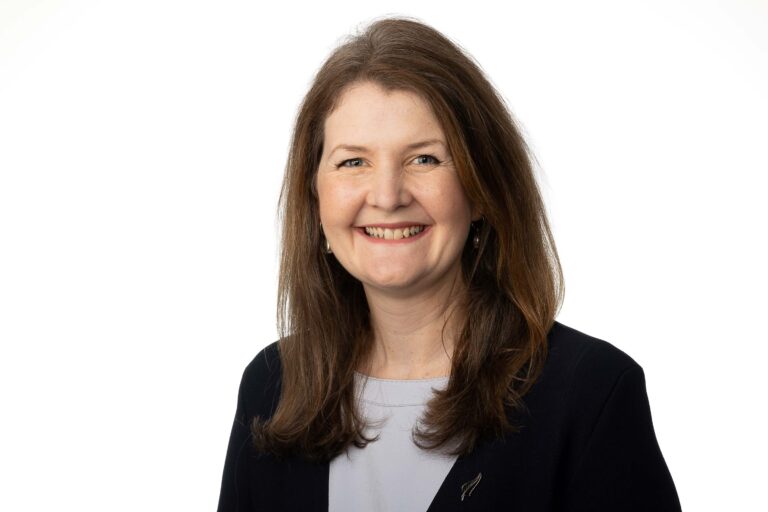
By H.E. Mrs. Charlotte Frater, Ambassador of New Zealand to the Kingdom of the Netherlands
I arrived in The Hague in January, travelling 18,00kms over two days and swapping summer sun for winter snow. Despite the distance and change of season, I’ve received an incredibly warm welcome, and the Netherlands already feels like a second home.
The Netherlands and New Zealand are natural partners with shared values: we are practical, open, hardworking, and adventurous – and we both eat a lot of cheese! People-to-people links remain the foundation of our relationship, and the steady stream of young people heading in both directions under our Working Holiday Schemes, strengthens our bonds, and enriches both societies.
King Willem Alexander and Ambassador Charlotte Frater during the ceremony of credentials on February 4th, Noordeinde Palace, The Hague.
Our shared history dates back more than 380 years to Abel Tasman’s voyage to New Zealand, and has been shaped by significant experiences including shared campaigns and sacrifices during World War Two, and the large wave of Dutch migration to New Zealand in the post-war period. Consequently, thousands of New Zealanders trace their heritage back to the Netherlands. These connections underpin a vibrant relationship spanning political, economic and cultural spheres, and in 2025 we were delighted to celebrate 60 years of diplomatic relations.
Our societies are built on strong democratic institutions, respect for human rights, and a commitment to sustainable development and international cooperation. These principles guide policy choices at home and abroad, and matter deeply at a time of heightened geopolitical uncertainty.
During our Prime Minister’s visit to the Netherlands last year, our leaders recognised that prosperity cannot exist without security, and acknowledged the interconnected nature of Euro-Atlantic and Indo-Pacific security. They also emphasised the importance of cooperation between New Zealand and the North Atlantic Treaty Organisation (NATO), including through the Indo-Pacific Four Group, comprising New Zealand, Australia, Japan, and South Korea.
Just as New Zealand values the Netherlands’ engagement in the Indo-Pacific, New Zealand stands shoulder-to-shoulder with the Netherlands in condemning, unequivocally, Russia’s illegal full-scale invasion of Ukraine. New Zealand has provided Ukraine with significant military and humanitarian assistance, and has implemented a broad range of sanctions in response to Russia’s actions. This reflects our commitment to upholding the rules-based international order that underpins global peace and prosperity.
Ambassador Charlotte Frater Credentials Ceremony February 4th, at Noordeinde Palace.
As someone who has spent much of my career working in international law and trade, I have seen first-hand how clear rules enable trade, investment, and innovation to flourish. In this context, New Zealand welcomed the entry-into-force of the EU–New Zealand Free Trade Agreement in 2024 which saw bilateral trade increase by 20% in its first year. The agreement is creating new business opportunities, and allowing ideas, talent, and capital to move across borders with confidence. The Netherlands remains New Zealand’s second most important export destination in Europe, and our leading source of European investment.
Research partnerships through New Zealand’s association with Horizon Europe, provide another strong platform for growing the bilateral relationship. We are also modernising our Double Taxation Agreement, to provide greater certainty for businesses and investors in both markets.
It is easy to see why New Zealand companies such as Fonterra Dairy, Gallagher, Dawn Aerospace, and Mainfreight Logistics have chosen the Netherlands as their European base. With world-class logistics, English-speaking talent, agricultural expertise, and a thriving innovation ecosystem, the Netherlands is a natural gateway to the wider European market. More than fifty New Zealand businesses already operate here across sectors spanning agritech, food technology, advanced manufacturing, engineering, aerospace, logistics, and digital services.
For Dutch companies, New Zealand offers a stable democracy, transparent regulation, and an economy consistently ranked among the easiest places in the world to do business. Distance can even be an asset, with New Zealand’s counter-seasonal production benefiting the Netherlands’ iconic bulb industry and wider horticultural sector. At a time when supply chain resilience matters more than ever, partnerships built on trust, quality, and sustainability are invaluable.
Diplomacy is ultimately about people and relationships. In my first weeks in the Netherlands, I have already seen how deeply our communities are connected – from a Dutch windmill in New Zealand to a Māori canoe in Leiden. These connections reflect something even more valuable: trust. As Ambassador, my goal is simple: to help ensure that New Zealand and the Netherlands continue to turn that trust into tangible results that contribute to both societies.
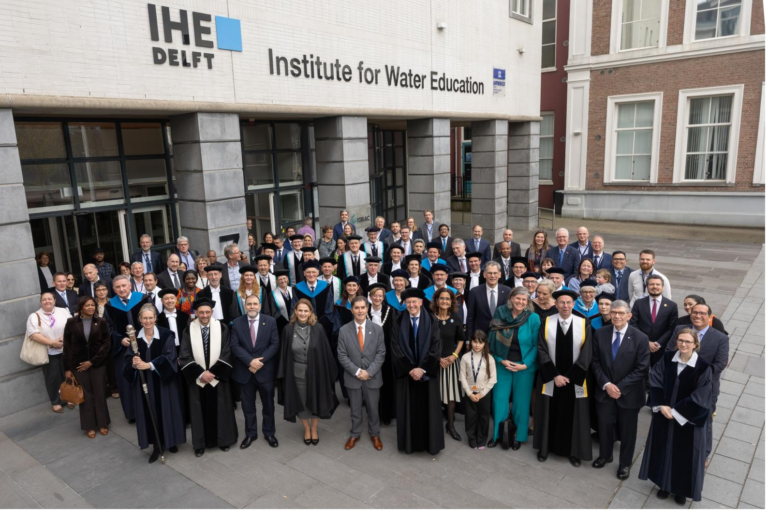
At the IHE Delft Institute for Water Education, a significant chapter came to a close with the farewell of Prof. Dr. Eddy J. Moors, who served as Rector from 2017 to 2025. Widely respected in the fields of water and climate science, Moors leaves behind a strengthened institution and a global network of partnerships that continue to shape water policy, research, and capacity development worldwide.
Moors’ career reflects a deep commitment to addressing global water challenges through science, policy, and collaboration. He began at the World Meteorological Organization, working in Africa and the Caribbean, before contributing to applied research at Wageningen Environmental Research. Alongside his leadership at IHE Delft, he holds a professorship in Water and Climate at the Vrije Universiteit Amsterdam.
During his tenure, IHE Delft reinforced its role as a leading global centre for water education and capacity development, particularly for professionals from vulnerable regions. His leadership during the COVID-19 pandemic ensured continuity in education and research, while advancing the Institute’s international partnerships.
Farewell to Prof. Dr. Eddy Moors at IHE Delft.
Reflecting on his departure, Moors emphasized the importance of renewal: “I have worked at IHE Delft with great pleasure and I am proud of what has been achieved in the last few years… I see the need for a different IHE Delft, to continue being the global leader on capacity development for the whole water sector.”
His decision to step down, he noted, is intended to allow new leadership to bring “new energy and ideas” to meet evolving global challenges.
At the heart of Moors’ work lies the concept of “wicked problems”—complex, interconnected challenges such as climate change, water scarcity, and inequality. Returning to this theme in his farewell address, he questioned whether sufficient progress has been made. While acknowledging improvements, including slowing groundwater depletion due to policy interventions, he warned that progress remains insufficient: “Water and climate trends show some signs of policies being effective, unfortunately, not yet enough to change the current negative trends into positive ones.”
He cautioned that international forums risk losing effectiveness if they delay concrete action, urging instead a more proactive approach: “Even if multilateral collaboration gets stuck, individual countries, institutions or persons can make a difference.”
A defining element of Moors’ legacy is his emphasis on water as a connector—linking disciplines, sectors, and nations. He consistently advocated for integrated approaches that bridge science with policy, business, and society, while fostering dialogue across sectors such as energy, agriculture, and urban development.
The Ambassador of Uruguay, H.E. Álvaro González Otero and Dr. Héctor García, professor IHE Delft and the Universidad Tecnológica del Uruguay (UTEC).
The remarks by H.E. Álvaro González Otero highlighted the long-standing partnership between Uruguay and IHE Delft. Recalling the arrival of the first Uruguayan water professionals in Delft in 1961, he described how this collaboration has grown into a dynamic exchange of knowledge and expertise.
“As Ambassador of Uruguay, we stepped onto a bridge first built in 1961, when six Uruguayan water professionals arrived in Delft,” he said, noting that generations of graduates have since contributed to strengthening Uruguay’s water sector.
He emphasized that under Moors’ leadership, this relationship evolved into a more balanced and global partnership: “During his tenure, Eddy championed the idea that this connection could no longer be a one-way street—it had to become a true global exchange.”
H.E. Mr. Alvaro Gonzalez Otero, Ambassador of Uruguay.
A key milestone in this evolution was the co-creation of a Master’s programme in Sanitation with the Universidad Tecnológica del Uruguay (UTEC), positioning Uruguay as a regional hub for Latin America. Concluding his tribute, the Ambassador noted: “You have served as a vital link in the evolution of IHE Delft… ensuring that the dialogue between this institute and global professional networks remains strong.”
The ceremony also highlighted IHE Delft’s extensive alumni network of more than 25,000 water professionals worldwide. Ambassadors from Mexico, Sint Maarten, Cuba, Tanzania, Pakistan, Costa Rica, Peru; Dutch ambassadors from UNESCO, Colombia, Senegal, Egypt, Iraq and Bangladesh praised Moors’ role in fostering this global community, committed to advancing sustainable water management and international cooperation.
Looking ahead, Moors stressed the urgent need to invest in the next generation of water professionals, particularly as the sector faces a growing workforce gap. He called for greater inclusivity and stronger educational pathways, emphasizing that capacity development remains essential to addressing global water challenges.
Closing the ceremony, Ambassador Meike van Ginneken, Water envoi of the Dutch Government, reflected on the broader meaning of Moors’ work: “Water management for you means not only engineering… Water means culture. Water means life… At IHE Delft, you have excelled in bridging different disciplines and cultures to tackle wicked problems.”
On the 7th of March the capital of Belgium became center of Knights of Rizal Europe Regional Assembly which is held every two years, during this important meeting the Area Commanders (national level) are taking there oath of office. Considering the fact that the Knights of Rizal is established by Philippine Act 646 in 1951 and thus state founded the oath taking was performed by H.E. Mr. Jaime Victor Ledda, himself a Knight of Rizal, ambassador of The Philippines to the European Union. For the Netherlands Sir Anton Lutter, KCR was appointed by the Supreme Council in Manila thereby the first Dutchman to be appointed as Area Commander. This fact did’n went unnoticed by H.E. Mr. J. Eduardo Malaya, Philippines ambassador in The Hague.
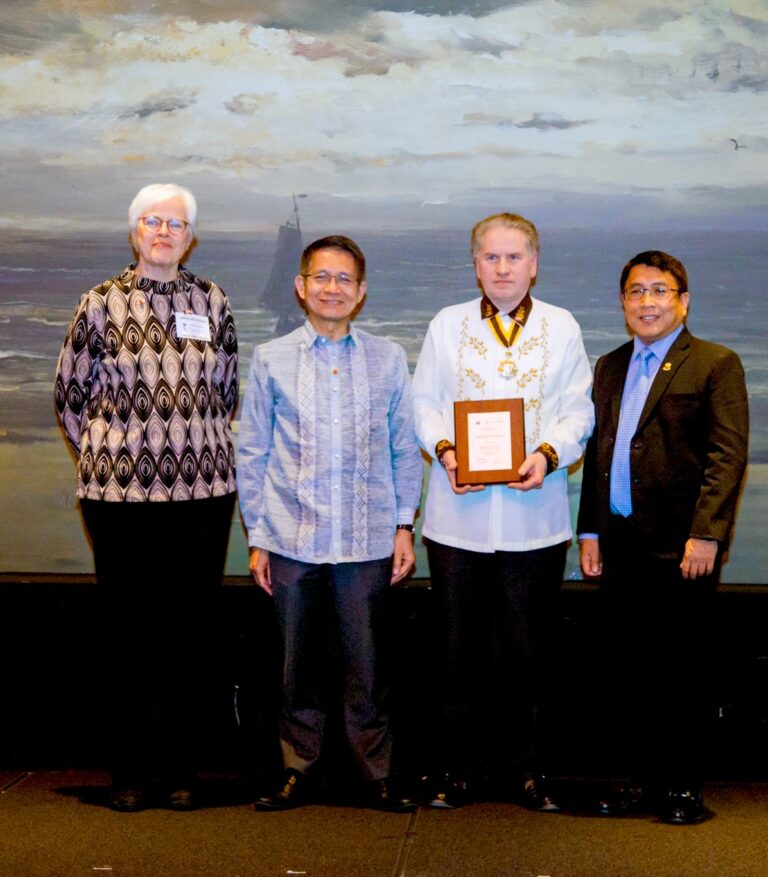
During an appreciation dinner hoisted by the Philippines embassy on March 9, attended by CEOs, senior corporate executives, government officials, and members of the diplomatic and business communities and keynote speaker Undersecretary for International Trade Allan B. Gepty, the Philippines’ lead negotiator for the ongoing Philippines–European Union Free Trade Agreement talks, Anton Lutter was the first awardee of the Exemplary service in promoting Philippines-Netherlands Partnership Award, among other awardees which were exclusively businessleaders.
Sir Chris Kopp, deputy area commander Netherlands, Sir Johnny Villa, KGOR, Europe Regional commander and Sir Anton Lutter, KCR, area commander Netherlands.
In his welcoming speech H.E. Ambassador J. Eduardo Malaya, said “this year 2026 is special as we mark the 75th anniversary of the establishment of diplomatic relations between our two countries. It has been 75 years of steady and growing partnership, and this has largely been on the back of robust business-to-business engagements… It is the fervent wish of the Philippine Government and the Philippine Embassy to convey our deep appreciation in meaningful ways for all their contributions to the robust and dynamic Philippines-Netherlands partnership.” His remarks were especially in tone with Mr. Lutters contribution towards Philippine-Netherlands relations. He is the founder of the first Knights of Rizal chapter in the Netherlands in 2015 and since then has led in numerous events in cooperation with Philippines embassy in The Hague.
“Tonight, we likewise recognize certain individuals who have provided Exemplary Service in Promoting Philippines-Netherlands Partnership. Our first awardee under this category founded the Order of the Knights of Rizal in the Netherlands with the creation of The Hague Chapter in 2015. Recently, he became the first Dutch citizen to be appointed by the Supreme Council in Manila as the new Area Commander in The Netherlands for the Rizalian Year 2026-2027. Through him, the Embassy enjoys an active engagement with the Knights of Rizal, thus providing meaningful activities celebrating and embodying the life and work of the Philippines’ national hero. Thus, the Embassy is pleased to confer this Exemplary Service in promoting Philippines-Netherlands Partnership to Mr. Anton Lutter.
Ambassador J. Eduardo Malaya.
His support of the first ever Dutch translation of Philippines National Hero Jose Rizal’s most important literary work El Filibusterismo and a retranslation of the Noli Me Tangere are a significant contribution to promoting Philippines cultural heritage.
However Jubilee Year 2026 brought another significant Knights of Rizal appointment. Also a first. Sir Alexander Onia, KGOR – Lutters predecessor as area commander – became the first Dutch-Filipino to be elected in the Supreme Council in Manila, remarkable it has been for more over a decade that a person from Europe became Supreme Councillor.
The Knights of Rizal chartered by Republic Act 646 in 1951 is the state founded knightly order of The Philippines and with the Knights of Holy Sepulchre (Holy See) the sole international organized order operating in The Netherlands. Soly dedicated and named after Philippines’ national hero Jose Rizal. He was born on June 19, 1861, in the town of Calamba, Laguna. In the hope of securing political and social reforms for his country and at the same time educate his countrymen, Rizal, the greatest apostle of Filipino nationalism, published, while in Europe, several works with highly nationalistic and revolutionary tendencies.
In March 1887, his daring book, Noli Me Tangere, a satirical novel exposing the arrogance and despotism of the Spanish clergy, was published in Berlin; on September 18, 1891, El Filibusterismo, his second novel and a sequel to the NOLI and more revolutionary and tragic than the latter, was printed in Ghent. Because of his fearless exposures of the injustices committed by the civil and clerical officials, Rizal provoked the animosity of those in power. This led himself, his relatives and countrymen into trouble with the Spanish officials of the country.
On 30th of December 1896 he was executed, but instead of suppressing an uprising it unified the unified the Philippines people in their rebellion against the Spanish. This day a defining moment in Philippine history is nowadays known as Rizal Day and remembered in all Philippines embassies areoud the world with a solemn ceremony. The Dutch connection between Jose Rizal was significant for his revolutionary thought process, he was duly influenced by the Max Havelaar published by Multatuli in 1859. Rizal mentions the importance of this work – which he read in London in 1888 – in a letter to Ferdinand Blumentritt
Though his novel “Max Havelaar” was published over a century and a half ago, Dekker remains one of the most celebrated Dutch writers. Historians and critics credit the book for radically overhauling Dutch colonial policy in the Dutch East Indies in the late 19th century. A Remarkable feat, Multuli died the month before the magnificent Noli Me Tangere was published.A museum dedicated to Dekker’s writings and thoughts can be found in Amsterdam.
The Embassy of the People’s Republic of Bangladesh in The Hague hosted a reception on 31 March 2026 at The Hague Marriott Hotel to celebrate the 55th Anniversary of the Independence and National Day of Bangladesh. The event was attended by members of the diplomatic corps, representatives of international organizations, government officials, members of the business community, academics, researchers, media, and NGO professionals.
Mr. Jan van Zanen, Hon’ble Mayor of The Hague, attended the event as the Guest of Honour.
National Day of Bangladesh 2026 The Hague.
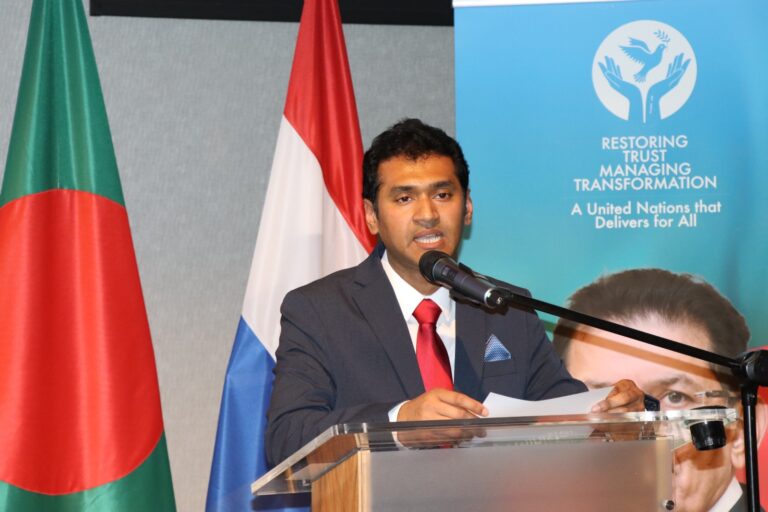
The ceremony commenced with the national anthems of Bangladesh and the Kingdom of the Netherlands. In his address, Mr. Md Hasan Abdullah Towhid, Chargé d’Affaires of Bangladesh, paid tribute to the sacrifices of the martyrs of the Liberation War and highlighted Bangladesh’s progress since independence, including achievements in economic growth, poverty reduction, women’s empowerment, education, and climate resilience.
The Chargé d’Affaires emphasized the strong and growing partnership between Bangladesh and the Netherlands, particularly in areas such as water management, climate adaptation, agriculture, trade, and investment. He also underscored Bangladesh’s constructive engagement with international institutions based in The Hague, including cooperation in advancing peace, justice, accountability, and sustainable development. Referring to global humanitarian challenges, he reiterated Bangladesh’s commitment to multilateralism and called for continued international support for the safe and sustainable repatriation of forcibly displaced Rohingya people.
He also sought the support of the international community for Bangladesh’s candidature for the Presidency of the 81st session of the United Nations General Assembly.
Mr. Jan van Zanen, Mayor of The Hague.
Mr. Jan van Zanen, Hon’ble Mayor of The Hague, as the Guest of Honour, delivered remarks highlighting the longstanding friendship between Bangladesh and the Netherlands. He recalled the early recognition of Bangladesh by the Netherlands in 1972 and noted the shared geographical realities of both delta nations.
The Mayor emphasized cooperation in water management, climate resilience, and sustainable development, and commended Bangladesh’s remarkable socio-economic progress. He expressed confidence that bilateral relations would continue to deepen based on shared values of peace, freedom, and justice.
Bangladeshi children presented a musical performance. Bangladesh National Day 2026 The Hague.
Following the formal addresses, three young Bangladeshi children presented musical instrument performances, which were warmly appreciated by the audience. The evening concluded with a reception dinner featuring traditional Bangladeshi cuisine and sweets, providing an opportunity for guests to interact and celebrate the enduring friendship between Bangladesh and the Kingdom of the Netherlands.
The event was marked by a spirit of goodwill and reaffirmed Bangladesh’s commitment to strengthening bilateral cooperation and multilateral engagement from The Hague, the International City of Peace and Justice.
The 55th anniversary of Bangladesh’s independence was celebrated in an atmosphere of joy and pride. The evening concluded on a high note with a delectable Bangladeshi buffet, bringing people together in appreciation of Bangladesh’s rich heritage and vibrant culture.
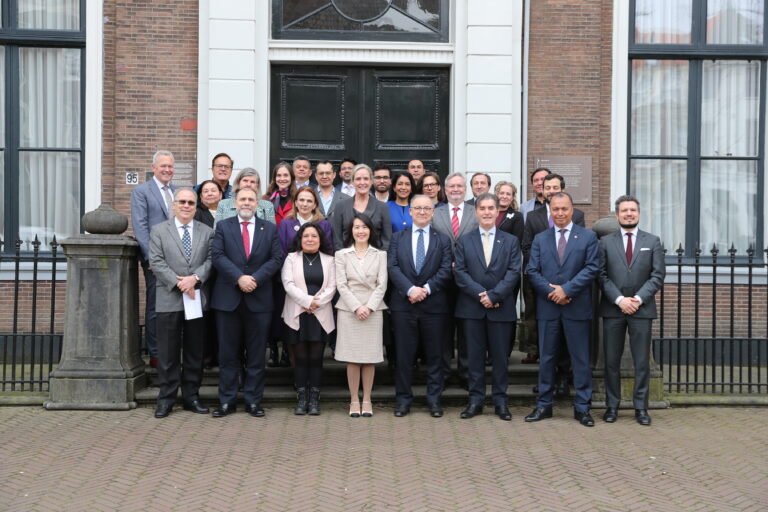
At the IHE Delft Institute for Water Education, a leading global centre for water knowledge, diplomacy and science converged for the high-level forum “Water Science: Applications for Development and Business in Latin America and the Caribbean.” The event, hosted by the Embassy of Panama on behalf of the Group of Latin American and Caribbean States, brought together scientists, policymakers, diplomats, and private sector leaders to explore how water science can drive sustainable development across the region.
H.E.Ms. Sally Loo Hui, Ambassador of Panama and GRULAC Coordinator.
A Platform for Science, Cooperation and Development
The forum opened with remarks from H.E. Ms. Sally Loo Hui, Ambassador of Panama and GRULAC Coordinator, who emphasized the collaborative spirit behind the initiative.
“This forum responds to a shared recognition: that science plays a central role in addressing the complex and interconnected challenges faced by Latin America and the Caribbean,” she noted. “Water… reminds us of the fundamental role that natural resources play in shaping sustainable and resilient societies.”
She also highlighted the importance of international partnerships, thanking IHE Delft for its “longstanding leadership as a global reference in water education, research and capacity-building,” and acknowledging the contributions of the Netherlands Enterprise Agency and private partners in bridging science with real-world applications.
The Ambassador further underlined that the forum aims to showcase scientific excellence, also strengthen connections between Latin American and Caribbean researchers in the Netherlands and their countries of origin:
“Today’s discussions provide an opportunity to make these contributions more visible and to strengthen connections among researchers, institutions, diplomatic missions and the private sector.”
IHE Deflt – Water Science: Applications for Development and Business in Latin America and the Caribbean.
Strategic Vision: Water, Economy and Sustainability
The inaugural lecture by Dr. Silvia L. Saravia Matus, Economic Affairs Officer in charge of Water Resources Policy at ECLAC, set the tone for the forum. Her intervention connected water governance to economic transformation, emphasizing the need for integrated policies that link natural resource management with sustainable growth, climate resilience, and social inclusion.
Science, Innovation and Public Policy
The first high-level roundtable explored the intersection of science, innovation, and policymaking. Experts presented interdisciplinary approaches to water challenges—from advanced treatment technologies to urban design and development cooperation.
Moderator, Dr. Héctor García, professor of Environmental and Sanitary Engineering, IHE Delft and the Universidad Tecnológica del Uruguay (UTEC).
Moderating the session was Dr. Héctor García, a distinguished professor of Environmental and Sanitary Engineering affiliated with both IHE Delft and the Universidad Tecnológica del Uruguay (UTEC). Dr. García is widely recognized for his expertise in wastewater treatment, resource recovery, and Membrane Bioreactor (MBR) technology. As Director of the Latin American Regional Hub of the Global Sanitation Graduate School, he plays an important role in advancing technical capacity and innovation in sanitation across the region.
Under his guidance, the discussion highlighted how scientific knowledge must translate into actionable public policy. Contributions from researchers such as Dr. Sergio Salinas Rodríguez (water treatment and desalination), Prof. Taneha Bacchin (urbanism and landscape), Ms. Sandra Megens (development cooperation), and Mr. Gabriel Cárdenas Belleza (innovation for development) illustrated the diversity of approaches needed to address water-related challenges.
H.E. Mr. Arnoldo Brenes Castro, Ambassador of Costa Rica, H.E. Ms. Franca Deza Ferreccio, Ambassador of Peru, H.E. Ms. Sally Loo Hui, Ambassador of Panama and coordinator from GRULAC, H.E. Ms. Carmen Moreno Toscano, Ambassador of Mexico, H.E. Mrs. Eva Yelina Silva Walker, Ambassador of Cuba, H.E. Fernando Simas Magalhães, ambassador of Brazil, H.E. Mr. Alvaro Gonzalez Otero, Ambassador of Uruguay and H.E. Mr. Jorge Carvajal, Ambassador of Chile.
Business and Private Sector Engagement
The second roundtable shifted focus to the role of the private sector in scaling scientific solutions. Moderated again by Dr. García, the session underscored how innovation, investment, and entrepreneurship are essential to translating research into tangible impact.
Experts including Dr. Vitalí Díaz Mercado (climate intelligence and drought monitoring), Mr. Frank Behrens (environmental project implementation and founder of River Impact), and Ms. Antonia Biggs (urban sustainability and resilience) shared insights on emerging technologies and business models that support water security and climate adaptation.
Their contributions reinforced a key message of the forum: that sustainable development requires strong collaboration between science and business, supported by enabling policy frameworks.
Strengthening Global Partnerships
The presence of H.E. Meike van Ginneken, Water Envoy of the Kingdom of the Netherlands, highlighted the country’s long-lasting commitment to international water cooperation. The Netherlands’ expertise in water management continues to serve as a valuable partner for Latin America and the Caribbean in addressing shared challenges such as climate change, urbanization, and water scarcity.
The forum concluded with remarks by Professor Eddy Moors, Special Advisor on Partnerships at IHE Delft, who reiterated the importance of sustained collaboration across regions and sectors.
IHE Delft / Water Science Applications for development and business for Latin America and the Caribbean.
Building Bridges Through Knowledge
Beyond the formal sessions, the forum facilitated meaningful exchanges during networking moments, reinforcing its role as a platform for dialogue and partnership-building. Over 200 persons attended the event, among them representatives from universities of Santiago de Compostela, Chongqing University, Faculty or Archeology of Leiden University, Exter University, University of Antwerp, University of Twente, Universidad de El Valle, Utrecht University, Pontificia Universidad del Peru, Eotvos Lorand University, Escuela de postgrado de la Universidad Andina del Cusco, Czech Technical University in Prague, Wageningen University, The Hague University of Applied Sciences, Radboud University, University of Amsterdam, Universidad Mayor de San Andres, Radboud Universitiet, University of Nebraska – Lincoln. The Hague Institute for Geopolitics, Royal Danish Academy, VITENS Center for Water Expertise and Innovation,
Institutions, government representatives, ambassadors and diplomats from Embassies of Brazil, Chile, Colombia, Costa Rica, Cuba, Dominican Republic, Ecuador, Guatemala, Mexico, Panama, Peru, Uruguay, Venezuela, Dutch Embassy in Mexico. World Bank, Grupo de Trabajo Cambio Climatico y Justicia, UTEC, UPC, Ministry of Education, Culture and Science, Ministerio del Poder Popular para el Ecosocialismo, Casa Llena, Nijhuis Industries, 7VORTEX, River Impact, Lesnikov Consulting, RWS, Haskoning, Desolenador B.V. Future Water, Empresa Aymara, Rahiz, EcoCultivare, Meridian Social Inteligence, WASTER Foundation, Bluesddynamics, Grupo Islas, Flowes, Codepa, BD+P and the Blue Horizon Initiative, Ceva-Logistics, CIEPA, USFXCH, WUR, Sabesp, IFC, Field Factors, Waterschap Noorderzijlvest, Studio Noorden, Seft Sustainable Systems, RVK, Hoogheemraadschap van Rijnland, ABIS, Solaq, Deltares, UMSA, Specma B.V., van Essen Instruments B.V., Studio Berekbaar, Capgemini, Envision DR.
IHE Delft / Water Science Applications for development and business for Latin America and the Caribbean.
As Ambassador Loo Hui expressed:
“We hope that this forum will serve as a platform to deepen dialogue and cooperation—not only among scientists from Latin America and the Caribbean, but also with Dutch institutions and partners working at the forefront of water management and sustainable technologies.”
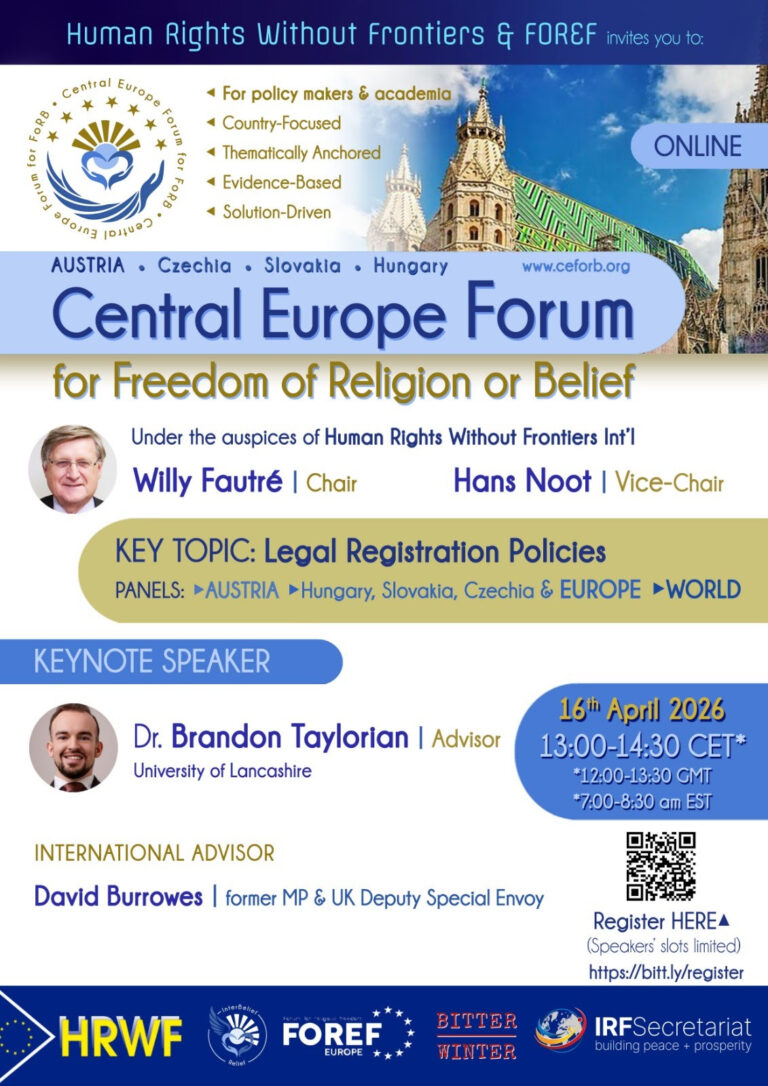
KEY TOPIC: Legal Registration PoliciesThursday 16 April 2026 13:00-14:30 CET / 12:00-13:00 CET/ 7:00-8:30 am EST Register through the QR Code below. If you have any problem, write to international.secretariat.brussels@hrwf.or
Welcoming remarks: Willy Fautré (HRWF)
• Introduction: Explanation of the concept and format of the Forum (Hans Noot)
Panel 1: FORB issues in Austria – Moderator: Hans Noot · Keynote speaker: Dr Brandon Taylorian – Topic: Registration System of Religions and Belief Communities in Austria, Czech Republic, Hungary and Slovakia· Peter Zoehrer: Topic: Registration issues faced by specific religious communities· An OSCE expert (TBC)
Panel 2: FORB issues in the Czech Republic, Hungary, Slovakia & Europe (Moderator: Attila Miklovicz) Short introduction about some major FORB issues having occurred in the previous three months in Central Europe and the rest of Europe (Willy Fautré) Central Europe: Speakers from Hungary (Attila Miklovicz), Czech Republic (Kristyna Tomanova) & Slovakia (…)·
European Union: Anja Tang-Hoffmann (Observatory of Intolerance and Discrimination Against Christians in Europe/ OIDAC) · Other European countries: Open space for exchange of information on FORB issues in the whole of Europe. (Access to the microphone for those booking a time slot through our online form until 24 hours before the start of the webinar)
Panel 3: FORB issues in the World (Moderator: Eva Miskelova) Short introduction about some major FORB issues having occurred in the previous three months in the World (Willy Fautré) Open space for exchange of information on FORB issues in the World (Access to the microphone for those booking a time slot through our online form until 24 hours before the start of the webinar)
ConclusionsDavid Burrowes
Disclaimer: Human Rights Without Frontiers (HRWF) publishes information from a variety of outside sources which express a wide range of viewpoints. The positions taken in these communications are not necessarily those of HRWF.
HRWF does not consider the merits of religions or beliefs, neither align itself with any specific religion, theology or non-religious worldview. HRWF does not defend any particular religion or belief system, but instead defends freedom of religion or belief for ALL as guaranteed by Article 18 of the UN Universal Declaration.
“Artificial Intelligence marks a transformative chapter in human history”: Prime Minister Narendra Modi
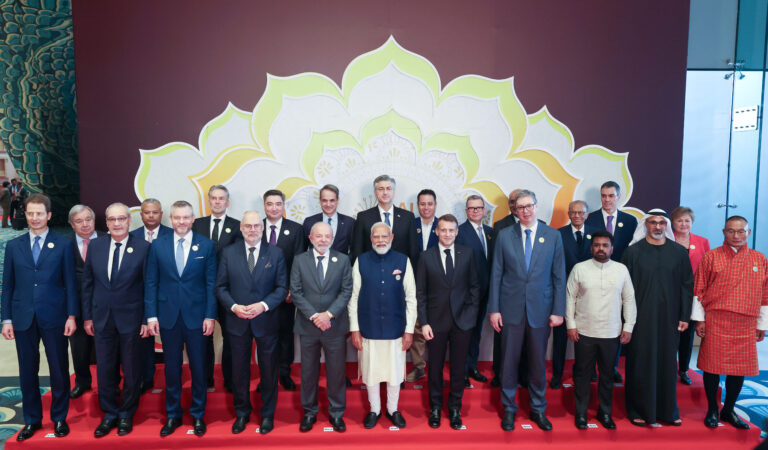
With a population of 1.4 billion, India’s growing importance in the field of AI cannot be overlooked. It is for this reason, the India AI Impact Summit 2026, held in New Delhi from 16–20th February at the iconic Bharat Mandapam, brought together not only 22 Heads of State/Government but also policy makers, tech tycoons, and innovators. The fourth in a series of such summits – Bletchley Park (UK, 2023), Seoul (2024), and Paris (2025) – its magnitude was unmatched with 100+ participating countries, 500+ sessions, 3,250+ speakers and 300+ exhibitors.
Amongst the many prominent political figures attending the event were French President Emmanuel Macron, and Brazilian President Luiz Inácio Lula da Silva. The bigwigs of the tech industry included Sundar Pichai, CEO of Google, Sam Altman, CEO of OpenAI, Demis Hassabis, CEO of Google DeepMind, Dario Amodei, CEO of Anthropic, Matthew Prince, CEO of Cloudflare, Mukesh Ambani, Chairman of Reliance Industries.
M.A.N.A.V. Vision
Inaugurating the Summit, Prime Minister Narendra Modi stressed that India’s vision for AI is ‘Sarvajana Hitaya, Sarvajana Sukhaya’ (Welfare for All, Happiness of All).
To translate this vision into action, PM Modi presented MANAV, the Hindi word for “human”, which serves as an acronym representing five core principles for human-centric AI governance: M – Moral and Ethical Systems: AI should be based on ethical guidelines; A – Accountable Governance: Transparent rules and robust oversight; N – National Sovereignty: Respect for national rights over data; A – Accessible and Inclusive: AI should be a multiplier, not a monopoly; V – Valid and Legitimate: AI should be lawful and verifiable.
AI Summit
Major Investment Announcements
Significant investment commitments across the AI value chain which were announced during the Summit include the following:
Over USD 200 billion in AI-related investments are expected across infrastructure, foundation models, hardware and applications.
Reliance Industries pledged USD 110 billion over seven years towards AI-focused infrastructure.
Tata Group & OpenAI announced a partnership to scale AI-ready data centres.
Adani Enterprises announced plans to invest USD 100 billion by 2035.
General Catalyst announced a USD 5 billion investment commitment over five years, while Lightspeed Venture Partners announced USD 10 billion in investments.
Google announced investments including new India–US subsea cable routes and a USD 15 billion AI hub in Andhra Pradesh; support for AI innovation and digital skills development.
Larsen & Toubro joined Nvidia to build one of India’s largest AI computing facilities.
Adoption of New Delhi Declaration
Endorsed by 92 countries and international organisations, the India AI Impact Summit 2026 Declaration set a shared global vision for an equitable, ethical, and inclusive AI. Inspired by the motto “Sarvajan Hitaya, Sarvajan Sukhaya”, it lays out a comprehensive framework built on seven key pillars, including democratising AI resources, utilising AI for economic growth and social good, ensuring secure and trusted AI, expanding AI in science, enabling social empowerment, developing human capital, and building resilient and energy-efficient systems.
The Legacy of the Summit
The Summit truly democratised AI. Unlike prior global AI gatherings confined to small rooms of CEOs and experts, it brought students, youth and common citizens into the conversation — providing them with direct access to the world’s leading AI thinkers. This inclusive outreach is the defining legacy of the AI Impact Summit 2026, promoting fresh and innovative ideas.
AI Summit -CEO
India in the Global AI Spotlight
India brings unparalleled scale and energy to everything it does and this Summit was no exception. With the presence of world leaders, major technology companies, and innovative startups, the event clearly demonstrated the country’s capability to convene global conversations on the future of technology.
Hosting one of the world’s largest youth populations and technology talent driven by its diversity, democracy and demographic dynamism, India’s energy capacity and policy clarity uniquely position it to harness AI’s full potential.
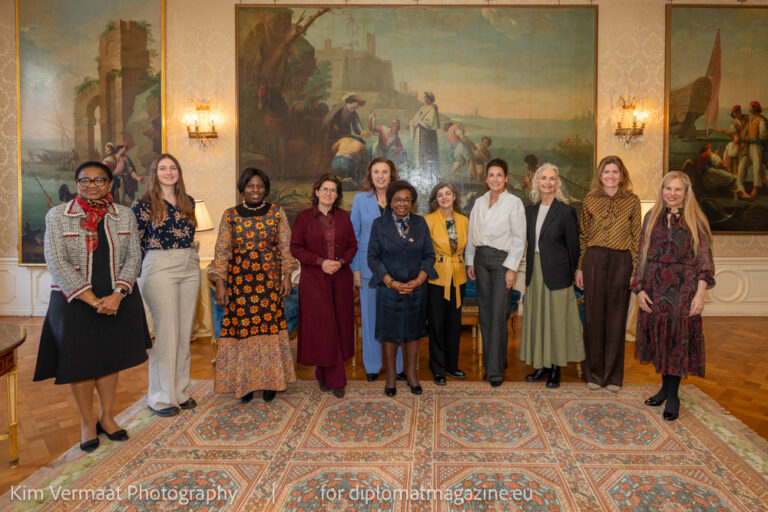
On the occasion of International Women’s Day, the Ambassador of Spain to the Netherlands, H.E. Mrs. Consuelo Femenía Guardiola, hosted a distinguished luncheon at her residence in The Hague. The gathering paid tribute to the vital contributions of women in the fields of international relations and cultural diplomacy, bringing together an accomplished group of professionals from across the arts and diplomatic communities.
The event highlighted the remarkable scope and diversity of the participants’ responsibilities. Each guest represented a unique and inspiring journey, combining demanding professional roles with personal commitments and leadership in their respective fields.
Following a warm and engaging reception, guests were invited to introduce themselves, sharing insights into their work, the challenges of balancing professional and family life, and the sources of their inspiration. The conversation evolved into an enriching dialogue, where experiences, perspectives, and practical wisdom were exchanged. Themes such as resilience, leadership, motherhood, and the pursuit of meaningful careers were reflected around the table.
H.E. Ambassador Mrs. Consuelo Femenia Guardiola with her guests.
Ambassador Femenía created an atmosphere of openness, reinforcing the importance of dialogue and mutual understanding among women from diverse backgrounds. This gathering is part of a tradition she has upheld since the beginning of her tenure in the Netherlands—dedicating an annual luncheon to recognize and celebrate the achievements of women across different sectors.
Her initiative continues to build new ties within the international community while honoring the impact of women’s leadership.
Participants included:
Ms. Mayelinne De Lara, Publisher of Diplomat Magazine
H.E. Madeleine Liguemoh Ondoua, Ambassador of Cameroon
H.E. Odette Melono, Deputy Director-General of the Organisation for the Prohibition of Chemical Weapons
Ms. Virginia Pablos, Amsterdam Spanish Film Festival
H.E. Lizeth Pena, Ambassador of Angola
Ms. Gabriella Sancisi, Director of Protocol and Host Country Affairs, Ministry of Foreign Affairs of the Netherlands
Ms. Helene Stergiou, Foreign Affairs Advisor and Defence Coordinator
H.E. Bibi van Zuylen van Nijevelt, Mistress of the Robes of the Royal Household of the Netherlands
“The greatest enemy of knowledge is not ignorance, but the illusion of knowledge.” — Daniel J. Boorstin
By Major General (Two Stars) (retd) Corneliu Pivariu
In the current context, characterized by strategic complexity and narrative competition, the role of intelligence can no longer be assessed exclusively through the lens of information collection, but through its capacity to support decision-making based on an unaltered evaluation of reality.
The relationship between the politico-military elite and the intelligence community represents one of the critical nodes of state functioning in the security domain. Within this space, not only is information produced, but what may be called strategic truth is constructed—a form of knowledge that is inherently incomplete, probabilistic, and permanently subjected to political and narrative pressure.
Intelligence does not provide certainties, and the politico-military elite (PME) is not merely a passive recipient. Between the two lies an essential process: the transformation of information into strategic courses of action. The quality of this process ultimately determines the quality of political decision-making.
Intelligence as the Raw Material of Decision-Making
The fundamental function of intelligence is to reduce uncertainty, not eliminate it. No intelligence community, regardless of available resources, can provide a complete and definitive picture of strategic reality. Assessments are probabilistic, scenarios are conditional, and warnings are often uncomfortable.
Within this framework, the PME occupies a critical intermediary position. It must interpret information, correlate it with political, military, economic, and alliance dimensions, and transform it into intelligible courses of action. This process is not mechanical; it requires professional judgment, experience, and risk assumption.
In most cases, the problem does not arise from a lack of information, but from how it is used. When intelligence becomes a justificatory backdrop or, conversely, is perceived as a threat to a pre-existing political agenda, the decision-making process degrades and strategic truth becomes distorted.
Strategic Truth: Nature and Limits
Strategic truth is not an objective truth in the classical sense, but an operational construct resulting from the aggregation of incomplete information, competing interpretations, and political and institutional constraints.
It is neither fixed nor definitive. It is dynamic, revisable, and dependent on the institutional capacity to integrate information and to correct initial assumptions. The difference between a high-performing state and a vulnerable one lies not in access to information, but in the ability to construct and maintain a strategic truth as close to reality as possible.
In this sense, strategic truth is not given—it is produced. And the process through which it is produced becomes itself a critical variable of national security.
The Political Filtering of Information
One of the most frequent failures of the strategic decision-making process is not the absence of information, but its biased selection.
In most cases, relevant information exists, but it is filtered: data that confirms already assumed political options is privileged, while contradictory information is marginalized or reinterpreted. This is not necessarily falsification, but a subtle and systematic distortion.
This process may be defined as a form of politicization of strategic truth, in which the evaluation of reality is adapted to the decision objective, rather than the reverse.
Under these conditions, intelligence loses its warning function, and strategic decision-making becomes an exercise in validation, not orientation.
At this point, the PME becomes the critical link. It can function either as a protective filter of strategic truth or as a mechanism for adapting it to the political preferences of the moment.
Its role is not merely to organize information, but to decide what reaches the level of political decision and in what form. Responsibility thus becomes structural, not merely technical.
PME: Beneficiary or Obstacle to Strategic Truth
The quality of a politico-military elite is reflected in its relationship with strategic truth.
A mature PME treats intelligence as a critical resource, encourages analytical pluralism, and accepts professional disagreement as a normal component of the decision-making process. It understands that repeated warnings, even if they do not immediately materialize, are not failures, but expressions of strategic prudence.
By contrast, a defensive or politicized PME tends to penalize analysis that contradicts the dominant line. In such contexts, analytical self-censorship emerges: analysts avoid uncomfortable scenarios in order not to be perceived as alarmist or disloyal.
A PME that penalizes uncomfortable analysis not only reduces its performance but loses its fundamental strategic function. Instead of protecting the state from surprise, it becomes a mechanism of self-confirmation.
Lessons from Recent Failures
The experience of recent conflicts and crises[1] reveals a constant pattern: strategic surprise does not occur because intelligence has completely failed, but because warnings were not integrated into the decision-making process. The problem is not the absence of signals, but the inability to transform them into decisions.
Early warning signals exist, but they are ignored, reinterpreted as improbable, or adapted to an already established narrative.
Each time, the PME stands at the center of this process. It decides which information is considered relevant, how it is framed, and what options are built around it. Responsibility is both strategic and moral, even when it is not formally sanctioned.
The Tension Between Loyalty and Honesty
The relationship between PME and intelligence is marked by a structural tension between institutional loyalty and analytical honesty.
Loyalty to the state and to political leadership is essential. But when loyalty is reinterpreted as the obligation to confirm political expectations, it becomes a form of strategic irresponsibility.
Institutional loyalty must not be confused with analytical conformism.
When critical analysis is discouraged or penalized, intelligence loses its warning function, and the PME becomes an instrument of validation rather than strategic protection. The ability to uphold uncomfortable truths becomes, in this context, a strategic resource in itself.
Strategic Truth in the Era of Narrative Competition
In the current context, strategic truth is subject to an additional pressure: global narrative competition.
Information is no longer only evaluated internally but is integrated into a space of perception confrontation, where legitimacy, morality, and credibility become strategic weapons. The PME must distinguish between the need to protect sensitive information and the temptation to adapt reality to a desired public narrative.
The greatest risk is not external manipulation, but strategic self-deception.
When narrative becomes more important than realistic assessment, the state begins to operate on the basis of a constructed reality rather than an existing one. Under such conditions, strategic error is no longer accidental, but inevitable.
The role of the PME is to maintain a functional separation between communication and analysis, between public messaging and internal assessment. Confusion between the two inevitably degrades decision quality.
Conclusion
The relationship between the politico-military elite and the intelligence community is not merely technical, but fundamental to the functioning of the state.
States do not fail because they lack information, but because they are unable to accept the truth contained within it.
A mature PME leverages warnings, protects analytical pluralism, and accepts uncertainty as a structural element of decision-making. A PME that filters, sanitizes, or instrumentalizes information dramatically reduces its strategic relevance.
Ultimately, the quality of a politico-military elite is measured not only by professional competence, but by its ability to protect strategic truth—even when it contradicts the interests, perceptions, or political comfort of the moment.
The fundamental issue is not whether states possess sufficient information, but whether they are capable of using it without distorting it. In this sense, strategic truth becomes not only a product of intelligence, but a condition for the functioning of the state.
Brașov, March 19, 2026
[1] Recent examples of dysfunctions in the relationship between intelligence, the politico-military elite, and political decision-making illustrate the structural nature of the problem:
In the case of the intervention in Iraq (2003), intelligence regarding the existence of weapons of mass destruction was profoundly distorted in the decision-making process. Subsequent investigations showed that intelligence assessments were selectively used, reinterpreted, and, in some cases, presented in a manner that supported an already formed political option. The problem was not merely one of analytical error, but of the deliberate adaptation of information to a political objective, which compromised the integrity of the strategic decision-making process.
In the context of Afghanistan (2021), numerous intelligence community assessments signaled the institutional fragility of the Afghan state and its dependence on external support. Nevertheless, the pace and form of the withdrawal indicated a discrepancy between existing assessments and the way they were integrated into political decision-making, leading to the rapid collapse of the previously supported system.
In the case of the Russian invasion of Ukraine (2022), warnings regarding the imminence of the conflict existed and were communicated, including publicly, by certain Western states. However, at the European level, part of the political and analytical elites assessed the risk as low or unlikely, highlighting the difficulty of integrating scenarios perceived as having low probability but high strategic impact.
These examples indicate that strategic failures do not predominantly derive from the absence of information, but from the way in which it is filtered, reinterpreted, or adapted within the decision-making process.
Recent developments in Iran (2026) provide an additional example of these dysfunctions, still in the process of clarification. The sequence of precision strikes against sensitive objectives and command levels suggests the existence of significant vulnerabilities in information protection and risk assessment. In this case, the issue does not appear to be the absence of signals, but the difficulty of correctly assessing the extent of adversarial penetration and integrating these assessments into the decision-making process. Thus, the distortion of strategic truth does not necessarily arise as the result of deliberate intervention, but as an effect of limitations in the capacity for interpretation and anticipation.
These examples, drawn from different strategic contexts, indicate that strategic failures do not predominantly derive from the absence of information, but from the way in which it is filtered, reinterpreted, or adapted within the decision-making process.