From 8 Jul – 15 Oct 2017
The South African Embassy in The Hague would like to announce that celebrated South African photographer , Zanele Muholi would be exhibiting a series of her photographs at the Stedelijk Museum in Amsterdam from Saturday, July 8, 2017 to Sunday, October 15, 2017.
The photographs are compiled from two series: ‘Faces and Phases, portraits of South African lesbians’ and ‘Brave Beauties’, which celebrates transgender women.
All art connoisseurs are encouraged to go and view the exhibition.
http://www.stedelijk.nl/tentoonstellingen/zanele-muholi
Mr. Mohammad Sinno, President of the Lebanese Dutch Business Association and Ms Abir Ali, Chargé d’Affaires a.i. of the Embassy of Lebanon.Ambassadors, Dutch Officials, NGO’s and Dutch Business people gathered, at the Residence of Lebanon in Wassenaar, to meet with a Delegation of high-level Lebanese Entrepreneurs, featuring businesses in Agriculture, Food & Beverage, Pharmaceuticals, clothing, small industry, Insurance and Consultancy. Ms Abir Ali welcome H.E. Saywan Barzani, Ambassador of Iraq.This yearly event, organized by the Embassy of Lebanon in collaboration with NCO-VNO (Dutch Entrepreneurs Organization) aims at giving the opportunity to Lebanese and Dutch Entrepreneurs to explore business and investment possibilities, and to strengthen the business ties between Lebanon and the Netherlands. Promoting investments in Lebanon, with her charming smile and subtle anecdotes Ms. Abir Ali, Chargé d’Affaires a.i. of the Embassy of Lebanon, encouraged Dutch Entrepreneurs to invest in Lebanon enhancing financial and administrative incentives. Ms. Ali highlighted the uncomplicated steps needed to build-up a business in Lebanon. She also reassured investors about the stable economic situation. Mr. Mohammad Sinno, President of the Lebanese Dutch Business Association in his word, also invited the Dutch to team-up with the Lebanese and highlighted the favorable climate in Lebanon. Finally, the delicious Lebanese bites, served during this networking event, a wonderful weather and contributed in creating a warm Lebanese atmosphere. H.E. Elyes Ghariani, Ambassador of Tunisia and H.E. Abdelouahab Bellouki , Ambassador of Morocco.
President Trump took his second trip to Europe, visiting this week Poland and Germany.
President Trump reaffirmed America’s commitment to their allies while working to promote American interests abroad. In Poland, President Trump reminded us to value “the dignity of every human life, protects the rights of every person, and share the hope of every soul to live in freedom.”
The President also explained that the “West became great not because of paperwork and regulations but because people were allowed to chase their dreams and pursue their destinies.”
The United States share strong democratic roots and freedoms with Europe.
A joint action day on 19 June in France and Romania led to 23 arrests (13 in France and 10 in Romania) for suspected involvement in a human trafficking ring and participation in a criminal organisation.In 2011, French police became aware of thefts committed on the Metro in and around Paris by young adult and underage Romanian nationals. The level of these crimes peaked in 2015 and 2016, when France hosted very large international events (the Paris Climate Change Conference (CPO 21) and the Euro football competition).Young potential thieves, belonging to family clans from Iasi and Roman in Romania, were regularly trafficked from Romania to France. The thieves reside in one building in Saint-Denis, and are supervised by adult organisers. Every morning, between 6:00 to 10:00, groups of children and young adults leave the building to commit crimes on the Metro.The action was led in France by the Brigade for the protection of minors of Paris, conducted by an investigative judge, and in Romania by the Directorate for Investigation of Organized Crime and Terrorism, Iasi Territorial Office, and Brigade for Combating Organized Crime, as well as Border Police Iasi. Of the 39 suspects identified, 31 are minors. The value of the stolen goods is estimated at approximately EUR 600 000 since 2011.Preparations for the action day were made possible by the signing of a joint investigation team (JIT) agreement between France and Romania, funded and supported by Eurojust.Human trafficking ring dismantled by Spanish and Bulgarian authorities
A large-scale joint investigation, run by the Spanish and Bulgarian judicial and law enforcement authorities, and supported by Eurojust and Europol, has resulted in the dismantling of an international organised crime group involved in trafficking young Bulgarian women to Spain for the purpose of sexual exploitation. In the coordinated action week between 26 June and 30 June, 34 individuals were arrested (26 in Spain and 8 in Bulgaria), and 13 victims of sexual exploitation were safeguarded.
The criminal group operated in Spain and Bulgaria for at least six years, taking control of the prostitution industry in Torremolinos and Marbella, Spain. They recruited vulnerable women in Bulgaria, transported them to Málaga and forced them to practice prostitution in the Marbella area of Puerto Banús. The gang used violence and threats against the victims and their families. The victims were also forced to steal their clients’ cash, credit cards and other valuable objects, sometimes by spiking the clients’ drinks. The objects were channelled to local pawnshops linked to the criminal group, and converted into cash, which was used either to purchase high-value cars or transported back to Bulgaria.
Mr Herbert Ndahiro, First Secretary, H.E. Jean Pierre Karabaranga and spouse Viviane Uwicyeza Mironko.By Roy Lie A Tjam.
The Diplomatic Mission of Rwanda in The Hague under the direction of Ambassador H.E. Jean Pierre Karabaranga, organized a lunch reception at the Hilton Hotel The Hague on 4 July 2017. The occasion, to celebrate Rwanda’s 23 Liberation Day.
Ambassador Karabaranga during the speech.
A good number of Ambassador Karabaranga fellow chiefs of mission, International, and scores of well-wishers attended the celebration.
The program included a presentation by three lovely Rwandan children, a dance demonstration, a speech by Ambassador Karabaranga and a lunch-buffet.
Liberation Day or Kwibohora is celebrated annually on 4 July. This year for the 23rd time. Kwibohora marks the day the Rwandan Patriotic Army liberated Kigali, leading up to the end of the Genocide.
During his speech, Ambassador Karabaranga said:Indeed, on the 4th of July in 1994, the darkest chapter in our history was brought to a close, and a new life could begin. We have come far enough, these past twenty-three years, to allow ourselves a moment of sober satisfaction, as we recommit to the journey ahead.On 4th of July every year Rwandans stand together as a people united, liberated and focused as never before on attaining the future we want. Now that the foundation is firmly laid, we honour our citizen’s individual and collective duty to keep propelling Rwanda forward.In the aftermath of the genocide, Rwandans made three important choices – to stay together, to be accountable and to think big. These decisions have been at the core of the country’s ongoing renewal and efforts to overcome seemingly insurmountable challenges. Kwibohora23 – Liberation Day 2017 is an opportunity to share this story and learn about Rwanda’s vision for a peaceful, prosperous and self-reliant nation.
He added: The liberation of Rwanda was never handed to us on a silver or gold plate: it required enormous sacrifice including many people’s lives. On this date we pay tribute to Rwandan men and women who in different ways contributed to our country’s liberation. The fallen heroes paid the ultimate price during the liberation struggle. Armed with unbreakable conviction to change the unbearable situation of Rwandans, these ordinary men and women were able to do extraordinary acts. Today we pay a special tribute to them. Their blood was not shed in vain.
Kwibohora is an opportunity to recount Rwanda’s liberation story, it’s a day of unity and reconciliation.
Kwibohora is a time to reflect and also to celebrate and move towards a prosperous future.
Ambassador Karabaranga, finished his speech by saying:
The achievements we have recorded in the political and socio-economic development are beyond what any of us would have imagined in the aftermath of the genocide against the Tutsi.Who would have imagined Kigali with such amazing skyscrapers and beautiful paved roads? What about the strides we have made in education? Between 1962 and 1994, Rwanda produced less than 1,000 undergraduates and the total enrolment in university was 2,160 students.In the last 21 years, our kids are enjoying a universal primary and secondary education and 76,000 Rwandans are doing their university studies. Annually, we are producing about 16,000 undergraduates.With 64% women in parliament and having reached the gender parity in primary education, Rwanda is leading the world in promoting women and children’s rights. We have achieved universal health care and Rwandans’ life expectancy increased by 20 years in the last 23 years.Our per capital income since 1994 has increased by about 250%, placing the country on track to become a middle-income country by year 2020. For example before the 1994 war, GDP growth rate was at 2.2% and today available data shows that the Rwandan economy recorded an average growth rate of 8.5% in last 14 years and it is projected to grow by 6.2 percent in 2017 and 6.8 percent in 2018.Rwanda also increased the GDP per capita from less than $185 in 1994 to $844 by the end of 2016. This contributed greatly in reducing poverty levels from 78% in 1995 to 32% in 2016.In 1994, Rwanda’s total budget was a only 50 billion Rwandans francs, nearly 100 % of it externally funded. Today, the upcoming the 2017/2018 fiscal year the national budget is valued at two trillion, ninety four billion, nine hundred and ten million, four hundred eighty thousand five hundred forty-five (Frw 2.094,910,480,545).Rwanda will contribute and finance 66% of its national budget plus 17% of loans, making the total of 83% of the entire budget. According to the Budget Framework Paper (BPF) 2017/2018 Rwanda will pull its domestic revenue to 66% to the whole budget plus 17% of loans, making the total of 83% of national budget. The remaining 17% will come from foreign aid.The 2017/2018 budget framework paper projects foreign direct investment to continue to increase reaching USD 307.2 million, USD 404.4 million and USD 439 million respectively in 2017, 2018 and 2019, from USD 258.9 million in 2016.Again it is worth to note that the 2016 World Bank report ranked Rwanda among the fastest growing economies of the world, the 2nd easiest place to do business in Sub-Sahara Africa and first in the region.To sum it up, Rwanda is no longer a case study for conflict but a model of stability, good governance and fast growing economy. Although, as Rwandans we have much to be proud of, we have no room for complacency. The journey ahead is still long and demands that we double or even triple the momentum where need be.As we celebrate the Liberation Day, we challenge ourselves to safeguard the successes recorded while thriving to achieve more. We want stability and continuity.
Insights from Professor Anis Bajrektarevic.Trans-Pacific View author Mercy Kuo regularly engages subject-matter experts, policy practitioners, and strategic thinkers across the globe for their diverse insights into U.S. Asia policy. This conversation with Dr. Anis Bajrektarevic – chairperson and professor in international law and global political studies, Vienna, Austria and editor of the New York-based scientific journal Geopolitics, History, and International Relations – is the 98th in “The Trans-Pacific View Insight Series.”
Q1: Compare and contract regional security architectures in Asia and Europe.
While all other major theaters have had pan-continental settings in place already for many decades, such as the Organization of American States – OAS (American continent); African Union – AU (Africa); Council of Europe and Organization for Security and Cooperation in Europe – OSCE (Europe), Asia is rather different. What becomes apparent, at first glance, is the absence of any pan-Asian security/ multilateral structure. Prevailing security structures are bilateral and mostly asymmetric. They range from the clearly defined and enduring non-aggression security treaties, through less formal arrangements, up to the Ad hoc cooperation accords on specific issues.
The presence of the multilateral regional settings is limited to a very few spots in the largest continent, and even then, they are rarely mandated with security issues in their declared scope of work.
Another striking feature is that most of the existing bilateral structures have an Asian state on one side, and an either peripheral or external protégé country on the other side which makes them nearly, per definition, asymmetric. The examples are numerous: the US–Japan, US– S. Korea, US–Singapore, Russia–India, Australia–East Timor, Russia–North Korea, Japan –Malaysia, China–Pakistan, US–Pakistan, China–Cambodia, US–Saudi Arabia, Russia –Iran, China–Burma, India–Maldives, Iran–Syria, N. Korea–Pakistan, etc.
Q2: With Brexit in the UK and the “America First” foreign policy of the US, please give us your take on the future of NATO.
The West is apparently in a serious decline. The UK has been sliding down for 100 years, absorbing it by a skilful set of planetary contrasts. The US has been melting ever since the end of WWII. In 1945, Americans had 54% of global manufacturing output, today it is hardly a 1/3 of it.
NATO is a relict of Cold War instrumentarium. Currently, confrontational nostalgia is what keeps it afloat. Atlantistic world is overcommitted and overstretched. London and Washington understand that NATO increasingly becomes part of a problem not a solution, for their own future. Europe goes along with it. Simply, the Old Continent is not a wealthy club anymore. It is a theater with a memory of its wealthy past. The EU has to learn how to deescalate and compromise. This is in its best interest, for the sake of its only viable future.
Q3: Is an Asian version of NATO plausible?
Why does the world’s largest continent must consider creation of a comprehensive pan-Asian institution? Not a military pact a’la NATO (since NATO is only an instrument of American military presence in Europe) but a true multi-vector and multilateral instrument. Prevailing security structures in Asia are bilateral and mostly asymmetric, while Europe enjoys multilateral, balanced and symmetric setups (the American and African
continents too).
In my forthcoming book No Asian century, I go as far as to claim that irrespective of the impressive economic growth, no Asian century will emerge without creation of such an institution. Asia today is a huge running water without clear river banks – a rising economic success, social volcano and political hazard.
Q4: Identify three ongoing geopolitical risks that Asia and Europe share.
For most of the 19th and a good part of 20th century, a central question of Europe and Euro-Atlantic was how many ‘Germanys’ Europe can digest – one big, über-performing and omnipresent, or several Germanophone states in a dynamic equilibrium with itself and the rest. This and the so-called the grand accommodation – Germany with Russia or France with Russia – remains a central security dilemma for many decades to come.
On the other flank of the world, the entire Asian architecture was based on an assumption of a weak center; fragmented, backword and soft mainland China. What we are witnessing now is awaking of China – reminiscence of an imperial Germany in the heart of Europe.
Q5: What common linkages underpin U.S. transatlantic and transpacific relations, and how should the U.S. administration capitalize on them?
Chinese grab for fossil fuels or its military competition for naval control is not a challenge but rather a boost for the US Asia-Pacific –even an overall posture. Calibrating the contraction of its overseas projection and commitments – managing the decline of an empire – the US does not fail to note that nowadays half of the world’s merchant tonnage passes though the South China Sea. Therefore, the US will exploit any regional territorial dispute and other frictions to its own security benefit, including the costs sharing of its military presence with the local partners, as to maintain its pivotal position on the maritime edge of Asia that arches from the Persian Gulf to the Indian Ocean, Malacca, the South and East China Sea up to the northwest–central Pacific.
A real challenge is always to optimize the (moral, political and financial) costs in meeting national strategic objectives. In this case, it would be a resolute Beijing’s turn towards green technology, coupled with the firm buildup of Asian multilateralism. Without a grand rapprochement to the champions of multilateralism in Asia, which are Indonesia, India and Japan, there is no environment for China to seriously evolve and emerge as a formidable, lasting and trusted global leader.
Consequently, what China needs in Asia is not a naval race of 1908, but the Helsinki process of 1975. In return, what Asia needs from China and Japan is the ‘ASEAN-ization’, not the ‘Pakistanization’ of its continent.
————
Fist published by:http://thediplomat.com/2017/06/regional-security-architectures-comparing-asia-and-europe/
28 June 17
About the author:
Author is chairperson and professor in international law and global political studies, Vienna, Austria. He is Editor of the New York-based scientific journal GHIR (Geopolitics, History, Intl Relations). Professors authors four books: FB – Geopolitics of Technology (Addleton Academic Publishers, NY); Geopolitics – Europe 100 years later (DB, Europe), Geopolitics – Energy – Technology (Germany, LAP). Europe and Africa – Security structures (Nova, NY) is his latest, just released book. His new book is No Asian century.
The Hague, 05 July 2017Today, in an international joint action day in Italy, Spain and Germany, 32 people were arrested, suspected of involvement in drug trafficking, participation in a criminal organisation and money laundering. The action day was the culmination of complex investigations, led by the Italian Direzione Distrettuale Antimafia ed Antiterrorismo of Naples and the Spanish Audiencia Nacional and Fiscalia Especial Anticorrupcion y Contra la Criminalidad Organizada, with the support of Eurojust. The Italian Procura Nazionale Antimafia ed Antiterrorismo was involved as well, in its role as coordinating body for the investigations at Italian level and as Eurojust national correspondent.Eurojust ensured proper coordination at EU level of the national investigations, and full legal and operational assistance to all national authorities involved. Today, Eurojust set up a coordination centre at its premises in The Hague to coordinate the joint execution of the arrests, searches and seizures in Italy, Spain and Germany and to facilitate the real-time exchange of information among all judicial and law enforcement officials involved in the joint operations.The case was referred to Eurojust by the Anti-Mafia Prosecution Office in Naples in 2016 for assistance in judicial cooperation, following an Italian investigation commencing at the end of 2015 after a drug seizure. An exchange of information facilitated by Europol clarified links to a Spanish organised criminal group (OCG) involved, among other criminal activities, in extortion, money laundering and transporting large quantities of cocaine and hashish from Spain to Italy.To avoid interception, the OCG communicated via electronic means (Skype, Whatsapp and Viber) and encrypted mobile telephones. The drug proceeds were laundered via reinvestment in catering, food import and export, trade in precious metals and vehicles, and football. As a result of today’s action, EUR 5 million and hundreds of kilos of drugs were seized in Italy, Spain and Germany. The OCG also had bank accounts in several offshore tax havens.To assist the competent authorities in carrying out parallel investigations in this complex case, a joint investigation team (JIT) was signed between Italy and Spain in October 2016, funded and supported by Eurojust. This JIT was the first ever signed by Italy, after a change in its national legislation in March 2016. The speed of the progress achieved after the signing of the JIT is striking compared to the lengthy time previously required by traditional mutual legal assistance procedures. The JIT was extended in time to cover the joint action.A coordination meeting took place in January 2017 to exchange operational information and adopt a common strategy, including a decision on the joint action day and how to avoid conflicts of jurisdiction. Operational meetings also took place at Europol, in Spain and in Italy. Europol employed a mobile office on the action day, and officers were present in Italy, Spain and Germany.National judicial and law enforcement authoritiesIn Spain, Juzgado Central de Instrucción nº 6 de la Audiencia Nacional, Fiscalia Especial Anticorrupcion y Contra la Criminalidad Organizada, Guardia Civil (UCO), Mossos d’Esquadra (UCAI, UCB and UCE).In Italy, Procura Nazionale Antimafia ed Antiterrorismo, Procura della Repubblica Presso il Tribunale di Napoli, Direzione Distrettuale Antimafia (DDA), Guardia di Finanza (Nuclei di Polizia Tributaria di Napoli e Pisa).
The exhibition Fashion Cities Africa will open at the Tropenmuseum in Amsterdam on 6 October 2017. Through the eyes of fashion agents from Casablanca, Johannesburg, Lagos, Nairobi and the Netherlands, visitors discover the lively and diverse fashion scenes that shake up the world of fashion. Fashion items, personal accounts, blogs, photographs and films will immerse visitors in a visual spectacle highlighting a number of trends.From streetwear to couture
Fashion is hot in Africa, but there is no such thing as ‘African fashion’. There are flourishing fashion scenes in several cities, ranging from streetwear to couture, and from experimental to more conventional. The people wearing, creating and studying these fashions use them to display their identity, personal tastes and background. The fashions are often deeply rooted in the city where these people live, the city that holds a mirror to them. Fashion Cities Africa showcases the diversity of fashion in four African cities – full of creativity, inspiration and entrepreneurial spirit.Local perspective
Fashion Cities Africa explores the urban fashion scenes from the perspective of local designers, stylists, retailers, photographers and bloggers. The brother and sister team behind 2ManySiblings, for example, takes us to the market in Nairobi where they buy second-hand designer clothes in order to restyle them. The exhibition also includes creations by The Sartists (Johannesburg), Said Mahrouf (Casablanca) and the Maki Oh fashion label (Lagos), which is favoured by celebrities such as Beyoncé and Michelle Obama.Africa in the Netherlands
The Tropenmuseum has also invited four Dutch fashion agents who incorporate their African roots into fashion – Daily Paper, DoruNsimba, Karim Adduchi and Lady Africa – to participate in the exhibition. For Fashion Cities Africa, they share their inspiration, methods and designs with visitors.Fashion Cities Africa will be organised in collaboration with Royal Pavilion & Museums, Brighton & Hove, with sponsorship by BankGiro Loterij and Prins Bernhard Cultuurfonds.
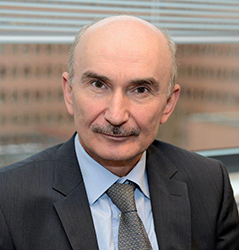
Mr Nikolaos (Nick) Panagiotopoulos was appointed Administrative Director of Eurojust during the plenary meeting of the College of Eurojust on 30 May 2017. He took up his duties on 1 July 2017.Mr Nikolaos (Nick) Panagiotopoulos, Eurojust Administrative Director. Mr Panagiotopoulos was born in Greece. He was awarded a Bachelor of Arts, Honours Political Science, Concordia University (1982), a Bachelor of Laws LLB, McGill University (1985), a Master’s degree in European Administration and Policy, Panteion University (2002), and a Post-Graduate Certificate in Human Resource Management, after having successfully completed a work-based programme co-organised by the European Commission and the University of Kingston (2014). Mr Panagiotopoulos’ professional experience spans over 30 years, having served in both national and EU administrations in areas of human resources, budgeting and auditing. He chaired the Council Working Group on Staff Regulations during the Greek Presidency in 2003, ensuring that a political compromise was reached on the first major revision of the Staff Regulations in 50 years. This revision was foreseen in the White Paper for the Reform of the European Commission. In 2006, he was appointed Chairperson of the European Commission Task Force for the Simplification of Administrative Procedures, an initiative of then Vice-President, Mr Siim Kallas.As Head of the Human Resources Unit at Eurojust, Mr Panagiotopoulos was responsible for the reorganisation of the unit and a change of its strategy, focusing on providing staff with professional customer-oriented services. As Administrative Director ad interim, he designed and implemented the first major reorganisation of the Administration, with a view to ensuring efficiencies and synergies, and focusing on supporting the operational activities of Eurojust.———-
The President of the Mechanism for International Criminal Tribunals (MICT or Mechanism), Judge Theodor Meron, was awarded the Officer’s Cross of the Order of Merit of the Republic of Poland at a ceremony recently held at the Polish embassy in The Hague.
In accepting the award, President Meron expressed his deep gratitude to the President and the Government of the Republic of Poland for the great distinction bestowed upon him in recognition of his contributions to the development of international humanitarian law and international criminal law.
“I do not see these honours as purely personal matters. More than anything, they reflect the appreciation of the country of my birth for a concept that I believe we all hold dear: the rule of law.”
Following the decorations ceremony, President Meron delivered remarks on “The Future of International Criminal Justice”, addressing the challenges faced by international criminal justice today and discussing some of the ways to move forward in the global effort towards greater accountability. “Now is the time to take concrete steps to advance the cause of accountability at the national, regional, and international levels and in a wide variety of fora. It is by doing so that we will, I believe, narrow the gap between the important normative and rhetorical advances made in recent years, on the one hand, and our actual results in the fight to end impunity, on the other”, President Meron concluded.
The Order of the Merit is a distinction conferred on foreigners and Polish citizens permanently living abroad who have made outstanding contributions to international cooperation and to bonds between the Republic of Poland and other nations and countries.
Appointments to the Order of Merit are made by the President of the Republic of Poland at his own initiative or upon the recommendation of the Prime Minister or the Minister of Foreign Affairs.


 Promoting investments in Lebanon, with her charming smile and subtle anecdotes Ms. Abir Ali, Chargé d’Affaires a.i. of the Embassy of Lebanon, encouraged Dutch Entrepreneurs to invest in Lebanon enhancing financial and administrative incentives.
Ms. Ali highlighted the uncomplicated steps needed to build-up a business in Lebanon. She also reassured investors about the stable economic situation. Mr. Mohammad Sinno, President of the Lebanese Dutch Business Association in his word, also invited the Dutch to team-up with the Lebanese and highlighted the favorable climate in Lebanon.
Promoting investments in Lebanon, with her charming smile and subtle anecdotes Ms. Abir Ali, Chargé d’Affaires a.i. of the Embassy of Lebanon, encouraged Dutch Entrepreneurs to invest in Lebanon enhancing financial and administrative incentives.
Ms. Ali highlighted the uncomplicated steps needed to build-up a business in Lebanon. She also reassured investors about the stable economic situation. Mr. Mohammad Sinno, President of the Lebanese Dutch Business Association in his word, also invited the Dutch to team-up with the Lebanese and highlighted the favorable climate in Lebanon.
 Finally, the delicious Lebanese bites, served during this networking event, a wonderful weather and contributed in creating a warm Lebanese atmosphere.


 He added: The liberation of Rwanda was never handed to us on a silver or gold plate: it required enormous sacrifice including many people’s lives. On this date we pay tribute to Rwandan men and women who in different ways contributed to our country’s liberation. The fallen heroes paid the ultimate price during the liberation struggle. Armed with unbreakable conviction to change the unbearable situation of Rwandans, these ordinary men and women were able to do extraordinary acts. Today we pay a special tribute to them. Their blood was not shed in vain.
Kwibohora is an opportunity to recount Rwanda’s liberation story, it’s a day of unity and reconciliation.
Kwibohora is a time to reflect and also to celebrate and move towards a prosperous future.
He added: The liberation of Rwanda was never handed to us on a silver or gold plate: it required enormous sacrifice including many people’s lives. On this date we pay tribute to Rwandan men and women who in different ways contributed to our country’s liberation. The fallen heroes paid the ultimate price during the liberation struggle. Armed with unbreakable conviction to change the unbearable situation of Rwandans, these ordinary men and women were able to do extraordinary acts. Today we pay a special tribute to them. Their blood was not shed in vain.
Kwibohora is an opportunity to recount Rwanda’s liberation story, it’s a day of unity and reconciliation.
Kwibohora is a time to reflect and also to celebrate and move towards a prosperous future.
 Ambassador Karabaranga, finished his speech by saying:
The achievements we have recorded in the political and socio-economic development are beyond what any of us would have imagined in the aftermath of the genocide against the Tutsi.
Who would have imagined Kigali with such amazing skyscrapers and beautiful paved roads? What about the strides we have made in education? Between 1962 and 1994, Rwanda produced less than 1,000 undergraduates and the total enrolment in university was 2,160 students.
In the last 21 years, our kids are enjoying a universal primary and secondary education and 76,000 Rwandans are doing their university studies. Annually, we are producing about 16,000 undergraduates.
With 64% women in parliament and having reached the gender parity in primary education, Rwanda is leading the world in promoting women and children’s rights. We have achieved universal health care and Rwandans’ life expectancy increased by 20 years in the last 23 years.
Our per capital income since 1994 has increased by about 250%, placing the country on track to become a middle-income country by year 2020. For example before the 1994 war, GDP growth rate was at 2.2% and today available data shows that the Rwandan economy recorded an average growth rate of 8.5% in last 14 years and it is projected to grow by 6.2 percent in 2017 and 6.8 percent in 2018.
Rwanda also increased the GDP per capita from less than $185 in 1994 to $844 by the end of 2016. This contributed greatly in reducing poverty levels from 78% in 1995 to 32% in 2016.
In 1994, Rwanda’s total budget was a only 50 billion Rwandans francs, nearly 100 % of it externally funded. Today, the upcoming the 2017/2018 fiscal year the national budget is valued at two trillion, ninety four billion, nine hundred and ten million, four hundred eighty thousand five hundred forty-five (Frw 2.094,910,480,545).
Rwanda will contribute and finance 66% of its national budget plus 17% of loans, making the total of 83% of the entire budget. According to the Budget Framework Paper (BPF) 2017/2018 Rwanda will pull its domestic revenue to 66% to the whole budget plus 17% of loans, making the total of 83% of national budget. The remaining 17% will come from foreign aid.
The 2017/2018 budget framework paper projects foreign direct investment to continue to increase reaching USD 307.2 million, USD 404.4 million and USD 439 million respectively in 2017, 2018 and 2019, from USD 258.9 million in 2016.
Again it is worth to note that the 2016 World Bank report ranked Rwanda among the fastest growing economies of the world, the 2nd easiest place to do business in Sub-Sahara Africa and first in the region.
To sum it up, Rwanda is no longer a case study for conflict but a model of stability, good governance and fast growing economy. Although, as Rwandans we have much to be proud of, we have no room for complacency. The journey ahead is still long and demands that we double or even triple the momentum where need be.
As we celebrate the Liberation Day, we challenge ourselves to safeguard the successes recorded while thriving to achieve more. We want stability and continuity.
Ambassador Karabaranga, finished his speech by saying:
The achievements we have recorded in the political and socio-economic development are beyond what any of us would have imagined in the aftermath of the genocide against the Tutsi.
Who would have imagined Kigali with such amazing skyscrapers and beautiful paved roads? What about the strides we have made in education? Between 1962 and 1994, Rwanda produced less than 1,000 undergraduates and the total enrolment in university was 2,160 students.
In the last 21 years, our kids are enjoying a universal primary and secondary education and 76,000 Rwandans are doing their university studies. Annually, we are producing about 16,000 undergraduates.
With 64% women in parliament and having reached the gender parity in primary education, Rwanda is leading the world in promoting women and children’s rights. We have achieved universal health care and Rwandans’ life expectancy increased by 20 years in the last 23 years.
Our per capital income since 1994 has increased by about 250%, placing the country on track to become a middle-income country by year 2020. For example before the 1994 war, GDP growth rate was at 2.2% and today available data shows that the Rwandan economy recorded an average growth rate of 8.5% in last 14 years and it is projected to grow by 6.2 percent in 2017 and 6.8 percent in 2018.
Rwanda also increased the GDP per capita from less than $185 in 1994 to $844 by the end of 2016. This contributed greatly in reducing poverty levels from 78% in 1995 to 32% in 2016.
In 1994, Rwanda’s total budget was a only 50 billion Rwandans francs, nearly 100 % of it externally funded. Today, the upcoming the 2017/2018 fiscal year the national budget is valued at two trillion, ninety four billion, nine hundred and ten million, four hundred eighty thousand five hundred forty-five (Frw 2.094,910,480,545).
Rwanda will contribute and finance 66% of its national budget plus 17% of loans, making the total of 83% of the entire budget. According to the Budget Framework Paper (BPF) 2017/2018 Rwanda will pull its domestic revenue to 66% to the whole budget plus 17% of loans, making the total of 83% of national budget. The remaining 17% will come from foreign aid.
The 2017/2018 budget framework paper projects foreign direct investment to continue to increase reaching USD 307.2 million, USD 404.4 million and USD 439 million respectively in 2017, 2018 and 2019, from USD 258.9 million in 2016.
Again it is worth to note that the 2016 World Bank report ranked Rwanda among the fastest growing economies of the world, the 2nd easiest place to do business in Sub-Sahara Africa and first in the region.
To sum it up, Rwanda is no longer a case study for conflict but a model of stability, good governance and fast growing economy. Although, as Rwandans we have much to be proud of, we have no room for complacency. The journey ahead is still long and demands that we double or even triple the momentum where need be.
As we celebrate the Liberation Day, we challenge ourselves to safeguard the successes recorded while thriving to achieve more. We want stability and continuity.


 Local perspective
Fashion Cities Africa explores the urban fashion scenes from the perspective of local designers, stylists, retailers, photographers and bloggers. The brother and sister team behind 2ManySiblings, for example, takes us to the market in Nairobi where they buy second-hand designer clothes in order to restyle them. The exhibition also includes creations by The Sartists (Johannesburg), Said Mahrouf (Casablanca) and the Maki Oh fashion label (Lagos), which is favoured by celebrities such as Beyoncé and Michelle Obama.
Africa in the Netherlands
The Tropenmuseum has also invited four Dutch fashion agents who incorporate their African roots into fashion – Daily Paper, DoruNsimba, Karim Adduchi and Lady Africa – to participate in the exhibition. For Fashion Cities Africa, they share their inspiration, methods and designs with visitors.
Fashion Cities Africa will be organised in collaboration with Royal Pavilion & Museums, Brighton & Hove, with sponsorship by BankGiro Loterij and Prins Bernhard Cultuurfonds.
Local perspective
Fashion Cities Africa explores the urban fashion scenes from the perspective of local designers, stylists, retailers, photographers and bloggers. The brother and sister team behind 2ManySiblings, for example, takes us to the market in Nairobi where they buy second-hand designer clothes in order to restyle them. The exhibition also includes creations by The Sartists (Johannesburg), Said Mahrouf (Casablanca) and the Maki Oh fashion label (Lagos), which is favoured by celebrities such as Beyoncé and Michelle Obama.
Africa in the Netherlands
The Tropenmuseum has also invited four Dutch fashion agents who incorporate their African roots into fashion – Daily Paper, DoruNsimba, Karim Adduchi and Lady Africa – to participate in the exhibition. For Fashion Cities Africa, they share their inspiration, methods and designs with visitors.
Fashion Cities Africa will be organised in collaboration with Royal Pavilion & Museums, Brighton & Hove, with sponsorship by BankGiro Loterij and Prins Bernhard Cultuurfonds.