
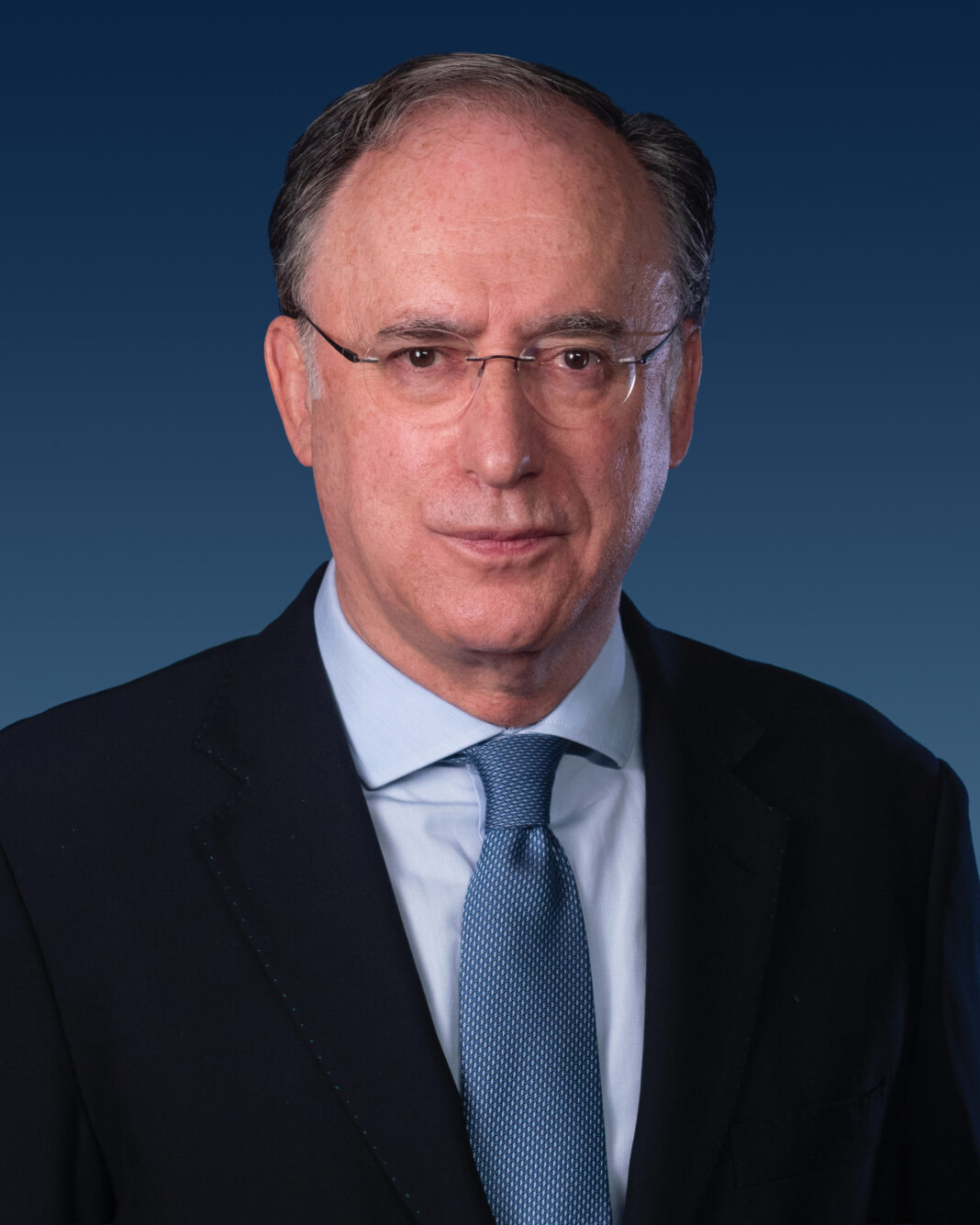

As his eight-year tenure as Director-General of the Organisation for the Prohibition of Chemical Weapons (OPCW) draws to a close, H.E. Ambassador Fernando Arias offers his final reflections to Diplomat Magazine. One of the most senior and respected figures within The Hague’s diplomatic community, Ambassador Arias has dedicated more than a decade of service in the Netherlands, including four years as Ambassador of Spain and eight years leading one of the world’s most critical multilateral institutions.
Elected by the Conference of the States Parties representing 193 member states, his leadership has coincided with a historic milestone: the verified destruction of all declared chemical weapons stockpiles worldwide. Yet, as he underscores, the mission is far from complete. In an era marked by geopolitical tensions, emerging technologies, and evolving security threats, the OPCW remains at the forefront of safeguarding international peace and security.
In this exclusive final interview, Ambassador Arias reflects on the Organisation’s achievements, the persistent risks of chemical weapons, and the challenges that lie ahead—offering a compelling perspective on why the OPCW’s work is more essential today than ever before.

As the head of the OPCW, could you explain the key successes of the Organisation over the past 30 years?
One of the OPCW’s most notable achievements is its near-universal membership: 193 States Parties, equal to that of the United Nations.
As a Nobel Peace Prize laureate, the Organisation has made a significant contribution to international peace and security through its extensive efforts to eliminate chemical weapons. This has been one of its greatest achievements.
By July 2023, all 72,000 metric tonnes of declared chemical weapons worldwide had been irreversibly destroyed by the possessor States Parties under stringent verification by the OPCW.
Hundreds of international cooperation activities have been conducted by the OPCW over the past 30 years. These initiatives have spanned broad areas, including assistance and protection in case of use of chemical weapons or chemical incidents, technical capacity building on national implementation of the Chemical Weapons Convention (the Convention), and the promotion of peaceful uses of chemistry.
The programmes for enhancing the expertise of customs officials, first responders, investigators and laboratory analysts have been especially valued by States Parties, as has our dedicated Africa Programme, tailor-made to meet the needs of African Member States.
These achievements are the result of the collective vision of the States Parties of a world free of chemical weapons, and of their commitment to the Convention and the OPCW. The Technical Secretariat of the OPCW has played its crucial role by effectively and professionally implementing its mandate.
You mentioned that all declared chemical weapons stockpiles had been irreversibly destroyed by 2023. What issues is the OPCW currently addressing? What are the remaining risks and challenges in achieving a world free from chemical weapons threats?
Although the stockpiled chemical weapons declared by possessor States Parties have all been destroyed, that does not mean that chemical weapons no longer pose a threat to international peace and security.
Currently, we are working with the new Government of Syria on the comprehensive identification and destruction of all components of the Syrian chemical weapons programme left behind by the Assad regime. We are also working together with relevant States Parties to destroy the old and abandoned chemical weapons from the First and Second World Wars, which continue to be discovered in several places.
Apart from that, to provide collective assurances of the adherence to the Convention by all States Parties, we monitor nearly 5,000 chemical research and industrial facilities all over the world, to verify that these facilities are used exclusively for peaceful purposes. We are also working with partners in the international community to prevent chemical terrorism, among other things.
The main challenges fall into two categories: those related to proliferation and re-emergence of chemical weapons; and those related to the emergence of new disruptive technologies.
The Convention bans an entire category of weapons of mass destruction.
Yet, recent conflicts and escalating geopolitical tensions have heightened concerns over continued possible use of chemical weapons on the battlefield.
At the same time, new and emerging technologies present significant challenges, as many of them can be misused in ways that undermine the object and purpose of the Convention, making it possible to acquire, weaponise and use toxic chemicals as weapons, in a faster, easier and more effective way.

Recognising that the Chemical Weapons Convention was negotiated 40 years ago, and that the political and security dynamics as well as the scientific and technological landscape have shifted so much since then, do you believe that the Convention remains effective and sufficient in curbing the chemical weapons threat? Has the OPCW taken any steps to adapt to these developments?
The OPCW is the international organisation tasked with ensuring a chemical weapons‑free world. It is undisputed that chemical weapons are stigmatised and considered abhorrent by the international community. No State has contested the Convention or legitimised the use of chemical weapons. Consequently, there is widespread political support for the work of the Organisation. In spite of the challenges I have mentioned, the Convention remains resilient and technically sound, with a rigorous verification regime.
However, more than 35 years have passed since the Convention was negotiated, and the text is showing its age. The global political tensions make it extremely difficult to introduce substantive amendments to the Convention. Nevertheless, there have been successful efforts to keep pace with scientific developments. For instance, in response to the use of a variant of the novichok nerve agent in 2018, the States Parties decided to amend the schedules of chemicals subject to OPCW verification, to incorporate a number of new novichok-related chemicals in the coverage of the Convention. I believe more technical changes of this nature will be needed in the future.
More broadly, the Secretariat and the States Parties continue to assess the implementation of the Convention every five years at a Review Conference. The Scientific Advisory Board also provides advice to me on ways that the Convention can be adapted and strengthened. Such mechanisms have proven effective at keeping the Convention fit for purpose in a changing world.
Could you elaborate on new technologies and their implications for the OPCW? How might technological advancements affect the Organisation’s work in the future?
New and emerging technologies have a direct impact on the functioning of the Organisation. AI, in particular, improves our laboratory capabilities at the OPCW Centre for Chemistry and Technology, and also has uses in various inspections, investigations, forensics and sampling techniques involving sophisticated scientific methods.
However, these benefits co-exist with risks. To cite some examples, formulas for new and extremely toxic chemicals can now be generated quickly, easily and cheaply, without the need for extensive manual research and laboratory capacity. Fortunately, for the time being, the step between obtaining the formula and the material production of the chemicals remains complicated. Nonetheless, we must be alert to the reality that these technologies could make it easier for malicious actors to develop and deploy new toxic chemicals as weapons. Equally concerning are technologies such as drones, which can be used as delivery systems for toxic chemicals, extending their reach and causing harm on a wider scale.
New technologies also enable the design of new and powerful laboratories in a small space, making detection difficult in case of illegal activities. 3D printing allows the manufacturing of equipment to take place locally, thereby avoiding the scrutiny usually performed by control regimes that regulate international trade.
Automation enables laboratories to operate with minimal staff, reducing the risks of information leaks and making clandestine illegal activities harder to detect.
These are but a few examples, and there are many more that affect the threat spectrum the Organisation faces.
In this context, could you share insights about the recently inaugurated OPCW ChemTech Centre? What kind of activities are conducted there?
The Centre for Chemistry and Technology (the ChemTech Centre), which was inaugurated in the presence of His Majesty King Willem-Alexander of the Netherlands in May 2023, was the Organisation’s response to challenges posed by scientific and technological developments as well as the evolving political context. Its state-of-the-art facilities and capabilities bolster our ability to monitor and react to any potential risk of the re-emergence of chemical weapons. The Centre also serves as a hub for maintaining and improving the skills and knowledge of our experts.
Today, the ChemTech Centre is an invaluable platform where we conduct the technical work and training programmes I have mentioned. It also constitutes a powerful tool at the disposal of the States Parties, with significant potential to further enhance national implementation of the Convention in all its aspects.
Given everything you have mentioned, what are your thoughts on the future of the OPCW in this turbulent age?
When the Convention was being negotiated, some founding fathers of the Organisation thought with good reason that the OPCW would have completed its most fundamental role with the completion of the destruction of declared stockpiles. They anticipated that, upon reaching this milestone, the Organisation could be reduced to a very small Secretariat, or even be closed. The unexpected reality is that with rising geopolitical tensions and the risks posed by new and emerging technologies, this Organisation’s work will continue well into the future. In effect, the OPCW is now more necessary than ever.