
By H.E. Mr. Milisav Raspopovic, Ambassador of Montenegro
Upon my arrival in the Netherlands, I often heard an interesting observation when speaking with local residents. Whenever Montenegro was mentioned, someone would inevitably smile and remark that Montenegrins, together with the Dutch, are among the tallest people in the world.
“We are a modest nation,” I would usually reply. “We would gladly accept slightly lesser proportions if it meant standing alongside you as the tallest members of the European Union.”
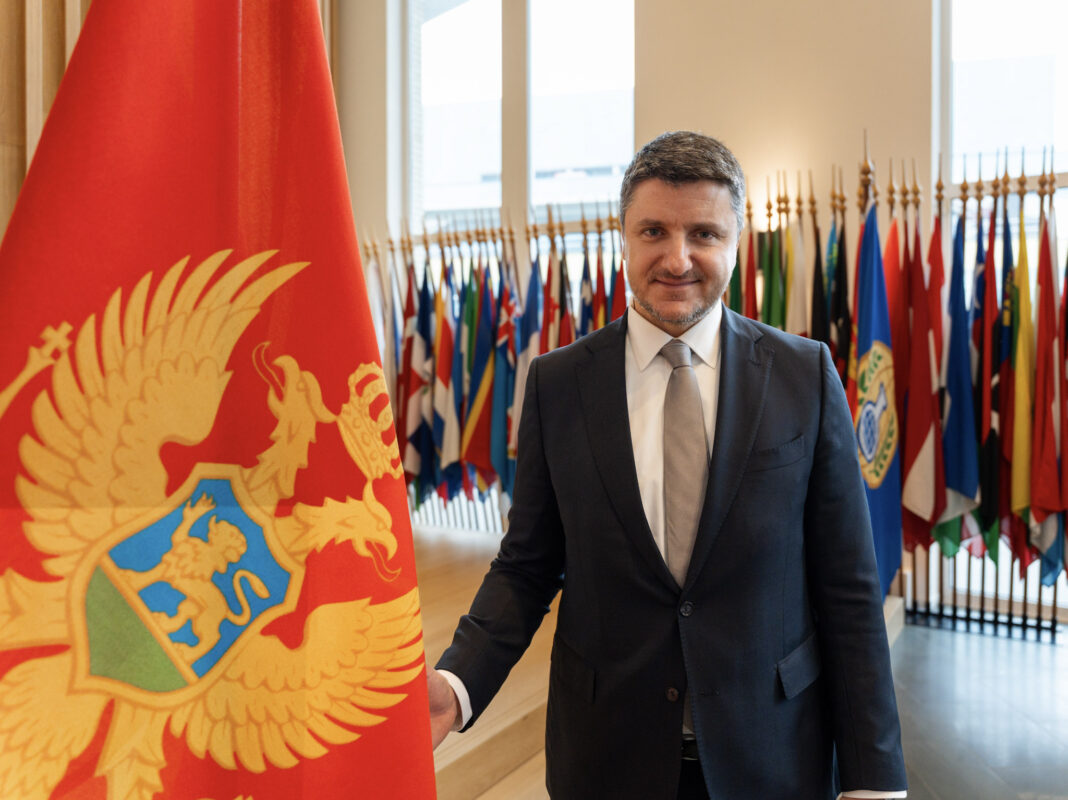
Behind this friendly exchange lies a sincere national aspiration. Full membership in the European Union remains the cornerstone of Montenegro’s foreign policy. Guided by this strategic objective, Montenegro made the decision to establish, for the first time, a resident Embassy in the Kingdom of the Netherlands, thereby strengthening its presence in a country with which we share both friendly bilateral relations and allied ties within NATO.
The opening of the Embassy of Montenegro in The Hague therefore represents far more than a diplomatic formality. It is a clear signal of our determination to deepen cooperation with a country that strongly supported Montenegro’s accession to NATO and that continues to play an important role in maintaining political momentum for European integration.
The Dutch approach to EU enlargement is well known and widely respected. It rests on the principles of individual merit, measurable progress and full respect for the Copenhagen criteria, with particular emphasis on reforms in the rule of law. The message from The Hague has always been consistent: the process must remain strict but fair, guided by standards rather than shortcuts or exceptions.
For Montenegro, which today stands as the frontrunner among EU candidate countries, such an approach is not an obstacle but an additional motivation. The year 2026 carries particular symbolism for us. It is a year in which we continue to intensify our dialogue with Dutch institutions, members of parliament and the broader public, explaining why Montenegro is determined to conclude the technical phase of accession negotiations and move decisively toward our strategic objective: becoming, symbolically, the 28th member state of the European Union by 2028.
This year is also significant for another reason. Montenegro marks twenty years since the restoration of its independence and the establishment of diplomatic relations with the Kingdom of the Netherlands. It is an anniversary that invites reflection, but also confidence in the future. As a reliable NATO ally, fully aligned with the EU’s Common Foreign and Security Policy, Montenegro contributes to stability in a region that remains strategically important for Europe. At the same time, our size and population mean that our accession would represent not a burden but an added value for the Union.
Our commitment will also be reflected through an active international role in the coming period. Later this year Montenegro will host the EU–Western Balkans Summit and is currently chairing the Berlin Process, providing an opportunity to further promote regional cooperation, stability and development guided by European values. Toward the end of the year, Montenegro will also assume the Presidency of the Committee of Ministers of the Council of Europe, further demonstrating our readiness to contribute actively to strengthening democratic institutions, the rule of law and human rights across the European continent.
Although Montenegro views its European path as a one-way road, we are fully aware that EU accession is not a unilateral journey. It is a partnership. As we approach what we hope will be the final phase of negotiations, the continued support and engagement of our friends in the Netherlands will be particularly valuable.
For that reason, we expect the coming period to be dynamic in bilateral terms as well. Beyond the anniversaries we celebrate this year, we hope to see intensified political dialogue, more frequent high-level visits and a stronger presence of Dutch experts and credible investors in Montenegro. Such engagement would send an important signal that Montenegro is approaching the final stretch of its European journey, while also reminding the wider region that progress toward the European Union remains both possible and achievable.
From time to time one hears that Montenegro is moving rapidly toward the European Union. I would suggest that our journey has been less about speed and more about direction. For over a decade we have patiently and consistently aligned our institutions and legislation with European standards. In our view, sustainable European integration is achieved not through shortcuts but through steady reforms, and this is the path Montenegro has chosen to follow.
Finally, it is impossible to speak about diplomacy in the Netherlands without acknowledging the unique role of The Hague, widely regarded as the legal capital of the world and a city with a remarkable multilateral dimension. At a time when the international order is facing increasing pressure and global tensions continue to rise, it is both a privilege and a responsibility to work in such an environment alongside colleagues from the diplomatic corps and representatives of numerous international organisations. Together, we share the responsibility of safeguarding a rules-based international order, effective multilateralism, and promoting a world founded on universal values, respect for human rights and fundamental freedoms, as well as sovereignty and territorial integrity.