

When I arrived at the Polish Embassy in The Hague, the first thing that struck me was the building itself: elegant, historic, steeped in diplomatic tradition – like a place that remembers Europe’s past.
And yet, in many ways, it also frames Poland’s future. Because the Poland of today is no longer seen only through the prism of history. It is increasingly viewed as one of Europe’s most dynamic economies — a European tiger, ambitious, resilient, and eager to play a greater role not only in politics and security, but also in science, technology, and innovation.
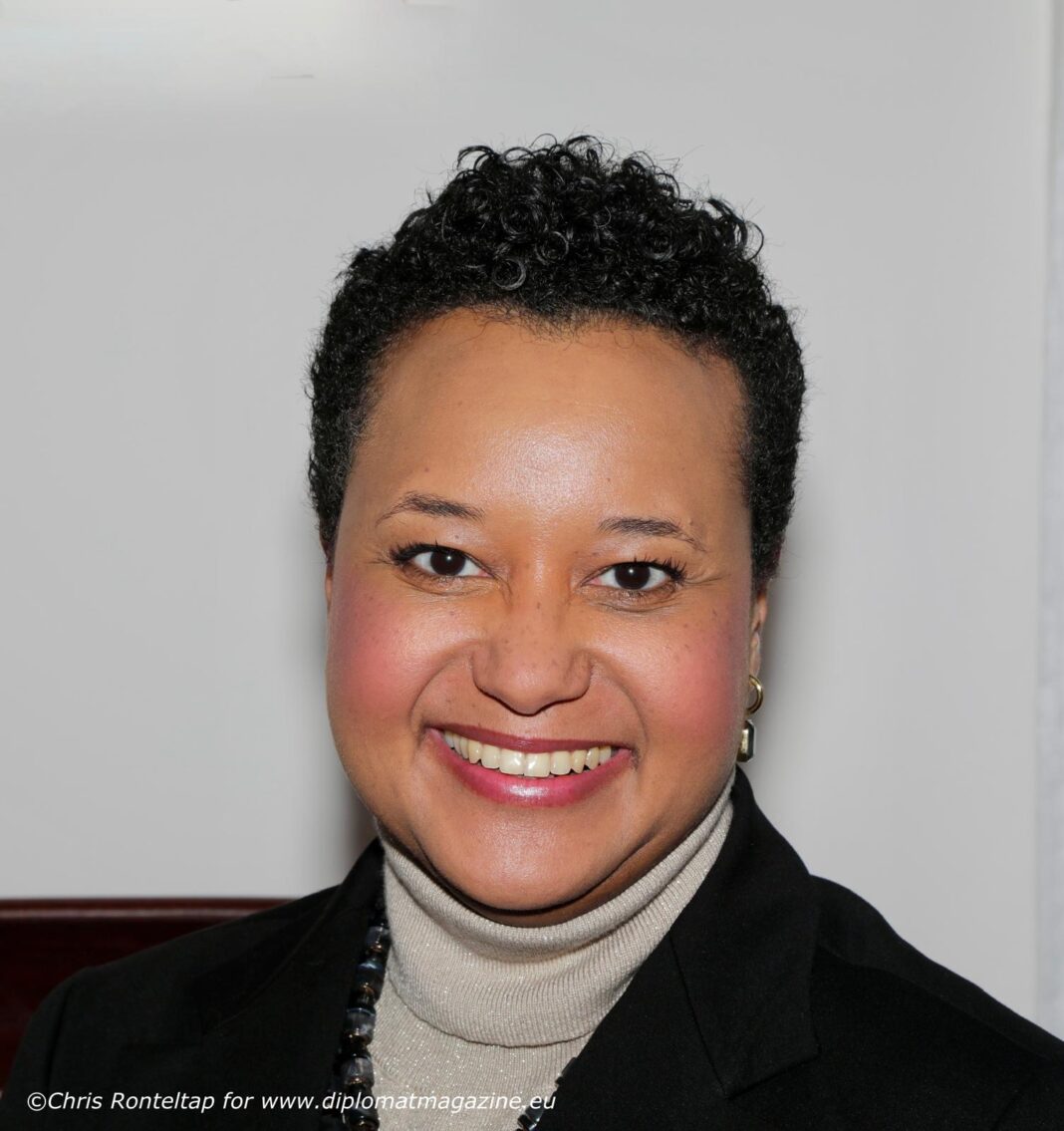
Poland surprises with its energy, its scale of transformation, and its growing confidence on the international stage. And it is precisely at this intersection of history, strategy, and modern ambition that I met Ambassador Margareta Kassangana.
Diplomat Magazine: Ambassador, meeting here in this beautiful historic embassy building, I think about how much Poland’s image has changed in recent years. Do you feel that shift is also visible here in The Hague?
Ambassador Margareta Kassangana: Absolutely. And I think it is one of the most interesting developments in how Poland is perceived internationally. Of course, history remains an important part of our identity, but today’s Poland is also a country of remarkable economic dynamism, resilience, and ambition. We are not only a key political actor in Europe, but also a country that is becoming more visible through innovation, scientific progress, and strategic thinking. From The Hague, this transformation is very tangible. Our partners increasingly look at Poland not just as an important country on NATO’s eastern flank, but as a state that wants to help shape Europe’s future — politically, economically, technologically, and institutionally.
In the past, we mainly learned from our Dutch partners. Today, however, this relationship has become much more balanced, and in many areas we are equally eager to share our own experiences. This evolution is clearly reflected in one of our most enduring cooperation mechanisms – the Utrecht Conference. Originally established as a platform to support Poland’s preparations for accession to the European Union, it has transformed into a forum for mutual exchange of knowledge and best practices between our countries. This shift marks a significant change and is a source of great satisfaction, highlighting how much we have developed over the past years.
Let’s begin with bilateral relations. Poland and the Netherlands seem to have grown even closer in recent years, especially in security and defence. What is driving that deepening partnership?
In an increasingly unpredictable world, trusted partnerships matter more than ever. Few bilateral relationships in Europe illustrate this truth as clearly as the ties between Poland and the Netherlands. Already robust, Polish–Dutch ties have deepened significantly over the past three years, particularly in the fields of security, defence, and strategic cooperation.
The current political and security environment has once again underscored the importance of reliable allies. Intensive contacts between Warsaw and The Hague have confirmed that we approach the key issues on the international agenda with strikingly similar perspectives. Poland and the Netherlands are not only close partners; they are among the frontrunners of security cooperation in Europe, sharing a common vision of the continent’s security architecture.
This alignment is not merely rhetorical. It is reflected in concrete actions. When Russia violated Polish—and NATO—airspace in September 2025, the swift and resolute response by Dutch pilots sent a powerful signal. It was a vivid demonstration of partnership and unity at a moment of heightened tension. In challenging times, Poland and the Netherlands can count on one another.

So this is a partnership built not only on interests, but also on trust?
Indeed. Trust is the key word here. And that trust is strengthened by the fact that our relationship is rooted in something deeper than current events. It is built on a shared history and on values that were tested under the most difficult circumstances.
During the Second World War, Polish and Dutch soldiers fought side by side against Nazi Germany. On Dutch soil, general Stanisław Maczek and general Stanisław Sosabowski played an important role in the liberation of towns and villages. Their legacy still lives in Dutch memory, and it continues to shape the emotional and political fabric of our relationship.
This is why remembrance is not just symbolic. It has real diplomatic meaning. In May 2025, Prime Minister Donald Tusk was invited by Prime Minister Dick Schoof as guest of honour to deliver the liberation speech during the 80th anniversary commemorations marking the end of the Second World War. Later that same year, both prime ministers met in Poland to witness the signing of a bilateral Memorandum on Developing Defence Cooperation. That moment captured something essential: history and future ambition can reinforce one another.
Europe is again facing a moment of profound insecurity. How do Poland and the Netherlands respond to that together?
We respond with clarity. Russia’s aggression against Ukraine and its broader imperial ambitions are a direct threat to European stability. Poland and the Netherlands both understand that supporting Ukraine it is a matter of principle and security. Our countries remain united in defending Ukraine’s sovereignty and territorial integrity. That support takes many forms — political, military, humanitarian — and it reflects a broader understanding that the security of Europe is indivisible. What happens in Ukraine affects all of us.
But your work here is not only about defence and geopolitics. There is also a strong economic dimension to Polish–Dutch relations.
Yes, and it is a very important one. The Netherlands is one of Poland’s most significant economic partners. It is among our top export destinations and key suppliers of goods, but the real story is not only about trade volumes. It is about where this relationship can go next.
There is enormous potential in high-tech and innovation-driven sectors: IT and ICT, semiconductors, advanced manufacturing, space innovation and also the energy transition. We see promising areas for cooperation in offshore wind, hydrogen technologies, and grid modernisation. These are sectors that are not just commercially attractive — they are strategically vital.
In today’s geopolitical reality, that matters enormously. Energy, defence, semiconductors, artificial intelligence, IT/ICT — these are no longer neutral economic fields. They are part of how Europe thinks about resilience, strategic autonomy, and risk reduction. So we need to look at economic cooperation through a broader lens than simple market efficiency.
We covered security, politics and economy but there is also a very human layer to this relationship, isn’t there?
Absolutely. One of the greatest strengths of Polish–Dutch relations is the people-to-people dimension. Around 400,000 Poles live in the Netherlands today, including many migrant workers. Their contribution to Dutch society and the Dutch economy is substantial and widely recognised.
They are often valued for their professionalism, expertise, work ethic, and reliability. But beyond economics, they also form a living bridge between our societies. They connect our cultures, our workplaces, and our everyday experiences in a way that diplomacy alone never could.
You’ve said before that what makes this embassy truly unique is its multilateral dimension. Why is that so central for you personally?
Because this is exactly what makes this posting so distinctive — and, for me, especially meaningful. The Polish Embassy in The Hague is not only a bilateral embassy. It is also a major multilateral platform. And that dual function is what defines much of my work.
The Hague is one of the world’s most important centres of international governance. Here, diplomacy intersects with international law, accountability, disarmament, and justice. Therefore, alongside the bilateral diplomacy I am also deeply engaged in a wide range of multilateral formats.
That includes, among others, the work with the Organisation for the Prohibition of Chemical Weapons (OPCW), engagement with the International Criminal Court (ICC), and broader involvement in the ecosystem of international courts and legal institutions based in The Hague. These are not marginal activities. They are central to Poland’s foreign policy and to our understanding of international responsibility.

That sounds like a very demanding diplomatic environment.
It is. But it is also incredibly stimulating. This overlapping world of bilateral and multilateral diplomacy — this constantly interpenetrating reality — is both a major challenge and a source of momentum. It requires agility, strategic coherence, and a very broad perspective.
One day you are working on political dialogue with the Dutch authorities, economic cooperation, or defence matters. The next, you are engaged in discussions on chemical disarmament, accountability for war crimes, support mechanisms for Ukraine, or developments in international law. These spheres increasingly overlap. Security, law, politics, technology, humanitarian responsibility — they all interact.
And that is precisely why I find this role so compelling. The complexity is demanding, of course, but it is also a driving force. It pushes us to think in an integrated way.
Let’s stay for a moment with the multilateral side. Where is Poland most active here in The Hague?
Poland is very active in several key formats. At the OPCW, for example, we play an important and visible role. Every year, Poland presents to the UN General Assembly a resolution on the implementation of the Chemical Weapons Convention. That is an important expression of our long-standing commitment to chemical disarmament and non-proliferation.
At present, Poland is also a member of the OPCW Executive Council, where I hold the position of Vice-Chairperson from the Eastern European Group. More recently, Poland finalised a voluntary financial contribution to support the OPCW’s work related to Syria and Ukraine. This reflects not only our political commitment, but also a practical willingness to help the organisation carry out its mission.
At the same time, Poland is highly active in the world of international justice. This engagement has been recognised in our work with the International Criminal Court. I currently serve as Vice-President of the Assembly of States Parties to the Rome Statute, which is both an honour and a responsibility. It is a sign that Poland is seen as a serious and constructive actor in these debates.
And, of course, Poland strongly supports international efforts aimed at helping Ukraine secure justice and redress. That commitment was clearly reflected in our accession, in December 2025, to the Convention establishing the International Claims Commission for Ukraine.
Listening to you, one has the impression that this embassy operates almost like several institutions in one.
In a sense, yes. And that is exactly why it is such a fascinating place to work. However, not only it requires diplomatic skills, but also high flexibility. You need to be able to move between very different registers: history and memory, defence cooperation, innovation policy, labour mobility, chemical disarmament, international criminal justice, and support for Ukraine. Yet these issues are increasingly interconnected, so the ability to see the bigger picture becomes essential.
Finally, if you had to describe today’s Polish presence in The Hague in one sentence, what would you say?
I would say that Poland in The Hague is a country that honours history, acts with determination in the present, and is increasingly ready to shape the future — both through strong partnerships and through serious multilateral engagement.
Ambassador, thank you very much.
Thank you. It was a pleasure.