
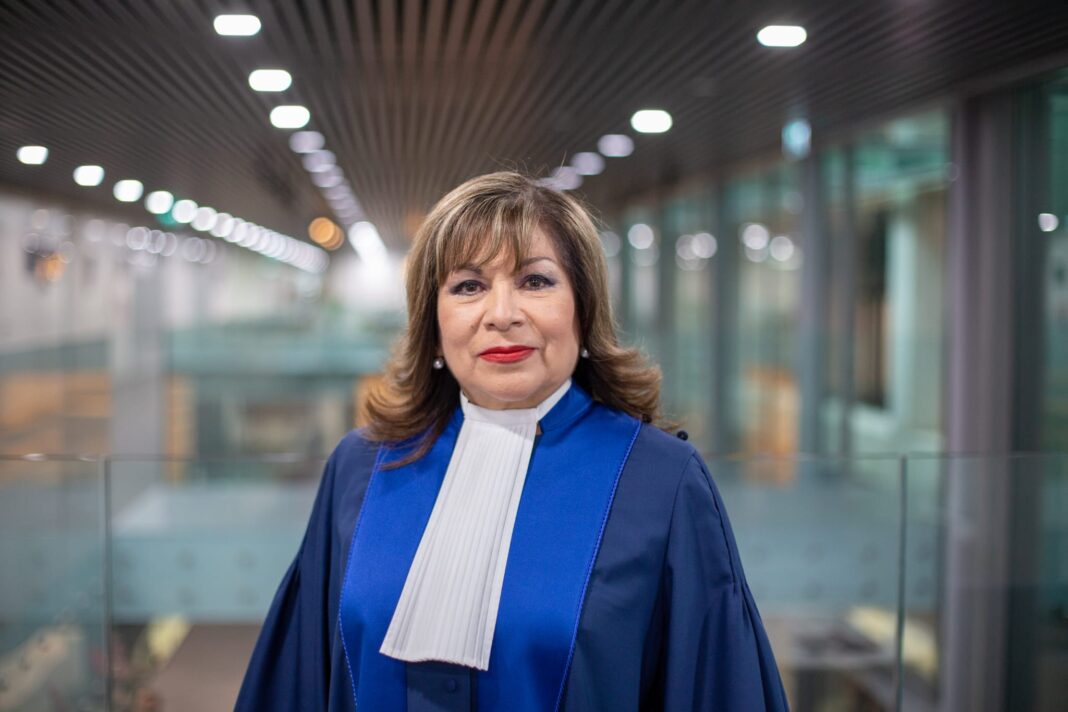

The Role of the International Criminal Court and the International Court of Justice
By H. E. Ms. Luz del Carmen Ibanez, Judge of the ICC
The pursuit of global stability, justice, and the strengthening of the rule of law is a central focus of international diplomacy. Yet, in an era of persistent global conflict and widespread human rights violations, can international legal institutions truly serve as guardians of justice and peace?
The complexities of modern conflicts raise important questions about the capacity of international courts to effectively address the root causes of violence and impunity. The International Criminal Court (ICC) and the International Court of Justice (ICJ) stand at the forefront of this mission, acting as pivotal actors in the effort to uphold human rights, ensure accountability, and foster peace in regions fraught with instability.
Both, through their distinct but complementary mandates, can collaboratively reinforce the rule of law on a global scale. How do these courts shape international norms, and what challenges must they overcome to remain relevant and effective in an increasingly polarized world?. These questions lay the foundation for understanding how international justice mechanisms can address contemporary conflicts and promote a more stable and just world order.
The role of international courts in addressing armed conflicts has evolved significantly, reflecting the growing recognition that justice and accountability are indispensable for sustainable peace. The ICC and ICJ, as integral components of the international legal order, have progressively adapted their functions to confront complex crises, ensuring that perpetrators are held accountable and that the rule of law is reinforced globally.
The ICC and ICJ emerged from distinct historical backgrounds, yet they share a fundamental commitment to international peace and justice through legal mechanisms. Established by the Rome Statute in 1998, the ICC was designed to address the impunity of individuals responsible for the most egregious crimes, such as genocide, war crimes, crimes against humanity, and aggression. The creation of the ICC marked a turning point in international criminal justice, as it signalled the international community’s resolve to prosecute individuals who threaten global security and violate human rights. By focusing on individual accountability, the ICC seeks not only to bring justice to victims but also to deter future violations and contribute to post-conflict reconciliation.
In contrast, the ICJ, established in 1945 as the principal judicial organ of the United Nations, operates primarily at the state level, adjudicating disputes between nations and issuing advisory opinions on pressing legal questions. The ICJ’s role in shaping international legal norms has been instrumental in resolving inter-state conflicts and clarifying the legal obligations of states under international law. By addressing state responsibility rather than individual criminal accountability, the ICJ plays a role in fostering diplomatic solutions and reinforcing the principles of international law.
The engagement of both courts in scenarios of armed conflicts exemplifies their complementary approaches. The ICC intervenes by prosecuting individuals directly responsible for war crimes and atrocities committed in the territories of the states members to Rome Statue and by referral of UN Security Council in other territories. Through investigations and trials the ICC provides a legal avenue for victims to seek redress and reparations and for perpetrators to face justice, breaking the cycle of impunity that often perpetuates violence. Meanwhile, the ICJ addresses conflicts from a structural perspective, adjudicating interstates disputes that underpin broader tensions and offering legal clarity on state actions. At same time the court’s advisory opinions underscore it’s ability to expand the protection of the law to novel and complex world concerns and humanity’s emerging crucial issues reinforcing values and international legal standards.
The complementary nature of the ICC and ICJ is crucial for addressing the multifaceted dimensions of armed conflicts. While the ICC focuses on the prosecution of individuals, the ICJ’s emphasis on state responsibility ensures that justice operates on both micro and macro levels. This dual-track approach not only strengthens the accountability framework but also reinforces the preventive function of international justice. The ICC’s issuance of arrest warrants and the ICJ’s binding rulings create legal precedents that deter future violations and promote adherence to international norms. Moreover, the contributions of both courts to post-conflict reconstruction are vital in fostering reconciliation and building resilient societies.
The ICC and the ICJ are fundamental pillars of the Rule of Law. Their permanent dialogue nurtures world peace, global security and the wellbeing of humanity.