
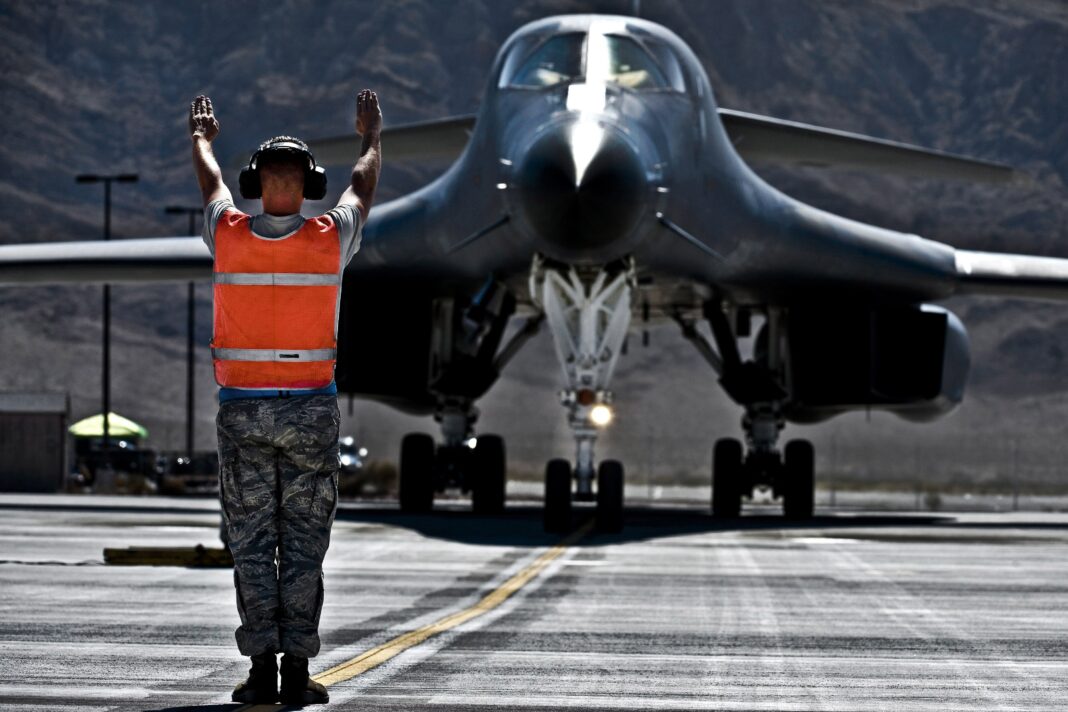

The Legal Risks of Foreign Bases
By Ayesha Asim
In international politics, geography is rarely just geography. A military base located on the territory of one state can become a strategic asset for another, but it can also transform the host country into a potential frontline during times of conflict.
Across the Middle East, foreign military presence has long shaped regional security dynamics. The United States maintains a network of military facilities, airfields, naval support points, and logistical hubs across several Gulf states, including Qatar, Bahrain, Kuwait, the United Arab Emirates, and Saudi Arabia. These installations form a central part of Washington’s regional defence structure.
Yet beneath these security arrangements lies a complex question of international law: when a state allows its territory to be used for military operations against another country, does it assume any legal responsibility for the consequences?
The question has gained renewed attention amid rising tensions between the United States and Iran, but the underlying legal issue extends far beyond any single conflict. It concerns a broader dilemma faced by states hosting foreign military forces: how far does responsibility extend when national territory becomes part of another state’s military operations?
The starting point of this debate is Article 2(4) of the United Nations Charter, which prohibits the “threat or use of force against the territorial integrity or political independence of any state.” Since the creation of the United Nations in 1945, this principle has remained one of the foundations of the international legal order.
International law recognises two primary exceptions to this prohibition. The first is the right of self-defence under Article 51 of the UN Charter following an armed attack. The second is the use of force authorised by the United Nations Security Council under Chapter VII.
Where military action falls outside these exceptions, its legality becomes highly contested.
This raises an important question for states that host foreign military forces. If another country launches attacks from their territory, and those attacks are considered unlawful, could the host state also face international responsibility?
One of the most relevant references comes from United Nations General Assembly Resolution 3314 of 1974, which defines aggression. Article 3(f) identifies as an act of aggression:
“The action of a State in allowing its territory, which it has placed at the disposal of another State, to be used by that other State for perpetrating an act of aggression against a third State.”
Although General Assembly resolutions are not legally binding in the same way as treaties, Resolution 3314 has played an important role in shaping international legal discussions on aggression and state responsibility.
The principle behind this provision is significant: a state does not necessarily have to fire the first shot to become legally relevant. Allowing its territory to be used as a platform for unlawful military action may create questions of responsibility, particularly where the state has knowledge of, and facilitates, those operations.
Recent conflicts demonstrate how complicated this issue can become.
During Russia’s 2022 invasion of Ukraine, Belarus allowed Russian forces to use its territory for military operations, including troop movements and missile launches. Ukraine and several Western governments argued that Belarus had become a facilitator of Russia’s military campaign, even though Belarus did not conduct the main combat operations itself.
A similar debate emerged during the 2003 US-led invasion of Iraq. Several Gulf states provided logistical support, access, and military infrastructure for coalition operations. Because the legality of the invasion remains disputed among international lawyers, questions were raised regarding the position of states that enabled those operations through their territory and facilities.
The issue also appeared during counterterrorism operations in the region. States providing airspace access, intelligence cooperation, or logistical assistance to foreign military campaigns have often faced domestic criticism and security risks because armed groups may view them as participants rather than neutral actors.
However, hosting foreign military forces does not automatically make a state a party to every operation conducted by those forces. Governments usually distinguish between allowing another country to maintain military facilities and directly controlling decisions about the use of force.
Many defence agreements are structured around this distinction. A host state may argue that it does not plan, approve, or command specific operations carried out by foreign forces based on its territory.
International law, however, focuses not only on formal arrangements but also on conduct. Questions may arise regarding whether the host state knew about particular operations, whether it assisted, and whether that support contributed to an unlawful act.
The International Law Commission’s Articles on State Responsibility address this issue through the concept of aiding or assisting another state in committing an internationally wrongful act. Under Article 16, a state may incur responsibility if it knowingly assists another state in carrying out conduct that violates international law.
The most sensitive issue concerns possible retaliation.
If a military facility located in another country is used to launch attacks, can that facility become a lawful target during an armed conflict?
Under international humanitarian law, military objectives may be targeted when they make an effective contribution to military action and when their destruction offers a definite military advantage. A base actively used for launching attacks may therefore be considered a military objective.
However, this does not provide unlimited permission for attacks. Any military response must still comply with the fundamental principles of distinction, proportionality, necessity, and precautions in attack. Civilian populations and civilian infrastructure remain protected under international humanitarian law.
A further legal debate concerns the position of the host state itself. If a government knowingly allows its territory to be used for offensive military operations, another state may argue that the host country has become involved in the conflict. The host government, however, may reject this interpretation and maintain that foreign military presence does not automatically remove its status as a non-belligerent state.
Ultimately, international law often faces a gap between legal principles and political reality. Powerful states frequently rely on broad interpretations of self-defence, while international institutions may struggle to respond effectively because of geopolitical divisions and Security Council dynamics. Nevertheless, one principle remains clear: military partnerships bring not only strategic benefits but also legal and political consequences.
For states hosting foreign bases, the challenge is balancing security cooperation with the risk that their territory may become part of conflicts they did not choose. A military installation may protect during times of peace, but during escalation, it can also turn into a potential target. In modern warfare, strategic geography rarely remains neutral. The presence of foreign forces can reshape not only regional security calculations but also the legal responsibilities of the states involved.
About the author:
Ayesha Asim is a legal academic, researcher, and PhD Scholar in Law. She holds an LLM in International Law (Gold Medalist) and has experience in legal research, teaching, and advisory roles. Her areas of interest include international law, humanitarian issues, and other contemporary legal challenges. You can reach her at ayeshamalyc09@gmail.com