
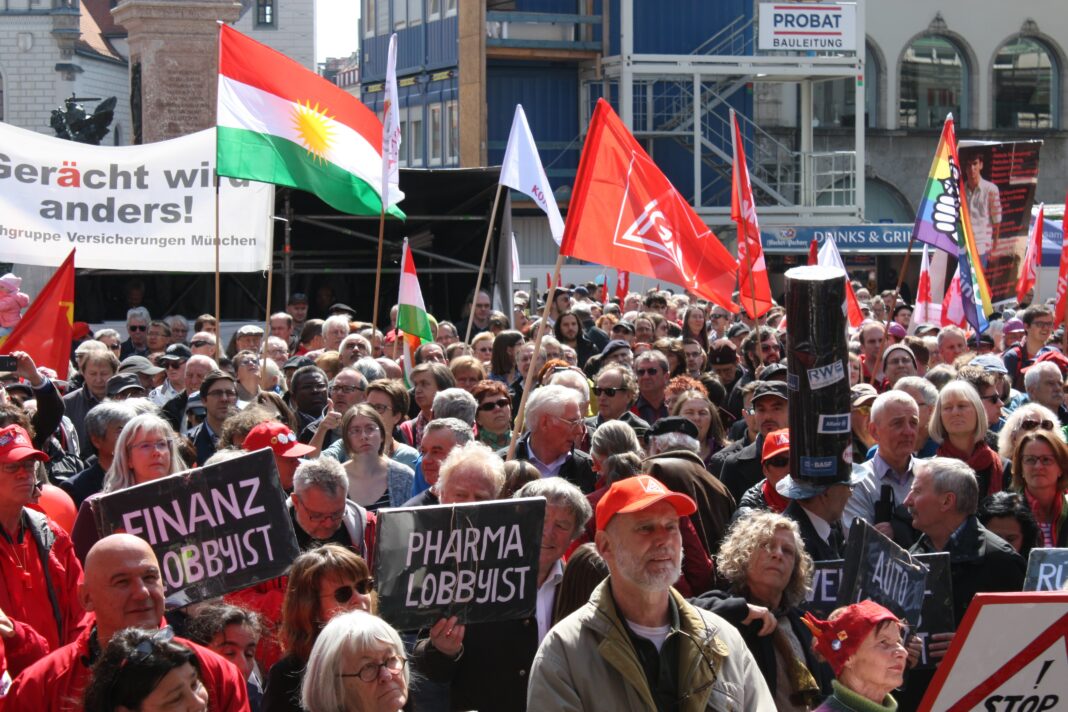

After generations of struggle to secure self-government, Iraqi Kurdistan faces a political crisis that could undo the foundations of its autonomy. The pursuit of centralised power at the expense of Kurdish unity risks weakening the very foundations on which future independence depends.
For generations, Kurds have struggled for self-government and the right to determine their political future. In Iraqi Kurdistan, that struggle produced a federal region with its own parliament, government, security forces and international relationships: a foundation for the aspiration to independence.
Prime Minister Masrour Barzani’s decision to reconvene parliament and move towards forming a government without the Patriotic Union of Kurdistan (PUK) has brought the region to the brink of institutional rupture. The PUK’s withdrawal from government and threat to establish parallel institutions show the severity of the breakdown.
This is more than another political dispute. Barzani’s pursuit of centralised authority risks undermining Kurdish self-government and the national aspirations for which generations have sacrificed. Independence cannot rest on nationalist sentiment alone. It requires functioning institutions, economic strength, international credibility and political cohesion. These are precisely the conditions now at risk.
Centralisation at the expense of unity
Since reunification in 2006, Iraqi Kurdistan has continued to operate through two competing political centres. The KDP dominated Erbil and Duhok, while the PUK retained control over Sulaimani. Security, intelligence and administrative structures remained divided along party lines, although formal efforts to integrate them continued. In September 2026, the KRG announced the formal unification of the Peshmerga forces under a single command structure, an important step whose durability now depends on continued political cooperation.
Though imperfect, this arrangement helped prevent a return to the civil conflict of the 1990s and provided the basis for Kurdish autonomy within Iraq’s constitutional framework. Barzani’s approach treats this settlement as an obstacle rather than a reality requiring negotiation.
The KDP argues that its victory in the October 2024 elections, securing 39 of 100 parliamentary seats, gives it a mandate to lead the next government. But winning the largest number of seats is not the same as securing a parliamentary majority, nor does it resolve how a region with two entrenched political and security structures can function without agreement between them.
The November 4 parliamentary session, secured with 52 members despite opposition boycotts, was presented as a restoration of democracy. Instead, it deepened confrontation and raised the prospect of parallel administrations. Parliament’s legitimacy depends not simply on reconvening, but on independence, representativeness and the ability to hold government accountable.
Baghdad stands to benefit
The consequences extend beyond Erbil and Sulaimani to the Kurdistan Region’s relationship with Baghdad. Kurdish leaders have relied on collective political weight to defend the region’s constitutional position, negotiate budgets, protect authority over natural resources and resist attempts to narrow autonomy. That position is under pressure. Disputes over oil exports, budget transfers and customs revenues have reduced the KRG’s economic room for manoeuvre as Baghdad asserts authority over mechanisms previously managed by Erbil.
A divided Kurdish leadership will struggle to negotiate with Baghdad on equal terms. Rather than presenting a common position, the KDP and PUK risk entering separate negotiations with competing priorities.
The unresolved status of Kirkuk and other disputed territories makes this consequential. Article 140 of the Iraqi Constitution established a process for resolving their status, but it remains unfinished. Advancing Kurdish claims requires sustained negotiation and a credible regional position. Seeking to concentrate authority in Erbil while weakening Kurdistan’s collective bargaining position is contradictory. Centralisation may strengthen one administration, but it does not necessarily strengthen the region.
A changing Middle East
The Kurdistan Region benefited from a geopolitical opportunity. The northern no-fly zone established in 1991, Saddam Hussein’s removal in 2003 and Iraq’s subsequent constitutional settlement enabled the Kurds to build institutions that had previously been unimaginable.
International partnerships grew around regional stability, counterterrorism, energy security and the fight against Islamic State. The Peshmerga became an important security partner, while Kurdistan developed into a diplomatic and commercial hub.
But circumstances are changing. The completion of the US military withdrawal from Erbil Air Base in September 2026 marks a shift in the security environment. Washington has not abandoned its relationship with the Kurds, but its military presence can no longer be taken for granted. Turkey and Iran retain substantial economic, political and security interests in Iraqi Kurdistan and are positioned to exploit divisions through established relationships with Kurdish actors.
An October 2026 Chatham House analysis warned that fragmentation risks external interference and further erosion of Kurdish self-government. Western governments may support an autonomous Kurdistan, but their willingness to mediate cannot be assumed. Fragmentation weakens Kurdish influence in Western capitals and increases vulnerability to neighbouring states.
The lesson of 2017
The 2017 referendum remains a warning.
The overwhelming vote for independence demonstrated the depth of Kurdish national aspirations. Baghdad rejected the result, neighbouring states opposed it, and Washington and European capitals declined to support the unilateral initiative. The loss of federal control over Kirkuk showed how quickly gains can be reversed when internal divisions, international opposition and strategic miscalculations converge.
The lesson was not that independence is impossible. It was that declarations and referendums are insufficient. Independence requires functioning institutions, sustainable economic foundations, political cohesion and international support. Almost a decade later, the region risks repeating the mistake of allowing immediate political calculations to take precedence over the long-term foundations of Kurdish national aspirations.
The Kurdish dream must come first
Neither unchecked centralisation nor formal separation offers a sustainable solution. A separate Sulaimani-centred federal region could institutionalise divisions the 2006 settlement was intended to overcome, while raising serious constitutional questions.
Kurdistan needs representative institutions, accountable government and security structures that operate beyond partisan interests. Political differences must be resolved through negotiation, not by marginalising major sections of the Kurdish political landscape.
Barzani’s approach must be judged against a larger historical question: does concentrating authority strengthen Kurdish self-government, or undermine the conditions that make it possible? Kurds struggled for generations to determine their future, not merely to secure a fragile political arrangement. Independence remains difficult, but its foundations are built today. Without political cohesion, credible institutions, economic leverage and international partnerships, that aspiration will become harder to realise.
The Kurdish national movement has survived wars, repression and displacement. Its achievements must not now be eroded by a political strategy that places centralisation above autonomy. Today’s leaders must ensure the next generation inherits a stronger Kurdistan, not a divided one, and that the Kurdish dream remains a possibility rather than a casualty of this crisis.