War in Ukraine and casualties beyond the shore of Europe: What can we do in The Hague?

0

 The Diplomatic Magazine invited Ambassador Sheikh Mohammed Belal, Managing Director of the Common Fund for Commodities (CFC) for an interview on the aftereffects of the war on the developing countries and possible responses that The Hague community could expect to pursue globally.

DM: In some of your remarks recently, it seems CFC have been urging its member states to pay greater attention to the impact of the Ukraine war on developing countries. The War is in Europe. Why would the developing countries be so concerned?

MD: Thanks Dr. De Lara. It is a pleasure to speak to Diplomatic Magazine (DM). I (MD) am happier to see that you chose, very rightly, to focus on the aftereffects of war on the developing countries as well. Indeed, the irony of this war is that the devastations of this war doesn’t stop at the border of Europe.

While our hearts go out for those paying the prices of this absurdity with their lives in Ukraine, we are equally concerned, indeed shocked, to see how this war is wreaking havoc on the developing world. I wish I can make you talk to a vendor in my home country Dhaka or one in Dakar, Senegal. You would see the discussions are around inflation, hunger, famine, fuels, or lack of medicine.

The Russian war in Ukraine is a major event in our lifetime. It is perhaps the most dangerous international incident since the Cuban missile crisis. Yes, there were pre-existing vulnerabilities. The war came at a time when the global economy is still in the grip of a pandemic and in the midst of inflationary pressures, which are likely to intensify, especially if the war is protracted.

Commodity markets have been thrown into disarray since February when war begun. The war has boosted prices and cut off supply, creating a harrowing environment for consumers of raw materials but the perfect conditions for trading houses. Because of supply bottlenecks created by this war, the world of commodities divided into two parts.

One, the developing country people paying a staggering high price for the essentials they ought to buy. The other part is the big businesses in the North making hefty profit. One commodity business recently published that its marketing division will record profits “comfortably” above the top end of its $2.2 billion to $3.2 billion guidance range this year [1]

Commodity traders, who transport the world’s resources, have been able to profit from the volatility, arbitraging cargoes through the web of sanctions and supply disruptions to keep material flowing. “What we’ve always found is that in times of high volatility, high prices and high volume is when we have the opportunity to make the most money,” one Executive of a big commodity business house boasted recently. [2]

Soaring food and fuel prices already affecting the most vulnerable in the developing countries, putting pressure on the poorest households which spend the highest share of their income on food, resulting in hardship and hunger. With more money needed to buy those essential commodities, developing countries deficits and debt stress could blow up to a level putting more people to poverty and hunger. This will add to their external imbalances and concerns about inflation persistence and the path of their public debt. The Ukraine conflict will not only be devastating for countless Ukrainians, but also for millions of vulnerable people elsewhere.

DM: Could you be little specific in which way this war is hurting countries beyond Europe and how?

MD: This is a great question. The war in Ukraine threatens to cause lasting damage to the economies of low- and middle-income countries, pushing millions of people into poverty and tipping dozens of countries into a debt crisis. This not CFC, but the World Bank has warned. High commodity prices, collapsing trade growth, rising interest rates and a stronger US dollar will exacerbate fiscal pressures in many countries, making it harder for net importers in particular to service mounting debts.

As you asked me to be specific, among many, let me draw attention of your readers into three major areas, that we consider, will be hit particularly hard by the Ukraine effect.

First, supply shock. As we all now know, more than before, that both Ukraine and Russia are a big part of these global grain, oils, fuel, and fertilizer markets. They provide some of the most essential commodities. These are things that people can’t do without.

According to UNCTAD, both Ukraine and Russia are global players in agri-food markets, representing 53% of global trade in sunflower oil and seeds and 27% in wheat. As many as 25 African countries, including many least developed countries, import more than one third of their wheat from the two countries at war. For 15 of them, the share is over half.

When we talk about commodities, people tend to think more about Russia than Ukraine. But Ukraine itself is a big player in the world commodity market.  So it’s the number one exporter of sunflower seeds. It’s the fourth largest exporter of wheat with a 10 percent share, and it’s the fifth largest exporter of corn with a seven percent share.  On the other side, Russia is a commodities giant. And it’s the biggest exporter of wheat. It accounts for a quarter of the market for natural gas, nearly 20 percent of the market for coal. Fourteen percent of the market for platinum. And more than 10 percent of the market for crude oil.

Secondly, a good part of the money that were earmarked for development may finds its way into the battlefield of destruction or better prepared to destroy next time. Donor budgets are facing immense pressure to reallocate funding in response to the colossal human cost of Ukraine’s conflict. Some donors are reportedly pulling funding from aid budgets in other regions to fill the gaps, which will have significant consequences for millions. We are so busy, rightly though, with the Ukraine that we hesitate to remind our member states about the worsening circumstances in the Yemen, Afghanistan, South Sudan, and the likes. They deserve our attention too. The Hague community can help us to remind our member states precisely that. We are all in this together.

Third, forces of deglobalization are much empowered and energized after this war. Please recall that the forces of globalization are already at a stress since the pandemic. Western countries have responded to Russia’s invasion of Ukraine with sanctions and extensive military support to the Ukrainians, while NATO is working for more funding for defense preparedness. At the same time, US-China tensions remain high. Fears of a global conflict are growing. The last thing we wish to see is any event that could spark a military confrontation beyond the borders of Ukraine. The Financial times recently hosted a webinar on “Are we on the path to World War Three?” This is too dangerous for both the developing and the developed countries as the concept of “comparative advantage” will be replaced by the forces of geo-politics.

DM: Please tell us why commodities became such a big part of this war? The recent compromise on Black Sea Grain deal is any good for the developing world?

According to FAO, in March 2022, world food prices reached an all-time high, with fuel prices up 86% and fertilizer prices up 35% from just two years prior. World Food Program accounted for  50 million people in 45 countries teetering on the edge of famine. Even in a high-income country like the United States, 2.4 million people are severely food insecure.

Of the total number of undernourished people in 2020 (768 million): 282 million live in Africa, 418 million in Asia, and 60 million in Latin America and the Caribbean. Nearly one in three people in the world (2.37 billion) did not have adequate food in 2020 – an increase of almost 320 million people in just one year.[3]

As per the African Common Position paper, in 2019 Africa expended US$43 billion on food imports, and it is projected to raise to US$90 billion annually by 2030, pointing to two contrasting realities, namely existing opportunities for African agriculture and farmers, and on the other hand, growing unsustainable food supply dependence on foreign sources.

CFC is small yet would like to remind the humanity that without fairness to those 570 million smallholder households, or about two billion people engaged in the production of food and other essential commodities like coffee, cocoa, cotton etc., there may not be enough food to feed, dress to wear, chocolate to eat. This is why CFC is working towards commodity value chains, which is much shorter, transparent, and traceable so that our smallholders get what is rightfully due to them. As we speak, they receive laughingly little sum to what they produce with their toil and sweat.

The Hague could help us to do it with more innovations and scale. We need good research to make the conscious consumers, of Gen-Z and the likes, much aware about what they eat or what they wear. Poverty alleviation is everyone’s mission. We truly wish to help our producers making the consumers aware so that they can ask the brands and business for the fairness that is sadly missing now.

DM: We are aware that with your mission to alleviate poverty, CFC have been investing the most in Africa. Is it because that Africa is rich in commodities or Africa has the highest number of people in poverty? Overall, how do you see this war would affect Africa?

MD: Your question has two parts. First, why we pay such a high degree of attention to Africa? And how the narrative of African resource curse could be transformed into blessings for all. Right?

In response to your first part of the question, Africa remains a matter of our utmost attention for a host of reasons. It is not only the continent of future, it is also the continent that will provide most of the CEOs of Fortune 500 in the not-too-distant future. If we don’t invest in Africa, we will continue to see that commodities will only serve the interests of the biggies, not the smallholders and SMEs (Small and medium enterprises).

Africa’s youth population is set to double by 2030, which presents a great opportunity to increase the consumer demand for new products and services. Currently 1 in 3 Africans is aged between 15-29 and approximately 40% are under-employed.  We would like to see those youth take a better care of their commodities and thereby turn the so called “resource curse” into a true blessings for all.  If young Africans could have access to a job in the ongoing African Continental Free Trade regime and an opportunity to use their talent and creativity, these young consumers could be the next big wave of market opportunities for products made in Africa.

On the issue of “resource curse”, we are hopeful. Africa is changing. They started discussing on value addition to what they produce in a way that we haven’t seen before. We see the President of African Development Bank Group H.E. Mr.Akinwumi A. Adesina tweeting this:

Quote:

“Africa’s prosperity must no longer depend on exports of raw materials but on value-added finished products…Across Africa, we need to turn #cocoa beans into chocolate, cotton into textiles and garments…” [4]

Unquote:

If Africa can take care of their own resources, the world will be better placed to achieve the SDGs and all other derivatives that you can ask for.

Therefore with sharpened focus on Africa, here in the CFC, we are asking countries in the Latin Americans, China, India and others to come forward to collaborate each other to learn from your best practices and even from their failures. We are also urging our United Nations entities like UNCTAD, FAO, WTO etc. to look into the commodity value chains so that they can work for both the producers and consumers.

As we speak, because of war, inflation is wreaking havoc across the developing world. For millions of people in the developing world, their calculation of finance got upside down because of this war.

Let me give you a very recent example. Zambia, a very commodity rich yet a least developed country, has been trying to negotiate a debt restructuring for nearly a year and a half, since November 2020. Zambia was compelled to seek this restructuring as almost 70 percent of their revenues would go to servicing debt if it resumed payments on schedule.  Yes, you heard it right. Seventy percent. Likewise, Zambia, there are many countries that are experiencing similar or more pain. As the world now gradually going into the discussion of debt restructuring for Ukraine and so on, we should be thinking about all these other countries that really do need debt relief.

To cap it off, we urge the international community, through your esteemed magazine, to make finance easier, cheaper, and de-risked as much as they can if they wish to put both the developing and the developed world on the growth trajectory for a world past the shocks of the pandemic, war, and the effects of climate change.

DM: We got a sense on why commodities became such a big part of this war. But please tell us how the recent compromise on Black Sea Grain deal is any good for the developing world?

MD:  Let me , first, begin by thanking the United Nations and its Secretary General Mr Antonio Guterres for his leadership to work out this much needed deal. The Black Sea Grain Initiative, brokered by the United Nations and Turkey, was set up to reintroduce vital food and fertilizer exports from Ukraine to the rest of the world.

Since the war in Ukraine begun, exports of grain from Ukraine, as well as food and fertilizers from Russia, have been significantly hit. The disruption in supplies pushed soaring prices even higher and contributed to a global food crisis.

CFFC Sheikh Mohammed Belal War in Ukraine and casualties beyond the shore of Europe

As could be seen from the infographic, around 25 per cent of the cargo has gone to low and lower-middle income countries. Egypt (8 per cent), India and Iran (4 per cent each), Bangladesh, Kenya and Sudan (2 per cent each), Lebanon, Yemen, Somalia, Djibouti (1 per cent each), and Tunisia (less than one per cent). Because of this deal, poor people in need are the most benefited ones as it helps to calm markets, and limit food price inflation.

What you may not see is, what I call, double jeopardy of the smallholders. Because of the rise in the price, they hardly, if at all, see any substantive increase in the receipt of their income. When the high price of cocoa, for example, reaches back to the cocoa farmers, it is not enough to meet the increased cost of inputs, like fertilizers, seeds, pesticides, chemicals they must buy. So, the smallholders lose out on both ways-the double jeopardy. (Please read the “COVID in COCOA” at the end of this interview).

DM: We discussed a lot of commodity issues while we remain focused on diplomats and diplomacy. We thank you for bringing this new dimension which, we believe, our readers may find interesting. Do you have any concluding thoughts?

MD: Firstly, we thank the Diplomat Magazine to speak commodities. It is poor people’s life. It is poverty alleviation. None of us will have the comfort of living in peace leaving those two billion commodity producers in poverty and hunger. So, we thank you for making this possible. We would like to thank the Diplomat Magazine for embracing grassroots when you publish interviews like “Green Hydrogen: A Promising Future For Chile And The World” or “Perspectives On The Cocoa Sector in Ghana”.

So, please keep speaking commodities, doing commodities as a voice to those two billion people who are feeding us. I thank you.

CFC is an UN affiliated international financial organizations mandated to ease the trap of commodity dependence globally. With 101 member states and 9 institutional members, CFC is headquartered in Amsterdam. Following sustainability roadmap, CFC has been working to make the commodity value chains work for both the producers and the consumers. With its focus on smallholders and small and medium enterprises (SMEs) in the commodity producing developing countries, CFC have been working to bring innovations in the commodity value chains in a way so that smallholders could increase both their income and productivity in a climate and gender friendly way. CFC’s investments helped a good many smallholders and SMEs be the part of global value chains and thereby lifting them from the pit of poverty.


[1] https://www.bloomberg.com/news/articles/2022-04-28/war-in-ukraine-brings-commodity-traders-uncomfortable-windfall (accessed on 30 November 2022)

[2] https://www.bloomberg.com/news/articles/2022-04-28/war-in-ukraine-brings-commodity-traders-uncomfortable-windfall (accessed on 30 November 2022)

[3] United Nations: https://www.un.org/en/global-issues/food.

[4] https://twitter.com/afdb_group/status/1598712408868110336 (accessed on 07 December 2022)

Oman dispatches Maitha Saif Al Mahrouqi for top diplomatic post in Germany

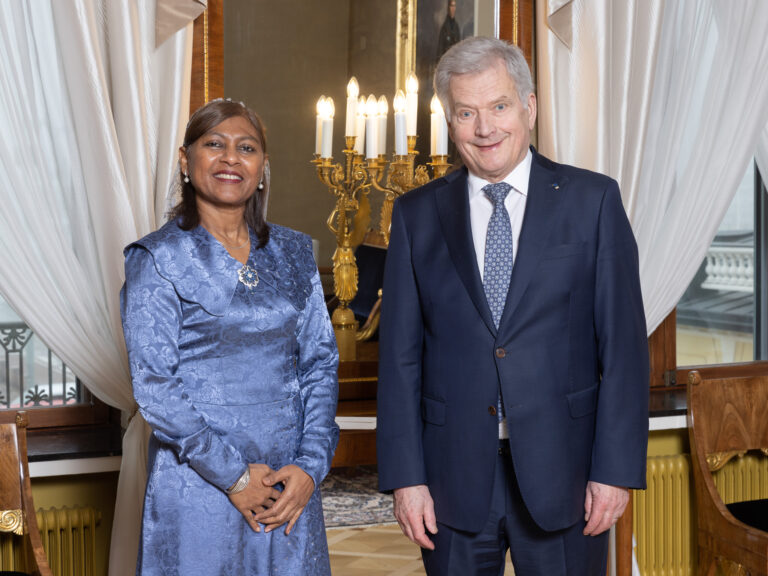
Tuesday, 22 November 2022, Berlin, Bellevue Palace, Germany: German Federal President Dr. Frank-Walter Steinmeier received the letters of credence from Omani top envoy Maitha Saif Majid Al Mahrouqi.

She was subsequently received for a bilateral conversation with the German head of state focusing on the legacy of His Majesty The Sultan of Oman‘s official visit to Germany, wherein the latter was received by both, the Federal President and the Federal Chancellor, mid-July of the present year.

At the time His Majesty Sultan Haitham bin Tarik Al Said was accompanied by a business delegation that advanced economic opportunities across various sectors, particularly in alternative energy, capitalizing on Oman’s natural resources including hydrogen, solar and wind power.  

Previous to her ambassadorship, Maitha Al Mahrouqi served in the capacity as Undersecretary of the Ministry of Heritage and Tourism for eleven years. Therein she was responsible for the oversight of the ministry’s strategic ambitions to drive economic growth through tourism. She also sat on a number of boards of directors and committees in ministries, governmental entities and companies with financial and economic legislative mandates.  

Ambassador Al Mahrouqi began her professional career in the aviation sector, working for Gulf Air, and becoming the youngest General Manager in the airline’s history. Thereafter she moved on to serve the country’s national carrier, Oman Air, as Country Manager, transforming the Oman office into a main hub for the airline.

Maitha Al Mahrouqi holds a Bachelor of Arts from Oxford Brookes University in the United Kingdom. She is fluent in English and Arabic, and will also be in charge of relations vis-Ă -vis the Nordic countries from the Omani embassy in Germany. 

She was awarded the Oman’s Civil Order (3rd Class) in 2015 by the late Sultan Qaboos bin Said bin Taimur Al Said

For further information

Embassy of the Sultanate of Oman in the Federal Republic of Germany: https://fm.gov.om/berlin/#Bilateral-relations

———–

Image courtesy of the Embassy of the Sultanate of Oman in Germany

Eurojust supports crackdown on criminal network

Judicial and law enforcement authorities in Romania, with the support of several other countries, have dismantled an organised crime group (OCG) suspected of money laundering and CEO/BEC fraud. The volume of transactions is believed to exceed EUR 70 million.

Eurojust and Europol supported the investigation, which led to the detention of nine suspects and the seizure of over EUR 5 million worth of assets. Eurojust supported the judicial cooperation and coordination with more than 20 countries and assisted the authorities in setting up and funding a joint investigation team (JIT) into the case.

The suspects allegedly set up companies in Romania and subsequently, within a very short period of time, opened bank accounts for these companies where consistent and successive transfers from various foreign companies were being conducted. The investigation showed that the money in these transfers came from fraudulent activities, including CEO/BEC fraud.

CEO/BEC fraud occurs when an employee authorised to make payments is tricked by a fraudster into paying a fake invoice or making an unauthorised transfer out of the business account. The perpetrators often impersonate a high-ranking figure within the company (e.g. the CEO or CFO).

The amount of the money transferred by the criminal network is estimated at over EUR 70 million. Some of the bank transfers involved more than EUR 3 million per transaction.

In an action day on 6 December, nine suspects were detained in Romania and one was placed under judicial control. A total of 24 house searches were carried out, 13 in Romania, 7 in the Republic of Moldova and 4 in Sweden. The total value of the seized assets is over EUR 5 million.

The case was opened at Eurojust at the request of the Romanian authorities in September 2019. A JIT was established in June 2020 between Romania and Ukraine, and extended to Italy in June 2021. More than 20 countries, including EU Member States and third countries, have been involved in the investigation.

Eurojust facilitated the judicial cooperation and provided extensive support for the coordinated investigative efforts. The Agency hosted four coordination meetings and facilitated the transmission and execution of many European Investigation Orders (EIOs) and requests for mutual legal assistance.

Europol facilitated the exchange of information between law enforcement authorities.

The following authorities took part in this investigation:

  • Romania: Prosecutor’s Office attached to the High Court of Cassation and Justice, Directorate for Investigating Organised Crime and Terrorism – Central Structure; General Inspectorate of Romanian Police –Directorate for Combating Organised Crime
  • Italy: Public Prosecutor’s Office of Bologna; Postal and Communications Police Service
  • Ukraine: Prosecutor’s Office General; Dnipropetrovsk region Prosecutor’s Office; Kryvyi Rih’s Central local Prosecutor’s Office; Main Department National Police of Ukraine in Dnipropetrovsk region – Police Division â„– 4 of Police Local Department; Cyber Police Department National Police of Ukraine – Cybercrimes combating Office in Dnipropetrovsk region
  • Republic of Moldova: Specialised Prosecutor Office on Combating organised crimes and Special Causes
  • Sweden: National Public Prosecution Department, National Unit against Organised Crime

ICC and Spain conclude Agreement on the Enforcement of Sentences

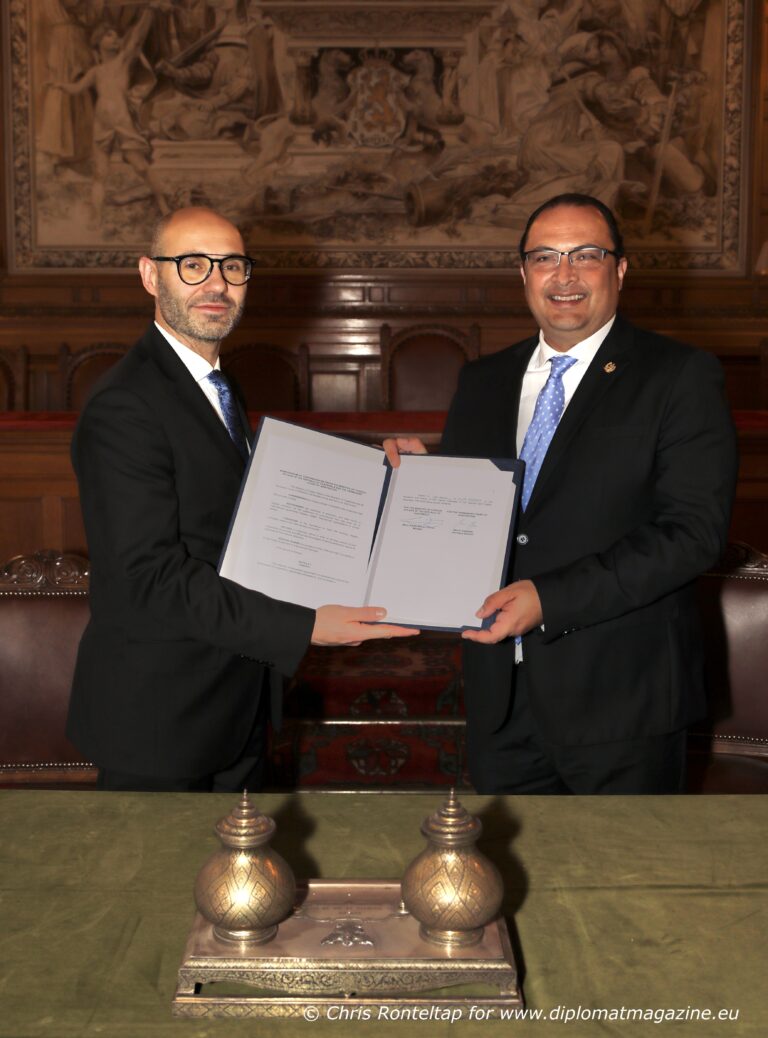
The International Criminal Court and the Government of the Kingdom of Spain have concluded an Agreement on the Enforcement of Sentences. Under the agreement, persons convicted by the ICC may serve sentences of imprisonment in Spain if so decided by the Court and accepted by the Government of the Kingdom of Spain.

On 8 December 2022, the President of the Court, Judge Piotr Hofmański, and H.E. María Consuelo Femenía Guardiola, Ambassador Extraordinary and Plenipotentiary of the Kingdom of Spain to the Kingdom of The Netherlands, signed the agreement during the plenary session on cooperation at the twenty-first session of the Assembly of States Parties in The Hague.

The Rome Statute, the Court’s founding treaty, provides that sentences of imprisonment imposed by the ICC “shall be served in a State designated by the Court from a list of States which have indicated to the Court their willingness to accept sentenced persons”.

In expressing the Court’s appreciation for Spain’s commitment and long-standing support, President Piotr Hofmański stated: “In signing this Agreement today, the Kingdom of Spain demonstrates its steadfast support and commitment to ensuring the proper functioning of the Court. It is enshrined in the Rome Statute that States Parties should share the responsibility for enforcing sentences of imprisonment pronounced by the Court. With its signature, Spain has assumed this responsibility”.

H.E. MarĂ­a Consuelo FemenĂ­a Guardiola, Ambassador Extraordinary and Plenipotentiary of the Spanish Kingdom said that: “We underline once again my country’s commitment to the Court in the performance of its functions as a judicial body. We are well aware of the need for this kind of cooperation in the practical implementation of the Court’s mandate, in the last phase of the judicial process. Today’s signing aligns with other actions already undertaken by Spain in the fight against impunity”.

Similar agreements on the enforcement of sentences are currently in force between the ICC and Argentina, Austria, Belgium, Colombia, Denmark, Finland, Georgia, Mali, Norway, Serbia, Slovenia, Sweden and the United Kingdom of Great Britain and Northern Ireland.

ASEAN First Coffee Morning

The ASEAN Ladies Circle, or ALC in The Hague, organised the first ASEAN Coffee Morning on Tuesday, 22 November 2022 to honour the solidarity and togetherness of ASEAN’s women, as indicated in the ASEAN motto “One Vision, One Identity, One Community,” and introduce the Netherlands’ international community to the rich culture of ASEAN nations.

The ALC invited the members of the Ambassadors Spouses Association (ASA) and Diplomat Magazine to participate on this special first ASEAN Coffee Morning.

The program promulgated the ASEAN identity by showcasing the vibrant culture of Indonesia, Malaysia, Thailand, Vietnam and the Philippines. The event featured a fashion show, cultural entertainment, and delicious Southeast Asian cuisine.

Nataya Archjananum, ALC President during her welcome speech.

The festive program started with the singing of the ASEAN Anthem, followed by the welcome remarks by ALC President Madam Nataya Archjananun, spouse of the Ambassador of Thailand and current president of the ALC for the term 2021 – 2022. She stated “In the past, the ALC has taken in turn hosting coffee mornings, among ALC Embassies, to strengthen ASEAN sisterhood and networking. This year, we have decided to take our coffee mornings collectively to the next level.

We want to provide the Netherlands and the international community at large a glimpse to the rich cultural of ASEAN nations represented by the ALC. ASEAN nations are rich in cultural diversity, friendly people with natural charms, many beautiful sites to visit, and delicious food, and is on track to become 4th largest economy in the world. Imaging yourself taking a tour to visit ASEAN. So, fasten your seat belts and please enjoy your trip today. Kopkun mark ka. “”

Guests were introduced to performances of Panyembrama Dance from Indonesia, Wan Bulan dance from Malaysia, Igorat Cordillera Dance from the Philippines, and Rum Plern Dance from Thailand.

ASEAN Fashion Show

In addition, they were also introduced to the traditional attire of Indonesia, Malaysia, the Philippines, Thailand, and Vietnam. The fashion show became even more spectacular as the spouses of ASEAN Ambassadors and H.E. Dato’ Nadzirah Osman, Ambassador of Malaysia paraded in their exquisite attires with Dr. Mayelinne De Lara of Diplomat Magazine graced the finale.

Diplomat Magazine’s Publisher, Dr. Mayelinne De Lara.
Mrs. Le Thi Hien Anh, spouse of Vietnam’s Ambassador.
Ms. Nataya Archjananun, Spouse of the Ambassador of Thailand.

Her dress represented ASEAN unity in diversity wearing Tusuk Konde or hair pin and a Batik scarf from Indonesia; a Philippines wrap around banaca blouse, a mudmee silk and a sarong/ikat  from Thailand. On her right hand, Dr De Lara carried  the Malaysian songket miniaudiere and a red fan from Viet Nam.

Every ASEAN country’s celebrations include delicious food, a warm ambience, and entertaining activities. Guests were invited to sample unique dishes from each ASEAN country, such as Nasi Lemak, Sa-te, Chendol, Pad Thai, Goi Cuon, Palabok, and Ube Macapano cupcakes.

The celebration ended on a high enjoyment, thanks partly to ASEAN Line Dance, performed by ASEAN Madams and all the attending guests.

The event was joined by members of the Ambassadors’ Spouse’s Association (ASA) and guests of the ALC. 

ASEAN, or the Association of Southeast Asian Nations, is a regional organisation presently comprising 10 Southeast Asian nations. The ALC comprises spouses of ASEAN Ambassadors and diplomats, and female diplomats and staff members of 5 ASEAN Embassies based in The Hague, namely, Indonesia, Malaysia, the Philippines, Thailand, and Vietnam.

ICC and Ireland sign a Memorandum of Understanding

ICC and Ireland sign a Memorandum of Understanding on voluntary contributions to three important trust funds of the Registry

On 5 December 2022, on the margins of the twenty-first session of the Assembly of States Parties (ASP) to the Rome Statute of the International Criminal Court (“ICC” or the “Court”), the Registrar of the International Criminal Court, Mr Peter Lewis, and the Acting Legal Adviser of the Department of Foreign Affairs of Ireland, Mr Declan Smyth, signed a Memorandum of Understanding (“MoU”) establishing the terms and conditions governing contributions made by Ireland to support the following ICC trust funds managed by the Registry: the Special Fund for Relocations, the Trust Fund for the Development of Interns and Visiting Professionals and the Trust Fund for Family Visits.

“I am extremely grateful for the generous support from the Irish authorities to the work of the Court and of the Registry in three crucial areas. It will contribute to the efficient implementation of the Court’s mandate in the areas of protection of witnesses and family visits to the ICC’s indigent detained persons, as well as to ensure geographical diversity amongst its interns and visiting professionals”, said ICC Registrar Peter Lewis.

With this MOU, a significant contribution will go to the Special Fund for Relocations. This Trust Fund is set up to manage donations from States to relocate witnesses in third countries through a cost neutral arrangement. This Fund allows States, who are able to donate some money towards relocations, to support those who are willing to receive relocated witnesses, but lack the financial means to do so. The donation will allow the Registry to support the relocation of several witnesses and their family members.

Another part of the donation will go to the Trust Fund for the Development of Interns and Visiting Professionals. This Trust Fund was established with the aim of providing funded internship and visiting professional placements to nationals of developing countries that are States Parties to the Rome Statute. The Trust Fund therefore contributes to the Court’s efforts to increase geographical representation and to give fair opportunities to all individuals willing to work at the Court.

Finally, a third part of the donation will be provided to the Trust Fund for Family Visits. This Fund contributes to protecting the right to and respect of family life for all indigent persons detained at the ICC Detention Centre. It ensures that during their time in detention, which usually spans over several years, indigent detained persons are able to receive visits from their nuclear families, who lack the means to afford such visits and travel.

The Ambassador of Ireland to the Kingdom of the Netherlands, Mr Brendan Rogers, said: “International justice is a profound idea, but many practical steps are required for its achievement. With these contributions Ireland will enhance key support functions at the ICC so that the Court can focus on delivering justice for victims of the most heinous crimes. Ireland is proud to contribute The Special Fund for Relocations, the Trust  Fund for Interns and Visiting Professionals and the Trust Fund for Family Visits. We encourage all States Parties to consider how they can use voluntary contributions to complement the work of the Court.”

ICC Policy on the Crime of Gender Persecution

0

The Prosecutor of the ICC, Karim A.A. Khan KC Publishes Policy on the Crime of Gender Persecution

Today, I am launching the new Policy on the Crime of Gender Persecution that will guide my Office in its fight against impunity for sexual and gender-based crimes. With this initiative, I believe we are taking a significant stride towards fulfilling my promise to address sexual and gender-based crimes in a more systematic and effective way.

If we are to deliver justice for victims and ultimately break cycles of gender-based violence, we must first comprehend the discrimination that fuels these egregious acts. We must also recognise the complex nature of victimisation. Only then can we successfully advance accountability for the crime against humanity of persecution on the grounds of gender under the Rome Statute. I am firmly committed to ensuring that my Office systematically addresses sexual and gender-based crimes, and takes a deeper and more focused approach to investigating and prosecuting gender persecution. This latest policy paper initiative is another commitment to this necessary objective.

This new Policy takes a comprehensive approach to sexual and gender-based crimes that may amount to the crime against humanity of persecution on the grounds of gender (gender persecution). It recognises all of its victims, namely women, girls, men, boys, including/and LGBTQI+ persons. It also recognises that acts or crimes of gender persecution may include, but are not always manifested as, forms of sexual violence or any physical violence or physical contact. They may include psychological abuse. They may also take forms other than physical injury to persons, including acts such as cultural destruction or confiscation and prohibition of education for girls. 

Accountability for gender persecution crimes can help to disrupt the normalisation of institutionalised gender discrimination and violence. By promulgating this Policy, my Office signals its commitment to ensuring that in all our future cases we properly reflect the specific facts and evidence. We will do this by charging gender persecution and persecution on any other ground where it exists. To this end, I will ensure that this Policy is effectively implemented.

I am particularly grateful to Professor Lisa Davis, my Special Adviser on Gender Persecution who led the drafting of this Policy at my request. Complementing and building on the 2014 Policy Paper on Sexual and Gender-Based Crimes, this new Policy will help to further promote accountability, transparency, and predictability in the Office’s work in this crucial area. The Office has already taken steps in this direction, first confirming the charge of persecution on grounds of gender (and religion) in the case of Prosecutor v Al Hassan.

It was vital for me that the Policy be informed by the voices of staff and external actors, especially those with valuable experience addressing gender-based violence. Critically, we sought to ensure the voices of the victims of such crimes are reflected in our new approach. Taking direction from my initiative to strengthen engagement with civil society, the Policy was developed through an extensive year-long consultative process, engaging staff, civil society and affected communities. I want to thank the more than 500 organisations, institutions, States, UN experts, independent experts, activists, survivors, scholars, and academics, representing over 100 countries and territories who provided input. Their comments signal the importance of developing this Policy.

I am positive that this new approach will allow my Office to increase transparency, clarity, and predictability in the application of the legal framework. I look forward to taking the next necessary steps to expand cooperation, broaden accountability for gender persecution, and enhance the Rome Statute’s preventive impact in relation to gender crimes.

Art Work Returned to Vietnam in Collaboration with Vietnam Embassy The Hague

By Roy lie Atjam

The Embassy of the Socialist Republic of Viet Nam in the Netherlands organized a ceremony for the donation of two art objects from the personal collection of Mrs. Ellen Berends, a retired diplomat who served in Vietnam. The ceremony took place at the Chancellery of Vietnam in The Hague on 17th November 2022.

During her stint in Hanoi – Vietnam (1997 – 2002) Mrs Berends acquired two artworks by the Vietnamese artist  Phung Phâm (1) a Lacquer painting on wood of a standing woman in traditional dress entitled “Proud” (“Tá»± HĂ o”) and (2) Lacquer painting on wooden folding screen entitled “Love Kisses”.

However, Mrs. Ellen Berends has decided to donate the two works of art to the Vietnam Museum of Fine Art and the people of Vietnam. According to Berends, the works are part of the Vietnamese cultural property. A noble and generous move indeed. Bravo!                    

Former Dutch diplomat in Vietnam Ms. Ellen Berends.


Ambassador Pham Viet Anh and Ellen Berends during the ceremony for the donation of two artworks by the Vietnamese artist  Phung Phâm from Ms Berends personal collection. The two pieces will be part of the Vietnam Museum of Fine Art’s collection.

Mrs Berends recounted how she came across the two works and ultimately purchased them. She had to do some savings before buying the objects. She has never regretted buying them, the pieces accompanied Berends on all postings abroad she has had over the years.

The Ambassador of Vietnam H.E. Mr. Pham Viet Anh took a keen interest in the dossier, and despite some minor hiccups, he facilitated an appropriate and smooth transfer.

Former Dutch Ambassadors Ellen Berends and Monique Frank.
Mrs. Le Thi Hien Anh, Vietnam’s Ambassador spouse, Ms. Vo Thi Ngoc Diep, Commercial Counsellor – Head of Trade Office, Arjen IJff, a Dutch designer who was born in Vinh Long province (Viet Nam) and Mrs. Thi Lan Huong Nguyen from the Embassy of Vietnam.

After the signing of the deed and other documents, witnessed by friends of Vietnam, the diaspora, and Dutch government representatives notably Ms. Dewi van de Weerd, Ambassador for International and Cultural Cooperation at the Dutch Ministry of Foreign Affairs and Ms. Margriet Kim Nguyen, Policy Officer International Affairs at the Department for Heritage and Art, Ministry of Education, Culture and Science; Ambassador  Pham Viet Anh, lauded Mrs. Ellen Berends and expressed his government’s gratitude for the generous donation. Also present, the former Dutch Ambassador to Vietnam Ms. Monique Frank.

The two works will soon be on their way back home, to Vietnam!

Le Procureur de la Cour pénale internationale présente son Rapport annuel


Aujourd’hui, mon Bureau prĂ©sente son premier rapport annuel intitulĂ© « Avènement d’un monde plus juste : un effort de tous les instants ». La publication de ce rapport est le reflet de mon engagement Ă  accroĂ®tre la transparence des activitĂ©s de mon Bureau et Ă  renforcer le dialogue avec les parties prenantes que la lecture du rapport pourrait intĂ©resser, qu’il s’agisse des communautĂ©s touchĂ©es, des autoritĂ©s Ă©tatiques, de la sociĂ©tĂ© civile, des organisations internationales ou de nos partenaires rĂ©gionaux et internationaux.

Au travers de ce rapport annuel, nous entendons rendre compte des progrès accomplis, des difficultés rencontrées et de la stratégie mise en œuvre en fonction des priorités que nous nous sommes fixés. Cet exercice de réflexion nous a permis de dresser le bilan des initiatives entreprises et des événements survenus entre le début de mon mandat et la fin du mois de novembre 2022.

J’espère que cette publication permettra de mieux faire comprendre les activités qui ont été entreprises en exécution du mandat dont nous sommes investis ainsi que le changement institutionnel et culturel amorcé au sein de notre organisation. Sans être exhaustif, le rapport annuel couvre un large éventail de sujets tels que les efforts déployés pour mener encore plus d’activités sur le terrain, le recours aux technologies, la mise en place de partenariats avec la société civile, la réorganisation du Bureau et notre volonté d’insuffler plus de dynamisme à la complémentarité.

J’ai conscience que nous ne pourrons pas mettre en œuvre cette vision du changement positif si nous fonctionnons en vase clos. Comme je l’ai déjà dit à plusieurs reprises, l’une des principales priorités de mon Bureau consiste à entretenir un dialogue plus soutenu avec l’ensemble de nos partenaires tels que les survivants, la société civile et les autorités nationales. La CPI n’a pas vocation à devenir la plus haute instance judiciaire mais plutôt une plaque tournante pour la coopération et les échanges, et mon Bureau entend jouer son rôle pour traduire concrètement cette aspiration et lui accorder tout son sens.

Ce rapport est le tout premier du genre à être publié par mon Bureau. Je ne doute pas qu’il serait possible d’en améliorer certains aspects et nous tenterons de le faire dès l’année prochaine. Cela étant, il s’agit là d’un effort sincère visant à améliorer notre visibilité auprès de tous nos partenaires afin qu’ensemble, nous puissions tenir nos engagements. Nous vous remercions de bien vouloir nous faire part de vos commentaires sur la façon dont nous pourrions l’améliorer.

Le travail assidu de l’ensemble du personnel de mon Bureau au cours des 18 derniers mois m’emplit d’espoir et d’optimisme mais je suis bien conscient qu’il reste tant Ă   faire pour rĂ©pondre aux attentes lĂ©gitimes des survivants et des familles des victimes et que nous ne devons pas relâcher nos efforts. Nous poursuivrons dans la voie sur laquelle nous nous sommes engagĂ©s il y a un an et demi afin d’atteindre l’objectif que nous partageons : mettre un terme Ă  l’impunitĂ© pour les crimes internationaux. Notre capacitĂ© Ă  changer le cours des choses dans la vie des personnes qui nous accordent leur confiance et comptent sur nous permettra d’évaluer l’efficacitĂ© de notre action.

Nous continuerons à nous acquitter en toute impartialité et en toute intégrité du mandat qui nous a été confié, avec un dévouement et un respect sans faille, à chaque instant.