Aujourd’hui, mon Bureau présente son premier rapport annuel intitulé « Avènement d’un monde plus juste : un effort de tous les instants ». La publication de ce rapport est le reflet de mon engagement à accroître la transparence des activités de mon Bureau et à renforcer le dialogue avec les parties prenantes que la lecture du rapport pourrait intéresser, qu’il s’agisse des communautés touchées, des autorités étatiques, de la société civile, des organisations internationales ou de nos partenaires régionaux et internationaux.
Au travers de ce rapport annuel, nous entendons rendre compte des progrès accomplis, des difficultés rencontrées et de la stratégie mise en œuvre en fonction des priorités que nous nous sommes fixés. Cet exercice de réflexion nous a permis de dresser le bilan des initiatives entreprises et des événements survenus entre le début de mon mandat et la fin du mois de novembre 2022.
J’espère que cette publication permettra de mieux faire comprendre les activités qui ont été entreprises en exécution du mandat dont nous sommes investis ainsi que le changement institutionnel et culturel amorcé au sein de notre organisation. Sans être exhaustif, le rapport annuel couvre un large éventail de sujets tels que les efforts déployés pour mener encore plus d’activités sur le terrain, le recours aux technologies, la mise en place de partenariats avec la société civile, la réorganisation du Bureau et notre volonté d’insuffler plus de dynamisme à la complémentarité.
J’ai conscience que nous ne pourrons pas mettre en œuvre cette vision du changement positif si nous fonctionnons en vase clos. Comme je l’ai déjà dit à plusieurs reprises, l’une des principales priorités de mon Bureau consiste à entretenir un dialogue plus soutenu avec l’ensemble de nos partenaires tels que les survivants, la société civile et les autorités nationales. La CPI n’a pas vocation à devenir la plus haute instance judiciaire mais plutôt une plaque tournante pour la coopération et les échanges, et mon Bureau entend jouer son rôle pour traduire concrètement cette aspiration et lui accorder tout son sens.
Ce rapport est le tout premier du genre à être publié par mon Bureau. Je ne doute pas qu’il serait possible d’en améliorer certains aspects et nous tenterons de le faire dès l’année prochaine. Cela étant, il s’agit là d’un effort sincère visant à améliorer notre visibilité auprès de tous nos partenaires afin qu’ensemble, nous puissions tenir nos engagements. Nous vous remercions de bien vouloir nous faire part de vos commentaires sur la façon dont nous pourrions l’améliorer.
Le travail assidu de l’ensemble du personnel de mon Bureau au cours des 18 derniers mois m’emplit d’espoir et d’optimisme mais je suis bien conscient qu’il reste tant à faire pour répondre aux attentes légitimes des survivants et des familles des victimes et que nous ne devons pas relâcher nos efforts. Nous poursuivrons dans la voie sur laquelle nous nous sommes engagés il y a un an et demi afin d’atteindre l’objectif que nous partageons : mettre un terme à l’impunité pour les crimes internationaux. Notre capacité à changer le cours des choses dans la vie des personnes qui nous accordent leur confiance et comptent sur nous permettra d’évaluer l’efficacité de notre action.
Nous continuerons à nous acquitter en toute impartialité et en toute intégrité du mandat qui nous a été confié, avec un dévouement et un respect sans faille, à chaque instant.
The twenty-first session of the Assembly of States Parties (ASP) to the Rome Statute of the International Criminal Court (ICC) opened today at the World Forum Convention Center in The Hague, The Netherlands. The session is scheduled from 5 to 10 December 2022.
At this session, in The Hague, States Parties to the Rome Statute, observer States, invited States, international and regional organizations and representatives from civil society will discuss key challenges facing the Statute. States Parties will also adopt resolutions on important issues pertaining to the functioning of the Court and the Trust Fund for Victims (TFV), including on their respective budgets, on cooperation and the recommendation on the Election of the ICC Registrar.
Calling for the renewed support to the Court, H.E. Silvia Fernández de Gurmendi, President of the Assembly of States Parties, stressed its “vital role in the international legal framework to ensure the accountability of perpetrators of atrocity crimes and bring justice to victims. The increased cooperation of States Parties and the promotion of the work of the Court are essential to achieve the global aspirations of the Court’s mandate.”
The President of the Court, judge Piotr Hofmański, emphasised that the Court was ending an exceptional year: “The Court’s workload reached unprecedented heights, with new trials as well as new investigations. We celebrated the ICC’s 20th anniversary, a mark of significant maturity for our institution. And we returned to full physical presence at the Court’s premises. …The demands and expectations toward the ICC may be higher today than ever before. And the Court is responding to these expectations with fullest dedication.” The President also called for enhanced cooperation from States with the Court and an increased budget: “It is critically important to build capacity now so that we can cope effectively with the workload that awaits us. We need a sufficient and balanced regular budget for that purpose,” he stated. The President also mentioned the importance of making the ICC system more universal: “Many non-party States are present in this room today – I call upon you all to take steps toward joining the Rome Statute without delay.”
ICC Prosecutor Karim A.A. Khan KC stated: “At this moment, almost 25 years on since Rome, we need the law and the International Criminal Court more than ever. In 2022 my Office has implemented significant changes to make us more agile, field-focused and increase our capacity to partner effectively with survivors and impacted communities. While there are still many challenges to address and overcome, the progress we have made in implementing this vision is testament to the commitment and dedication of all members of the Office. I believe we now stand ready to deliver more effectively for survivors and the families of victims”.
Prosecutor Khan also underlined the need to deepen partnerships to render collective work towards justice more effective: “My time thus far as Prosecutor has shown again and again that we will only achieve the true promise of the Rome Statute by working together, across all actors. The Assembly of States Parties is an opportunity for us to convert the words of justice, and the important words of support for the Court we have heard this year, into concrete action that can be felt by those who look to this Court for the vindication of their basic rights”.
The Chair of the Board of Directors of the Trust Fund for Victims, Minou Tavárez Mirabal, stated: “This Board of Directors has strongly pushed for better communication and visibility about its numerous programmes and for increasing fundraising efforts. Based on the fundraising strategy presented to the Board in July 2022, the Trust Fund for Victims has developed its new Strategic Plan 2023 to 2025. The new strategy makes use of the TFV’s strongest asset: The Trust Fund for Victims and the Court together are the pillar of reparative justice of the Rome Statute. Together we can work to put in place transformative reparations for and with victims. Together we can mitigate the negative effects of Rome Statute crimes for the next generations. Together we can work for peace and stability. We call upon all States Parties to consider providing additional voluntary contributions, including development funding for the benefit of victims and their families.”
The ICC, governed by the Rome Statute, is the world’s first permanent, treaty-based, international criminal court established to help end impunity for the perpetrators of the most serious crimes of concern to the international community, namely crimes against humanity, war crimes, genocide, and the crime of aggression. In accordance with article 112 of the Rome Statute, the Assembly is the management oversight and legislative body of the ICC. It is composed of representatives of the States that have ratified and acceded to the Rome Statute.
That’s one life motto by which Elaine Engelbrecht lives her life these days. When you are in the diplomatic world, you certainly need to get strong. Frequent relocations, new environment, uncomfortable situations… they’re all part of a not very well known picture. And the stress… let’s not mention the stress of any international move… Elaine tells me: ‘as a nomad by heart, I’m always excited about the next adventure at the horizon, as this kind of life offers many opportunities to travel and to be exposed to new cultures, but the other side of it is packing up and saying goodbye to nice people you’ve met in different places. It’s always hard to start all over again’.
She’s South African by birth and Dutch by marriage; she has lived and worked in Taiwan, Libya, The Netherlands, China and Pakistan, so you could say she is a true citizen of the world and an expert in relocation and reinvention. ‘My educational background includes a bachelor’s degree in music, a TEFL certification to teach English as a foreign language, a Postgraduate in Education, and I’m currently studying towards a second bachelor’s degree in English education and becoming a certified copywriter’, she says.
Elaine and her husband, Ajen
But this life takes its toll on everyone, while also opening up new windows of opportunity for those sharp enough to notice them. After moving back to the Netherlands, from a diplomatic mission to Pakistan, with her husband, Arjen and their two dogs, Lara and Sparky, she suddenly started getting unexplained bad lower back pain which often woke her up in the middle of the night.
She recalls: ‘I’d have to take pills just to get back to sleep. So, I turned to ‘Google doctor’ and found all kinds of scary diagnoses, from kidney stones to cancer. Thankfully, I also found an article about the connection between my symptoms and root chakra imbalance and I decided to give the suggested healing advice a try. To rebalance the root chakra, one must reconnect with nature and listen to singing bowl music, tone C. After only 4 days of doing so, the pain was gone!’
She had healed herself and then thought: ‘why not apply this concept to piano learning?’ And so, she created the Chakra Piano books, a holistic program for young beginners (available on Amazon*). She confesses that ‘writing has always been a creative and therapeutic outlet. In 2015 I wrote a fantasy adventure chapter book, which received a publishing offer from Oxford University Press in early 2020. Unfortunately, due to COVID-related budget cuts, things did not work out after all but I’ll be self-publishing the series before the end of the year instead.
I feel the happiest when I’m creating something.’ … So, she created also a Facebook group called ‘Creative Diplomatic Spouses’. ‘I thought a group like this could be a nice platform for us, creatives, to promote our work, since so many of us are doing such things like beautiful cakes, cards, table decorations, books or paintings. Secondly, I thought the group would be a great place where creatives could connect. For example, if a writer is looking for an illustrator, why not ask in the group? ‘
She is full of nice ideas and diligently puts them all into practice. She is a teacher, a writer, holds a blog and she is also a student again. She advises other spouses to be unafraid to speak up about their prior training and future career goals. She thinks that, especially after Covid days, many have become more aware of the possibilities to work remotely or to start up mobile careers. Preparing for a portable career or studying something during a posting, joining a local activity group or NGO, volunteering for a cause one cares about… these are all options that we can take to help us stay active, career relevant, satisfied and fulfilled.
She says that ‘life in a new country can be a bit unstable in the first 6 months’. Her advice? ‘Keep it simple—eat, sleep and exercise. Learn to cook a great three course meal’. I would add: ‘Don’t lose your faith and optimism’.
But, as you live year after year of a diplomatic life, you gradually learn to increase your confidence, expand your knowledge, expertise and adaptation tools.
One last piece of advice from her in the end… ‘Stop shrinking to fit places you’ve outgrown’.
On 2 December 2022, H.E. Kateřina Sequensová, Ambassador of the Czech Republic to the Kingdom of the Netherlands and the Registrar of the International Criminal Court (“ICC” or “the Court”), Mr Peter Lewis, signed a cooperation agreement on the protection of witnesses at the seat of the Court.
“We are extremely grateful for the voluntary cooperation of the Government of the Czech Republic. The agreement after its entry into force will provide a framework which will allow the protection of some of the witnesses who decide to testify before the Court,” ICC Registrar Peter Lewis said. “We are looking forward to the signature of similar agreements with other states, thus moving from words to deeds and making the justice advocated by the ICC a tangible reality,” he added.
Ambassador Sequensová, signing on behalf of the Czech Republic, stated that “Without witnesses, there will be no trials, no justice for the victims. By signing the relocation agreement, the Government of the Czech Republic wishes to contribute to the fight against impunity for the most serious crimes under international law and reaffirms its support to the Court and its work. We acknowledge that victims and witnesses are at the heart of Rome Statute and its system making it a true victims’ court.”
The ICC offers protection to persons at risk because of their engagement with the Court. Agreements on witnesses’ protection are in principle confidential, unless the State decides otherwise, and are necessary to ensure the success of this protection and to allow witnesses to safely present their testimonies to the ICC Judges.
It all started in room 3603 of the Rockefeller Center, where the one who Gen Dwight D. Eisenhower, cited as “the last hero,” created an intelligence program that would later become the world’s largest security services agency and US information source.
It was 1941, the Second World War had revealed the atrocities and shame of racial policies that continued to destroy innocent lives. Europe was stunned. In an attempt to block the perpetration of genocide, and to safeguard the protection of people and their dignity, President Roosevelt signed an order appointing an Assistant Attorney General to Information Coordinator (COI).
The name of this hero was William J. Donovan, who history will remember as the protagonist of countless operations aimed at restoring freedom and democracy to many western nations. Donovan worked hard to train the information service and was the source of important international collaborations. His efforts were so effective that the government changed the name of the COI to the Office of Strategic Service.
William J. Donovan, 1928.
George Grantham Bain Collection/Library of Congress, Washington, D.C. (Digital File Number: cph 3c09385)
Today, the official website of the US Department of Justice clearly explains the moment of that transition, that is when the US presidency declared the existence of the OSS.
The Office of Strategic Service turned out to be an extraordinary organization committed to the fight against evil, which worked assiduously for international justice and subjected criminals to the law, even paying with their own blood, thanks to the sacrifice of the lives of many of its agents.
The text of the official website of the Department of Justice, in fact, quotes verbatim:
“President Roosevelt issued an order to replace the COI with the Office of Strategic Services (OSS) and appointed Mr. Donovan as its director.
During World War II, the OSS focused on gathering crucial information on members of the Third Reich. Mr. Donovan’s knowledge and experience was vital to the initial investigation into the Nuremberg Trials, where he was appointed Assistant Chief Prosecutor Robert Jackson”.
The battle of William J Donovan and the OSS to bring war criminals to justice.
When the war ended, the British and American governments did not seem intent on prosecuting war criminals. It would seem, in fact, that it was Donovan himself who insisted so much on the establishment of criminal proceedings that led President Truman to then give the order to collect all the technical elements useful for organizing these trials.
Supreme Court Justice of the time R. Jackson was in charge of war criminals. The magistrate’s office realized that the OSS was the only agency to have worked on the matter, so much so that it invited Donovan to be part of the court’s work.
Donovan’s extraordinary work made it possible to gather information from Auschwitz survivors. This fact traced sensitive documentation on the SS and the Gestapo.
The Office of Strategic Service moves 172 officers into the Judge’s investigation team who proved instrumental in the indictment evidence and what went down in history as the most important war trial.
The OSS continued its relentless work of safeguarding human rights even after the Second World War. It can be referred to, in fact, when we research the history of the United Nations emblem. The architect Lundquist, captained the OSS team that created the emblem while different sources explain, instead, that Donal McLaughlin, also an OSS official, worked on the graphics of the conference and finalized the design of the pin and currently the logo United Nations official.
Today, as then, history repeats itself and American intelligence still seems to work tirelessly to ensure the West and the whole world those guarantees that make peoples free from autocratic regimes. These efforts go well beyond a departmental service, in fact they allow peoples the freedom to express themselves, but above all to exist and be able to “disagree”, the possibility of hoping and dreaming of a better future and pursuing happiness because it is in its inspiring principles and it is an inalienable right declared by the Congress of Philadelphia on July 4, 1776.
For this reason, it would be important to reflect on how precious the work of the OSS has been and how much that of the current US agencies that monitor respect for human rights is today. and on the attacks against that democracy that makes everyone equal without any distinction of race, ethnicity, political affiliation, birth and religion.
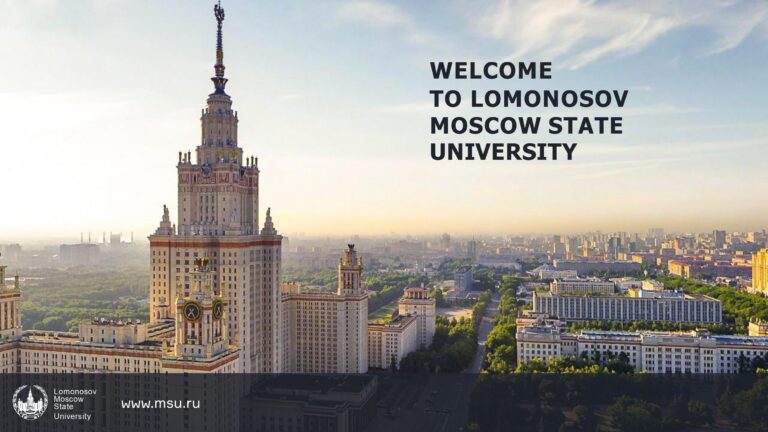
«Lomonosov was a great man. He created the first university; it is better to say, he himself was the first university» – Alexander Pushkin (Russian poet)
In January 2025 Lomonosov Moscow State University will celebrate 270 years. Preparations are underway for a large celebration of this major event. The festivities will begin in 2023. The international programme includes research conferences, exhibitions and science festivals.
We believe that meetings between the international alumni of Moscow State University from many countries and generations will bring back the best memories of student life in Russia in an atmosphere of friendship and mutual understanding. It also presents an occasion to discuss the current topical issues. Moscow State University alumni have always been and remain the intellectual elite of Russia and other countries, demonstrating high standards of Russian education.
Moscow State University was founded in 1755 and is rightfully considered the oldest Russian university. The establishment of a university in Moscow became possible due to tireless efforts of the outstanding scientist, the first Russian academician Mikhail Vasilyevich Lomonosov (1711-1765) after whom it was later named.
Mikhail Lomonosov – Russia’s most famous and most impressive polymath – was a scientist, geographer, writer, historian and poet. Coming from a peasant family in Russia’s far north (Arkhangelsk region), he was taught to read by a neighbor and had devoured every book in his village by the age of 19, when he walked to Moscow to attend school. He studied in Moscow and Saint-Petersburg before receiving an Academy of Sciences grant to study abroad. He spent almost five years studying in Germany at the University of Marburg (where he learnt philosophy, chemistry, other sciences and theology), and visited the Netherlands in 1740, where he stopped over at Leiden University.
Upon his return to Russia he made a proposal to establish a University in Moscow, thus starting a new tradition of modern high education in Russia. In accordance with the plan of M. Lomonosov, 3 faculties were formed at the University: philosophy, law and medicine. All students began their studies at the Faculty of Philosophy, where they received fundamental knowledge in the field of natural sciences and humanities. Education could be continued in the field of law, medicine or philosophy. Unlike European universities, Moscow University did not have a theological faculty. The reason for this is that Russia already had a special system of education for preparing priests of the Orthodox Church. The professors taught not only in Latin – the commonly recognized language of science at that time – but also in Russian.
In the first half of the 19th century, Moscow University played a leading role in the public life in Russia. The traditions of free-thinking were promoted by the student circles of which V. Belinsky, A. Herzen, N. Ogarev and N. Stankevich were part. Nearly 1,500 students studied history and philology, physics and mathematics, law and medicine at the MSU at that time.
In the first half of the 20th century, the university was one of the centers of advanced scientific knowledge and spiritual life in Russia. The names of prominent Russian thinkers of the late 19th – early 20th centuries are associated with it: V. Solovyov, V. Rozanov, S. Bulgakov, P. Florensky. Famous figures of the leading political parties of Russia studied or taught at the university.
After the Second World War the need for enlargement of the University became apparent. In the late 1940s and early 1950s new university buildings were constructed on Lenin (now Vorobyevy) Gory. On September 1st, 1953, they opened their doors to students.
Lomonosov Moscow State University has become a major international university preparing undergraduate and graduate students. One of the first preparatory faculties in our country to teach Russian to foreign students (now it is called the Institute of Russian Language and Culture) was established in 1959 at the university.
Today Lomonosov Moscow State University is the largest classical university in Russia. MSU has 41 faculties, 40 research institutes, a Medical Research and Education Center, a Scientific Library, 4 museums, a Botanical Garden and a Science Park. It has branches in other cities in Russia and abroad. The total area of the MSU campus on «Vorobyevy Gory» in Moscow is 1,200,000 square meters. The campus territory can be compared to a city within a city – there is everything a student needs: libraries, reading rooms, lounges, printing services, post office, laundries, a beauty salon, hairdressing salons, first-aid posts, a pharmacy, canteens, cafes, grocery stores, gyms, swimming pools, stadiums, courts, bicycle and roller skate rental, parks and car parks.
Lomonosov Moscow State University is also the leading scientific center of the country. In 2021, 7 scientific and educational schools were established at MSU: “Fundamental and Applied Space Research”, “Preservation of the World Cultural and Historical Heritage”, “Brain, Cognitive Systems, Artificial Intelligence”, “Molecular Technologies of Living Systems and Synthetic Biology” , “Mathematical methods for the analysis of complex systems”, “Photonic and quantum technologies. Digital medicine”, and “The future of the planet and global environmental changes.”
As one of the pillars of fundamental education, Moscow State University has made a significant contribution to developing international humanitarian cooperation, bringing up a constellation of outstanding scientists and scholars, state persons, politicians and public figures holding various posts in foreign countries.
Nobel laureates, laureates of the State Awards of the USSR and Russia have worked and are still working at Moscow State University. Among Russian Nobel Prize laureates, eleven were graduates or professors of the MSU. Students of Moscow State University won multiple Russian and international awards in various subjects, and its graduates are in high demand both on the Russian and international labor market.
We invite all interested parties to take part in the celebration devoted to the 270th anniversary of Lomonosov Moscow State University.
For many employees, their homes have become a second workplace, while some employees even work from home permanently. What do you as employer have to keep in mind when offering your employees the opportunity to work (partly) from home? We have listed 6 focus points for you.
1) Health and safety legislation
As an employer, you have to provide a safe and healthy workplace. This duty of care also applies to working from home, although this is subject to fewer rules than office work. For example, you must provide an ergonomically furnished home office for your employees. This also means that if your employees do not have appropriate supplies (such as a good office chair), you must provide these to your employees.
You must therefore check whether your employee’s home office is suitable (e.g. with a checklist) and instruct employees on how to work safely and healthily at home (e.g. with an instruction on ergonomic adjustment of their desk and on a healthy sitting posture).
2) Right to working from home?
Perhaps employees ask you to work partly or permanently from home, but you are not sure whether you want to allow this. Do you have to agree to such requests? Working from home is not (yet) a legal right. Currently, employees can request to work from home under certain conditions, but the employer only has to consider this request.
Earlier this year the Lower House approved the ”Work Where You Want” Act. If this legislative proposal is also passed by the Senate, a request to work from home may be rejected in fewer cases. In short, an employer then will have to prove that the employer’s interests outweigh those of the employee.
3) Information security
For employees working from home, the line between private and work can blur. As a result, company documents may be taken home or forwarded to private devices. Other family members may also be able to listen in on a confidential telephone conversation. It is therefore important to think carefully about and agree with your employees on how company data – in line with the GDPR – is protected.
Incidentally, the question may arise whether you are allowed to monitor your employees while working from home, e.g. through tracking software. Here, it is important to realise that because of the right to privacy, this is only allowed within limited frameworks.
4) Allowance for working from home?
When your employees work from home, they incur additional costs (such as for electricity). You can compensate for these costs by paying a home working allowance. However, providing such an allowance is not mandatory. This may be different, however, if a collective agreement is in force. In fact, some collective agreements stipulate that employees are entitled to a home working allowance. As the government wants to encourage working from home, this allowance is tax-free up to and including EUR 2 per day. This amount will be increased for 2023.
5) Home working policy
If you are going to allow structural home working, it is wise to draft a home working policy and include it in your employee handbook. This can contain clear arrangements on working from home: how often and from which location(s) may an employee work from home and what about the (un)availability of your employee? It can also include arrangements about the aforementioned topics, such as workplace furniture and security.
6) Employee participation
Finally, keep in mind that the works council also plays a role in the context of working from home. For instance, the works council has a right to consent when introducing or changing a home working policy. A home working policy may also be subject to the right to give advice in some respects, e.g. if it results in a significant investment for the benefit of the company.
About the author:
Jan Dop
Jan Dop is Head of Russell Advocaten’s Embassy Desk, that serves Embassies, Consulates, diplomats and expats. He has been a lawyer at Russell since 1995, and became a partner in 2011.
Vendredi 11 novembre, par une écrasante de 98 voix pour et seulement 17 contre, la Quatrième Commission de l’Assemblée générale des Nations Unies a adopté une résolution demandant à la Cour internationale de justice (CIJ) de se prononcer sur les effets de l’occupation et de la colonisation illégales des territoires palestiniens par Israël.
La résolution est intitulée “Pratiques israéliennes affectant les droits de l’homme du peuple palestinien dans le territoire palestinien occupé, y compris Jérusalem-Est” (Note 1).
Dans les semaines à venir, ce même texte devra être voté par l’Assemblée générale en tant que telle une seconde fois, et ce malgré la profonde irritation qu´il semble avoir provoqué en Israël (voir article du Times of Israel, édition du 12 novembre).
Cette irritation est annonciatrice d´actions diplomatiques d´Israël tous azimuts, et ce au plus haut niveau, afin d´empêcher à tout prix une adoption définitive de ce texte: voir en particulier cette dépêche de l´agence Reuters du 29 novembre 2022 et cette note publiée en Uruguay en date du 2 décembre 2022. Dans le court extrait de la lettre destinée à une cinquantaine de chefs d´Etats que l´ont peut lire dans cette note du Times of Israel, il est fait mention de l´expression “dangerous move” (sic.) sans que l´on sache exactement en quoi demander un avis consultatif au juge international de La Haye pourrait s´avérer dangereux: a moins qu´Israël reconnaisse tacitement avec cette lettre officielle que ses actions en territoire palestinien sont illégales au regard du droit international, ce qui serait en soi plutôt surprenant.
On rappellera à cet égard les termes de la résolution 2334 (voir texte) adoptée par le Conseil de Sécurité des Nations Unies au mois de décembre 2016 et en particulier la réaffirmation qu´elle fait des différentes normes internationales que viole, selon le Conseil de Sécurité, Israël sur le territoire palestinien occupé.
L’année 2022 en matière d’agression militaire
Comme il est devenu assez habituel dans le cas de victoires incontestables pour les uns (et de défaites diplomatiques pour d’autres), ce premier vote réalisé le 11 novembre a été peu diffusé par les grands médias internationaux.
En cette année 2022, durant laquelle un État membre des Nations Unies comme l’Ukraine, subit une agression militaire de la part de la Russie depuis le 24 février et est au centre de l’attention des médias internationaux, cette omission soulève des questions somme toute très valides. Si l´on prend en compte en plus les diverses résolutions de l’Assemblée générale adoptées depuis mars 2022 (et très largement diffusées) sur le respect de l’intégrité territoriale de l’Ukraine, l’obligation de faire la distinction entre les objectifs militaires et les populations civiles par la Russie, l´interdiction de porter atteinte aux services publics essentiels d´une population lui permettant de subvenir à ses besoins, la nécessité impérative pour la Russie de respecter ses autres obligations en vertu de la Charte des Nations Unies et du droit humanitaire international, les questions soulevées le sont même un peu plus.
N’est-il pas dans l’intérêt de tout État membre des Nations Unies et de la communauté internationale en tant que telle que ces mêmes règles, invoquées à juste titre par l’Ukraine, soient appliquées uniformément et dûment respectées par tous les autres États menant des opérations militaires hors de leurs territoires, y compris par Israël (Note 2) ? Et n´est-il pas souhaitable que certains Etats fassent preuve de plus de cohérence, notamment ceux qui expliquent que, face au conflit entre Israël et Palestine, ” La France se tient du côté du droit international” (voir point 2 de cet hyperlien officiel de l´une de ses ambassades) ?
Quelle pourrait être la phrase de cette résolution qui a conduit plusieurs États en cette année 2022 à revoir leur position par rapport à un texte similaire adopté en 2021 (et les années précédentes) avec leur vote affirmatif et s´abstenir en cette année 2022? Quelle crainte pourraient-ils avoir d´une demande au juge international en vue d´examiner, dans le cadre d´une procédure consultative, l’occupation du territoire palestinien et les effets de la colonisation israélienne à la lumière des normes internationales actuelles?
Outre les 98 voix pour et les 17 voix contre, il y a eu 52 abstentions et 25 “No Show” (absence du délégué au moment de l’enregistrement du vote).
En Amérique Latine, Israël et son fidèle allié américain n’ont pu obtenir que le vote négatif du Guatemala (et les abstentions de la Colombie, du Costa Rica, de l’Équateur, d’Haïti, du Honduras et de l’Uruguay) ; tandis qu’en Europe, ils ont réussi à réunir les votes négatifs de l’Allemagne, de l’Autriche, de l’Estonie, de la Hongrie, de l’Italie, de la Lituanie et de la République tchèque (ainsi que 25 abstentions, dont celles de l’Espagne, de la France, des Pays-Bas et du Royaume-Uni, … qui avaient voté en faveur en 2021 d´une résolution semblable).
Sur le continent africain, seul le Liberia a voté contre cette résolution (et se sont abstenus neufs Etats: le Burundi, le Cameroun, la Cote d´Ivoire, l´Érythrée, l´Ethiopie, le Ghana, le Rwanda, le Togo et le Sud Soudan).
A noter que sept Etats européens ont voté en faveur de cette résolution: la Belgique, l´Irlande, le Luxembourg, Malte, la Pologne, le Portugal et la Slovénie.
La Bolivie et le Venezuela font partie des “No Show“, avec une différence qui mérite d’être précisée : en raison d’arriérés de paiement de sa contribution annuelle en tant qu’État Membre, le Venezuela ne peut pas participer aux votes de l’Assemblée générale (voir communiqué officiel des Nations Unies).
Comme indiqué précédemment, ce vote a été très peu diffusé dans les médias internationaux. Il est à noter que la veille (10 novembre), un communiqué de presse officiel de l’ONU informait du vote qui aurait lieu 24 heures plus tard par la plénière de l’ONU (voir le communiqué de presse officiel de l’ONU).
Le vote en faveur de cette résolution par la délégation ukrainienne semble avoir profondément irrité Israël : en réponse, Israël a choisi de s’abstenir sur une résolution ultérieure concernant l’obligation de la Russie de compenser les dommages causés en Ukraine depuis qu’elle a lancé sa dénommée “opération militaire spéciale” – terme officiellement utilisé en Russie – le 24 février sur le sol ukrainien (voir cette note du Times of Israel et notre brève note – en espagnol – sur cette résolution adoptée en faveur de l’Ukraine le 15 novembre). A moins qu’Israël considère déjà qu’il est dans son intérêt de ne pas reconnaître qu’un Etat doive répondre des faits internationalement illicites et des dommages commis par ses militaires sur un territoire qui ne lui appartient pas.
L´indéfectible “coalition” aux Nations Unies sur laquelle peut toujours compter Israël
Comme il est devenu habituel pour ce type de résolution, le noyau dur des États opposés à tout texte en faveur de la Palestine comprend l’Australie, le Canada, les États-Unis, les Îles Marshall, Israël, la Micronésie, Nauru et Palau. En général, ce noyau dur parvient a obtenir quelques votes en Afrique et en Amérique Centrale.
A titre d´exemple, parmi bien d’autres, lorsqu’en novembre 2012, l’Assemblée générale a reconnu à la Palestine le statut d´ ” État Non Membre Observateur “, en adoptant la résolution A/Res/67/19 (138 voix pour, 9 contre et 41 abstentions) (Note 3), cette étrange association d’États a été rejointe par le Panama et la République Tchèque (voir communiqué de presse officiel de l’ONU). D´une façon similaire (9 votes), lors d´un vote sur l´obligation de pas transférer d´ambassades à Jérusalem intervenu en 2017, recueillant 128 votes pour et 35 abstentions (voir note de presse officielle des Nations Unies).
Cette curieuse “coalition” selon le terme utilisé par le Washington Post en 2012 (voir article) s´est aussi exprimée en 2021, lors du vote de la résolution A/RES/76/225 (voir texte), avec ses 7 votes contre, face à 156 votes pour, et 15 abstentions (voir détail du vote): loin d´être une alliance de circonstances, les liens qui unissent ses membres semblent être ceux d´un véritable front, durables et solides.
En cette année 2022, ces liens ont réapparu lors du vote de la résolution intitulée “Règlement pacifique de la question de Palestine” A/77/L.26, adoptée le 30 novembre 2022 par 153 votes pour, 9 contre et 10 abstentions (voir détail du vote au cours duquel la Hongrie et le Liberia ont rejoint ladite “coalition“, l ´Australie s´étant finalement abstenue).
Ce noyau dur peut parfois se réduire quelque peu: l´expression la plus modeste en nombre de votes de la dite “coalition” (4 votes: Etats Unis, Israël, Iles Marshall et Micronésie) constitue sans doute cette résolution votée au mois d´octobre 2003 sur l´édification du mur construit para Israël, adoptée avec 144 votes pour et 4 contre (voir communiqué officiel des Nations Unies).
Quelques questions posées … sans réponse
Comme indiqué plus haut, le texte de la résolution votée le 11 novembre vise à rapprocher la Palestine de la justice internationale : il est très similaire à celui de résolutions adoptées les années précédentes par l’Assemblée générale des Nations unies, avec seulement un ajout significatif concernant la demande faite à la CIJ pour la version 2022. Comment expliquer alors le soudain changement d’avis de certains Etats sur cette question, et la crainte de certains Etats d’une demande d’avis consultatif de la CIJ ? On réaffirme haut et fort les principes juridiques violés par la Russie depuis le 24 février en Ukraine, mais on préférerait que la justice internationale n´examine pas la violations de ces mêmes principes juridiques sur le territoire palestinien?
Il convient de noter qu’un second vote, non plus par la Quatrième Commission mais par l’Assemblée générale en tant que telle, aura lieu dans les semaines à venir, de sorte que certains États ont encore le temps de rectifier leur position. Un article récent publié dans la presse en Colombie va exactement dans ce sens (voir tribune publiée dans Las2orillas), alors qu´un autre texte en Espagne publié dans El Independiente fait remarquer l´abstention soudaine des autorités espagnoles.
Un autre article récent de la presse uruguayenne souligne le changement de position du délégué uruguayen pour 2022 par rapport au vote de 2021 (voir note de presse d’El Observador) : une presse plus curieuse dans d’autres parties du continent américain, mais aussi en Europe, confirmerait que ce changement de position (une abstention en 2022 au lieu d’un vote favorable en 2021) n’est pas un monopole de l’Uruguay, et qu’en Amérique Centrale, tout comme en Europe, il y a également eu des changements de position sans aucune explication de la part des autorités gouvernementales (Note 4).
Quant au Canada, son vote contre cette résolution a été une nouvelle fois dénoncé par des ONG canadiennes (voir note du CJPME dans laquelle on lit que “It is reprehensible that Canada should try to block a legal opinion on Israel’s actions in occupied Palestinian territory“).
L’origine de la demande faite à la CI
En ce qui concerne la demande faite à la CIJ dans la résolution de 2022, elle découle du fait suivant, également fort peu médiatisé : un récent rapport publié le 20 octobre 2022 par une Commission d’enquête créée par le Conseil des Droits de l’Homme des Nations Unies sur ce qui s’est passé en 2021 en Palestine – (voir lien officiel et texte intégral en Français) incluait dans ses recommandations finales que :
“92. La Commission recommande à l’Assemblée générale de prendre les mesures suivantes :
a) Adresser d’urgence à la Cour internationale de Justice une demande d’avis consultatif sur les conséquences juridiques du refus persistant par Israël de mettre fin à son occupation du Territoire palestinien occupé, y compris Jérusalem-Est, qui constitue une annexion de facto, sur les politiques appliquées pour maintenir cette occupation et sur le refus par Israël de respecter le droit du peuple palestinien à l’autodétermination, ainsi que sur l’obligation incombant aux États tiers et à l’Organisation des Nations Unies de veiller au respect du droit international ;
b) Transmettre le présent rapport au Conseil de sécurité et lui demander d’envisager de nouvelles mesures pour faire cesser la situation illégale résultant de l’occupation permanente imposée par Israël, et demander au Conseil d’exiger qu’Israël mette fin immédiatement à son occupation permanente”.
Le communiqué de presse des Nations Unies (voir texte) en date du 22 octobre 2022 – et fort peu relayé dans la presse internationale – détaillait les différents aspects contenus dans ce rapport.
Cette suggestion relative à la CIJ a été immédiatement approuvée par un groupe d’États, traduite en termes acceptables pour une majorité d´entre eux, dénotant une stratégie diplomatique très habile afin d´obtenir les chiffres enregistrés lors du vote susmentionné du 11 novembre dernier. Il convient également de noter que le contenu du rapport présenté en octobre 2022 par une commission d’enquête, dont nous recommandons la lecture dans son intégralité, n’a pas été largement diffusé par les médias grand public. Comme à son habitude, l’appareil diplomatique israélien n’a rien trouvé de mieux que de tenter de discréditer les trois membres de cette commission (voir l’article du PassBlue), une attitude qui n’impressionne plus grand monde au sein des Nations Unies.
Des années de violations du droit international et un Conseil de Sécurité tenu en échec
Cette commission d´enquête est similaire à plusieurs autres créées par le Conseil des Droits de l´Homme des Nations Unies de par le passé :
– en 2018, lors des exactions commises par les forces de sécurité israéliennes contre les manifestants non armés palestiniens participant à la “Grande Marche” (voir hyperlien afin d´accéder à son rapport) ;
– en 2014, suite à l´offensive militaire à Gaza (70 morts côté israélien, dont 67 militaires, 2251 morts côté palestinien, parmi lesquelles celles de 551 enfants (voir hyperlien pour accéder au rapport et le résumé de ce dernier) ;
– ou encore en 2009 suite à l´offensive militaire menée sur Gaza entre le 28 décembre 2008 et le 17 janvier 2009 par Israël (voir hyperlien) et qui se traduisit par la mort de 13 israéliens et celle de plus de 1400 palestiniens (voir la section “casualties” des paragraphes 352-364 du rapport détaillé).
Lors d´une session du Conseil de Sécurité des Nations Unies du 28 octobre 2022 (voir procès-verbal), le représentant de la Palestine a, quant à lui, posé la question de la Palestine et de la justice internationale de La Haye en ces termes:
“Si quiconque ici est convaincu qu’Israël ne commet pas de tels actes, mettons un terme à ce débat. Demandons plutôt à l’organe le plus compétent au monde de se prononcer. Tournons-nous vers la Cour internationale de Justice et laissons-la prendre une décision factuelle et juridique à cet égard. S’agit-il d’une occupation temporaire ou d’une annexion permanente déguisée ? Est-elle légale ou est-ce la manifestation la plus abjecte de l’acquisition d’un territoire par la force ? Est-elle intrinsèquement discriminatoire et délibérée ou non ? Si quelqu’un ici estime honnêtement que ce n’est pas le cas, demandons l’avis de la Cour ” (page 6).
La question a donc été bien posée au sein du Conseil de Sécurité : et comme on le sait, cet organe des Nations Unies peut parfaitement demander un avis consultatif à la CIJ.
En raison d´un prévisible veto nord-américain à une telle initiative (la lecture de la déclaration faite par son délégué lors de cette session va dans ce sens, omettant toute référence à la CIJ), c´est donc tout naturellement vers l´Assemblée générale que la diplomatie de la Palestine s´est tournée.
En relisant l´intervention du représentant de la Palestine en octobre 2022, on se rappellera d´un article publié en 2009 «Gaza: le processus de paix en question» publié dans l´Annuaire Français de Droit International (AFDI), dans lequel on pouvait avoir une idée de la stratégie des autorité israéliennes, qualifiée de «gestion du pourrissement », consistant, selon l´auteur de cet article,
«à laisser les choses en l´état, en refusant en fait toute solution allant dans le sens de l´émergence d´un véritable Etat palestinien, tout en donnant l´apparence de la bonne volonté en se prêtant périodiquement au jeu de la négociation«(Note 5).
Dans une tribune récente sur cette demande d´avis consultatif (voir article publié le 19 novembre 2022 dans ArabNews intitulé “Israel has only itself to blame for its referral to ICJ“) on lit que:
“The occupying force is taking steps every single day to make a peace agreement based on a two-state solution impossible by enabling some of its population to settle in the Occupied Territories at the expense of Palestinians, while oppressing them, assaulting them and dispossessing them in contravention of international law, not to mention basic morality and common decency“.
Le libellé des deux questions posées à la CIJ dans la demande d’avis consultatif
Dans le texte de la résolution A/C.4/77/L.12/Rev.1, il est indiqué dans la partie finale de la résolution que l’Assemblée générale des Nations Unies :
” 18. Décide, conformément à l’Article 96 de la Charte des Nations Unies, de demander à la Cour internationale de Justice de donner, en vertu de l’Article 65 du Statut de la Cour, un avis consultatif sur les questions ci-après, compte tenu des règles et principes du droit international, dont la Charte des Nations Unies, le droit international humanitaire, le droit international des droits de l’homme, les résolutions pertinentes du Conseil de sécurité, de l’Assemblée générale et du Conseil des droits de l’homme, et l’avis consultatif de la Cour internationale de Justice du 9 juillet 2004 :
a) Quelles sont les conséquences juridiques de la violation persistante par Israël du droit du peuple palestinien à l’autodétermination, de son occupation, de sa colonisation et de son annexion prolongées du territoire palestinien occupé depuis 1967, notamment des mesures visant à modifier la composition démographique, le caractère et le statut de la ville sainte de Jérusalem, et de l’adoption par Israël des lois et mesures discriminatoires connexes ?
b) Quelle incidence les politiques et pratiques d’Israël visées au paragraphe 18 a) ci-dessus ont-elles sur le statut juridique de l’occupation et quelles sont les conséquences juridiques qui en découlent pour tous les États et l’Organisation des Nations Unies ?”
Il s’agit donc d´une nouvelle demande d’avis consultatif de l’Assemblée générale des Nations Unies. Elle fait suite à une autre demande, formulée cette fois au mois de décembre 2003, avec le vote d´une résolution adoptée avec 90 votes pour, 8 contre et 74 abstentions (voir note de presse des Nations Unies). Cette dernière a abouti à l’avis consultatif de la CIJ de juillet 2004 sur les conséquences juridiques de la construction d’un mur par Israël dans le territoire palestinien occupé. La question posée au juge international en 2003 par l’Assemblée générale était la suivante :
“Quelles sont en droit les conséquences de I’édification du mur qu’Israël, puissance occupante, est en train de construire dans le territoire palestinien occupé, y compris à l’intérieur et sur le pourtour de Jérusalem-Est, selon ce qui est exposé dans le rapport du Secrétaire général, compte tenu des règles et des principes du droit international, notamment la quatrième convention de Genève de 1949 et les résolutions consacrées à la question par le Conseil de sécurité et l’Assemblée générale?“
Dans le texte de l’avis consultatif publié sept mois plus tard, et dont la lecture intégrale est recommandée, on notera que le dispositif – paragraphe 163, 2) – a été adopté avec 14 voix pour et une seule contre, celle du juge nord-américain Thomas Buergenthal (Note 6).
On notera qu´en 2021, la Palestine a obtenu une décision favorable sur l´admissibilité de sa requête contre Israël (voir texte) dans le cadre d´une communication inter-étatique auprès cette fois non pas d´une juridiction internationale, mais du Comité pour l´élimination de la discrimination raciale (CERD) des Nations Unies, concernant les violations de la Convention sur l´élimination de toutes les forme de discrimination raciale de 1965 (voir texte de la décision du CERD de 2021).
La justice internationale et les États en bref
Comme on le sait, devant la CIJ de La Haye, les avis consultatifs ne peuvent être sollicités que par des organes des Nations Unies (voir l’article 96 de la Charte des Nations Unies) et non par des États. Ces derniers, en revanche, ont l´exclusivité du ius standi pour activer la procédure contentieuse devant le juge international de La Haye.
Pourquoi ne pas porter devant le juge international une affaire contentieuse contre Israël par des États intéressés par le respect du droit international par Israël ? Tout simplement parce que juridiquement, il n’y a pas moyen de le faire : comme on se doit de le rappeler, la justice internationale est fondée sur le principe du consentement préalable de chaque État. Dans le cas d’Israël, ses autorités maintiennent leurs distances avec la justice internationale de La Haye, n’ayant jamais reconnu la juridiction obligatoire de la CIJ par la déclaration prévue à l’article 36, paragraphe 2 du Statut (voir liste officielle des Etats ayant fait cette déclaration). De son côté, la diplomatie israélienne a évité de signer des traités (qu’ils soient bilatéraux, régionaux ou multilatéraux) dans lesquels une clause permet le recours à la CIJ comme mécanisme de règlement des différends entre les États parties.
Il convient de noter que depuis 2018, l’État de Palestine a déposé une requête contre les États-Unis devant la CIJ, en raison du transfert de l’ambassade américaine de Tel Aviv à Jérusalem (voir le texte de la requête et le lien officiel de la CIJ sur cette affaire). Il est intéressant de noter que la dernière ordonnance de la CIJ sur cette affaire (voir ordonnance) date du 15 novembre 2018, fixant des délais pour la remise des mémoires aux deux États : 15 mai 2019 pour la Palestine, 15 novembre 2019 pour les États-Unis. Dans cette même ordonnance, on peut lire que les États-Unis ont choisi de ne pas participer à une réunion convoquée par le Président de la CIJ avec les deux États, prévue le 5 novembre 2018. Il n’y a pas eu d’autres informations sur cette affaire depuis lors, ce qui soulève quelques interrogations.
Au-delà du manque d’information de la CIJ sur les suites données à la requête présentée par l´Etat palestinien contre les Etats-Unis depuis plus de trois ans, et qui devrait susciter des questions chez certains observateurs, on notera que l´Australie a décidé récemment de ne plus reconnaître Jérusalem comme capitale d´Israël (voir communiqué officiel du 18 octobre 2022).
En guise de conclusion
Pour la deuxième fois, par le biais de la procédure consultative, la cause de la Palestine frappe à la porte du Palais de la Paix de Carnegieplein, qui abrite la plus haute juridiction des Nations Unies, au vu des violations du droit international que les autorités israéliennes ne cessent de commettre depuis de trop nombreuses années. A cet égard, nous recommandons la lecture des considérants de la résolution A/C.4/77/L.12/Rev.1 susmentionnée, qui énumèrent les différents rapports et résolutions des Nations Unies adoptés au cours des années précédentes, qu’Israël ignore dans ses actions ou cherche à discréditer, à sa manière.
La procédure consultative prévoit la possibilité pour les Etats et les organisations de présenter leurs opinions juridiques à la CIJ: à cet égard voir liste des avis reçus en 2004 par la CIJ (et notamment les écrits envoyés par la France, la Jordanie ainsi que par la Suisse). Aussi, ce nouvel exercice permettra de vérifier la portée de la reconnaissance par certains Etats des normes internationales dont la violation est dénoncée dans le cas de l’Ukraine (et devrait l’être également dans le cas de la Palestine). Si l’on considère ceux qui ont voté pour et contre cette résolution (et ceux qui ont considéré l´abstention comme une option), il est très probable que les services juridiques de certains appareils diplomatiques cherchent déjà à nous expliquer que ces règles s’appliquent dans un cas, mais pas nécessairement dans l´autre : un bel exercice de cohérence juridique s´annonce pour ceux tentés (pressés?) de justifier la position d’Israël devant le juge international de La Haye.
En ce qui concerne une autre juridiction internationale également située dans la capitale néerlandaise, la Cour Pénale Internationale (CPI), qui juge des individus (et non des Etats) d’un point de vue pénal, et qui a également été sollicitée en 2022 par l’Ukraine (voir hyperlien officiel de la CPI), nous avons eu l’occasion d’analyser la portée d’une décision de la Chambre préliminaire de la CPI du 5 février 2021 concernant la Palestine (voir texte en Anglais et en Français). Dans cette décision, il a été déclaré que la CPI est compétente pour examiner une requête présentée par la Palestine pour concernant les actions menées par Israël dans tous les territoires palestiniens occupés, sans exclusion d’aucune sorte : voir notre note intitulée “Palestine / Cour Pénale Internationale (CPI) : à propos de la décision de la Chambre préliminaire du 5 février 2021”. Dans ces réflexions, dans lesquelles nous avons également fait référence à plusieurs Etats qui se sont sentis obligés de justifier juridiquement la position défendue par Israël devant les juges de la CPI (sans succès), nous avions conclu que :
“… cette décision ouvre la voie à la justice pénale internationale pour examiner tout ce qui a été observé, documenté et dénoncé provenant du territoire palestinien (et ce depuis juin 2014) et qui a plongé dans le deuil nombre de familles palestiniennes.
Le fait qu’une juridiction internationale telle que la CPI, pour la première fois dans l’histoire du droit international public, se prononce sur le statut de la Palestine en tant qu’État, et accepte d’examiner ce qui se passe à l’intérieur de son territoire, donne à cette décision une portée non seulement juridique, mais aussi hautement symbolique et pleine d’espoir “.
On notera qu´au mois de juin 2020, les Etats-Unis ont officiellement pris des sanctions contre le personnel de la CPI: un geste assez original et somme toute inédit dans toute l´histoire du droit international, et fort peu analysé. On rappellera que ce geste insolite de l´administration nord-américaine fut célébré par un seul Etat au monde, Israël (voir article du Times of Israel, du 11 juin 2020) (Note 7). Au mois d´avril 2021, les Etats-Unis ont révoqué ces sanctions, un geste salué par la CPI (voir communiqué officiel).
La résolution adoptée le 11 novembre 2022 au siège des Nations Unies à New York par la Quatrième Commission de l’Assemblée générale devra faire l’objet d’un nouveau vote, cette fois par l’Assemblée générale en tant que telle dans les prochaines semaines du mois de décembre 2022.
En soi, il s’agit déjà du premier pas d’une procédure qui rapprochera sans doute un peu plus la justice internationale du drame humain qui se déroule depuis de trop nombreuses années dans le territoire palestinien en raison de violations ouvertes et flagrantes de nombreuses règles du droit international.
Notes
Note 1: Le texte de la résolution adoptée A/C.4/77/L.12/Rev.1 par l’Assemblée Générale des Nations Unies le 11 novembre 2022 est disponible dans les différentes langues officielles ici. Concernant les quelques études faites sur cette résolution voir la brochure en 13 questions préparée par Diakonia, International Humanitarian Law Center (sans indication des auteurs), ” The ICJ advisory opinion on the legal consequences of Israel´s occupation of Palestinian territory“, November 2022, disponible ici.
Note 2: Sur le conflit entre l´Ukraine et la Russie, voir notre analyse sur la non comparution de la Russie devant le juge de La Haye: BOEGLIN N., “Droit de la force ou force du droit: l´impasse russe“, publiée sur le site UPMagazine, édition du 4 avril 2022, et disponible ici; ainsi qu´en langue espagnole BOEGLIN N. “La fuerza del derecho ante el derecho a la fuerza. A propósito de la no comparecencia de Rusia ante la Corte Internacional de Justicia (CIJ)”, Site de la Universidad de Costa Rica (UCR), Section “Voz Experta“, édition du 23 Mars 2022. Texte disponible ici. Plus généralement, nous renvoyons nos lecteurs à cet hyperlien de la Société Française pour le Droit International (SFDI) recensant les nombreuses opinions de divers spécialistes sur l´action de la Russie contre l´Ukraine au regard du droit international public.
Note 3: Sur la portée juridique de ce vote du 29 novembre 2012, voir notre analyse: BOEGLIN N. “Le nouveau statut de membre de la Palestine : une perspective latinomaméricaine“, Sciences-Po Paris (OPALC), Janvier 2013. Texte disponible sur ce lien del OPALC. En ce qui concerne l´adhesion de la Palestine au Statut de Rome en 2015, voir BOEGLIN N. “La reciente accesión de Palestina al Estatuto de Roma y a otros instrumentos internacionales: breve puesta en perspectiva“, Revista de Pensamiento Penal, 2015. Texte disponible ici. Dans cette récente note de ArabNews du 21 Novembre 2022, les efforts des diplomates de la Palestine se poursuivent afin d´obtenir le statut d´Etat Membre de la Palestine aux Nations Unies à part entière.
Nota 4: La résolution A/Res/76/82 de Décembre 2021 intitulée “Israeli practices and settlement activities affecting the rights of the Palestinian People and other Arabs of the occupied territories” peut être consultée ici et son contenu peut être comparé avec celui de la résolution de 2022 A/C.4/77/L.12/Rev.1/. Le détail du vote de la résolution de 2021 (147 votes pour, 17 contre et 20 abstentions) est disponible ici. En 2021, ont voté pour en Amérique Latine les Etats suivants: l´Argentine, la Bolivie, le Chili, le Costa Rica, Cuba, El Salvador, le Mexique, le Nicaragua, le Panama, le Paraguay, le Pérou, la République Dominicaine et le Venezuela. Se sont abstenus le Brésil, la Colombie, l´Equateur, le Guatemala, Haiti et le Honduras. Une comparaison similaire peut être faite pour la résolution de 2021, A/Res/76/89 et intitulée “Palestine refugees’ properties and their revenues” adoptée avec 159 votes pour, 5 contre et 8 abstentions (voir détail du vote) et la résolution qui sera votée en 2022. Ainsi que la résolution de 2021 A/Res/76/150 (voir texte) intitulée “The right of the Palestinian people to self-determination” adoptée avec 168 votes pour, 5 contre et 10 abstentions: voir détails du vote enregistré disponible ici.
Nota 5: Voir BOCKEL A., «Gaza: le processus de paix en question», AFDI (2009), pp. 173-187, p. 184. Article disponible dans son intégralité ici.
Note 6: Le juge Thomas Buergenthal, en désaccord avec la conclusion d’illégalité du mur, est néanmoins d’accord pour déclarer que les colonies israéliennes sont illégales : voir sa déclaration, paragraphe 9. Plus généralement, sur la portée juridique de cet avis consultatif de la CIJ de 2004, voir en particulier ABI-SAAB R. “Conséquences juridiques de l’édification d’un mur dans le territoire palestinien occupé” : quelques réflexions préliminaires sur l’avis consultatif de la Cour internationale de Justice“, Revue Internationale de la Croix Rouge (RICR), 2004, pp. 633-657. Texte complet disponible ici; ainsi que BADIA MARTÍ A., “La opinión consultiva de la Corte Internacional de Justicia sobre las consecuencias jurídicas de la construcción de un muro en ele territorio palestino ocupado del 9 de julio del 2004“, Revista Electrónica de Estudios Internacionales (www.reei.org). Texte disponible sur la toile ; FALK R. A., “Toward Authoritativeness: The ICJ Ruling on Israel’s Security Wall“, American Journal of International Law (AJIL), 2005, pp. 42-52 et également RIVIER R., “Conséquences juridiques de l´édification d´un mur dans le territoire palestinien occupé. Cour Internationale de Justice. Avis du 9 juillet 2004“, Annuaire Français de Droit International (AFDI) 2004, pp. 292-336. Texte complet disponible ici.
Note 7: Sur ce sujet, nous renvoyons aussi a notre note “BOEGLIN N., “Les sanctions annoncées par les États-Unis contre le personnel de la Cour pénale internationale: brèves réflexions“, DiplomatMagazine (La Haye), édition du 5 juillet 2020, texte disponible ici.
L’auteur:
Dr. Nicolas Boeglin.
Nicolas Boeglin, est Professeur de droit international public, Faculté de Droit, Université du Costa Rica (UCR).
By H.E. Mr. Mevlüt Çavuşoğlu, Ministry of Foreign Affairs of Turkey
On the evening of July 15, 2016, the “Fethullahist Terrorist Organization” (FETO) launched a bloody coup attempt against the people and the government of my country. Their aim was to establish a radical, fundamentalist regime, loyal only to their ringleader Fetullah Gülen.
As FETO affiliated army units left their barracks to occupy key locations, such as the Bosphorus Bridge in Istanbul and fighter jets and attack helicopters bombed strategic targets including the Parliament, Presidential compound, army and police headquarters; thousands of civilians took to the streets to stop this unprecedented heinous coup attempt. The plotters killed 251 innocent civilians and left thousands injured. On that night the Turkish people defended democracy with their lives. This heroic response was something the conspirators did not foresee.
To understand what transpired, one has to understand the true nature of FETO. FETO was established in the late 1960’s as a so-called “religious movement”. In the guise of promoting education and inter-religious dialogue, it managed to cover its malign intentions.
The well-planned and wide-spread infiltration by FETO members and converts into the army, law enforcement, judiciary and numerous government institutions, including my Ministry, was carried out for decades clandestinely for an overarching plan, of which the final phase was unleashed on July 15, 2016.
Had the coup attempt succeeded, there would have been a very different Turkey today. Democracy would not have existed and fundamental rights and freedoms would have been suspended indefinitely. The nation would have fallen in the hands of an extremist government.
FETO not only controlled a significant portion of educational institutions, but also owned numerous financial institutions. Their bank accounts were fed by prominent FETO members in industry and commerce, as well as by officials and members of the public. Many innocent civilians were also lured into contributing to FETO’s finances as their piety was manipulated. The enormous income driven from their schools around the globe was channeled into these accounts clandestinely waiting for their ultimate move.
Following the bloody coup attempt of July 15, 2016, a resolute cleansing of the public sector, including government institutions and the military, as well as of the private sector from all FETO affiliated persons and companies was initiated. Some prominent conspirators have been apprehended. Others escaped justice and found refuge in foreign countries. The head of the FETO terrorist organization, Fethullah Gülen, still resides in the United States. Our government has been requesting the extradition of Gülen to Turkey from the United States as well as that of FETO members from European countries for years. Unfortunately, these requests have not been fulfilled yet.
On the other hand, elsewhere in the world, an increasing number of governments understand the danger this terrorist organization also poses to them and are taking the necessary steps. FETO is also engaged in illegal activities such as visa fraud, money laundering and arms trafficking. Consequently, FETO members are being cleared from public and private sectors in many countries. Many schools affiliated with this terrorist organization abroad have been transferred to the Turkish Maarif Foundation after 2016. Today, Maarif Schools are functioning in many countries and are providing excellent education worldwide.
The nature and scope of Turkey’s fight against FETO is no different than that exercised by other countries against organizations which had terrorized officials and civilians alike, and endangered democratic values, fundamental rights and freedoms. Turkey is doing what the respective countries in their fight against terrorism have done in the past. All procedures are in compliance with law.
Terrorism does not have a nationality, ethnicity or religion. This menace threatens humanity as a whole. Therefore, the response to this threat must be united and determined. No state has the luxury to differentiate between terrorists and no terrorist organization can be classified as “useful” according to preferences. FETO is responsible for the loss of hundreds of lives as well as other grave crimes against the Turkish people. Six years after July 15, 2016, Turkey continues its resolute fight against FETO, just as it continues its fight against other terrorist organizations such as the PKK, PYD-YPG, DHKP-C and DAESH.
We expect the international community to stand in solidarity with Turkey in the fight against terrorism.
Interview with Ambassador Pham Viet Anh, Ambassador of Vietnam to the Netherlands with Diplomat Magazine
In the framework of the visit of the Prime Minister of Vietnam to the Netherlands and in preparation for the 50th anniversary of the establishment of diplomatic relations (1973 – 2023) between the two countries, Diplomat Magazine interviews the Ambassador of Vietnam, H.E. Mr. Pham Viet Ahn.
1. Mr. Ambassador, could you tell us the purpose and message of Vietnamese Prime Minister Pham Minh Chinh’s official visit to the Netherlands?
On 6/12/2021, while the Covid-19 pandemic situation was still very tense in both countries, during a brief phone call, in addition to important content on anti-pandemic cooperation, Prime Minister Mark Rutte invited Prime Minister Pham Minh Chinh to pay an official visit to the Netherlands in the hope that the visit will broaden and deepen the already strong relations between the two countries. The Dutch Prime Minister made clear the purpose of this important visit.
The Covid-19 pandemic is a terrible and unprecedented thing in history that has weakened even the most powerful countries. This year, the world witnessed the chaos that unfolded in ways few could imagine. All these hasty events taught us that only peaceful and honest cooperation for the common goal of humanity can help us survive and develop.
I think this is also the message that Prime Minister Pham Minh Chinh wants to bring to the Netherlands, especially before the New Year 2023, when the two countries celebrate the half-century of establishing diplomatic relations.
2. What is the Prime Minister Pham Minh Chinh’s focus during this visit?
The Netherlands and Vietnam have two strategic partnerships: “Strategic Partnership on Climate Change Adaptation and Water Management” (since 2010) and “Strategic Partnership on Sustainable Agriculture and Food Security” (since 2014). During the visit, the Prime Minister Pham Minh Chinh paid special attention to cooperation on climate change adaptation and energy transition.
In addition, cooperation in the fields of science and technology, high-tech agriculture, semiconductor industry, digital transition, construction of smart seaports… are also content of interest to the Prime Minister. He also paid great attention to trade and investment cooperation.
Dr. Mayelinne De Lara, Diplomat Magazine’s Publisher and the Ambassador of Vietnam, Mr. Pham Vietnam.
3. Over the past 50 years, what are the impressive marks in the Vietnam-Netherlands relationship?
I am impressed by the length of the 400-year history of relations between the two countries. I was also impressed by the Dutch protests against the American war of aggression in Vietnam, by the valuable help that the Dutch gave to the Vietnamese people during the war years and in the most difficult times. I was also impressed by the achievements that the Netherlands helped Vietnam overcome difficulties in the 1980s to become a rice exporter after long decades of food shortages.
Between the year 2000 and 2022, the relations of the two countries experienced a great leap forward. The number of high-level delegations from both countries has increased by 5 or even 6 times in the 1990s. As a result, cooperation in all fields of economy, science, education, culture, trade and investment has increased rapidly. Both strategic partnerships emerged during this period and the two countries agreed to upgrade relations to a comprehensive partnership during the Prime Minister Mark Rutte’s visit to Vietnam (April 4, 2019).
4. Mr.Ambassador, what areas of cooperation should Viet Nam promote in the coming time?
The two countries have a lot of potential for cooperation on a sharing basis in raising awareness of humanity’s common challenges for sustainable development. Among the urgent needs, I could mention the following areas:
– Cooperation on adaptation to climate change. The Netherlands sets very high climate targets and is determined to promote development cooperation, which motivates both countries to work together. Advanced Dutch technologies and initiatives can be tested and applied in Vietnam.
– Cooperation on energy transition. The Netherlands is working to develop renewable energy sources, green energy to replace fossil energy. Vietnam is also determined to develop solar, wind energy, even hydrogen.
– Cooperation in the development of semiconductor technology in Vietnam. This is a very important link for other industries, providing the brains of smart, modern machines and electronics that the whole world needs.
4. What do you think of the commercial cooperation between the two countries?
Trade and investment cooperation between the two countries has developed very strongly, partly thanks to the good policies of both governments, but the important part being the needs and efforts of businesses.
Regarding trade, the EU-Vietnam Free Trade Agreement (EVFTA) has contributed significantly to creating positive changes in bilateral economic and trade cooperation. In 2022, the Netherlands is the Vietnam’s 2nd largest trading partner in the EU with bilateral trade turnover in the first 9 months of the year reaching nearly US$8.3 billion.
In terms of investment, the Netherlands is the EU’s largest investor in Vietnam with a total registered capital of about US$13.58 billion with nearly 400 projects, focused on the fields of processing industry, production, distribution of electricity, gas, water… The prospects for investment cooperation promise bright results when the EU-Vietnam Investment Protection Agreement (EVIPA) is approved by EU members.
Dutch companies remain very dynamic, have been investing in Vietnam for decades and are very successful. Although Vietnamese companies have a very weak presence here, there have been very positive signs that Vietnam’s largest companies will bring Vietnamese products and establish offices in the Netherlands, such as Vinfast in automotive and FPT in software development.
I believe that businesses in both countries will benefit many times, contributing to the prosperity of both countries. In particular, I believe that cooperation with Dutch companies in the Netherlands is more than just a business. The Netherlands is proud of its entrepreneurs. In the 17th century, Dutch businessmen conquered markets around the world. Today, the growth of the Dutch economy is based on foreign trade. The experience of the Dutch businessman is therefore rich and respectable. This is the added value of this cooperation.
5. What do you think of the Vietnamese community in the Netherlands in promoting friendly relations between the two countries?
I am surprised at the capacity and accuracy of Statistics Netherlands (CBS). According to CBS, as of July 2021, the Vietnamese community numbered 24,594 people, of which the first generation numbered 14,910 people, the second generation 9,684 people. The Vietnamese community is well integrated and has stable jobs, respects the law and poses no obstacles to Dutch society. The Dutch Vietnamese are now contributing back to Vietnam. They want to be useful to both countries. In everyday life, they are the bridge of the Dutch and Vietnamese communities, they contribute to a better understanding of the Vietnamese people and Vietnamese culture among the Dutch.
The Minister for Foreign Trade and Development Cooperation, Ms. Liesje Schreinemacher and Mr. Arjen IJff, creator of the official logo of ’NLVN50’ .
I would like to give you a special story which impressed me much. It’s about Mr. Arjen IJff, a Dutch designer who was born in Vinh Long province (Viet Nam) in January 1975. He was adopted at his 3 months old and brought to the Netherlands. He is now in the journey to find his blood parents who, in his feeling, are Vietnamese. Last month, he won the logo design competition to commemorate the 50th anniversary of the establishment of Dutch-Vietnamese diplomatic relations organized by the Dutch Embassy in Ha noi and Consulate General in Ho Chi Minh City.
By all activities regarding the above-mentioned anniversary next year, I hope that he will have some clues to find his Vietnamese relatives. This story also reflects the friendship relations which promoted by a specific person.