

A two-hour journey from The Hague opens the door to one of the Netherlands’ three royal cities — and, in 2026, to the fascinating world of Mata Hari.
For diplomats based in The Hague, becoming familiar with the country of their posting naturally extends beyond the diplomatic capital. The Netherlands offers many destinations worth discovering, among them Leeuwarden, the historic capital of Friesland, approximately two hours from The Hague and one of the country’s three cities with a royal crypt, together with Delft and Breda. In Leeuwarden, the crypt of the Frisian Nassaus is located in the Grote of Jacobijnerkerk, where several direct ancestors of the present Dutch royal family are buried.
In 2026, Leeuwarden has an additional reason to attract visitors. The city is marking 150 years since the birth of Mata Hari, the internationally famous dancer and performer born Margaretha Geertruida Zelle in Leeuwarden on 7 August 1876. Her extraordinary life and enduring international fame remain closely connected with the city.

Following Mata Hari’s Footsteps
The Fries Museum has a presentation The Lives of Mata Hari, offering insight into the different chapters of her life and career. Visitors can also follow her story beyond the museum, including the house where she was born and the home where she lived with her family during her childhood.
Before becoming the celebrated Mata Hari known around the world, Margaretha Zelle grew up in Leeuwarden as the daughter of a prosperous hat merchant. Her early years provide an interesting glimpse into the social life of the city in the late nineteenth century.
Her later transformation into an international performer and her involvement in one of the most controversial espionage stories of the First World War give her Leeuwarden connection a particular interest for visitors concerned with history, international affairs and diplomacy.
A City Transformed by Culture
Leeuwarden’s contemporary appeal goes well beyond its historical associations. In 2018, Leeuwarden was European Capital of Culture, an event that accelerated a substantial programme of urban renewal and cultural investment.
The transformation can be seen throughout the city. Public spaces and parks were renewed, museums and cultural institutions were renovated or developed, and the central railway station underwent an impressive transformation, creating a welcoming gateway to the city.
Despite this renewal, Leeuwarden has retained the character of a walkable historic city. Canals, squares, traditional architecture, independent shops, cafés and restaurants are all within easy reach.
For those visiting at the weekend, a free walking tour in English is offered on Saturdays, while private walking tours and boat tours can also be arranged.

Shopping is another pleasant way to explore the centre, with independent retailers, original brands and good-quality products at attractive prices. Local specialities are also worth trying, including the delicious baked treats Fryske Oranjekoek and Fryske sûkerbôle. Restaurants range from traditional Frisian and Dutch cuisine to international menus and contemporary dining, combining the elegance expected of a royal city with the relaxed atmosphere for which Leeuwarden is known.
The city’s artistic character is equally visible. Contemporary murals add colour to the historic streets, while designated spaces for graffiti and street art provide a platform for artists, including internationally recognised names.
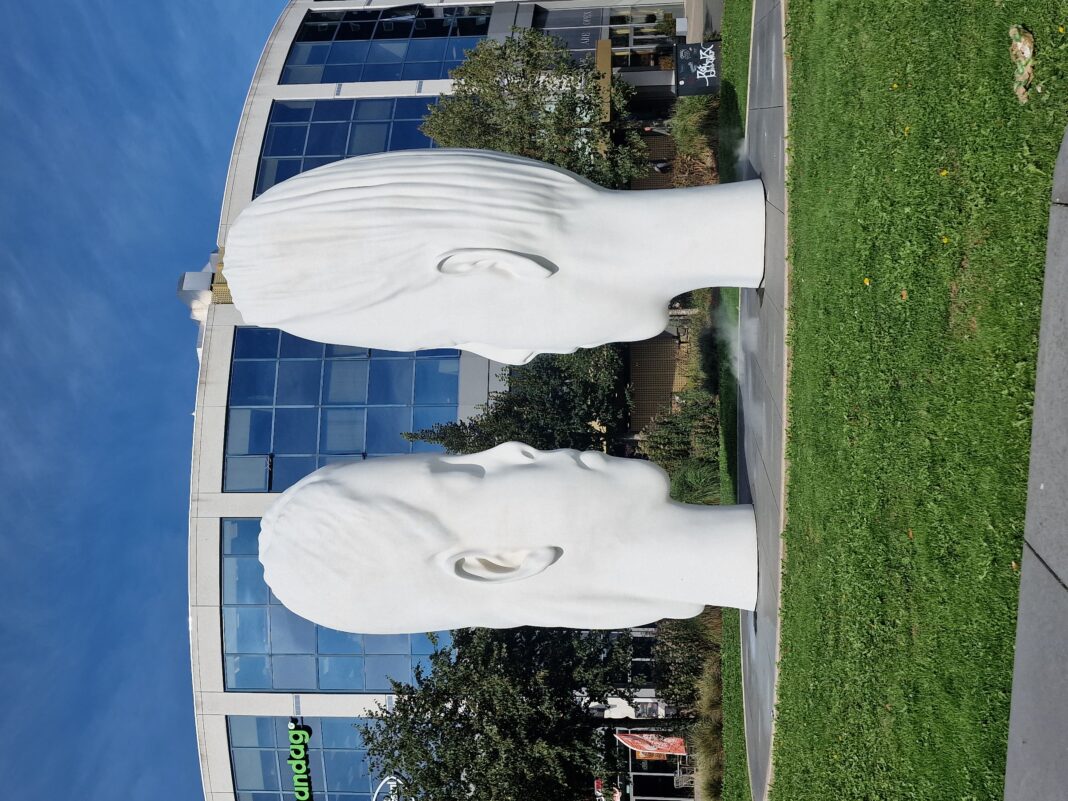
One of Leeuwarden’s most recognisable landmarks is Love, the white marble sculpture by Spanish artist Jaume Plensa. Located beside the railway station, the two monumental children’s heads form part of Friesland’s celebrated 11Fountains project, created for Leeuwarden’s year as European Capital of Culture.
Staying at the Leonardo Oranje Hotel
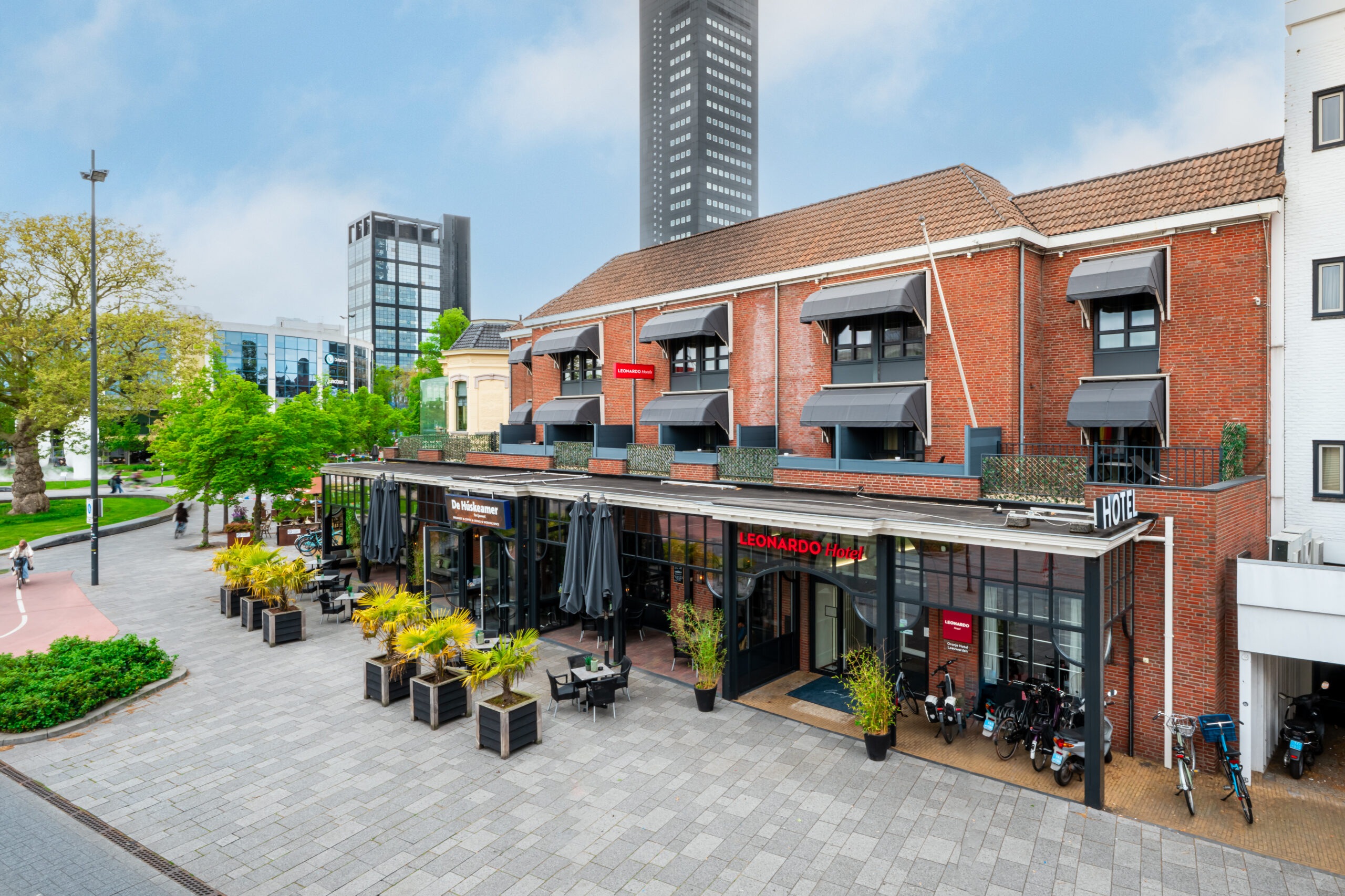
For visitors travelling from The Hague, the Leonardo Oranje Hotel Leeuwarden offers an exceptionally convenient base. Located directly opposite the beautifully renovated central railway station and beside Love, the hotel is ideally positioned for exploring the city. Guests arriving by train can reach the hotel entrance almost immediately, without having to walk through the city with their luggage.
The hotel’s location mirrors one of Leeuwarden’s attractions: much of the city can be explored easily on foot.

There is also a personal dimension to the hotel’s hospitality that is particularly relevant to diplomatic guests. General Manager Else Wiersma brings nine years of experience from the Leonardo Royal Hotel The Hague, giving her a strong understanding of embassies, diplomats and the practical requirements of international guests.
Her experience is complemented by the character of Leeuwarden itself. The city offers the cultural facilities, restaurants and hospitality expected of a regional capital, while retaining the personal scale and attention that can make a short stay particularly enjoyable.

A Different Side of the Netherlands
For diplomats accustomed to The Hague’s international institutions, embassies and official events, Leeuwarden provides an opportunity to experience another side of the Netherlands without travelling far from the diplomatic capital.
The city’s royal history is also reflected in the remarkable story of Maria Louise of Hesse-Kassel, princess from the German state of Hesse-Kassel, who married Johan Willem Friso, Prince of Orange-Nassau. Widowed at only 23, she remained closely connected with Friesland and later established her own city palace in Leeuwarden. In 1731, she moved into the Princessehof, created by joining several adjoining houses on Grote Kerkstraat, and lived there until her death in 1765. Today, the historic palace houses the National Museum of Ceramics, with a permanent exhibition dedicated to Maria Louise and her role in the history of the Dutch royal family. The same building has another remarkable connection: M.C. Escher, one of the Netherlands’ most internationally renowned artists, was born there in 1898, and the museum also presents a permanent exhibition about his early life.

Elsewhere in the historic centre, the Jewish Quarter, the Grote of Jacobijnerkerk, the Catholic Sint-Bonifatiuskerk, and the Sint Anthony Gasthuis with its gardens offer further glimpses into Leeuwarden’s centuries-old heritage. And beyond the principal attractions, the city rewards those who explore on foot. Narrow passages and small alleyways lead through the old centre to quiet courtyards, many filled with flowers, fruit trees and greenery. These unexpected spaces provide an intimate glimpse of Leeuwarden and are among the pleasures of discovering the city at a leisurely pace.
Narrow passages and small alleyways crossing the historic centre lead unexpectedly into quiet courtyards, many filled with flowers, fruit trees and greenery. These hidden spaces offer an intimate glimpse of the city’s past and are among the pleasures of discovering Leeuwarden without a fixed itinerary.

The 150th anniversary of Mata Hari’s birth in 2026 provides an especially timely reason to make the journey. Her story connects Leeuwarden with the wider world, while the city’s royal heritage, cultural renewal, contemporary art, gastronomy and Frisian identity offer visitors much more to discover.
Leeuwarden may be only two hours from The Hague, but it offers a distinctly different perspective on the Netherlands — where royal history, cultural ambition and the personal charm of a Frisian city come together.