


By Linn Thant
Myanmar’s prolonged conflict is not simply a military confrontation. At its core, it is a political struggle over democracy, federalism, ethnic equality, self-determination, and the distribution of state power.
The attempted coup of 1 February 2021 deepened a crisis that had already persisted for decades. Yet the events since 2021 have also made one reality increasingly difficult to ignore: the Myanmar military is not merely one party to the country’s political crisis. Its continued use of armed force and political coercion remains the principal and continuing source of the threat to peace, and a decisive obstacle to a durable and inclusive political settlement.
Seven Decades of Conflict Without a Political Settlement
Myanmar has experienced armed conflict almost continuously since independence in 1948. Successive governments and military authorities have negotiated ceasefires with different ethnic armed organizations, sometimes reducing fighting for years. But repeated ceasefires have not resolved the fundamental political questions of federalism, ethnic equality, self-determination, and the distribution of political power.
Research on Myanmar’s peace processes records at least seventeen ceasefires negotiated by the military between 1989 and 1997. The long Kachin ceasefire of 1994–2011 provides a particularly important example: it reduced large-scale fighting for many years, but the underlying political and social grievances remained unresolved, and the ceasefire eventually collapsed.
During the same period, the military pursued a controlled constitutional process. Academic research shows that ceasefire negotiations with ethnic armed organizations proceeded alongside a military-led constitution-making process during the 1993 and 2008.
This history demonstrates a fundamental distinction:
- The absence of fighting is not necessarily the presence of peace.
- A ceasefire can stop the shooting without resolving the political conflict that produced it.
- When a Ceasefire Becomes a “Time-Out”
- Myanmar’s history therefore requires careful scrutiny of every new ceasefire and peace-talk proposal.
A ceasefire can be a genuine first step toward peace. But when offered under severe military or political pressure, it can also function as a temporary “time-out”—creating space to reorganize forces, consolidate positions, reduce battlefield pressure, divide opposing actors, gain diplomatic breathing room, or prepare for the next phase of conflict.
This does not mean that every ceasefire proposal is necessarily insincere. The more important question is whether the proposal is designed to end the conflict or merely manage it temporarily.
Myanmar’s previous experience provides reason for caution. Research has found that repeated ceasefires did not necessarily translate into substantial political reform, and that prolonged ceasefire arrangements could create conditions in which armed and political actors consolidated territorial, economic, or institutional positions without resolving the underlying political dispute. (OUP Academic)
The 2015 Nationwide Ceasefire Agreement was explicitly intended to move from cessation of hostilities toward political dialogue and a lasting political settlement. Its text called for inclusive political dialogue and mutually acceptable solutions for lasting and sustainable peace. (Peacemaker) Yet the process did not produce a comprehensive political settlement before the attempted coup of 2021.
The post-2021 peace landscape has also become increasingly fragmented. A 2026 analysis by ISP-Myanmar describes a shift toward bilateral ceasefires with selected ethnic armed organizations and examines how this has contributed to fragmentation of the broader peace process. (ISP-Myanmar)
In April 2026, the military-backed government again proposed peace talks with armed opposition groups within 100 days. Several major armed groups rejected the proposal, illustrating the continuing gap between ceasefire initiatives and an inclusive political settlement. (Reuters)
Seven decades of repeated cycles—war, ceasefire, negotiation, political deadlock, and renewed conflict—do not prove that every peace initiative is meaningless. But they do provide strong historical grounds for demanding evidence that a new initiative represents a genuine change in political direction.
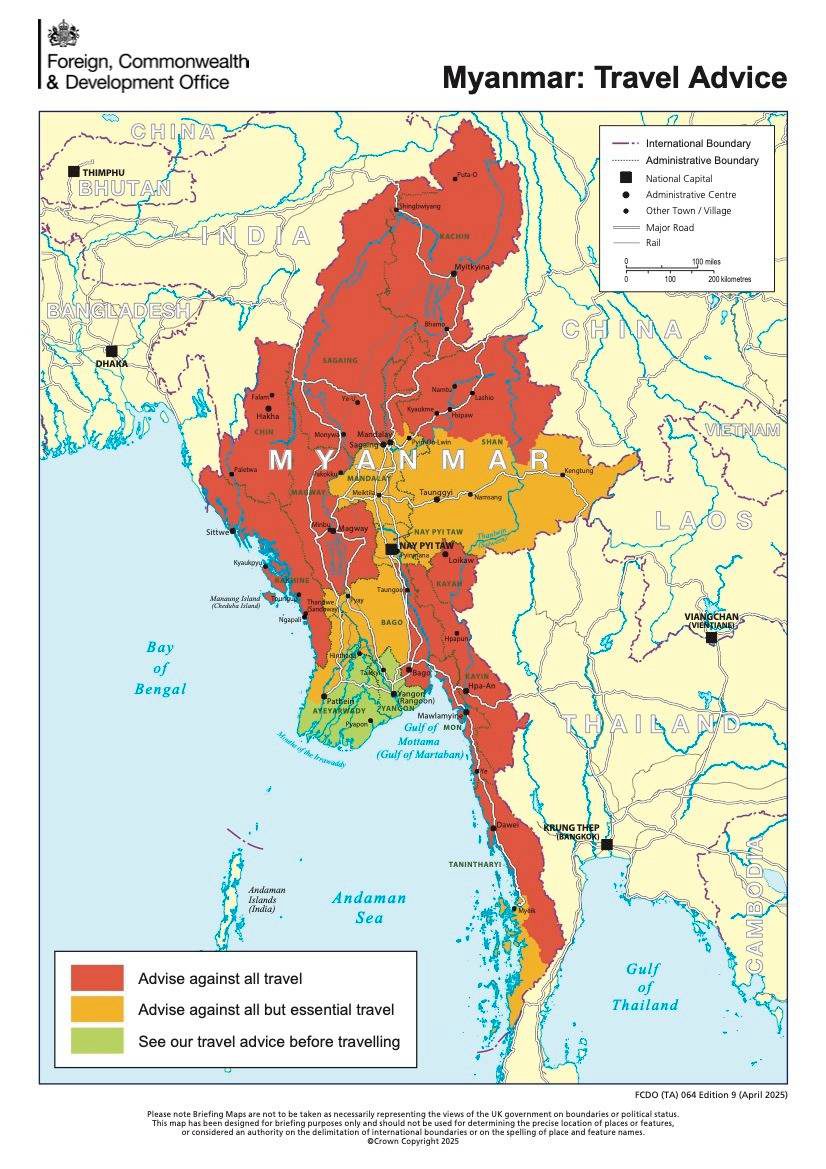
A time-out is not a peace agreement.
A ceasefire is not reconciliation.
And negotiations are not meaningful unless they address political power.
Political Prisoners Are Part of the Peace Question
The treatment of political prisoners is another essential test of whether a peace initiative represents genuine political change.
Since the attempted coup, thousands of people have been arrested and detained in connection with opposition to military rule. Human-rights organizations and international actors have repeatedly called for the release of people held arbitrarily.
At different moments, military authorities have announced prisoner releases, sentence reductions, or amnesties while political repression has continued. Such measures may create temporary diplomatic space, but releasing some prisoners is not the same as ending political imprisonment.
Political prisoners can become instruments of political leverage when their release, sentence reductions, or continued detention is connected to wider political or diplomatic calculations.
For that reason, national reconciliation cannot be measured simply by the number of prisoners released at a particular moment. The deeper question is whether political imprisonment itself has ended.
A genuine peace process cannot ask society to accept political freedom as a temporary concession.
The Conflict Is Political at Its Core
Myanmar’s crisis is often described through the language of territory, armed groups, military operations and ceasefires. These are important dimensions of the conflict, but they do not explain its fundamental cause.
At its core is a question of political legitimacy and the structure of the Union.
For decades, ethnic nationalities and democratic forces have demanded greater political equality, federalism, self-determination and civilian authority over state institutions. These questions cannot be resolved through military pressure alone.
Nor can lasting peace be achieved simply by asking armed organizations to lay down their weapons while leaving the underlying political structure unchanged.
A sustainable settlement requires an inclusive political process in which the future distribution of power is negotiated rather than imposed.
From Ceasefire to Political Settlement
The lesson of Myanmar’s history is not that dialogue should be rejected. Genuine political dialogue remains essential. But dialogue must not become another mechanism for temporarily managing military pressure. A credible peace process should therefore be measured by concrete outcomes:
- an end to attacks against civilians;
- a meaningful and verifiable cessation of hostilities;
- unrestricted humanitarian access;
- an end to political imprisonment;
- inclusive participation by relevant political and ethnic stakeholders;
- meaningful negotiations on federalism, equality and self-determination; and
- a political settlement in which no institution can determine the country’s political future through force.
Myanmar does not need another cycle in which a ceasefire temporarily lowers the level of violence, only for the underlying political conflict to return.
The country needs a transition from ceasefire to political settlement, from military coercion to civilian politics, and from centralized power toward a democratic system that genuinely accommodates the country’s diversity.
The Future of Myanmar Must Be Built by Its Peoples
After more than seven decades of conflict, Myanmar’s political future should not depend on what the military is willing to permit.
Whether the people of Myanmar ultimately choose federalism, confederalism, or another democratic constitutional arrangement, that future must be determined through political negotiation and agreement among the peoples of Myanmar themselves.
No military institution should have the authority to grant, withhold, or guarantee the political rights of an entire country and its peoples. A military that has repeatedly intervened in politics and used force to shape political outcomes cannot be the sole guarantor of the political system that follows.
Federalism or confederalism will not become meaningful simply because it is promised in a ceasefire agreement, announced at a peace conference, or permitted by those holding military power.
It will become real only when the peoples of Myanmar themselves negotiate, design, construct and safeguard the institutions and constitutional arrangements necessary to sustain it.
The future of Myanmar therefore cannot be something granted by the military.
It must be built by its peoples.
And lasting peace will not come from another temporary “time-out.” It will come from a political settlement in which the people of Myanmar themselves have the authority—and the responsibility—to determine and build the democratic, federal or confederal future they choose.
About the author:
Linn Thant: is the Prague-based Representative of the National Unity Government (NUG) of Myanmar and a former democracy activist. He writes on Myanmar affairs, geopolitics, democracy, and international relations.