Far from the front line of the war in Ukraine, battle lines of a different kind were drawn when residents of a Moscow district opposed a rumored proposal for a mosque for 60,000 worshippers by a lake cherished by Russian Orthodox believers.
In February, people in Kosino-Ukhtomsky started to voice anger at the complex, which would include a Muslim center and educational facilities. President of the predominantly Muslim Russian republic of Chechnya, Ramzan Kadyrov, fiercely loyal to Russian President Vladimir Putin, called on anti-mosque demonstrators to “show your patriotism” by going to the trenches in Ukraine.
Prominent MMA fighters also weighed in opposing the mosque, while a video message by Chechens from the battlefield in Ukraine warned they could also wage war on the Orthodox protesters in Moscow.
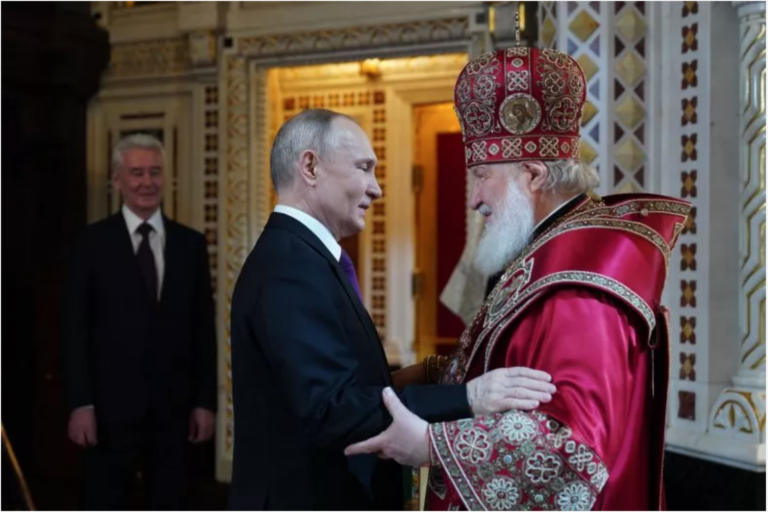
After weeks of demonstrations, Moscow Mayor Sergey Sobyanin announced on April 5 the mosque would be shifted to a much smaller site elsewhere. The decision got the backing of Patriarch Kirill, who as head of the Russian Orthodox Church and another close Putin ally, has given a canonical justification for the war in Ukraine.
This photo illustration shows a mosque and a church. The rumored proposal of a mosque being built near a Russian Orthodox religious site in Moscow has raised religious tensions in the country.NEWSWEEK; SOURCE PHOTO BY GETTY
The spat over the mosque, “is a part of an ongoing surge in religious tensions, including those among Russian servicemen and mercenaries fighting in Ukraine,” Denys Brylov, head of the Kyiv-based European Centre for Strategic Analytics, told Newsweek. “This tension is largely caused by the influx of Muslim soldiers into the Russian army.”
Along with Putin’s arguments about about NATO encroachment on Russia and “de-Nazification” as reasons for the war, Kremlin propaganda has also portrayed the full-scale invasion as a fight for what Putin has dubbed the “unity” of Orthodox Christian Russians and Ukrainians.
Muslims make up roughly a tenth of Russia’s population and adherents of the faith fighting in Ukraine for Putin are dying in large numbers. Kadyrov’s forces, which are part of Russia’s National Guard, Rosgvardia, but directed by the strongman ruler, have a prominent profile thanks to their videos from the battlefield.
Olga Lautman, senior investigative researcher at the Institute for European Integrity, said there have been clashes between Kadyrov fighters and Russian soldiers.
“We’ve seen the tensions already over the past year escalate,” she said.
Cannon fodder
Brylov said that as well as Russian Muslims, a growing number of army personnel are migrants from former Soviet states in Central Asia. This follows a decree by Putin last September making it easier for foreign citizens who sign up for the military to get Russian citizenship.
“These amendments aim to make up for the attrition in the Russian army at the expense of migrant workers,” he said, adding that many migrants are tricked into signing military service contracts or sent to a war zone instead of being deported.
Two men of Tajik origin reportedly got into an argument with a lieutenant colonel on a military training ground in Russia’s Belgorod region in October 2022. Unconfirmed reports said they responded to an Islamophobic insult by opening fire and killing up to 22 people.
“Non-Slavic and non-Orthodox citizens of the Russian Federation are only second-rank citizens and just cannon fodder for Putin’s war on Ukraine,” Willy Fautré, director of Human Rights Without Frontiers, told Newsweek.
“The question is how long the ethnic political leaders of the non-Orthodox and non-Slavic populations of the Russian Federation will go on tolerating the instrumentalization of their peoples in the never-ending carnage of the ‘special military operation,'” Fautré added, referring to the Kremlin’s term for its invasion of Ukraine.
“Discrimination against Muslims is not uncommon,” he said. “Although the number of Muslim servicemen grows, the Russian army does not provide Muslim servicemen with the necessary conditions for religious observance.”
However, there have always been tensions within the Russian armed forces.
“A lengthy history of the brutal hazing of new recruits is one issue, retaliation against superiors is another,” Robert Crews, history professor at Stanford University told Newsweek. “In the context of the Russian invasion of Ukraine, who gets sent where, and with what resources has been a major fault line.”
Initially, the Russian military turned to poorer regions with less political influence, which made it more difficult to avoid service.
“Non-Russian recruits, including those of Muslim background, have played a prominent role,” he said. “But it’s not clear that the Kremlin has treated them as cannon fodder because of their non-Russian ethnicity, though many observers have made this claim,” Crews said.
Chechnya President Ramzan Kadyrov is pictured at the Kremlin in Moscow on September 30, 2022. The strongman leader of the predominantly Muslim Russian republic has publicly condemned protesters lobbying against a mosque in Moscow.MIKHAIL METZEL/GETTY IMAGES
Islamophobia
“Racism and Islamophobia are potentially unsettling elements in the Russian army, as in others in Europe and elsewhere,” he said, although the Kremlin’s position is that Islam is a “traditional” Russian religion, and that Muslims are essential to the war effort.
“Orthodox Christian symbols and imagery are dominant, but they do not exclude attention to Islam as a component part of a military that has been multi-confessional since at least the 16th century,” Crews said.
Muslim leaders in Russia have backed Putin’s invasion, repeating Orthodox Christian arguments about the “satanic” nature of the Western enemy. But troops of different faiths both being sold the idea of a “Holy War” could create a gap in logic that is tricky to bridge. Meanwhile, tensions can spill over between Muslim and non-Muslim personnel fighting for Moscow.
Brylov said that the idea that serving in the Russian armed forces is unacceptable, especially under contract, is spreading among some Russian Muslims, who may question the religious validation for the war.
Why Zelensky is right to be nervous about a Trump return
“In the case of prolonged hostilities, lack of changes in the war zone, and, consequently, a growing number of dead Muslims, we can expect increasing dissatisfaction among Muslim servicemen,” Brylov said.
After the war, a growing number of Muslim combat veterans will become more influential both in the Russian armed forces and among military and law enforcement agencies, he added.
There are Muslims fighting on both sides in the war, with adherents from Crimea and Azerbaijan among those who have joined the fight on the side of Ukraine. Anti-Russian Chechens received support from the Ukrainian authorities, which have recognized the Chechen Republic of Ichkeria—the name of the de facto independent Chechen state that existed in the 1990s—as being temporarily occupied by Russia.
Kadyrov, Prigozhin and military bloggers have all been critical of the Russian defense ministry, pointing to different views on how Moscow should fight the Ukraine war as Putin’s efforts falter. Meanwhile, the dispute over the mosque in Moscow could be a prelude to tensions in Russian society after the war ends.
“Putin has been able to hold the different factions together through fear but over the past year, the Russian military continues to suffer these losses and humiliation on the front lines, and you are seeing more and more factions fighting,” Lautman told Newsweek. “And the fighting is spilling over publicly.”
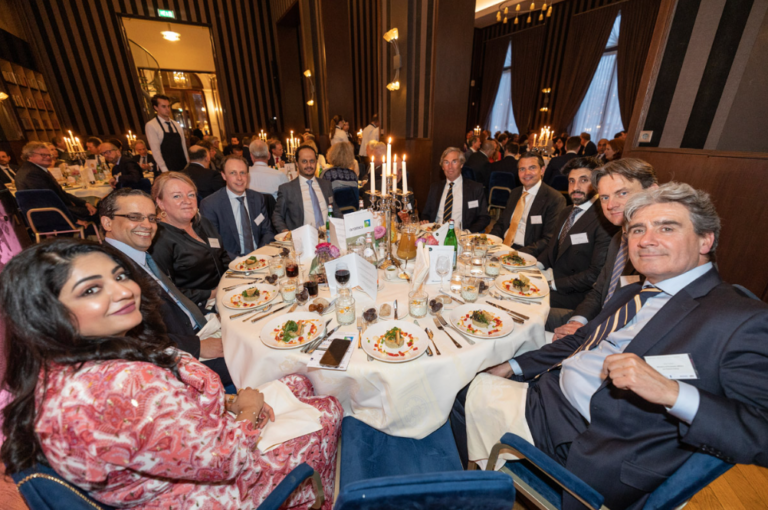
Over the past few years, the MENA Trade Dinners have been established as some of the most successful networking events of the year, with a main focus on the relations between the Netherlands and the MENA (Middle East and North Africa) countries.
In addition to representatives from the business community, many Dutch ambassadors in the Arab countries and also ambassadors of Arab countries to the Netherlands have been present to this diplomatic event, as well as representatives from the Ministries of Foreign Affairs and Economic Affairs. Mrs. Erica Schouten, Deputy Political Director of the Netherlands Ministry of Foreign Affairs and Dr. Sjoukje Heimovaara, President of the Executive Board of Wageningen University & Research have delivered the Opening Speech and Keynote Address, respectively.
Mrs. Erica Schouten, Deputy Political Director of the Netherlands Ministry of Foreign Affairs.
The main subject of discussion was the recent report of the Intergovernmental Panel on Climate Change (IPCC), which states that global emissions of greenhouse gases and consequential global warming have continued, despite latest efforts, with a 1.1 degree increase on average temperature. This global warming effect is particularly alarming for the MENA region, as the most arid and dry region on earth, with disastrous implications: increasing aridity in North Africa and deepening droughts in West Asia, unprecedented heat waves, a rise of the sea level and the livelihood of many vulnerable people being irreparably affected.
According to the speakers, since the 1970s, in Iraq half of the arable land has been already wasted as a result of the progressive salinization of the soil. Meanwhile, food security is endangered by the increasing demand, because of the sharp population growth. The Russian war in Ukraine has also exposed the vulnerabilities of the global food supply chain and threatened the food security of many countries dependent upon the import of cereals and fertilizers.
MENA is the region most impacted by the current food crisis. The Gulf Cooperation Countries, for example, import about 85% of their food, with rice and cereal imports at almost 95% of their needs. According to the IMF Managing Director, Kristalina Georgieva, 141 million people across the Arab world were exposed to food insecurity last October.
Food security needs attention everywhere, but especially in the MENA region. For MENA to achieve a more stable food supply situation, different policies need to come into place, food production and consumption systems within MENA need to adapt and also food waste must be stopped.
H.E. Ms. Salima Abdelhak, Ambassador of the Republic of Algeria and Marian Reijnen
Director MENA Business Council
International Project Manager
VNO-NCW/MKB-Nederland
Confederation of Netherlands Industry and Employers VNO-NCW
Royal Dutch Association of Small and Medium Enterprises MKB Nederland.
Globally, one third of all food is wasted; also 30% of all land, water and energy used in production are wasted. The amount of waste could be drastically reduced by using smart apps and food chain initiatives, better storage conditions and also changing the consumption patterns. One example could be diversifying consumption from wheat to other grains such as sorghum and millet, which are more resistant to heat and droughts.
But one of the most important needed transitions would be the one towards the consumption of more plant based proteins and less meat. Animal based products need up to 5 times more resources, land and water than for an equivalent in plant based proteins. Production of beef even requires up to 20 times more. That is why it is now considered that by adapting to a diet with fewer animals based proteins, the self-sufficiency in food production would be significantly increased.
The Ambassador of Morocco H.E. Mohamed Basri.
Food production worldwide is responsible for around 30 percent of all greenhouse gases. At the same time it is the system most vulnerable for the effect of climate change. Experts warn that we need to act decisively and fast to prevent entering into a disastrous downward spiral.
MENA Iftar, The Hague, March 2023.
Agriculture in MENA countries should focus on increasing its domestic food production capacities while using its resources more efficiently. Meanwhile there is a need for further investment in agricultural research and modern technologies, water efficiency needs to increase, heat and salt tolerance also need attention. Early results from a project in the Estidamah Research Centre for protected horticulture in Riyadh, Saudi Arabia, developed with support from Wageningen University & Research experts, show that water savings of up to 90 percent can be achieved in local tomato farming. Instead of using 168 liters of water for the production of only one kilogram of tomatoes, only 5 liters of water were needed for an equivalent production, when using high-tech greenhouses (reusing the condensed waters to further irrigate the crop). Technology can consistently increase production.
The Center for Horticultural Excellence in Agadir, in the Kingdom of Morocco, was recently opened, as a result of a very close cooperation between the governments of the Netherlands and Morocco, and the strong mobilization of various Dutch and Moroccan private players, allowing for a sustainable and integrated development of the horticultural sector in Morocco.
Gains can also be made by using more high quality seed material and varieties. That is why Seed NL is facilitating the seed sector transformation in Africa. In Egypt for example, high quality seeds for new varieties of strategic crops already contribute to a more resilient food production.
The Ambassador of Lebanon, H.E. Mr. Abdel Sattar Issa.
However, every choice we make has untold benefits but also tradeoffs. High-performance greenhouses provide great water efficiency but cost a lot of energy. All in all, to really transform the food system, a multidisciplinary approach is needed.
Wageningen researchers together with the ones from the University of Science & Technology and the National Agriculture Research Center in Jordan, with the International Center for Biosaline Agriculture in the UAE, and Greenport Holland, designed a new policy, in order to assist policy makers and other professionals to navigate the tradeoffs between water and energy efficiency, between food security, affordability and safety. With this dashboard, the effects and tradeoffs of certain policies and investment decisions can be weighed. The results of the project were presented during the Water-Energy-Food (WEF) Summit at the World Expo in Dubai.
The dashboard allows any user to gain insight into the effectiveness of interventions, and to assess what is their impact on the overall water, energy and food security for a defined region. This can contribute to the development of sustainable policies. Currently, further extension of this dashboard is explored, but reliable data on the local production, trade and consumption are needed. For that, it has to be a coordinated effort.
Marian Reijnen
Director MENA Business Council
International Project Manager
VNO-NCW/MKB-Nederland
Confederation of Netherlands Industry and Employers VNO-NCW
Royal Dutch Association of Small and Medium Enterprises MKB Nederland.
Young people (aged under 30) constitute more than half (55 percent) of the population across MENA. They have demonstrated resilience to shocks and have led positive change in their communities across the region. They are equipped to build a more skilled workforce in the agricultural sector using their creativity and entrepreneurial spirit and developing innovative solutions. But the youth needs further quality education. Young generations are the key to a sustainable, bright future, for MENA and for the world!
“Food security exists, when all people at all times have physical and economic access to sufficient food that meets their dietary and healthy life” (World Food Summit 1996).
This broadly accepted definition of the FAO is very demanding and points to 4 dimensions of food security, namely: availability of, access to food, its utilization and its stability.
In contrast, food insecurity means that at least one of these dimensions is not met. The definition also shows that food(in) security is a gradual phenomenon and food insecurity does not automatically mean hunger. To measure the magnitude and severity of food insecurity, an Integrated Food Security Phase Classification (PC) amongst other systems has been put in place.
However, following the latest report of the World Food Programme “the scale of the current global hunger and malnutrition crisis is enormous: This year 350 Mio people are projected to starve from hunger – more than double the number in 2020. More than 900.000 people are fighting to survive in famine-like conditions. This is ten times more than five years ago – an alarmingly rapid increase.
These figures also show that we move away from the aim of zero hunger by 2030 instead of getting closer. Without fundamental and immediate changes in the global food and nutrition system, the global community will fail on its promise to end hunger and malnutrition by 2030 and this would be a shame for the world. Even more so since most experts share the view that the world could nourish up to 10 Billion people.
The status report of “Food Security and nutrition in the world also shows the enormous geographic imbalance of hunger, the uneven distribution within the global society and the harder impact of food insecurity on those who are already disadvantaged.
Children suffer the most from famine and hunger. In 2020 15 Mio children below the age of 5 suffered from hunger “stunting” and another 45 Mio from “wasting” or acute undernutrition.
In the same report the key drivers of hunger were identified. The predominant drivers are persistent military conflicts and terrorism (two thirds) pre-existing and COVID 19 related economic shocks (one fourth) and weather extremes (one tenths). Two thirds of the suffering people are concentrated in only 10 States. This was the situation before the outbreak of the Ukrainian War.
The War caused several additional problems, inter alia food insecurity for many Ukrainians, above all for the displaced persons but also for the world commodity markets.
The UN said, that the war’s impact on the global food market could cause up to an additional 13 Mio people to get hungry, especially in the Middle East and North Africa.
In addition, Ukraine is the Nr.5 amongst the wheat exporters, responsible for 8% of global exports and the Nr.1 in sunflower oil exports (39.5% of global exports). But Ukraine is also the Nr.1 supplier of wheat for the World Food Programme.
In addition one must not forget the volatility of the international wheat market prices. The Middle East and many North African countries are the biggest importers of wheat and as soon as the international wheat prices are rocketing an increase of food insecurity, mainly for the poor people in these countries is unavoidable.
The consequences of such developments are possible turmoil as we have seen in 2015 during the Arab Spring.
All this shows how important free access to the Ukrainian ports is.
To sum up:
Hunger and famine are mainly caused by 3 key drivers: military conflicts and terrorism, economic shocks and weather disasters.
Since 2020 the number of hungry people is rising and the aim to achieve zero hunger by 2030 is very likely out of reach.
There is an enormous geographic imbalance and an uneven-distribution of food within the global society.
The most vulnerable are women and children.
Most experts share the view that the world could nourish up to 10 Bio. people.
Fighting hunger means providing access to food and a fair distribution of food between all countries.
The Ukrainian war worsened food security internally and also globally by adding another 13 Mio to the food insecure people and to provide enough wheat for the World Food Programme.
The free access to the Black Sea ports is of utmost importance to be able to bring enough food to the Middle East and to North Africa.
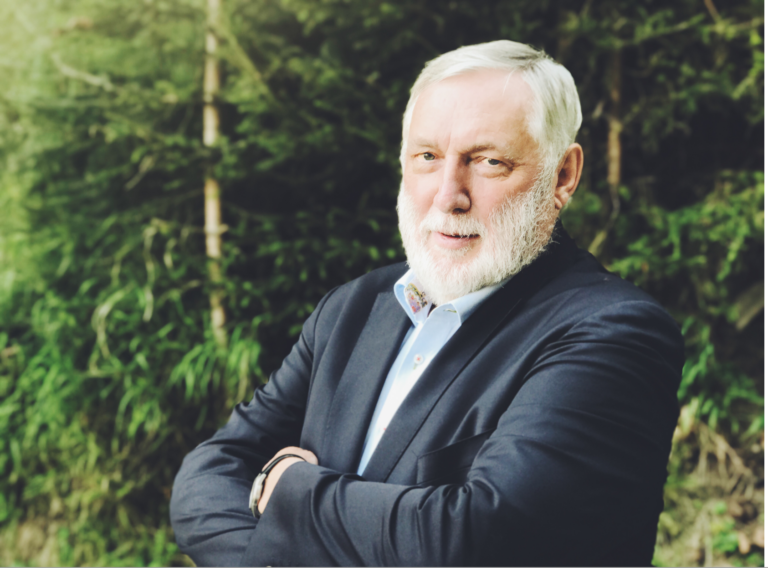
About the author Franz Fischler
Dr. studies of Agriculture, University of Natural Resources and Life Sciences, Vienna.
1989-1994: Federal Minister of Agriculture and Forestry, Austria;
1995-1999: European Commissioner for Agriculture and Rural Development;
1999- 2004 Commissioner, also responsible for Community Fisheries Policy;
2012-2015, Chairman of the RISE-Foundation, Brussels;
2014/2015: Chairman of the Steering Committee, EU scientific programme to the 2015 Expo Milano;
2012 – 2020 President of the think tank “European Forum Alpbach”.
Since 2015: President of the Board of Trustees to the Austrian Institute of Advanced Studies (IHS).
Advising several governments in SEE and MENA on the EU accession and food-agriculture-fishery matters. Dr. Fischler’s Agricultural Reform (in his capacity of the EU Commissioner) is considered as the most successful reform in Europe of all times.
The Embassy of Guatemala, in collaboration with Diplomat Magazine, organized a Cigars Aficionado afternoon for diplomats and friends.
At Casa del Habano, in The Hague, diplomats from, among other countries, Argentina, Slovenia, Philippines, Ecuador, Egypt, Dominican Republic, and Chile reunited themselves on a Friday afternoon to discuss over a good cup of coffee, later to taste Guatemala rum and De Graaff dark exclusive chocolate.
Then, experts began to talk about the cigars. Raymon van Horssen, owner of La Casa del Habano, presented three products coming from Nicaragua, Ecuador, Honduras, and Cuba (see detailed description below).
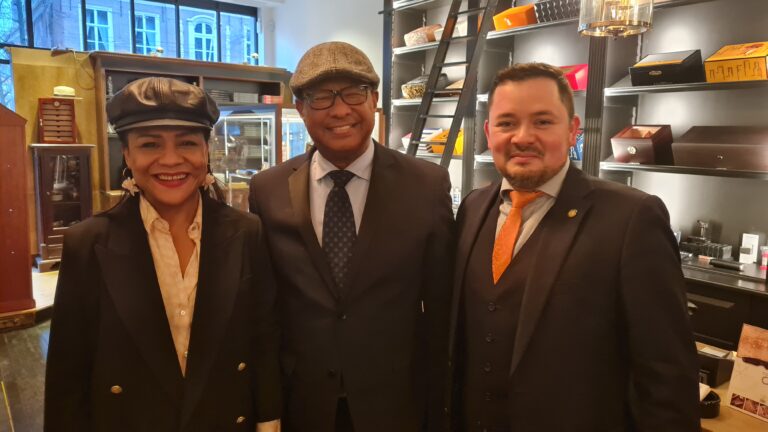
Yvonne Litz, owner and founder of Casa del Habano, was also there to guide cigars amateurs in their choices. Diplomats and friends tried the cigars, courtesy of the Embassy of Guatemala. First-time smokers and experts shared a pleasant learning experience. The Embassy of Guatemala will now host a Cigars Aficionado activity for diplomats and friends once a month throughout the year.
Yvonne Litz, owner and founder of Casa del Habano and H.E. Mr. Jose Eduardo Malaya, Ambassador of the Philippines.
Many thanks to Casa del Habano and De Graaff chocolaad for their hospitality!
Casa del Habano – Cigars on display March 2023
JDN numero Uno, a medium strength cigar (it used to be available, exclusively as a diplomatic gift, about two years ago) – Wrapper: Ecuador / Binder: Nicaragua / Filler: Nicaragua. Tasting notes: nutty, caramel, toffee and a touch of orange peel.
Plasencia Cosecha 149, a medium-full strength – 100% Honduras. Tasting notes: earth, coffee, black pepper, baking spices.
RyJ Coronitas en Cedro, smooth strength – 100% Cuban tobacco. Tasting notes: dark caramel sweetness with nutty flavors and mild notes of white pepper.
Judicial and law enforcement authorities in Romania, Ireland and the United Kingdom have dismantled a criminal network involved in trafficking and sexual exploitation of human beings, pimping and money laundering. During a joint action day, 12 suspects were charged. Eurojust provided support to set up and fund a joint investigation team (JIT) into the case and facilitated judicial cross-border cooperation.
Active since 2017, the organised crime group (OCG) allegedly recruited young Romanian women, some of them minors, and transported them to the United Kingdom and Ireland where they were sexually exploited. The prostitution service was advertised on dedicated escort websites and took place in rented apartments in various cities.
Starting initially in the UK, the leader of the criminal group has allegedly organised and developed a genuine prostitution network, assigning a specific role to each member of the OCG. He also created the conditions for other pimps to join and use the network to sexually exploit their own victims.
It is believed that the prostitution activities generated large sums of money that were used by the suspects to finance their luxurious lifestyles and to purchase valuable assets. Profits were laundered through banks and other money transfer services to conceal their illicit origin.
During a joint action day on 19 April, 12 suspects were charged, five of them were detained and four are under judicial control. A total of 19 house searches were carried out, 17 in Romania and 2 in Ireland. During the house searches, various means of evidence were seized, including laptops, mobile phones and cards. Six real estate properties, six premium and luxury vehicles and over EUR 22 500 in cash have been frozen.
The case was opened in December 2021 at the request of the Romanian authorities. A JIT was set up between the Romanian, Irish and UK authorities with the support of Eurojust in May 2022. Three coordination meetings were also hosted by the Agency to facilitate judicial cooperation and provide support for the coordinated investigative efforts.
The following authorities took part in this investigation:
Romania: Directorate for Investigating Organized Crime and Terrorism – Buzau Territorial Office; Police Brigades for Countering Organized Crime Buzau, Bucuresti, Ploiesti
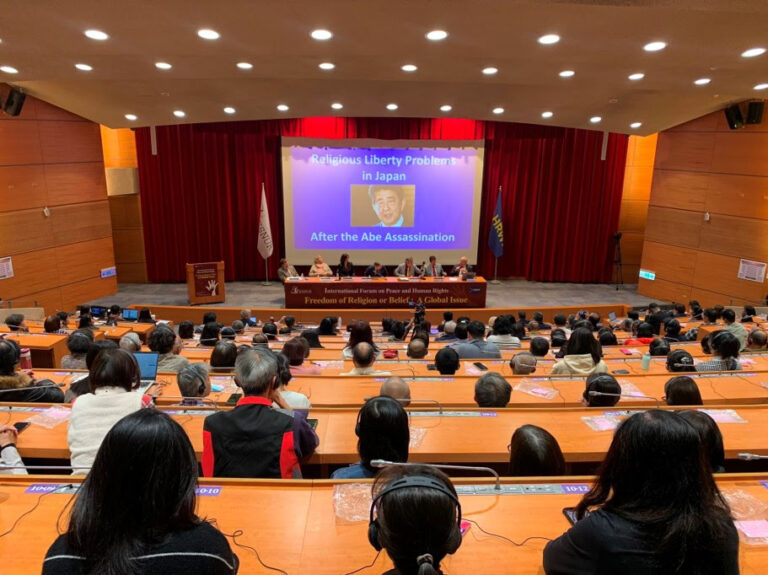
HRWF (21.04.2023) – On 9 April, CESNUR (Center for Studies on New Religions) and HRWF (Human Rights Without Frontiers) organized a conference about religious freedom issues at the prestigious National University of Taiwan.
This conference was part of a one-week program of academic events and networking activities of an international delegation of European and American scholars and human rights advocates.
The delegation, who was headed by Massimo Introvigne (CESNUR) and Willy Fautré (HRWF), had meetings with a wide range of Taiwanese authorities, such as the president of the Parliament You Si-kun and the president of the Control Yuan (the supervisory body of the government) Chu Chen, who is also the chairperson of the National Human Rights Commission.
The delegation also visited the Citizen Congress Watch, a major human rights organization in Taiwan created in 2007 and grouping together around 50 NGOs. Discussions were also held with various media outlets, such as Taipei Times. At each meeting, the delegation raised the unsolved case of Tai Ji Men, a Qigong organization wrongly charged with tax evasion, declared innocent by the Supreme Court after ten years of judicial proceedings but still deprived of their property confiscated by the National Taxation Bureau. An unsolved remnant of the transitional justice period following 40 years of dictatorship, known as the White Terror.
HRWF’s director presented a paper titled
In search of a solution to the Tai Ji Men case through international diplomacy and soft power
Taiwan, a country with a population of 23.6 million, has a deserved reputation of being a democratic country whose human rights record in general can be said to be one of the best, if not the best, in Asia.
According to a survey by the Academia Sinica’s Institute of Sociology released in 2019, 49.3 percent of the population exclusively practices traditional folk religions (shamanism, ancestor worship and animism), 14 percent Buddhism, and 12.4 percent Taoism, with 13.2 percent identifying as nonbelievers. The rest of the population consists mainly of Protestants (5.5 percent), I-Kuan Tao (2.1 percent), Catholics (1.3 percent). There are also hundreds of thousands Falun Gong practitioners according to the Falun Gong Society of Taiwan, about 11-12,000 Jehovah’s Witnesses, Sunni Muslims, Baha’is, Mormons and Scientologists.
The Center for Studies on New Religions and Human Rights Without Frontiers organized a conference about religious freedom issues at the National University of Taiwan. Abril 2023.
This paper will cover three issues. First: Taiwan’s policies with regard to freedom of religion or belief and the perception thereof by Western democracies. Second: Is the case of Tai Ji Men a freedom of religion case or not? Third: Avenues for a possible solution through international diplomacy.
When you scan the reports of the main international organizations dealing with religious freedom worldwide, you can hardly find any criticism about Taiwan.
Taiwan’s policies about freedom of religion or belief
Before elaborating a policy based on international diplomacy and the use of soft power, it is important to portray the perception of the religious freedom situation in Taiwan by foreign and domestic actors as well as religious communities in Taiwan.
In July 2018, the US Department of State held the first Ministerial to Advance Religious Freedom in Taipei, launching the Potomac Plan of Action that called on participating states to create Ambassador at Large positions for religious freedom. The Potomac Plan of Action as a framework for national and multinational activity then encouraged to draw on the Plan of Action’s provisions when responding to violations and abuses of religious freedom or instances of persecution on account of religion, belief, on non-belief.
The US Department of State also announced the creation of a special fund to which countries can contribute financially for the promotion of religious freedom around the world.
In response to these US initiatives, President Tsai Ing-wen appointed Pusin Tali, President of the Yu-Shan Theological College and Seminary, as Taiwan’s first Ambassador at Large for religious freedom.
Ambassador Pusin Tali was tasked with representing the Taiwanese government in its relations with like-minded countries and civic groups worldwide to strengthen international links and cooperation for religious freedom.
The Constitution provides for the free exercise and equal treatment under the law of all religions, which “shall not be restricted by law” except as necessary for reasons of protecting the freedoms of others, imminent danger, social order, or public welfare.
Taiwan categorizes registered religious groups as foundations, temples, or “social groups.” Most churches are registered as religious foundations.
Temples may directly register with local authorities without permission from the Ministry of the Interior (MOI). Taiwan-wide religious social groups and local religious social groups may register with the MOI and local authorities, respectively. There are no minimum financial requirements for registration of temples or religious social groups.
Registered religious groups operate on an income-tax-free basis. Registered religious foundations and temples are also exempt from building and property taxes. Nonregistered groups are not eligible for the tax advantages available to registered religious groups. As of 2020, there were approximately 15,400 registered religious groups, including 1,500 religious foundations, 12,000 temples, and 1,900 religious social groups, representing more than 22 religions. Many groups choose not to register individual places of worship and instead operate them as the personal property of the group’s leaders.
The Falun Gong Society, which is banned as a xie jiao in Communist China, enjoys full freedom in Taiwan where it chose to be registered as a sports organization and not as a religious group.
The American Institute in Taiwan (AIT), the de facto US embassy in Taiwan, engaged with legislators and ministries, as well as Ambassador Pusin. AIT representatives encouraged religious leaders, nongovernmental organizations, and representatives of faith-based social service organizations throughout Taiwan to continue promoting religious freedom.
Jehovah’s Witnesses are very happy about the program of the six-month alternative civilian service to military service implemented since 2000 as it allows conscientious objectors to fulfill the four-month national service obligation without violating their conscience. Instead of carrying a military service, they are given the option to work in hospitals, in nursing homes, and in other areas of the public sector. The program has exceeded expectations, benefiting both Taiwan society and conscientious objectors, who no longer face imprisonment because of their neutral stand.
In its 2021 Report on Religious Freedom in the World, the Catholic agency Aid to the Church in Need stressed that “no religious tensions have been reported between religious groups or organisations” and concluded: “Given Taiwan’s encouraging trajectory towards greater democratisation and respect for the rights of its citizens, the overall prospects for religious freedom in the coming years are positive.”
According to the Taiwanese Ministry of Labor (MOL), there were no reports of complaints of religious discrimination from workers during the year 2021.
The sole negative issue publicly raised in Taiwan is the labor standards law which negatively impact the religious practice of some categories of foreign workers. The legislation needs to be amended because it does not cover domestic service workers and caretakers, who are not legally guaranteed a weekly rest day. Due to this exclusion, many domestic workers continued to be unable to attend religious services. For the moment, the MOL coordinates with the Ministry of Health and Welfare to expand subsidized short-term respite care services for employers, thereby enabling more migrant caregivers to take leave to attend religious services without risking their jobs.
A representative of the Presbyterian Church said the Church continued encouraging employers to allow domestic workers to take a weekly rest day and that it promoted this issue once a year during a Sunday worship service close to International Workers’ Day in May.
The Tai Ji Men case, a religious freedom case or not?
In 1996, a crackdown targeting a number of religious institutions hit Tai Ji Men as well. Its leader Dr. Hong Tao-Tze was arrested together with his wife and two disciples. They spent several months in a detention center. They were accused by the tax administration of tax evasion for the years 1991 to 1996. In these years, as in the previous years, Dr Hong had received non-taxable donations from his disciples in “red envelopes,” but suddenly the tax administration interpreted these operations as taxable tuition fees for a so-called “cram school,” the Qigong Academy. After 10 years of court proceedings, Dr Hong and the other arrested people were declared innocent by the Supreme Court but the tax administration ignored the decision and went on prosecuting Tai Ji Men for the alleged non-payment of taxes, going so far as to confiscate a part of their property as payment.
Some in Taiwan and abroad argue that the Tai Ji Men case is ‘just’ a domestic conflict between the National Taxation Bureau (NTB) and the Qigong Academy which is not related to freedom of religion and belief or to human rights. Or they maintain that it is a non-intentional miscarriage of justice.
Firstly, the accusations of tax fraud were recognized as unfounded by the Supreme Court in 2007. After 10 years of legal battles in courts, Dr Hong, the shifu of Tai Ji Men was acquitted of all the charges and compensated financially for being illegally detained for several months. It means that the miscarriage of justice was corrected by the judiciary.
However, the NTB failed to recognize and correct its ‘error’, putting itself above the law, but was never sanctioned. Consequently, an essential part of Tai Ji Men’s property was illegally confiscated by the tax administration in total impunity and passivity.
Secondly, abusive taxation of a religious, spiritual or belief group is a violation of freedom of religion or belief because it amputates the right of their believers to practice their faith in their beliefs, the European Court of Human Rights ruled in the case Association of Jehovah’s Witnesses v. France on 5 July 2012.
The Association of Jehovah’s Witnesses alleged that a 1995 French parliamentary report classifying it as a harmful cult resulted in discrimination against the organization, in particular resulting in a tax audit. When the Association declined to declare donations for the requested years, asking instead for the sort of tax exemption granted to liturgical associations, the automatic taxation procedure was activated against the Association. After failing to prevail in the French courts, the Association brought the matter before the ECtHR, complaining of violation of numerous ECHR provisions.
After 17 years of judicial proceedings, 10 in French courts and seven at the European Court in Strasbourg, the European Court found a violation of Article 9 (right to freedom of religion). It noted that the manual gifts received by the association represented the main source of its funding and over-taxation of 60% imposed on the association was violating the right of its followers to freely exercise their religion in practical terms.
By its judgment, the Court held that France was to reimburse the applicant association 4,590,295 euros (EUR) for the taxes unduly paid and EUR 55,000 for costs and expenses. This was some form of official apologies.
Afterwards, three other similar cases of abusive taxation concerning the Evangelical Church of Besançon and two Aumist belief groups benefitted from this pilot judgement.
This international court decision is of utmost importance as it proves that the sudden taxation of gifts received by religious or belief associations was discriminatory and was a violation of religious freedom. The French government also reimbursed the victims.
In the case of Tai Ji Men in Taiwan, it is additionally a case of human rights violation as the Ministry having authority over the tax administration failed to correct their miscarriage of justice, to put an end to their ongoing prosecution against Tai Ji Men and to stop one more illegal measure: the confiscation of a part of their property.
International diplomacy as a possible solution
For many years, the Tai Ji Men case has remained out of the radars of the international community of human rights and religious freedom watchdogs.
Things started to change when Massimo Introvigne, the founder and managing director of the Center for Studies on New Religions (CESNUR), an international network of scholars who study new religious movements, visited the group in Taiwan and investigated their case a few years ago.
Along with the Brussels-based Human Rights Without Frontiers (HRWF), he started to organize monthly webinars in which an increasing number of foreign scholars, lawyers and human rights activists were involved. Due to the geo-political situation in the region, only friends of Taiwan who exclusively see the good of the country were and are involved in this international awareness campaign. Foes are not allowed.
The legal channels, public demonstrations, protests and petitions have shown their limits. Only a political decision in Taiwan could solve the unresolved Tai Ji Men case, which worriedly tarnishes the image of the country abroad. But there has never been any political will on the part of the Ministry of Finance and the government, even after the final decision of the Supreme Court in favor of Tai Ji Men, and since then either. The only way to activate the necessary political will in Taiwan, to solve the case and hereby to protect Taiwan’s image is through the soft power of the main protector of the country, the United States, as well as other democratic countries that are friends of Taiwan.
CESNUR and HRWF must continue to inform the international community but they must complete their information campaign by building up an advocacy coalition of influential institutions and political decision-makers abroad, in the US and other democratic countries, as well as in Taiwan to facilitate the opening of a dialogue between the concerned parties.
The American Institute in Taiwan (AIT), the de facto US embassy, has the ability and experience to promote religious freedom in Taiwan. They could be the voice and the arm in Taiwan of the US State Department, the US Commission on Religious Freedom (USCIRF) and other influential American institutions.
Last but not least, advocacy actors for a political solution of the Tai Ji Men case should also raise awareness in Taiwan itself among members of the Legislative, Executive and Control Yuans, political parties, think tanks, human rights organizations, foreign embassies and media outlets.
The activation of all these soft power forces both abroad and in Taiwan can awaken political will, nurture dialogue, lead to gestures of goodwill and a solution beneficial to the expectations of both parties.
In accordance with the decision of the Constitutional Court of the Republic of Uzbekistan on April 30 of this year will be held a national referendum on the draft constitutional law “On the Constitution of the Republic of Uzbekistan”.
The issue of the need for constitutional reform was first raised by President Shavkat Mirziyoyev in his inauguration speech on November 6, 2021. Later, in his congratulation on Constitution Day (December 2021) and in his address to the Oliy Majlis and the people of Uzbekistan (December 2022), the head of state outlined the proposed changes in more detail.
The key essence of the constitutional reform is the need to harmonize the Basic Law with the modern realities of society, consistently carry out reforms, and, most importantly, create a solid legal foundation for building the New Uzbekistan.
In his address to parliament, Shavkat Mirziyoyev said: “We need to develop a modern Constitution imbued with the goal of ensuring the interests of the individual, respect for his honor and dignity as the highest value, a basic law that will fully meet the objectives of building a new Uzbekistan and will serve future generations”.
An analysis of the transformations and reforms carried out in recent years attests to their decisiveness, magnitude, and irreversibility. Direct dialogue between the state and society has been established, and the situation regarding freedom of speech, religion, and movement has changed dramatically.
An important element of the structural transformation process was the improvement of social protection of citizens and the reduction of poverty. It is the well-being and prosperity of the people that are the main goal of the reforms. So, if in 2017 500,000 low-income families received social assistance, today there are more than 2 million.
Another major priority was the fight against corruption, shadow money flows, and the prevention of conflicts of interest and illicit enrichment. In order to coordinate work in this direction in a systematic way, a specialized Agency was created. Liberal reforms aimed at ensuring openness of the national economy and creating the necessary conditions for its integration into world economic relations have been carried out in the economy of Uzbekistan.
The key transformations include liberalization of the foreign exchange market, lower import duties, and greater access of private investors to industries such as energy, geological exploration, chemistry and petrochemistry, medicine, and education. All sectors have received systemic programs of support and development. Improving the business environment and supporting entrepreneurship, which is the driver of today’s economy, has become another top priority of the ongoing reforms.
More than 200 types of licenses and permissive procedures were abolished in this area. The total number of taxes was reduced from 13 to 9, rates on some of them were reduced by half. The VAT rate was gradually reduced from 20 to 12 percent.
“We all need to understand one thing: supporting entrepreneurship is the most effective way to improve the well-being of citizens, our people, the ultimate goal of building a New Uzbekistan,” the head of state said in an interview with the Yangi Uzbekiston newspaper.
The development of entrepreneurship has begun to show impressive rates. So, if in 2016 the number of operating enterprises was 258 thousand, then by the beginning of 2023 – 592.4 thousand (an increase of 2.3 times). If in 2016 the number of newly created enterprises was about 33 thousand, then in 2022 there will be more than 93.6 thousand (an increase of 2.8 times).
Between 2016 and 2022, according to the World Bank, Uzbekistan’s average annual GDP growth was 5.2%, compared with only 2.3% for the world as a whole. Even in 2020, when a coronavirus pandemic swept the world, Uzbekistan’s GDP increased by 1.9%, while the global GDP collapsed by 3.3%. During the same period, Uzbekistan’s foreign trade turnover increased more than 2 times, from 24.2 billion US dollars (2016) to 50.0 billion US dollars (2022). Exports increased by 60%, from 12.1 billion US dollars (2016) to 19.3 billion US dollars (2022 G.).
As a result of the reforms aimed at creating a favorable investment climate, the volume of foreign investments in the economy has increased 10-fold over the past 5 years, amounting to $40 billion. Relations with the countries of the region and Uzbekistan’s image in the international arena have significantly improved. President Shavkat Mirziyoyev’s new regional course was able to actually reset relations within the region. With the support of other Central Asian countries, unprecedented progress has been made in resolving such sensitive issues as borders, water and the energy problem.
Borders opened, trade normalized, and all countries in the region began to reap significant economic benefits from closer cooperation.
Uzbekistan’s trade turnover with Central Asian states has tripled since 2016 (from $2.5 billion to $7.5 billion). Trade with Kyrgyzstan increased 7.5 times, with Turkmenistan 4.4 times, with Tajikistan 3.4 times, and with Kazakhstan almost 2.4 times. For the first time since the early 1990s, the region is seeing close cooperation in industrial cooperation in priority sectors of the economy, cross-border trade zones are being created, and transport and logistics issues are being addressed.
Anna Bjerde, vice president of the World Bank, wrote in her article for Gazeta.uz, “We see quite impressive results of the implemented market reforms in Uzbekistan. Further reforms are needed to withstand global shocks and build an inclusive market economy.”
Obviously, in order to strengthen the results achieved and consistently continue the reforms initiated, the logic of rapidly changing life itself suggests the need to create a solid legal framework that defines the current and future development of Uzbekistan.
As foreign experts point out, the constitutional changes should become a kind of face of the large-scale reforms that are being carried out under the leadership of President Shavkat Mirziyoyev. Despite the successes achieved, there is a public demand for a continuation of radical changes aimed at building a state that is developed in all respects.
According to expert forecasts, by 2030 the population of Uzbekistan will reach more than 40 million people, and by 2040 – 50 million people. Our country is becoming a large state, where in the near future more than half of the population will be young people. Creating decent conditions for them requires: a steadily growing economy; sustainable security; effective governance; social guarantees and much more.
Therefore, the ambitious goal is to increase the country’s GDP to $100 billion within five years, bring annual exports to $30 billion, raise the share of the private sector in GDP to 80%, bring investment to $120 billion, including at least $70 billion of foreign investment.
All of this will allow Uzbekistan to become one of the world’s upper-middle-income countries by 2030. To this end, it is planned to bring Uzbekistan to a leading position in the world Index of Economic Freedom, to significantly improve the efficiency of the judicial system, anti-corruption measures and the protection of property rights.
In addition, the task is to raise the level of investment and financial freedom. By 2030 it is planned to make the republic leaders in logistics efficiency. To this end, there is a firm intention to accelerate the process of accession to the World Trade Organization, which will allow to establish a system of non-discriminatory trade with more than 160 countries and find stable markets.
Another important goal is to use digitalization as the main “driver” of economic transformation. It is planned to increase the volume of the digital economy by at least 2.5 times. All of this requires a solid legal basis, indicating that the New Uzbekistan needs to update the Constitution.
In the context of the economic dimension, the draft law “On the Constitution of the Republic of Uzbekistan” includes articles related to ensuring the freedom of entrepreneurial activity, the inviolability of private property, a favorable investment and business climate. In particular, direct action norms are introduced aimed at developing market relations and fair competition, protecting private property, ensuring a favorable business and investment climate and conditions for the development of entrepreneurship, legislative regulation and limitation of monopolistic activities.
All these and other changes should be the basis for building a strong economy of New Uzbekistan. At the same time, as President Shavkat Mirziyoyev noted, “Construction of the New Uzbekistan is not a subjective desire, not a PR campaign, but an objective necessity that has fundamental historical foundations. In order to systematically implement this ambitious task in all respects, the Development Strategy for 2022-2026 was adopted, which in essence is a powerful roadmap for achieving the goals set.
This is, on the one hand, a policy document covering all areas of life for the state and society, and on the other, a long-term plan, clearly aligned with our real capabilities. Today, more than ever, it is important to consolidate society around the idea of building a New Uzbekistan put forward by President Shavkat Mirziyoyev. Our common task is to take the right advantage of the emerging opportunities, to unite our efforts for the benefit of development and prosperity of Uzbekistan.
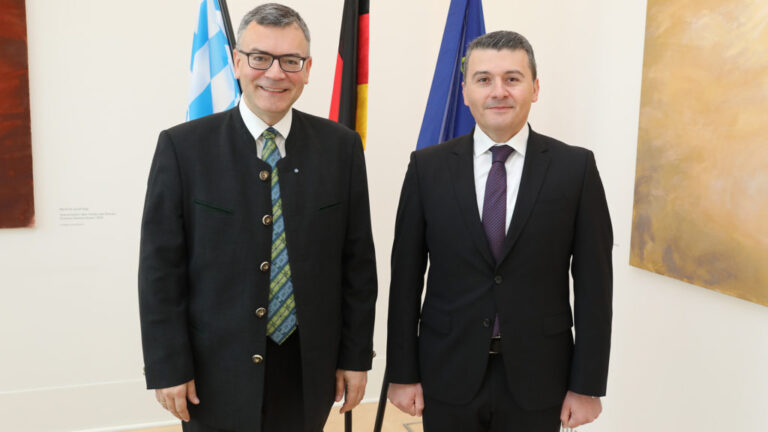
Wednesday, 19 April 2023, Munich, Free State of Bavaria, Germany: The Head of Bavarian Chancellery, Minister for Federal and Media Affairs, Dr. Florian Herrmann and Minister for European Affairs Melanie Huml received the Ambassador of the Republic of Azerbaijan, Nasimi Aghayev, for his inaugural visit to the State Chancellery.
Minister of State Dr. Florian Herrmann said as per statement: “A warm welcome to the Ambassador of Azerbaijan, Nasimi Aghayev. Diverse international relations are of outstanding importance for politics and business, especially in times of upheaval. We are pleased about the great interest in Bavaria and about the opportunities that exist for both sides within the framework of cooperation. Azerbaijan can play an important role in the diversification of raw material supply chains.
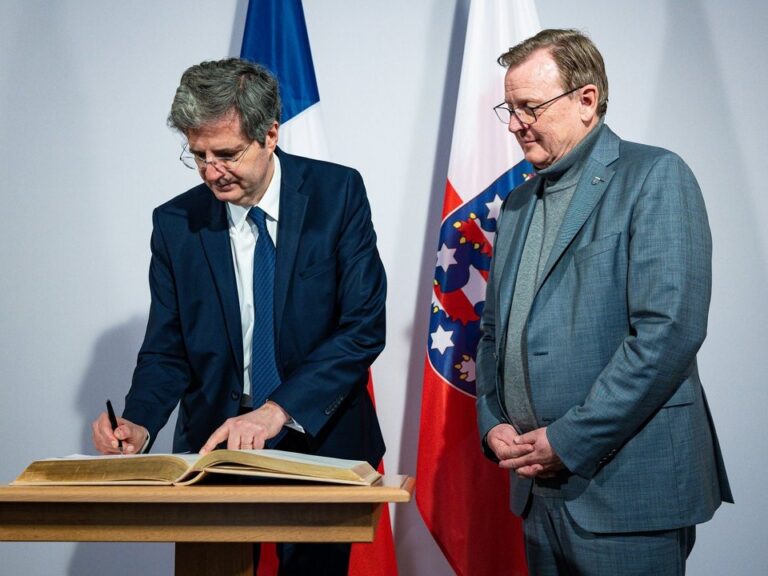
Monday, 17 April 2023, Erfurt, Free State of Thuringia, Germany: Premier Bodo Ramelow received the Ambassador of the French Republic, H.E. François Marie Delattre, for an inaugural visit to the Thuringian State Chancellery. The Ambassador was offered the opportunity to sign the stately guestbook.
Delattre was accredited to the German Federation on Tuesday, 27 September 2022. He arrived in Germany after serving as the Secretary-General of the Ministry of European and Foreign Affairs, the second ranking official that is, from 2019 through 2022.
He speaks French, German and English. His illustrious career began in 1989. François Delattre has furthermore served in the capacity as Permanent Representative to the UN in NYC (2014-2019); Ambassador to the United States (2011-2014); Ambassador to Canada (2008-2011); or Consul General in New York (2004-2008).
Ambassador Delattre (b. 15 novembre 1963) holds a licentiate degree in International Law, and the diplomatic rank of Minister Plenipotentiary ‘hors classe‘ – extraordinary.