

By Jianbo Wu
In April 2026, Thailand seemed to have found an answer to a longstanding geopolitical question: how to create an alternative to the Strait of Malacca for global shipping. The government announced it would accelerate the 1-trillion-baht (US$31 billion) Southern Land Bridge, citing the Hormuz crisis as a reminder of the strategic value of alternative routes. By July, however, the same project that had promised to rewrite regional trade was being rewritten itself. The Land Bridge was no longer an immediate national priority.
On July 24, a government committee concluded that the Land Bridge would no longer proceed as originally planned. A new feasibility review showed that the project’s net present value had turned from a projected surplus into a deficit of more than 10 billion baht (US$280 million). With no land acquired and construction yet to begin, Bangkok could still change course before locking itself into major sunk costs.
Three days later, Prime Minister Anutin Charnvirakul made the government’s revised position clear. The Land Bridge, he announced, had not been cancelled. Immediate priority would now go to upgrading regional port berths and completing dual-track railway connections. “When the time is right,” Anutin clarified, “or when necessary and geopolitically appropriate, the project can be dusted off and resumed at any time.”
The debate over the project is closely tied to the spring crisis around the Strait of Hormuz. When tanker insurance premiums surged and ships faced rising detour costs, the vulnerability of concentrated maritime routes came back into focus. The Malacca Strait, the narrow corridor through which roughly one-quarter of global maritime trade passes, was once again viewed as a strategic risk. For Thailand, the crisis reinforced the case for turning the Kra Isthmus into an alternative gateway between the Indian and Pacific oceans. A 90-kilometre corridor promised to shorten voyages by 1,200 kilometres and two to three days. But strategic urgency and commercial viability are different calculations.
The Land Bridge would require containers to be unloaded on one coast, moved across Thailand by rail, and loaded onto another ship before continuing their journey. That additional step could erase much of the advantage of avoiding the Malacca Strait. The July 24 feasibility review highlighted a broader challenge: nine of the world’s ten largest shipping lines had already committed capital to existing ports, routes and logistics networks, and there was little evidence they would divert meaningful volumes to the Land Bridge.
Domestic opposition added another layer of difficulty. Local fishing communities and environmental groups opposed the project over concerns about dredging, coastal reclamation and ecological impacts across roughly 13,000 rai. More than 100,000 signatures were submitted to the Prime Minister’s Office, heightening political pressure on Bangkok.
Furthermore, Thailand was not merely competing with a body of water. It was competing with one of the world’s most sophisticated maritime ecosystems, centred on Singapore. The city-state’s advantage comes not only from a transhipment hub connected to more than 600 ports worldwide, but also from the wider maritime services network built around it. Thailand was not simply building another port; it was trying to replicate an ecosystem that took decades to mature.
Yet Bangkok’s decision to pause the project did not end the competition. Instead, it changed the timeline. Singapore holds the advantage of the present: world-class efficiency, dense shipping alliances and high transshipment frequency. But the more global trade concentrates into a single highly optimised node, the more valuable credible alternatives become during moments of systemic disruption.
The Land Bridge does not need to match Singapore’s ecosystem today; it only needs to remain available when circumstances change. Alternatives rarely look cost-effective before they are needed. If insurance premiums surge, congestion worsens or geopolitical tensions further complicate passage through the straits, the question will no longer be whether Thailand can build a Land Bridge from scratch, but whether it has enough of one already in place.
This reality shaped Prime Minister Anutin’s political strategy. Facing the classic dilemma of how to retreat without surrendering, he unbundled the megaproject. Instead of pushing for twin mega-ports and a full industrial zone, state focus shifted to modest, high-utility works known as the “missing links”: modernising existing berths at Ranong Port and building a 110-kilometre rail link connecting Ranong to the national rail network at Chumphon.
Ranong is where the strategic option begins to take shape. The port already records rising cargo volumes, with container throughput climbing 55.56% in the first part of fiscal 2026, driven in part by trade diverted from Myanmar land borders. Completing the short rail gap that currently forces freight onto trucks would give Thailand’s entire national network, including future northbound links towards Laos and China, direct access to the Andaman Sea. Officials have also framed the port as a practical entry point for BIMSTEC markets, where shorter sailings to destinations such as Yangon, Chittagong and Chennai are already being tested.
Anutin’s mid-July official visit to Beijing illustrated a similar priority. The publicly available joint statement focused on accelerating the China-Thailand High-Speed Railway and integrating northbound rail corridors through Laos. The Land Bridge was conspicuously absent. The contrast was notable. At a time when Thailand was seeking to position itself as a maritime gateway, its most visible infrastructure cooperation with China remained centred on inland connectivity through rail links rather than a new cross-isthmus shipping corridor.
What emerged instead was an infrastructure ladder: one that delivers immediate economic value while preserving the option of a larger cross-isthmus corridor if conditions eventually justify it. In this sense, the pause did not abandon the Land Bridge’s strategic logic. It relocated that logic onto assets that already move cargo and can be expanded incrementally.
The debate is no longer whether Thailand will build the Land Bridge. It is whether the infrastructure now being built can create the commercial foundations for a project whose strategic value may ultimately depend on forces beyond Thailand’s control.
About the author:
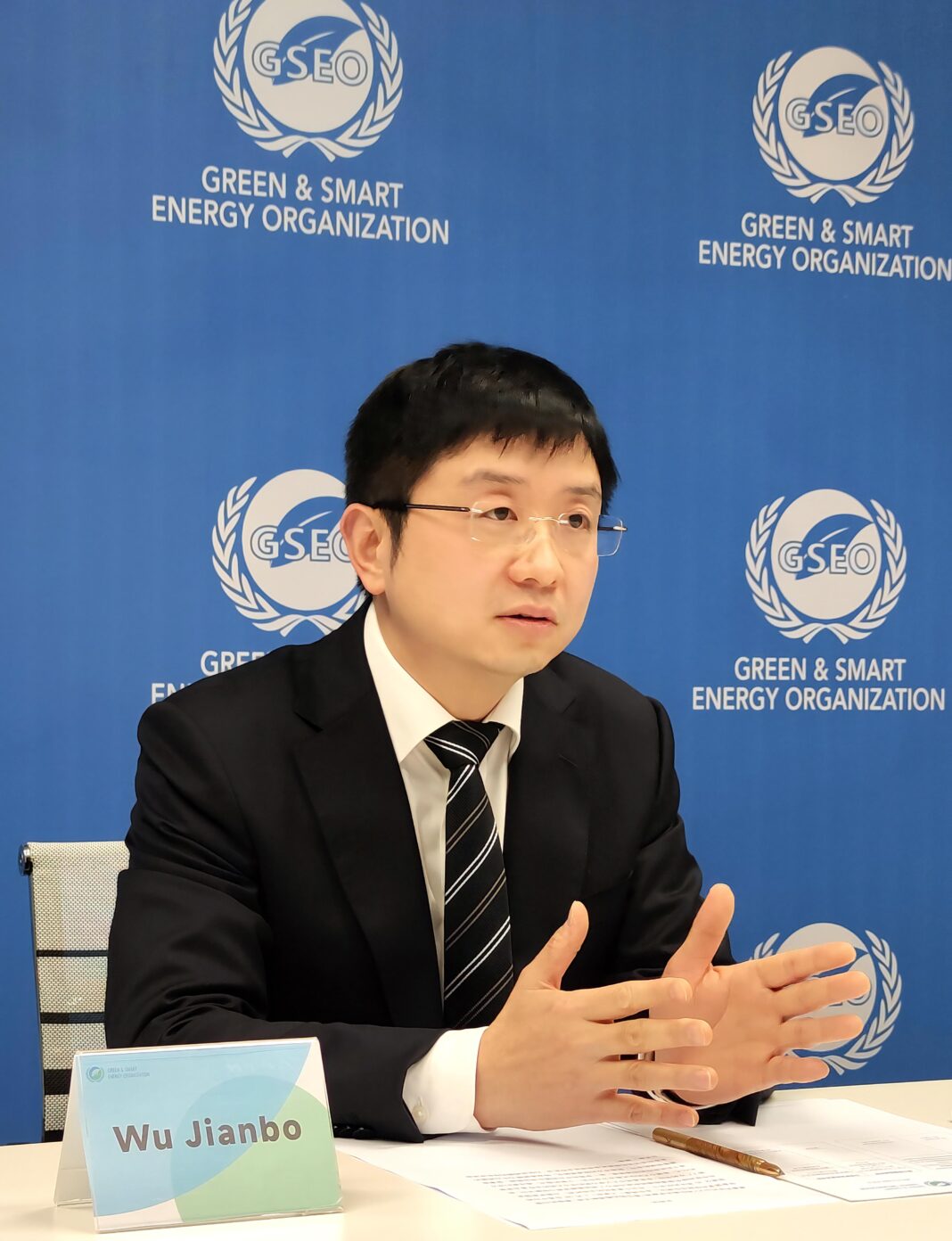
Jianbo Wu is Secretary General of the Green and Smart Energy Organization (GSEO), an international non-profit focused on cooperation in green and smart energy systems. His work examines the intersection of energy, infrastructure, global supply chains, and economic connectivity. He has directed multiple United Nations-supported programmes and has contributed commentary to a range of international policy and business publications, including East Asia Forum, Singapore Business Review, and the LSE South Asia Centre.