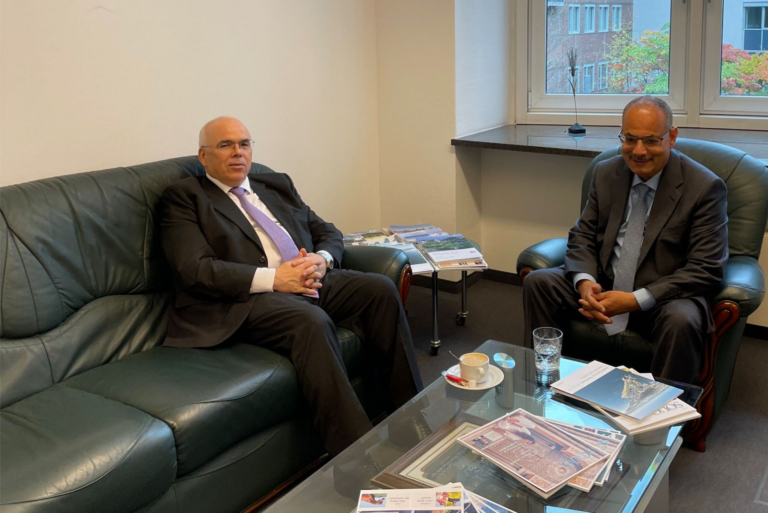
Monday, 23 October 2023, Berlin, Germany: The Ambassador of the People’s Democratic Republic of Algeria in Germany, Larbi El Hadj Ali, was welcomed by the Secretary-General of Ghorfa (Arab-German Chamber of Commerce and Industry), Abdulaziz Al-Mikhlafi for an exchanges of the possibilities to enhance the German-Algerian ties through the services provided by Ghorfa.
Larbi El Hadj Ali is a career diplomat who joined the foreign ministry in 1983. Prior to arriving in Germany, he was Algeria’s top envoy in Canada. He has held several senior positions in the Department of Foreign Affairs. Since 2013, he has been adviser to the foreign minister. From 2008 to 2013, he was deputy director in charge of the United Nations.
He served as deputy director of the partnership with the European Union between 2002 and 2004. He served as minister conselor at Algeria’s permanent mission to the United Nations in New York from 2004 to 2008 and was a member of the Algerian delegation during Algeria’s term on the Security Council (2004-2005). From 1996 to 2000, he was counselor in Brussels and previously to that, first secretary in Prague (1988 to 1992).
Coordinated arrest of Swedish high-value target suspected of major drug trafficking
Eurojust has supported the authorities in Sweden, Serbia and Montenegro in the arrest of a Swedish national suspected of being part of an organised crime group (OCG) involved in drug trafficking. After his arrest in Serbia, a procedure was initiated for his extradition to Sweden. During a joint action day also supported by Interpol, the authorities conducted house searches in Serbia and Montenegro and seized important evidence.
The suspect, previously convicted for similar crimes, is suspected of both aggravated narcotics- and weapon-offences, and illegal possession of explosives. He has recently been residing in the Balkans, from where he is believed to have continued his criminal activities in Sweden. He allegedly controlled his subordinates in the OCG remotely and directed them to carry out several criminal activities, such as the trade of vast quantities of narcotics and weapons.
Some of his accomplices have been already convicted and others are under criminal investigation.
At the request of the Swedish authorities, Eurojust organised an action day, with the involvement of the Agency’s Serbian and Montenegrin Liaison Prosecutors. Support was also provided with the execution of an International Arrest Warrant and requests for Mutual Legal Assistance.
The operation was the result of several months of close cooperation between the following authorities:
Sweden: Swedish Prosecution Authority, National Public Prosecution Department, National Unit against Organised Crime; Swedish Police; Nordic Police and Customs Liaison Office for Serbia and Montenegro
Montenegro: Special State Prosecution Office of Montenegro; competent organisational units of the Police Directorate of Montenegro
Serbia: Public Prosecutors Office for Organised Crime; Serbian Police, Fugitive Active Search Team (FAST)
Innovation is the primary force in driving development. President Xi Jinping stressed that the Belt and Road Initiative (BRI) is innovative by nature and its success needs to be powered by innovation. For 10 years, guided by innovative ideas, Belt and Road cooperation has pooled resources of innovation from various parties, injecting strong impetus into the development of partner countries and bringing tangible benefits to the people. A road of innovation for the new era is connecting China to the world.
This is a road that inspires innovative ideas for cooperation. Rooted in the spirit of harmony, inclusiveness, and cooperation of the ancient Silk Road, the BRI has put forward the innovative principle of extensive consultation and joint contribution for shared benefit, and abandoned the zero-sum mentality featured in the donors-dominated, Western-led model of international cooperation, thus creating a new vision for international cooperation. Just as the British commentator Martin Jacques observed, the BRI is completely novel and, in terms of its global impact, a bold and new project unprecedented in its character and conception.
This is a road that brings together resources of innovation. In the past decade, Belt and Road cooperation has spurred greater innovation in science and technology. From promoting people-to-people exchanges in science and technology to jointly building laboratories, from enhancing cooperation on science and technology parks to building technology transfer centers, the vision for a community of innovation featuring shared development philosophies, unimpeded flow of production factors, networked technology facilities, connected innovation chains and vibrant people-to-people exchanges is turning into reality.
At the water-conserving irrigation laboratory jointly built by China and Egypt, water can be channeled to the roots of crops through underground seeping pipes with just a tap on the phone. This advanced water-saving irrigation system from China provides an effective solution to the problems of high temperature, drought and water shortage that plague Egypt’s agricultural development. Belt and Road cooperation is also instrumental in integrating resources of innovation from all parties.
China and Portugal are located by the Pacific and the Atlantic respectively, with different climates and geographical conditions, yet greater cooperation on innovation including the Joint International Research Laboratory of Marine Biology inaugurated in 2017 and the Belt and Road Joint Laboratory on Space and Sea Technology Advanced Research launched in 2021 not only enables information sharing between the two countries, but also promotes complementarity in scientific research capabilities, thus producing a multiplying effect.
This is a road that delivers the benefits of scientific and technological innovation to the people. Through Belt and Road cooperation, China has not only integrated itself into the global scientific and technological innovation network, but also helped spread the fruits of innovation to more countries and peoples. China has carried out extensive cooperation with partner countries in smart cities, mobile payment, cross-border e-commerce and other areas of digital economy, and supported them in establishing and improving technology markets. China has set up the Technology Transfer South-South Cooperation Center with the United Nations Development Program, promoted cooperation among higher education institutions and research institutes, and helped partner countries cultivate future innovators. As co-chair of the Bill & Melinda Gates Foundation Bill Gates said, China has an incredible mix of expertise and experience, as well as investment in scientific and technological innovation, and it will be able to make unique contributions to sharing its technologies and its lessons.
This year, China will host the third Belt and Road Forum for International Cooperation. Going ahead, China will continue to promote Belt and Road cooperation on innovation, fully tap the potential of innovation, open up broader space for win-win cooperation, and provide more shared treasures for people worldwide to achieve common development and prosperity.
On Wednesday, October 25th, the Argentine Embassy in The Hague was graced by the presence of Las Hermanas Vera, the legendary exponents of Argentinian Chamamé folklore. Their performance was nothing short of exceptional, captivating the audience that had filled the embassy’s halls with joy and energy from the very first note.
The Vera Sisters, hailed as legends of Argentine Folk Chamamé, delivered a concert that will be remembered for years to come.
The Hermanas Vera, Argentinian Chamamé folklore.
This exclusive concert was made possible through the generous sponsorship of the Argentine Embassy, in collaboration with Diplomat Magazine.
With over 100 original compositions and 32 albums to their name, along with two Gardel awards, Las Hermanas Vera are not just singers and songwriters; they are living legends who have crafted an extraordinary career that began in the 1970s in their hometown of Caa Cati, in the General Paz Department of the Corrientes Province.
Argentine Folk Chamamé, Embassy of Argentina.Argentine Folk Chamamé’s concert.
Rafa Vera, the elder of the sisters, took her first steps in music in the church choir and school performances, followed by Boni Vera, the youngest of six sisters. It was there that they began to cultivate their musical talents, under the guidance of their father, Felix Vera, a farmer who also played the guitar and accordion. He imparted the first arpeggios on the guitar to Rafa and Boni, setting in motion a remarkable journey that has been characterized by a ceaseless harvest of success, awards, and recognitions, both on a national and international scale.
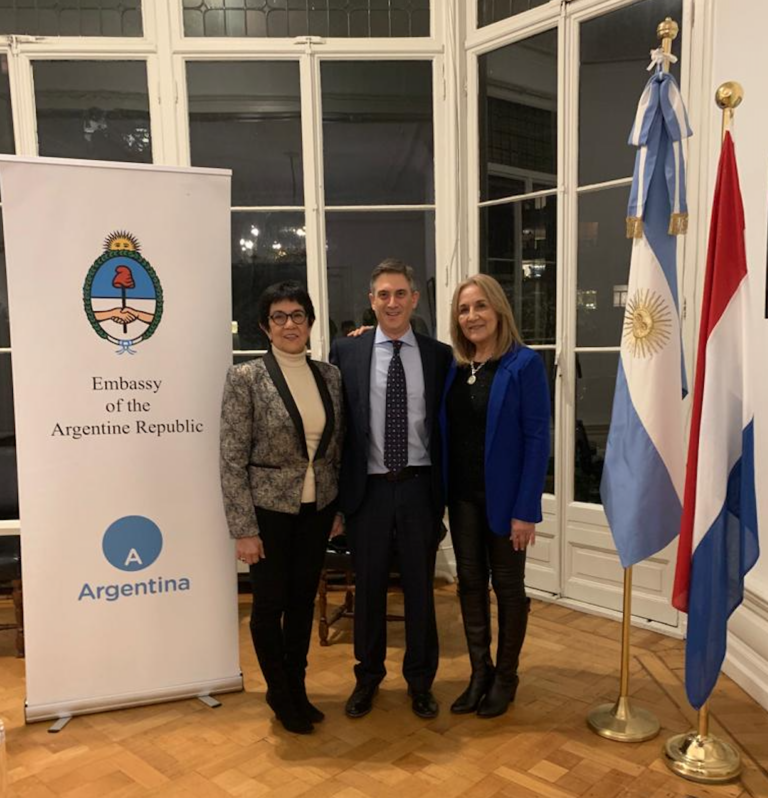
The concert began with a warm welcome from Diego Sadofschi, Minister Counsellor of Argentina, who greeted the numerous guests in attendance. Among the distinguished guests were diplomats, Dutch and Argentinians, and the ambassadors of Uruguay, H.E. Alvaro Gonzalez Otero, and Bolivia, H.E. Roberto Calzadilla Sarmiento.
Rafa Vera and Boni Vera, with Diego Sadofschi, Minister Counsellor of Argentina, their musicians and the embassy of Argentina staff.
Once the formalities were done, the stage was set for Las Hermanas Vera to work their magic. The show kicked off, and it was a continuous stream of heartwarming, soul-stirring music. Songs like “Villa Guillermina,” “A Pesar de Amarte Tanto,” “Para ti,” “Falso Juramento,” and many others flowed seamlessly, leaving no room for rest.
The audience was thoroughly engaged, with many joining in to sing along. The exceptional musicians accompanying Las Hermanas Vera were a testament to the rich rhythms of Chamamé, enhancing the entire concert experience.
Boni VeraRafa Vera
Following the concert, the Argentine Embassy graciously hosted a reception where guests could savor Argentine wines, chipa, empanadas, and alfajores. This was a moment for photos and warm embraces, as the evening had created an unforgettable bond between the audience and Las Hermanas Vera.
Chamame has been included as “Intangible Cultural Heritage of Humanity” by UNESCO in 2020. The performance by Las Hermanas Vera was a shining example of how the Argentine Embassy consistently brings authentic Argentine culture to the Netherlands. It was a unique cultural encounter with first-class Argentine Chamamé, leaving an indelible mark on the hearts of those in attendance. Congratulations to the Embassy of Argentina for yet another remarkable cultural event that further strengthens the bridge between Argentina and the Netherlands.
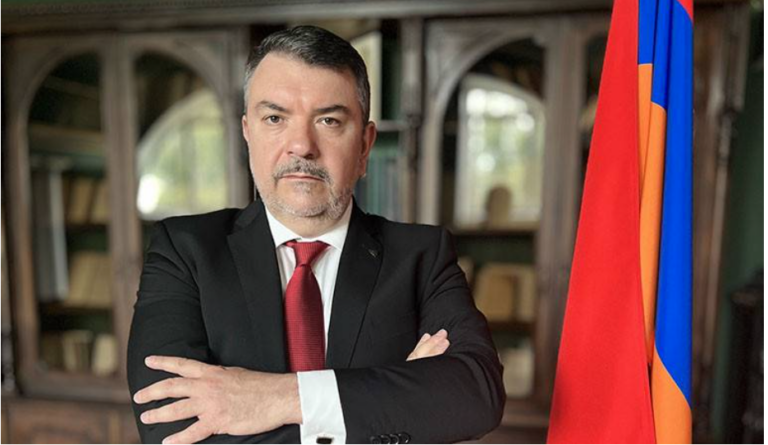
H.E. Mr. Viktor Biyagov, a seasoned diplomat, and a distinguished representative of the Republic of Armenia, assumed the pivotal role of Ambassador to the Kingdom of the Netherlands and Permanent Representative to the Organisation for the Prohibition of Chemical Weapons (OPCW) in September 2023, following a presidential decree from Armenia. He presented his credentials to the King of the Netherlands on October 25.
Born in the capital city of Yerevan, Biyagov has devoted his career to advancing Armenia’s interests on the global stage.
Education played an important role in shaping Viktor Biyagov’s path to diplomacy. He earned a Diploma in History and English Language with Honours from the Yerevan Institute of Foreign Languages between 1989 and 1994. Subsequently, he enriched his knowledge by attending the Course for Young Diplomats from Central and Eastern Europe at the Netherlands Institute of International Relations “Clingendael” in The Hague, Netherlands, in 1995. His quest for diplomatic excellence led him to the Diplomatic Academy of the Ministry of Foreign Affairs of Russia in Moscow, Russia, where he focused on International Relations from 1996 to 1998. He further honed his skills with a Senior Course at the NATO Defence College in Rome, Italy, in 2004 and a General Flag Officers and Ambassadors Course at the same institution in 2016.
Biyagov’s extensive career in diplomacy began in 1994 when he served as an Attaché in the CIS Countries Department at the Ministry of Foreign Affairs of Armenia. Over the years, he steadily climbed the ranks, demonstrating unwavering dedication and commitment to his nation’s diplomatic endeavors. He held positions such as Third Secretary in the European Department, Ministry of Foreign Affairs of Armenia, and Third Secretary and Consul at the Embassy of Armenia in Romania, Bucharest.
His expertise in arms control and international security led to his appointment as a Second Secretary in the Arms Control and International Security Department at the Ministry of Foreign Affairs of Armenia. Viktor Biyagov broadened his horizons by serving as a Second Secretary at the Embassy of Armenia in Germany, Berlin, from 2005 to 2008. His passion for diplomacy continued to shine through as he assumed roles such as Acting Head of the OSCE Desk in the European Department of the Ministry of Foreign Affairs of Armenia, and later as the First Secretary at the Mission of Armenia to the European Union in Brussels, Belgium.
In 2014, Biyagov played a significant role as the Head of the Foreign Relations Department within the Staff of the National Assembly (Parliament) of Armenia. His responsibilities included shaping Armenia’s foreign policy and parliamentary relations.
Demonstrating his adaptability and diverse skill set, Biyagov held roles as the Acting Head of the CIS Countries Department at the Ministry of Foreign Affairs of Armenia from September to November 2018. Following this, he took on the crucial position of Permanent and Plenipotentiary Representative at the Permanent Mission of Armenia to the Collective Security Treaty Organisation, a testament to his profound expertise in security matters.
In September 2023, Viktor Biyagov reached a pinnacle in his diplomatic career when he was appointed as Ambassador of the Republic of Armenia to the Kingdom of the Netherlands and Permanent Representative of Armenia to the OPCW. Holding the diplomatic rank of Envoy Extraordinary and Minister Plenipotentiary, he now serves as a bridge between Armenia and the international community, advocating for peace, security, and cooperation on a global scale. His remarkable journey and unwavering commitment to diplomacy make him a distinguished representative of the Republic of Armenia on the world stage.
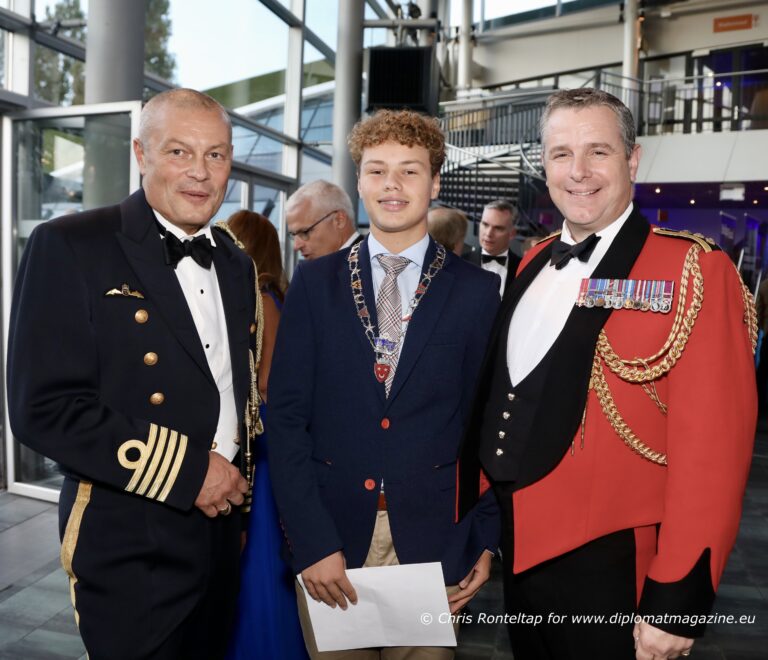
On the 4th of October, a remarkable event took place in The Hague, one that brings together military attachés accredited to the Netherlands in a setting that’s as unique as it is significant. Organized by The Defence Attaché Association (DAA) in The Hague, the Defence Attachés’ Annual Gala is a prestigious occasion that combines elegance, diplomacy, and a strong sense of unity.
The venue for this prestigious event is Madurodam Park, an extraordinary place that’s more than just a Dutch landmark—it’s a living miniature of the Netherlands, featuring iconic Dutch structures at a 1:25 scale. This year, on October 4th, Madurodam Park was transformed into a reception great salon, a dining room, and a ballroom, playing host to a record attendance of over a hundred guests representing diplomatic missions.
Defence Attaches’ Gala 2023
One of the unique aspects of this gala is the diverse crowd it attracts. Military attachés accredited to the Netherlands and their spouses come from various countries, including Australia, Austria, Belgium, Brazil, Bulgaria, Canada, China, Cyprus, Estonia, Finland, France, Germany, Greece, Hungary, India, Indonesia, Israel, Japan, Kosovo, Lithuania, Norway, Poland, Slovakia, Spain, Sweden, Switzerland, Turkey, Ukraine, United Kingdom and the United States of America. This cross-border representation enhances the international flavor of the event, fostering greater collaboration and understanding among military diplomats.
The gala’s dress code, a mix of military mess dress and black tie attire, not only adds a touch of elegance but also symbolizes the harmonious blend of the military and civilian worlds that this event represents, special mention of the spouses and partners of military attaches in elegant gowns. It is an event where formalities meet festivities, and military traditions intersect with diplomatic camaraderie.
UK Colonel Piers Strudwick during his welcome speech.
The evening commenced with a reception, during which speeches were given to set the tone for the night. Colonel Piers Strudwick of the UK, one of the evening’s hosts, introduced the gala and laid out the agenda. The Mayor of Madurodam, Fresco Mees, provided a warm welcome and shed light on the social vision and charitable work of Madurodam. It is heartening to know that Madurodam Park, plays an important role in supporting causes for children in the Netherlands.
The program then moved on to toasts and speeches. A toast to all heads of states was raised by Colonel Piers Strudwick, while Captain Antoon Hertogs, the Dean of the DAA and Defence Attaché of Sweden, extended a warm welcome to all attendees. The atmosphere was both elegant and relaxed, setting the stage for the gala dinner.
The Head of International Military Cooperation, Rear Admiral Sillevis Smitt, thanked the organizers for their outstanding efforts and highlighted the importance of this gathering. It’s a unique chance for attachés posted in different countries to come together, meet new colleagues, and strengthen their ties with the host country.
The Mayor of Madurodam, Fresco Mees.
General Onno Eichelsheim, the Chief of Defence of the Netherlands, emphasized the need for unity during these challenging times, particularly in light of ongoing conflicts like the war in Ukraine. His message was clear: “Stay firm and do not think that we did enough until victory.” The gala provided an invaluable opportunity for military attachés to exchange ideas and build stronger connections with their international colleagues.
The event was an unquestionable success. As the evening wound down, Colonel Mark Sturgeon, Army Attaché of the USA, extended his gratitude to everyone present and officially opened the ball. The festivities continued into the night, creating an atmosphere of celebration and togetherness that was truly unforgettable.
From left to right: Jennifer and Colonel Mark Sturgeon (US Army Attaché), Captain Jennifer Mills (US Defence Attaché), Lauren and Colonel Juris Jansons (US Air Attaché), Nicole and Warrant Officer Miguel Rendon (US Defence Attaché Office).
The significance of this gala extends beyond just a social event. In the current geopolitical climate, with the military playing an increasingly vital role in Europe, events like these help strengthen diplomatic ties, build networks, and create a sense of solidarity among nations.
The Defence Attachés’ Annual Gala in The Hague is not just an event; it’s a testament to the enduring power of diplomacy and unity in times of global challenges.
H.E. Mr. Hadi Farajvand, the newly appointed Ambassador of the Islamic Republic of Iran to the Netherlands, brings a wealth of experience and knowledge to his role. Born on November 1, 1964, in Bijar, Kurdistan Province, Mr. Farajvand has spent his career dedicated to the service of his country. He presented his credentials to the King of the Netherlands on October 25.
Hadi Farajvand’s journey into the realm of diplomacy began with a strong educational foundation. In 2001, he earned his Doctor of Philosophy (PhD) in Political Science from Imam Sadeq University, showcasing his dedication to the study of political affairs.
Farajvand’s professional journey in international affairs commenced in 1998 when he served as an Expert/Specialist for International Affairs in the Embassy of Iran in The Hague. His role there marked the beginning of a distinguished career in diplomatic service.
From 2002 to 2007, Hadi Farajvand took on the position of Deputy Director of the National Authority for Disarmament Treaties within the Ministry of Foreign Affairs.
His diplomatic experience continued to evolve as he took on the role of Ambassador of the Islamic Republic of Iran to Poland from 2007 to 2009. During this tenure, he played a pivotal role in enhancing diplomatic relations between Iran and Poland.
Following this, in 2009-2010, Ambassador Farajvand assumed the role of Senior Expert/Specialist for political affairs in the Office of the Minister at the Ministry of Foreign Affairs.
From 2010 to 2015, he served as the Director of the National Authority for Disarmament Treaties within the Ministry of Foreign Affairs, further solidifying his commitment to disarmament and global security.
Ambassador Farajvand’s career also ventured beyond Europe as he undertook the role of Ambassador of the Islamic Republic of Iran to Kenya from 2015 to 2019. This experience provided him with invaluable insights into the complex dynamics of African diplomacy.
In recognition of his expertise, Ambassador Farajvand was appointed as the Director of the Bureau for United Nations Security Council and Peacekeeping in 2020-2021.
In 2021-2023, he served as the Director of the Bureau for Security Council and International Cooperation in Countering Terrorism, demonstrating his comprehensive understanding of contemporary global challenges. He is proficient in both English and Arabic.
Today, Hadi Farajvand holds the position of Ambassador of the Islamic Republic of Iran to the Netherlands, representing his country in an important European diplomatic hub. With his vast experience, linguistic abilities, and commitment to global affairs, Ambassador Farajvand is well-prepared to navigate the intricate landscape of international diplomacy and to strengthen the ties between Iran and the Netherlands.
As Iran’s new ambassador, H.E. Hadi Farajvand’s life journey and extensive experience reflect his dedication to the service of his country. His appointment to the Netherlands is an opportunity for both nations to foster meaningful relations and work together towards common goals on the world stage.
In a significant achievement for Peru’s cultural heritage, a unique Chimu Huaco (1), representing a remarkable piece of the country’s ancient history, has been voluntarily returned to the Peruvian Embassy in the Netherlands.
The return of this precious artifact marks a important moment in the ongoing efforts to repatriate Peruvian cultural treasures that were removed from their homeland years ago. This act of goodwill by a Dutch citizen, Michael van Os de Man, highlights the collaborative spirit between the Netherlands and Peru in preserving the legacy of Peru’s ancient civilizations.
Chimu Huaco / Peru
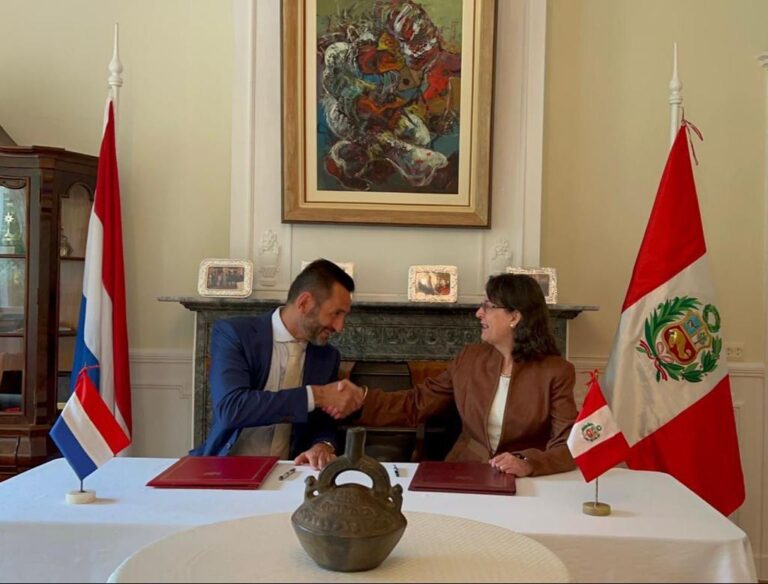
The story of this Chimu Huaco’s return is a testament to the relentless dedication and diplomatic finesse of H.E. Ms. Marisol Agüero Colunga, Ambassador of Peru to the Netherlands, who has spearheaded numerous initiatives to repatriate Peruvian cultural property. One such notable accomplishment was the signing of an agreement in July 2021 between H.E. Mr. Arjen Uijterlinde, Ambassador for International Cultural Cooperation of the Dutch Ministry of Foreign Affairs, and Ambassador Agüero, leading to the Dutch Government’s delivery of 28 cultural objects belonging to Peru’s cultural heritage. This was achieved through a concerted effort between the Foreign Ministries of both countries, the Dutch Information and Heritage Inspectorate, the Peruvian Ministry of Culture and the Embassy of Peru, in particular S.S. Galo Garcés’ interest and expertise in this area.
The 28 returned objects encompass a wide range of artifacts from various ancient Peruvian civilizations, including the Chimú, Chancay, Moche, Wari, and Vicús, dating back to a span between 200 BC and 1476 AD. The collection features captivating ceramics adorned with anthropomorphic and zoomorphic figures, as well as vibrant textiles boasting intricate patterns. Intriguingly, ancient seeds were also among the objects saved from being auctioned off.
Dr. Edward de Boc
The success in repatriating these artifacts is a reflection of the close collaboration between the Netherlands and Peru, particularly within the framework of the 1970 UNESCO Convention on the Means of Prohibiting and Preventing the Illicit Import, Export, and Transfer of Ownership of Cultural Property. This international treaty has played a crucial role in ensuring that cultural treasures like the Chimu Huaco find their way back to their place of origin.
Ambassador Agüero emphasized the extraordinary significance of reclaiming these cultural treasures, underscoring that “the legacy of these cultures constitutes an immense source of pride for the Peruvian people.” She also recognized the noble gesture of Mr. Michael van Os de Man of returning to Peru such an important piece of its historical past: “his decision to hand over this object belonging to the Cultural Heritage of my country, reflects a deep respect for the legacy of an ancient culture and the recognition of the importance that we, all Peruvians, give to it”.
These objects represent the history and heritage of Peru’s ancestors, and their return symbolizes the respect and gratitude of the Peruvian people toward the Dutch government for facilitating the repatriation process.
The recent return of the Chimu Huaco, handed over by Michael van Os de Man, is a heartening example of individuals taking responsibility for the cultural heritage they possess. Van Os de Man’s decision to return the artifact is commendable, particularly as he inherited it from a relative who acquired it in a time when international regulations on cultural property were not stablished. Recognizing the importance of this cultural relic, he reached out to Dr. Edward de Bock, a renowned Dutch academic and pre-Hispanic culture authority, for guidance on the repatriation process.
During the handover ceremony, Dr. de Bock noted the uniqueness of the Chimu Huaco compared to other ceramic pieces from the same culture. His words reflected the importance of this act of returning the object to the Peruvian Embassy, not only for the historical significance but also for the advancement of Peruvian culture research.
Ambassador Marisol Agüero, who received the Chimu Huaco on behalf of the Peruvian State, lauded Mr. van Os de Man’s initiative and Dr. de Bock’s invaluable guidance. She also highlighted the significance of the return, as it would enable further study of this invaluable artifact and enhance our understanding of Peru’s rich cultural history.
The return of the Chimu Huaco is a shining example of international cooperation and ethical responsibility preserving cultural heritage. It not only enriches Peru’s cultural identity but also underscores the power of individuals, governments, and academics working together to ensure that the legacies of ancient civilizations continue to be celebrated and protected for generations to come.
[1] Huaco is a prehispanic fine pottery artwork made by the inhabitants of the Americas.
Five weeks ago, the International Criminal Court detected a serious cyber security incident, thanks to the alert mechanism provided by its monitoring system. The ICC has made various and serious efforts to address this attack. The Court deems it is its responsibility to continue to inform about these efforts and to provide the relevant additional information on the attack itself.
As soon as the incident was confirmed, steps were taken to mitigate its effects by initiating an immediate incident response with the support of the Netherlands, the Host State, and external cyber security experts. This included forensic analysis of the incident, its causes and its impact, and initial mitigating measures.
The evidence available thus far indicates a targeted and sophisticated attack with the objective of espionage. The attack can therefore be interpreted as a serious attempt to undermine the Court’s mandate.
Based on the forensic analysis carried out, the Court has already taken and will continue to take all necessary steps to address any compromise to data belonging to individuals, organizations and States. Should evidence be found that specific data entrusted to the Court has been compromised, those affected would be contacted immediately and directly by the Court. For the Court, the safety of its data and maintaining trust with all of its stakeholders are paramount.
With the information currently available it is not presently possible for the Court to confirm who is responsible for the attack. The Dutch law enforcement authorities are currently conducting a criminal investigation.
As a result of the attack, the Court is reinforcing its risk management framework and identifying actions and procedures to be ready to respond to any potential repercussions from the cyber-attack including any potential security risk to victims and witnesses, Court officials and the Court’s operations .
As part of broader assessment into potential actions by threat actors, the Court has also identified that disinformation campaigns targeting the ICC and its officials may be anticipated to be launched in an effort to tarnish the ICC image and delegitimize its activities.
The Court is also accelerating a number of existing initiatives aimed at enhancing digital security.
This latest attack comes at the time of broader and heightened security concerns for the Court: several elected officials, including Judges of the Court and the Prosecutor, have had criminal proceedings initiated against them; the Court has recently undergone daily and persistent attempts to attack and disrupt its systems; and the Court averted an almost successful attempt to infiltrate a hostile intelligence officer into the Court under the guise of an intern.
The Court wishes to emphasize its utmost gratitude for the numerous expressions of support received from its States Parties and other international organizations, a number of whom have experienced similar cyber incidents in the past. The Court looks forward to cooperating with them and working together in addressing the increasing risk of cyber-attacks and the need to protect our institution to ensure its capacity to implement the ICC’s critical mandate of justice and accountability, which is a shared responsibility of all States Parts.
While the fears of a global war largely subsided since the Cold War’s end, recurring regional conflicts cast doubt on the attainment of worldwide peace. The U.S. aspires to sustain and bolster its global dominance, striving to retain sole superpower status. As China’s influence grows amid the anti-globalization tide, the international geopolitical landscape is in a state of profound transformation. Looking ahead, the enduring prevalence of regional hegemonic divisions appears to be a defining trend in the long-term geopolitical landscape.
Over the coming decades, a pivotal shift will unfold: the rise of diverse regional hegemonies. This transformation is propelled by the persistent fragmentation of the global scenes amid the era of anti-globalization.
In the context of the Americas, the United States, exercising its role as the preeminent superpower, commands significant influence over proximate nations such as Mexico and Canada. The augmentation of economic interconnections through U.S. nearshoring serves to fortify its dominion within North American affairs. This cohesion is underpinned by similar political systems and shared ideologies, rendering Canada’s alignment with the United States unsurprising, with Mexico potentially following a similar trajectory.
Within the European domain, the European Union (EU) demonstrates limited capacity to emerge as an independent global actor. Perturbations stemming from events such as the Russo-Ukraine war, the redirection of U.S. capital, and the tide of anti-globalization are expected to reduce the EU’s inherent advantages. The assertive anti-Russia stance adopted by several Eastern European nations, coupled with their notable contributions during the war, served to diminish the sway traditionally held by France and Germany. Hungary’s discernible policy deviations further compound challenges to EU cohesiveness. As a consequence, the EU is poised to rely extensively on NATO for security and the Anglo-American axis for economic and energy-related affairs, thereby relinquishing a degree of its strategic autonomy.
In Asia, China is poised to maintain its dominant position in East Asia, albeit amidst challenges such as Western-driven decoupling, global economic interdependence, and China’s aging demographic. India, positioned in opposition to China, will emerge as a consequential actor. The U.S. will persist in its engagement in the Asia-Pacific region, influenced by the strategic significance of the Taiwan Strait in international trade routes. Due to the complexity of territorial conflicts in the South Sea, it is unlikely that Vietnam and the Philippines will be fully won over by China. The Southeast Asia-China relationship may remain contentious. Within the region, there are foreseeable frictions among major powers, with India intensifying its sphere of influence.
The region spanning across Central and West Asia, to North Africa, will be marked by multiple competing fractions, contributing to the gradual decline of U.S. supremacy there, while Israel, Saudi Arabia, Iran, and other nations are set to ascend as regional powerhouses.
As for the African continent as a whole, it confronts internal conflicts and the impacts of anti-globalization waves, creating impediments to regional stability. Due to the reverberations of the Arab Spring, coupled with pre-existing religious and ethnic tensions, along with the challenges posed by high inflation and financial instability, a state of continuous upheaval prevails in many regions of the continent. Notably, Sudan remains a focal point of unrest. South Africa, being the most developed and politically stable country on the continent, holds the potential to rise as a regional hegemon in Africa. Nevertheless, the intricate web of conflicts within the African landscape, along with heightened competition among Western powers seeking to counter China’s influence on the continent, indicates that South Africa’s attainment of dominant control over regional affairs in the short term is unlikely. The prevailing trend toward fragmentation in Africa will persist and the ascendancy of South Africa as a regional hegemon will be a protracted endeavor.
Given its territorial expanse, population, and overall economic strength, in conjunction with strategic diplomatic efforts initiated during Luiz Inácio Lula da Silva’s tenure, Brazil is on the verge of emerging as the dominant regional power in South America. Nevertheless, it is imperative to recognize that Argentina, in parallel, has undertaken significant measures to diversify its diplomatic and economic relationships. These endeavors include bolstering economic, trade, and financial ties with China. Recent years have witnessed intensified efforts by both the U.S. and the EU to expand their influence in South America, in response to China’s growing impact in the region since the early 2000s. While Brazil is steadily enhancing its influence in South America, it is bound to encounter resistance, possibly even confrontation, from Argentina. The full consolidation of Brazil’s regional hegemonic status remains an evolving process that will require time and strategic finesse.
The global system has witnessed a profound shift, characterized by substantial realignments in supply chains that have eroded the long-standing dominance of the U.S. on the world stage. This transition towards anti-globalization appears poised to endure, potentially spanning a significant temporal expanse, measured in years or even decades. Within this evolving paradigm, one discerns an impending fragmentation of global space, heralding the emergence of regional hegemonies as an enduring motif within the realm of geopolitics.
About the authors:
Founder of ANBOUND Think Tank, Kung Chan is one of China’s renowned information analysis experts specializing in geopolitical and economic policies.
Zhou Chao is a research assistant at ANBOUND’s Center of International Relations and a Ph.D. candidate at Freie Universität Berlin.