By Jorge Marinho and Júlio Ventura
Politicians from a given country can be the targets of influence operations directly or indirectly conducted by adversary states, by turning to various instruments such as the media and lobbying firms, for instance. This article highlights the influence on lawmakers, within the context of lawfare. Since all this could entail repercussion in the sphere of security, this piece includes exclusive interviews with Andres Munoz Mosquera, Director of Allied Command Operations (ACO) Office of Legal Affairs – Supreme Headquarters Allied Powers Europe (SHAPE) / NATO, and with Adélio Neiva da Cruz, Director of the Portuguese Internal Intelligence Service.
Foreign influence on political affairs can be regarded as normal and legitimate in the area of international relations (Jones January 2023, p. 21). This is often observed when a government, in the pursuit of its interests, seeks to influence the affairs and decisions of (an)other government(s) (Jones January 2023, p. 21). Foreign influence activities comprise public communications, lobbying and diplomacy (Jones January 2023, p. 21). Illegitimate interference from one government in the politics of another State can be called foreign interference (Jones January 2023, p. 7). Unlike foreign influence, this is deceptive / covert, including, for example, corruption and espionage (Jones January 2023, p. 21). In this context, there are hostile activities (Public Safety Canada August 20, 2021).
In this piece, given that differences fade away (Mansted February 2021, p. 1), it is considered that the terms foreign influence and foreign interference can also be used as synonyms (Foreign Interference and You, p. 2 / Homeland Security Advisory Council Interim Report of the Countering Foreign Influence Subcommittee May 21, 2019, p. 11).
Media influence
Currently, various state and non-state actors take part in influence operations, in which multiple instruments are used, most notably, in this article, traditional and social media. To this end, we need to pay attention to communication not only from abroad, but also from domestic and local media that can serve foreign interests (McFarland, Somerville October 29, 2020 / Milosevich February 1, 2021). We should point out the possibility of infiltration in the latter two media. Proxies and accomplices can also take part in wielding foreign influence (2017 Foreign Policy White Paper, p. 75 / Kalniete February 8, 2022 / Tenove January 17, 2018).
A number of studies carried out in countries such as Australia, Bulgaria and Canada emphasize that, in the sphere of foreign interferences, the political system is targeted via various types of media (Enhancing Foreign Influence Transparency: Exploring Measures to Strengthen Canada’s Approach March 10, 2023 / Foreign Interference through Social Media March 13, 2020 / Vladimirov, Velcheva 2021). This problem can actually be countered by means of laws, as addressed, for instance, by Douek (July 11, 2018) in Lawfare. However, within the context of lobbying, the media could be used to pressure politicians, leaders and lawmakers (Mykkanen 2023 / Oleshchuk 2020, pp. 49-50). This, latu sensu, is also lawfare (Pinus, Hau 2023), in the sphere of a domestic confrontation, with foreign influences / interferences, between those wishing legal conditions favorable to certain interests, such as few, if any, constraints to the free circulation of information, including that which is broadcast by international media, and those pushing for the contrary.
When referring to Europe, according to Karaskova and Simalcik (June 2020, p. 3), public discourse can be effectively changed by hostile foreign influence, since this is something that, to a large extent, is overlooked by European governments and society in general. To offset said influence, Karaskova and Simalcik (June 2020, p. 3) propose the following aspects, among others: restrictions to foreign ownership of the media; limits to support given by the government to media owners; prohibiting cross ownership of the media; enforcing regulations for tracking investments; and depoliticizing broadcasting councils that oversee the media. On March 10, 2023, after several days of public protests in Tbilisi, Georgia’s Parliament rejected a foreign agent registration bill that would be enforced on all media outlets, civil society organizations and individuals receiving over 20% of their funding from abroad, which would have subjected them to monitoring and to possible sanctions (Treisman March 10, 2023s.).
Lawmakers and other politicians
Lawmakers can be the targets of various types of foreign influences, as is the case with covert operations (Schaffer May 23, 2022 / Tromblay July 13, 2017). To the foreign influencer, among a variety of aspects, it is vital to get to know the climate in which decision-making takes place and to come up with ways of introducing information that underpins their objectives (Tromblay July 13, 2017). In international relations, the use of lawfare tends to increase in the short / medium term; this is why we need to stress the importance of legal intelligence, whose purpose is to identify vulnerabilities, hazards, opportunities and hostile activities in the legal sphere (Férey April 2022, p. 7 / 32). Lawfare comprises aspects of an offensive and defensive nature (Férey April 2022, pp. 34-35).
The Government of New Zealand warns members of Parliament of the possibility of being the targets of espionage and influence / interference operations conducted by organizations from other countries (Espionage and Foreign Interference Threats June 2020, p. 3). All this can be orchestrated and carried out by foreign intelligence services with contributions from other actors, such as: academics; business people; community organizations; diplomats; media organizations; military personnel; online actors; proxies (Espionage and Foreign Interference Threats June 2020, p. 3).
Foreign interferences are also present in various central and local governments, weakening national sovereignty and favoring other countries’ interests (Consultation on a Foreign Influence Transparency Registry March 3, 2023 / Countering Foreign Interference February 16, 2023 / Foreign Interference: Threats to Canada’s Democratic Process July 2021, p.3). These interferences concern not only leaders, but also administrative personnel of government institutions (Foreign Interference: Threats to Canada’s Democratic Process July 2021, p. 9). For instance, in 2017, an agent-of-influence of a foreign country was identified and subsequently expelled from Singapore, on the grounds that he was collaborating with foreign intelligence agents, in order to influence senior decision makers of the Singapore government (Hostile Information Campaigns and Foreign Interference).
Elections are moments in a country’s political life that other governments take advantage of to pursue their goals (Foreign Interference: Threats to Canada’s Democratic Process July 2021, p. 6). A foreign power can recruit a certain politician and, over time, develop a relationship, seeking to benefit from that person’s possible election, to the extent that person will take part in government debates and decisions (Foreign Interference: Threats to Canada’s Democratic Process July 2021, p. 9). For example, in 2022, Mike Burgess, Director-General of Australia’s Intelligence Services (ASIO), revealed that a person directly linked to a foreign government and its intelligence agencies planned to make donations and promote some politicians in the media, in the context of elections (Fildes February 10, 2022). Foreign interference in political parties warrants particular attention (Foreign Threats to the 2020 US Federal Elections March 10, 2021 / Jones January 2023 / Kalniete February 8, 2022). In reality, the previously referred aspects are somehow part of political warfare (Pronk / Rahman September 3, 2019 / Robinson, et alii 2018, p. 7).
Several measures can be taken to counteract foreign influence. These are currently being adopted and debated by various organizations and governments. By way of example, since 2022, in Singapore, provisions have gone into effect for the purpose of tackling foreign interference by hostile information operations and, thus, protecting the following Politically Significant Persons (organizations and individuals with direct participation in political processes): central executive committee members of political parties; election candidates and their election agents; leader of the House; leader of the Opposition; members of Parliament; political office holders; political parties [Introduction to Foreign Interference (Countermeasures) Act (FICA)]. A competent body appointed by Singapore’s Minister of Home Affairs can determine that other Politically Significant Persons be protected [Introduction to Foreign Interference (Countermeasures) Act (FICA)]. In relation to Politically Significant Persons, the Government of Singapore enforces countermeasures on other aspects of foreign influence: affiliations; donations; leadership and membership; volunteers [Introduction to Foreign Interference (Countermeasures) Act (FICA)].
Siman (February 2022) points out the weakness of the European Union (EU) and of its member-states concerning countermeasures intended to offset influence operations. However, institutionally speaking, in the EU, there are reflections as to how foreign interferences affect the EU’s political system, including members of the European Parliament (Jones January 2023 / Kalniete February 8, 2022). As part of the EU, the Interinstitutional Agreement of 20 May 2021 between the European Parliament, the Council of the European Union and the European Commission on a Mandatory Transparency Register, in accordance with article 3, applies to activities conducted by interest representatives with the purpose of influencing the formulating or implementing of policy / legislation and decision-making processes of EU institutions. Even though registration is not mandatory for individuals and organizations whose objective comprises the aforementioned influence, it is encouraged, to the extent it is requested for certain activities such as invitations to speak at hearings or public events, meetings with politicians, senior officials, as well as entry in certain premises (Jones January 2023, p. 25). The Transparency Register could be improved in relation to foreign influence (Jones January 2023, p. 25).
In the U.S., certain agents should periodically disclose their relations with their foreign principals, their activities, revenues and expenditures linked to supporting those activities (Foreign Agents Registration Act). These aspects fall within the remit of the Foreign Agents Registration Act (FARA) Unit of the Counterintelligence and Export Control Section in the National Security Division (Foreign Agents Registration Act). The FARA encompasses, for instance, lobbyists who, while working for foreign governments, aim to influence Congress, U.S. branches of foreign parties and state-owned media (Schaffer May 23, 2022). As per Brandon Van Grack, FARA needs to be updated, considering the Internet and social media (Schaffer May 23, 2022).
According to Linvill and Warren (October 23, 2020), it is preferable to focus too much on problems related to foreign influence than to be negligent.
NATO
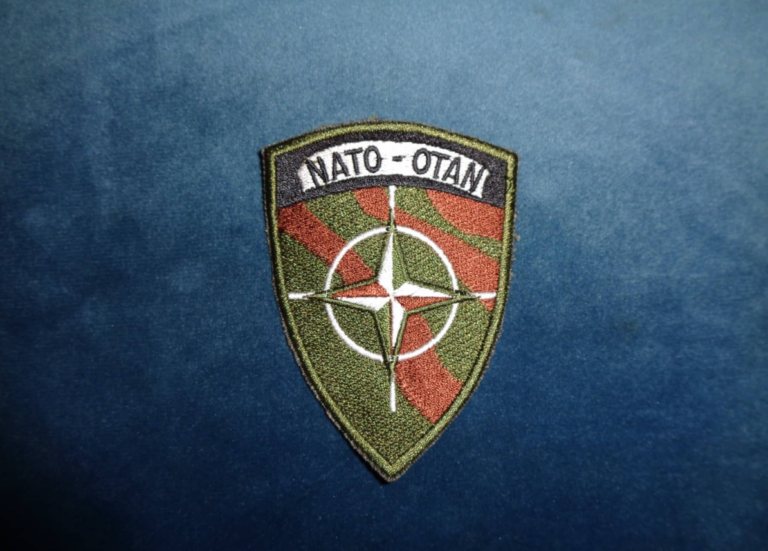
In an exclusive interview, Andres Munoz Mosquera, as a NATO expert, elaborates on various reflections surrounding the central topic of this article. In relation to the field of Security / Defense, Munoz Mosquera considers that, without legal cohesion among member-states, NATO would have disintegrated long ago. This interviewee points out that the Preamble and articles 3, 4 and 5 of the North Atlantic Treaty and article 51 of the United Nations Charter have greatly contributed to such cohesion.

Regarding influence on members of the Parliaments of NATO member-states, Munoz Mosquera acknowledges that the adversaries of said organization can try to sway decisions, by turning to lobbying firms. This expert feels that it is up to each government, and not to NATO, to determine whether legislation needs to be created in order to control lobbying firms’ activities.
Munoz Mosquera considers that most people don’t have the faintest idea of the influence that the NATO Parliamentary Assembly wields over both current members and those wishing to become part of said Alliance. This interviewee stresses that this Assembly enables characterizing NATO as a democratic political organization, comprising an intergovernmental nature, and with security and defense matters at its center of attention.
Counterintelligence
As concerns counterintelligence measures that NATO member-states’ governments could take to prevent their Parliament members to be the subject of foreign influence operations by NATO’s adversary states, Munoz Mosquera believes there are advantages in revealing to operators what is going on in the legal battlefield both in peacetime and in times of crisis. According to Andres Munoz Mosquera, this will broaden operators’ horizons regarding the impact of legal matters in the current strategic competition.
Munoz Mosquera clarifies that the only NATO body with legal operations capacity (the designation given to lawfare at this organization) is SHAPE. This expert explains that, as part of SHAPE, said operations include the following aspects:
-legal vigilance or legal intelligence, that is, monitoring and assessing adversaries’ legal moves
-obtaining open-source information from adversaries
-creating awareness and providing training in relation to legal, intelligence, hybrid and strategic communications staff.
Munoz Mosquera underlines that all this seeks to back NATO leadership with information aimed at decision-making. This interviewee adds that adversaries have seriously undertaken actions that break the Rule-of-Law under the guise of false legality and legitimacy.
Portuguese Internal Intelligence Service (PIIS)
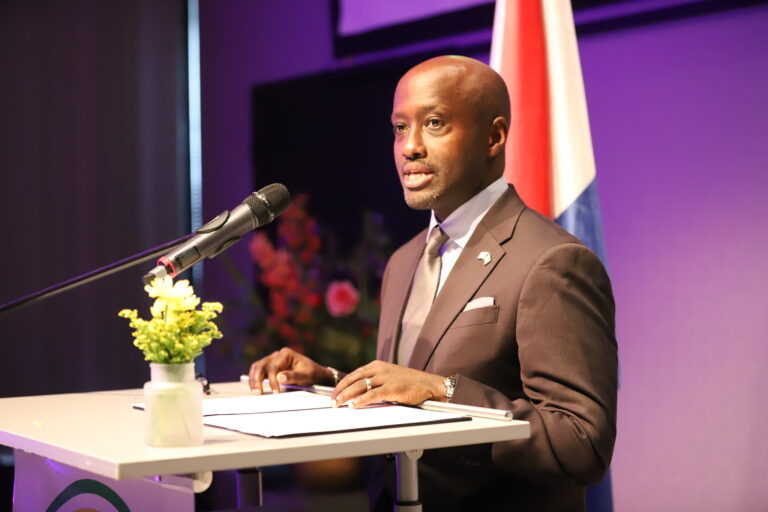
According to PIIS Director Adélio Neiva da Cruz, this body’s mission includes understanding and examining the phenomena matching various types of threats, such as foreign interference, with negative effects on economic sovereignty and national security. The PIIS Director maintains that, in fulfilling its missions, the organization that he heads cooperates with NATO and the EU in a variety of areas, namely interference from hostile States. Portugal is a member-state of both organizations.
Neiva da Cruz asserts that there is a relationship between Portugal’s domestic security and European domestic security, as part of a common space comprising freedom, security and justice. In this regard, the PIIS Director makes reference to a document which was recently approved with an outlook for the EU’s next decade: A Strategic Compass for Security and Defence. Nevertheless, this interviewee stresses that, as part of the EU, article 4(2) of the Treaty of Lisbon (May 9, 2008) sets forth that each member-state is solely responsible for its own national security.

Neiva da Cruz adds that the PIIS comprises activities that raise various private and public bodies’ awareness to counterespionage, warning them of issues related to influence and interference in Portugal, so as to protect classified and / or sensitive information. In terms of counterintelligence, Neiva da Cruz exposes that, within the current context of war economy and changes in world geopolitics, one of PIIS’ main objectives includes developing operational cooperation and exchanging information among the various authorities in outlining a common legal basis, using more effective methodologies, by turning to new tech tools and applications.
Adélio Neiva da Cruz considers that PIIS remains attentive to diverse situations where national security is called into question, inter alia:
- covert operations aimed at recruiting Portuguese nationals with access to relevant information, chiefly information that is protected with security measures, in the political, economic, diplomatic and military spheres;
- electronic access to communication networks and databases where valuable information is found.
Conclusion
This article addresses hostile foreign influence / interference activities in relation to political affairs of a given country. Said activities can be conducted through a variety of means, with this piece highlighting lobbying firms and the media. Targets include politicians and political organizations. Private or public bodies from another Government, including intelligence services, could be behind hostile foreign influence / interference exerted over a certain country. From the outset, this can be politically countered by creating laws, when this becomes necessary. Several countries have been regulating influence activities geared to politicians and political organizations.
Lawfare and legal intelligence
This way, lawmakers are particularly important, thereby making them the targets of hostile foreign influence / interference. This falls under lawfare and legal intelligence, both of which are increasingly relevant in the sphere of international relations. In this regard, a number of issues are raised regarding sovereignty, security and national defense.
The previously referred matters concern diverse national and international organizations, as seen with PIIS and NATO, respectively. The latter undertakes several activities as part of legal operations, such as legal vigilance or legal intelligence in relation to adversaries.
Concerning Portugal, PIIS remains attentive to possible covert operations in the political, economic, diplomatic and military spheres. PIIS cooperates with NATO and the EU, since Portugal is a member-state of both international organizations. However, the missions conducted by PIIS as a domestic body are vital to Portugal’s security.
About the authors:

Jorge Marinho PhD in Communication Sciences, BA in International Journalism.

Júlio Ventura BA in Law, MA student in Political Science and International Relations at the Portuguese. Catholic University (Lisbon, Portugal), member of the European Parliament trainee (Brussels, Belgium).
References
- A Strategic Compass for Security and Defence. Retrieved 3.7.2023 from https://www.eeas.europa.eu/sites/default/files/documents/strategic_compass_en3_web.pdf
- Consultation on a Foreign Influence Transparency Registry (March 3, 2023). Retrieved 30.3.2023 from https://www.canada.ca/en/services/defence/nationalsecurity/consultation-foreign-influence-transparency.html
- Countering Foreign Interference (February 16, 2023). Retrieved 30.3.2023 from https://www.homeaffairs.gov.au/about-us/our-portfolios/national-security/countering-foreign-interference
- Douek, E. (July 11, 2018). What’s in Australia’s New Laws on Foreign Interference in Domestic Politics. Retrieved 22.3.2023 from https://www.lawfareblog.com/whats-australias-new-laws-foreign-interference-domestic-politics
- Enhancing Foreign Influence Transparency: Exploring Measures to Strengthen Canada’s Approach (March 10, 2023). Retrieved 22.3.2023 from https://www.publicsafety.gc.ca/cnt/rsrcs/pblctns/2023-nhncng-frgn-nfluence/index-en.aspx
- Espionage and Foreign Interference Threats (June 2020). Retrieved 28.3.2020 from https://protectivesecurity.govt.nz/assets/Campaigns/PSR-ElectedOfficials-spreads.pdf
- Eurydice (June 8, 2022). Retrieved 3.7.2023 from https://eurydice.eacea.ec.europa.eu/national-education-systems/portugal/historical-development
- Férey, A. (April 2022). Towards a War of Norms? From Lawfare to Legal Operations. Retrieved 1.4.2023 from https://www.ifri.org/sites/default/files/atoms/files/ferey_lawfare_2022_us.pdf
- Fildes, N. (February 10, 2022). Australia Foils ‘Puppeteer’ Plot to Infiltrate Parliament. Retrieved 30.3.2023 from https://www.ft.com/content/0eee8866-07ec-4ebc-9a5a-d32a883f2ae4
- Foreign Agents Registration Act. Retrieved 3.4.2023 from https://www.justice.gov/nsd-fara
- Foreign Interference and You. Retrieved 20.3.2023 from https://www.ualberta.ca/research/media-library/foreigninterferencehandout-digital.pdf
- Foreign Interference: Threats to Canada’s Democratic Process (July 2021). Retrieved 30.3.2023 from https://www.canada.ca/content/dam/csis-scrs/documents/publications/2021/foreign-interference-threats-to-canada%27s-democratic-process.pdf
- Foreign Interference through Social Media (March 13, 2020). Retrieved 21.3.2020 from https://www.lawsociety.com.au/sites/default/files/2021-04/20200313_Submission_to_the_Select_Committee_on_Foreign_Interference_th.pdf
- 2017 Foreign Policy White Paper. Retrieved 27.3.2023 from https://www.dfat.gov.au/sites/default/files/minisite/static/4ca0813c-585e-4fe1-86eb-de665e65001a/fpwhitepaper/pdf/2017-foreign-policy-white-paper.pdf
- Foreign Threats to the 2020 US Federal Elections (March 10, 2021). Retrieved 31.3.2023 from https://www.dni.gov/files/ODNI/documents/assessments/ICA-declass-16MAR21.pdf
- Homeland Security Advisory Council Interim Report of the Countering Foreign Influence Subcommittee (May 21, 2019). Retrieved 20.3.2023 from https://www.dhs.gov/sites/default/files/publications/ope/hsac/19_0521_final-interim-report-of-countering-foreign-influence-subcommittee.pdf
- Hostile Information Campaigns and Foreign Interference. Retrieved 30.3.2023 from https://www.sg101.gov.sg/defence-and-security/current-threats/hics-and-foreign-interference
- Interinstitutional Agreement of 20 May 2021 between the European Parliament, the Council of the European Union and the European Commission on a Mandatory Transparency Register. Retrieved 3.4.2023 from https://eur-lex.europa.eu/legal-content/EN/TXT/?uri=uriserv:OJ.L_.2021.207.01.0001.01.ENG
- Introduction to Foreign Interference (Countermeasures) Act (FICA). Retrieved 1.4.2023 from https://www.mha.gov.sg/fica
- Jones, K. (January 2023). Legal Loopholes and the Risk of Foreign Interference. Retrieved 20.3.2023 from https://www.europarl.europa.eu/RegData/etudes/IDAN/2023/702575/EXPO_IDA(2023)702575_EN.pdf
- Kalniete, S. (February 8, 2022). Report on Foreign Interference in All Democratic Processes in the European Union, Including Disinformation. Retrieved 28.3.2023 from https://www.europarl.europa.eu/doceo/document/A-9-2022-0022_EN.html
- Karaskova, I., Simalcik, M. (June 2020). Limited Welcome: Protecting Media from Hostile Foreign Influence. Retrieved 4.4.2023 from https://www.amo.cz/wp-content/uploads/2020/06/AMO_Limited-welcome-protecting-the-media-from-hostile-foreign-influence.pdf
- Linvill, D., Warren, P. (October 23, 2020). Foreign Influence Operations Don’t Need to Succeed to Be Effective. Retrieved 1.4.2023 from https://www.lawfareblog.com/foreign-influence-operations-dont-need-succeed-be-effective
- Mansted, K. (February 2021). The Domestic Security Grey Zone: Navigating the Space Between Foreign Influence and Foreign Interference. Retrieved 22.3.2023 from https://nsc.crawford.anu.edu.au/sites/default/files/uploads/nsc_crawford_anu_edu_au/2021-02/nsc_foreign_interference_op_2021.pdf
- McFarland, K., Somerville, A. (October 29, 2020). How Foreign Influence Efforts Are Targeting Journalists. Retrieved 22.3.2023 from https://www.washingtonpost.com/politics/2020/10/29/how-foreign-influence-efforts-are-targeting-journalists/
- Milosevich, M. (February 1, 2021). How Soft Power Turns into Malign Influence and Foreign Interference? Retrieved 22.3.2021 from https://www.europarl.europa.eu/cmsdata/229827/EP%2001.02.2021%20Mira%20Milosevich.pdf
- Mykkanen, M. (2023). The Elements of Advocacy: Finnish PR Consultant’s Media Strategies in Lobbying. Retrieved 24.3.2023 from https://jyx.jyu.fi/bitstream/handle/123456789/85347/Mykk%C3%A4nen%20-%20Finnish%20PR%20Consultants%27%20Media%20Strategies%20in%20Lobbying%20-%20Final%20draft.pdf?sequence=1
- North Atlantic Treaty. Retrieved 1.7.2023 from https://www.nato.int/cps/en/natolive/official_texts_17120.htm
- Oleshchuk, P. (2020). The Instruments of Modern Media Lobbying. Retrieved 23.3.2023 from http://www.fhijournal.org/journals/2020/14/FHI_14_Oleshchuk.pdf
- Permanent Mission of Portugal to the United Nations: Ministry of Foreign Affairs. Retrieved 3.7.2023 from https://onu.missaoportugal.mne.gov.pt/en/about-portugal/history
- Pinus, J., Hau, M. (2023). Lawfare: New Trajectories in Law. Retrieved 29.3.2023 from https://www.routledge.com/Lawfare-New-Trajectories-in-Law/Pinos-Hau/p/book/9781032267722
- Pronk, D. The Return of Political Warfare. Retrieved 31.3.2023 from https://www.clingendael.org/pub/2018/strategic-monitor-2018-2019/the-return-of-political-warfare/
- Public Safety Canada (August 20, 2021). Retrieved 3.7.2023 from https://www.publicsafety.gc.ca/cnt/trnsprnc/brfng-mtrls/prlmntry-bndrs/20210625/08-en.aspx
- Rahman M. (September 3, 2019). Defending Singapore Against Foreign Interference. Retrieved 1.4.2023 from https://www.rsis.edu.sg/wp-content/uploads/2019/09/CO19171.pdf
- Robinson, et alii (2018). Modern Political Warfare: Current Practices and Current Responses. Retrieved 31.3.2023 from https://www.rand.org/pubs/research_reports/RR1772.html
- Schaffer, A. (May 23, 2022). The Justice Department Wants to Bring Foreign Influence Law into the Social Media Age. Retrieved 27.3.2023 from https://www.washingtonpost.com/politics/2022/05/23/justice-department-wants-bring-foreign-influence-law-into-social-media-age/
- Siman, B. (February 2022). Hybrid Warfare Is Not Synonymous with Cyber: The Threat of Influence Operations. Retrieved 29.3.2023 from https://www.egmontinstitute.be/app/uploads/2022/02/spb155-siman-final-version_0222.pdf?type=pdf
- Tenove, C. (January 17, 2018). The Digital Attack on Democracy. Retrieved 27.3.2023 from https://policyoptions.irpp.org/fr/magazines/january-2018/the-digital-attack-on-democracy/
- Treaty of Lisbon (May 9, 2008). Retrieved 3.7.2023 from https://eur-lex.europa.eu/legal-content/EN/TXT/HTML/?uri=OJ:C:2008:115:FULL
- Treisman, R. (March 10, 2023). Georgians Have Been Protesting a Controversial Bill for Days. Lawmakers Scrapped It. Retrieved 14.4.2023 from https://www.npr.org/2023/03/10/1162548795/georgia-foreign-agent-law-protests
- Tromblay, D. (July 13, 2017). Congress and Counterintelligence: The Unique Vulnerabilities of the U.S. Congress to Malign Foreign Influence. Retrieved 28.3.2023 from https://www.lawfareblog.com/congress-and-counterintelligence-unique-vulnerabilities-us-congress-malign-foreign-influence
- United Nations Charter. Retrieved 1.7.2023 from https://www.un.org/en/about-us/un-charter/full-text
- Vladimirov, M., Velcheva, B. (2021). Vulnerability to Foreign Influence in Bulgaria: Factors, Techniques and Recommendations. Retrieved 21.3.2023 from https://www.vulnerabilityindex.org/src/files/Foreign_Malign_Influence_in_Bulgaria_brief.pdf
Interviews
*This interview was conducted, via email, on July 1, 2023.
** This interview was conducted, via email, on June 27, 2023.
Figures
1. Photo by: Jorge Marinho
2. Retrieved 7.7.2023 from https://www.sis.pt/quem-somos/organograma-e-estrutura
Published by Marinho Media Analysis / July 10, 2023
http://www.marinho-mediaanalysis.org/articles/lawfare-and-foreign-influence-on-politicians-nato-and-portuguese-internal-intelligence-service-insights