Costa Rica joins Rondine’s “Leaders for Peace” initiative

0

Rondine’s President Franco Vaccari and H.E. Mr. Ronald Flores Vega, Ambassador of Costa Rica in Rome.

By Guido Lanfranchi.

One year ago, at the United Nations headquarters in New York, an innovative conflict resolution NGO called Rondine launched the Leaders for Peace campaign. This seemingly utopic initiative asked all 193 UN member states to give up a symbolic part of their defense budgets, in order to invest it in scholarships for future peace leaders, as well as in the introduction of human rights education in their national education systems. Today, Rondine’s campaign already seems a bit less utopic, thanks to the declaration of support received by the government of Costa Rica. 

Costa Rica is known internationally for its strong commitment to peace. In 1949, in the wake of a civil war, the country decided to renounce having an army, leveraging the ensuing savings to invest in other sectors, especially education and sustainable development. The country’s commitment to peace was further strengthened over the following decades, when the government officially declared its policy of neutrality and became the host of important institutions such as the Inter-American Court of Human Rights and the UN’s University for Peace.

Rondine alle Nazioni Unite – Campagna Globale Leaders for Peace.

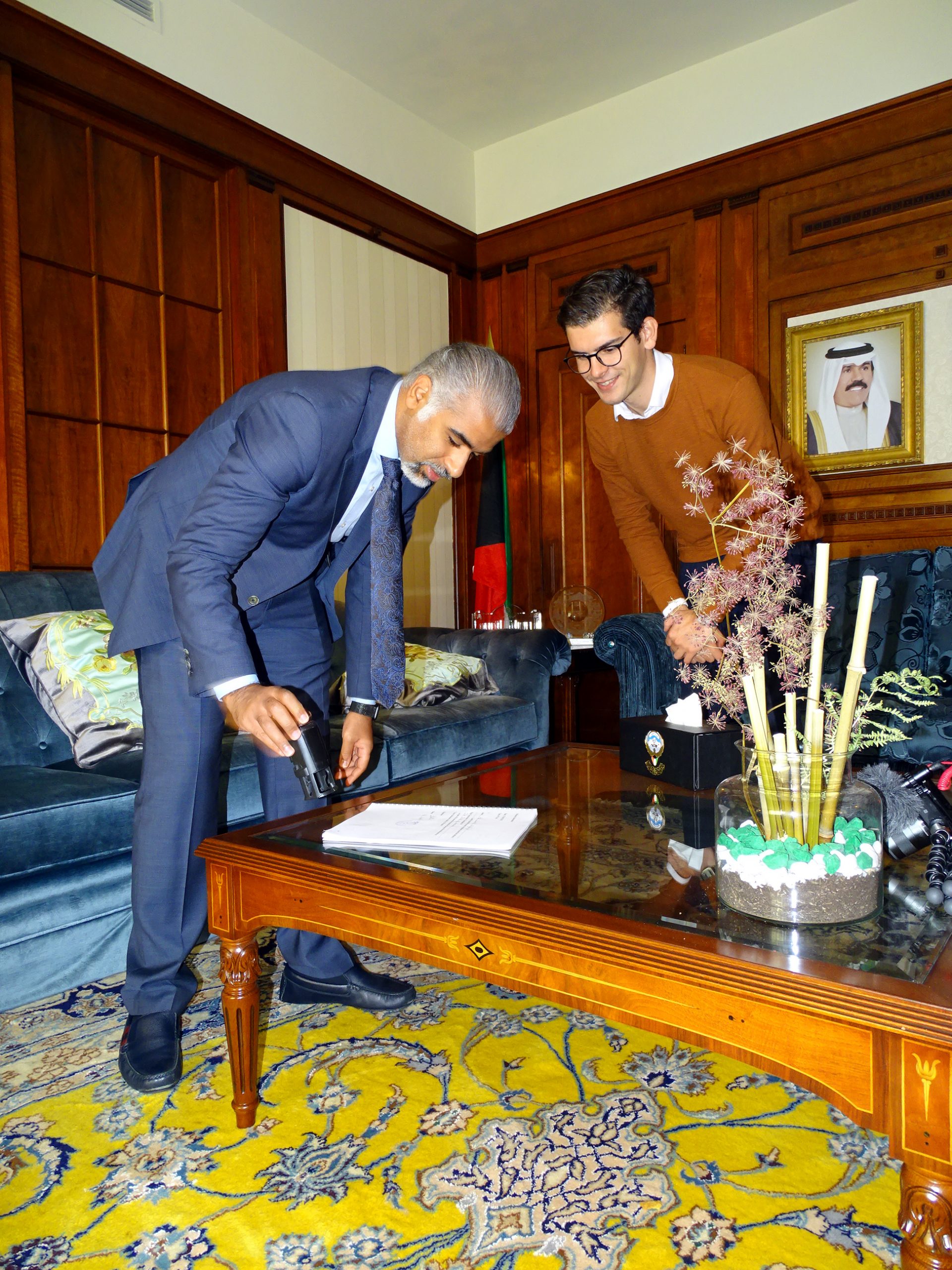
On July 23rd, 2020, Costa Rica reconfirmed its commitment to peace when H.E. Mr. Ronald Flores Vega, the Costa Rican Ambassador in Rome, formalized his country’s support for the Leaders for Peace campaign. The signature took place at the Costa Rican Embassy in Rome, in front of Rondine’s President Franco Vaccari, and in video-contact with Yanine, a Rondine alumni who joined in from her hometown in Colombia. 

Costa Rica is the second nation to officially support the Leaders for Peace campaign – joining Italy, whose commitment was formalized by Prime Minister Giuseppe Conte a year ago.

Moreover, the campaign has a number of international supporters for its high-level events, such as Jordan, Armenia, Sierra Leone, and the European Union, and it has also received a moral endorsement from the Holy Father, Pope Francis. As Mr. Vaccari proudly noted during the ceremony of signature at the Costa Rican Embassy, “the international community recognizes the need to train a new generation of young leaders for the world to come”. 

In parallel to the Leaders for Peace campaign and the advocacy vis-à-vis governments, Rondine’s activities have also continued on different fronts, including the organization of events and public debates. This has not taken place without hurdles, most notably due to the current pandemic and the ensuing impossibility of holding in-person meetings at Rondine’s Citadel. Yet, the organization did find a way around these problems by moving its events online – thus creating the “Rondine World Room” initiative, a series of five online roundtables on youth leadership and conflict resolution. The virtual events have taken place through May and June 2020, and they have covered different geographic regions, starting with the Americas and the moving eastwards to the Mediterranean basin, Europe, Africa, and finally the Caucasus. 

The World Room discussions have featured the presence of many different actors. Rondine students, both current ones and alumni, have naturally been part and parcel of the debate, contributing by sharing their experiences as students in Rondine and – in some cases – as current leaders in their countries. Moreover, to enrich the discussion, the organization has also reached out to a large pool of high-level speakers, including ambassadors from nine different countries, representatives from supranational institutions such as the EESC and ECOWAS, as well as international experts in the field of peacebuilding from Italy and abroad. 

Despite any hurdle, Rondine’s effort to contribute to a more peaceful world continues undaunted. 

About the author:

Guido Lanfranchi is a student and young professional in the field of international affairs. He has pursued his studies both at Leiden University and Sciences Po Paris, where he is currently enrolled. In parallel, he has been gaining professional experience through internships (first at the Council of the European Union, and currently at Clingendael Institute), as well as by working as reporter and associate editor for Diplomat Magazine The Netherlands. His research and work focus on the Middle East and Africa, and especially on conflict situations in these regions.

Wards the Pan-European Recalibration

0

An interview with Dr. Zeno Leoni on a side of Vienna Process Conference

Seventy-five years after the Victory Day and Nuremberg Trials, the Vienna Process has leveraged on the current time of crisis in order to empower a new process for further all-Europe integration that could put at its centre citizens and protect these from the socio-economic and security challenges of our times.

Among the speakers in the first of the three mesmerising conference panels, there was Dr. Zeno Leoni, an expert on the crisis of the Liberal International Order from the Defense Studies Department of King’s College London.

In his absorbing speech, he sought to address the need to rebalance state power and market forces after the market failures seen over the last twelve years.

Dr. Leoni, why it is important to celebrate the anniversary of Nuremberg Trials and what does it have to do with COVID-19?

Thanks for this question. Clearly, we are not at war anymore and especially in the Western world human and political rights are solid achievements.

Yet, the lesson of C-19 but also of the Great Recession of 2008 is that if at the end of WWII it was necessary to work on the values of the EU Charter of Fundamental Rights, in the 21st century we need a Nuremberg for social rights. We are facing a time of socio-economic instability and we need these rights to be secured if we do not want to see a social “carnage”, to use a language that draws on what happened eighty years ago.


What has been unveiled by the current pandemic outbreak?

Many countries have been slow to react or have not reacted at all. I wonder whether this is because we prioritize economic interests over life. During the pandemic, as the C-19 was putting under stress national health systems of different countries, EU institutions appeared to be more interested in approving the Mechanism for European Stability, while there was no sign of a coordinated effort to tackle this emergency.

I am not arguing that eugenics is back in fashion but both the Great Recession and C-19 demonstrate that Darwinism, whether biological or social, is still among us because if you are strong you move forward but if you are weak you risk perishing.

Why has the West been so unprepared?

I think the pandemic has showed that Western societies live their lives not in a strategic manner. We have become a society that thinks short-term, in a consumerist manner, that looks for quick gains as opposed to long-lasting goods and effects.
In terms of strategy as science, we don’t stockpile anymore because why stockpiling for something – like masks – that has little market value? We do not have plans in place, either.
In terms of strategy as art, we don’t study anymore, we don’t draw lessons from what others do, we are not creative and we do not have skills for improvising.

From the viewpoint of strategy as modus vivendi we also don’t live strategically. We stopped being a healthy population over the last decades, we don’t value things like work out and diet as these have become subordinated to work patterns – this is a trend that we have seen among Mediterranean people, in particular, as they used to be the healthiest. A healthy population would have saved many lives given that we know C-19 tends to kill more those who have pathologies that can be attenuated by a good lifestyle.


How can we get out of this stalemate?

The simple answer for this is “with more state”. For too many years – first with Washington Consensus, then with EU-led fiscal rigour – the state in the West has retrenched. This is not good news, as we can see. We need a state to manage strategic sectors – like health – with the necessary amount of financial resources. But we also need the state to provide society with strategic vision at any level in order not only to face future threats but also to prevent them – as in the case of working towards a healthy, strong population.

What role can the EU play in this?

The EU could become a more integrated actor not merely concerned with fiscal rigour but also with a tangible, implementable strategy that could prepare us to deal, in a multilateral manner, with the future global trends – migration, urbanisation, climate change, pandemics, great power rivalry. However, it still is overly fragmented by three factors. Firstly, German self-interested leadership. Secondly, the US remains a centrifugal pole of attraction which does not allow a full process of integration in the continent.

Finally, the backlash of globalisation has undermined the faith of people on the EU. Also, Brussels have to follow its own interest and urgently seeks recalibration, a new approach towards both Mediterranean and Russia – this is a Sine Qua Non, if we are any serious about future of this continent. 

Germany and France before others have the power to lead this change but they must put their selfish interests aside. 

*                *                      *                      *

The first July day of 2020 in Vienna sow marking the anniversary of Nuremberg Trials with the conference “From the Victory Day to Corona Disarray: 75 years of Europe’s Collective Security and Human Rights System – Legacy of Antifascism for the Common Pan-European Future”. This was probably the first conference in Europe of large magnitude after the lockdown. It gathered over twenty speakers from Canada to Australia, and audience physically at the venue, and many more online.

The conference was organised by four partners; the International Institute for Middle East and Balkan Studies (IFIMES), Modern Diplomacy Media Platform, European Perspectives Academic Journal, and Culture for Peace Action Platform, with the support of the Diplomatic Academy of Vienna that hosted the event in its prestigious historical setting.

Wishing to turn this event into a lasting process, the four implementing partners closed the gathering by marking the start of the process, tentatively named – Vienna Process: Common Future – One Europe. The follow up event is already scheduled for early October in Geneva to honour the 75th anniversary of the San Francisco Conference. Similar call for a conference comes from Barcelona, Spain which was a birthplace of the EU’s Barcelona Process on the strategic Euro-MED dialogue.

Diplomatic life, a life in episodes

By Alexandra Paucescu.

A pile of numbered boxes, each one caring things but also memories of our life, ready to be shipped away…it is a picture that so many of us, who live a diplomatic life, have seen at least once, but still gives us chills, every time it happens…

The view is proof that a chapter in our life has come to an end and another one is about to unfold. Melancholy inevitably kicks in, as we try to recall now the last five years spent in a city that became our home, and other years before that…

It was like yesterday that we first moved abroad, for our first diplomatic posting… and then, few years later, our first departure… I remember those empty corridors of our apartment in Vienna, where our children had learned their first steps, where we had lived such happy, cheerful times… I remember the innocence in my kids’ eyes and the anxiety for a new beginning, in ours…

Moving is always painful. After all, we are talking about what psychologists say it is one of the most stressful situations in someone’s life.

But ending a diplomatic posting is way tougher. Each time you arrive in a new country you start dreaming about the life you are going to build for yourself and your family, a completely new reality that you are about to live in and try to make familiar. You discover new places, you fall in love with new cultures that you immerse in and you make lifetime friendships. Day by day, you start to understand and to think like the locals, your children start having their own connections, so do you… You surprise yourself singing songs in languages you never understood before, at some point you will have your favorite restaurant around the corner, specific flavors that soon will become your preferred ones… and then… it is time to move again, to start fresh… Years fly like seconds and, in the blink of an eye, you find yourself all over again, in the same situation, the circle is full once more.

If it is going back to your home country or to another new destination, it really makes no difference… the feeling of displacement is almost similar, the stress of novelty is there. When you return home, you have maybe the advantage of being reunited with your extended family and closest friends, that gives you a small sense of comfort, but, let’s face it… nobody stays the same… places change in your absence, people change and slowly distance themselves and you still need time to feel reconnected to everything and everybody, you need to build ‘social bridges’ once again. The feeling of belonging is though stronger than when you move to a foreign country, where you don’t have initially any common ground, at least for the first few months. Another destination, another cycle…

With each new move, we transform, we become wiser, more patient and more resilient. We learn to wait, to communicate effectively and to live the present, not to look back to the past often and also, not to be too anxious about the future.

But how do we get to keep the same enthusiasm and excitement we had when we first started this nomadic life, following around the world our spouses, who work for the Foreign Service?

How can we protect our heart not to be broken from yet another painful departure? How do we find the strength to encourage our children to look forward to a new reality, not showing our own struggle? How can we permanently support our ‘halves’ and also stay focused and take care of countless necessary organizational details, in just a few months or even weeks?

I will tell you how:  it’s LOVE. Love is what keeps us, the diplomatic spouses, going. Love for our family and the strong belief that this is our important contribution to the career of our partner, this is what gives us the strength to live a life of diplomatic episodes, like a perpetual repetition of the legend of Sisyphus, hoping it will all be worth it in the end.

We look with confidence to the future, close the door to the past and bravely turn the page to yet another chapter of our own story, hoping that what lies out there will be a brilliant sequel of a lifetime adventure. Each one of us has a marvelous, best-seller story of life to tell, each one of us mastered the art of reinvention and adapting in a world that is not always supportive, nor fair.

There is this saying: ‘make future plans, if you want to make God laugh’. Indeed, life of diplomats is always unpredictable, surprising and emotionally consuming. 

I don’t know what future holds, where life is going to take me and my family, how steep the slopes of this roller coaster called life will be, but I truly hope that, in my senior years, I will look back and say : ‘Oh, what a fine ride my life was!’.

About the author:

Alexandra Paucescu (42)  – Romanian, born in Bucharest. Former exchange high-school student in the USA,  has a university degree in Management and a Master in Business, she speaks Romanian, English, French, German and Italian.

Turned diplomatic spouse by the age of 30, mother of two, active volunteer for UNICEF and United Nations Women’s Guild, author of ‘Just a diplomatic spouse’ book. Loves music, skiing and tennis.

Vienna Process: From Culture for Peace to Culture of Peace

0

By Anastasiia Pachina.

A conference whose theme was “From the Victory Day to Corona Disarray: 75 years of Europe’s Collective Security and Human Rights System (Legacy of antifascism for the common pan-European future)” was held on July 1 at the Diplomatic Academy in Vienna. One of the very few real events organized in Europe in past 6 months, this one-day conference brought together leading speakers from different continents and spectrums grouped in three panels. This highly anticipated international event thoroughly discussed on WWII legacy and antifascism, multilateralism and cross-continental affairs, but also about culture, science, arts and sports. 

On a first glance, one may wonder what the panel on culture, sports and arts have to do with topics on politics and diplomacy.

An Austrian top diplomat, historian and current Diplomatic Academy director, Emil Brix – who welcomed participants on behalf of the organizers – listed three essential questions under discussion. The first is legacy and security that remains relevant even 75 years after the end of World War II. The next one is different aspects of culture (education, art, science, academic cooperation). Or in his own words: “the topic we should all talk about… Culture and cultural differences are the main issue to be considered if we want the universal system to work the way we want… Cultural cooperation remains one of the main problems in the EU.” The last question listed by Ambassador Brix is that of the future. 

Conference Organiser and Panelists_Panel ‘From Culture for Peace to Culture of Peace’

Culture is Peace

Inclusion of culture on the agenda of the conference ‘From the Victory Day to Corona Disarray: 75 years of Europe’s Collective Security and Human Rights System’ is not an accident. Various spheres of culture and their tools along with geopolitics, diplomacy, security, and history were intensely used for the past 75 years in maintaining the established peace and contributing to the prosperous society. Experts from different fields of culture including science, arts, and sports were invited to present their vision under the II Conference’s Panel.

Tellingly, the centrally positioned II Panel of this day-long international gathering – that was successfully bridging the I and the III panel – borrowed its very title ‘From Culture for Peace to Culture of Peace’ from the Action Platform Culture for Peace which was one of the principal organizers of this high level conference.  

Ian Banerjee, Urban Futurist, University of Technology Vienna

The first Panel’s speaker was Ian Banerjee, an urban researcher at the Vienna University of Technology with his 20 years of experience in international urban development and urban innovation. His take titled: “Inventing Peace – Urban culture, creativity and the role of immaterial values in the digital age” was dedicated to urban planning that is able to make the world a more peaceful place. He also referred to digitalization which is changing and shaping a new world where ‘humans and objects are becoming rational nodes embedded in large dynamic complex systems in entangled interdependencies. Prof. Banerjee’s vision of ways for a prosperous society as well as his particular example of the transformation of the city of Medellin sparked vivid dynamics of this Panel. 

Lizzie Oshea

The next talk was presented by a lawyer, writer, and broadcaster from Australia, Lizzie O’Shea, whose writings were published among others by the New York Times, The Guardian, and The Sydney Morning Herald, and whose book ‘Future Histories’ has become a bestseller. Her presentation was focused on topics of privacy, human rights and surveillance in the online environment. Ms. O’Shea extensively talked on the preconditions that societies – supported by the diligent state – need in order to achieve the culture of peace state. In her view, these are the ties that bound; with a peace as the best social fabrics that evolves then into a societal culture, as the lasting civilizational vertical.

Miriam Schreinzer

The theme of music and its role in maintaining a balanced and harmonious world was introduced by Miriam Schreinzer, musicologist, cultural manager, member of the Viennese Regional Music Advisory Board, and fundraiser. She talked about peace activists, scientists, and musicians such as Yoko Ono, David Adams, to name but few.

Based on David Adams’s thesis, Miriam Schreinzer defined that a culture of peace consists of values, attitudes, behaviours, and ways of life determined by non-violence, human rights, tolerance and solidarity. She also presented two organisations Jeunesses Musicales Internationales and Simon Bolivar Symphony Youth Orchestra of Venezuela (former El Sistema) whose mission is to enable youth to develop through music. 

Hande Saglam

The theme of performing audio arts was continued by Dr. Hande Saglam. She is an ethnomusicologist, expert on migrant cultures and Deputy Director at Department of Folk Music Research and Ethnomusicology of the Music University Vienna.

Dr. Saglam elaborated on role that music plays in the development and diversity of the communities and on bringing parallel societies into contact with each other. Through the history of migration in Europe and Austria, she traced the formation of migrant communities. 

Lavrence Gimeno

Culture of Peace is Cross-generational 

Since the important mission of the Unifying Potentials for Future – Culture for Peace Initiative is to give the floor to the young generation; there were youth representatives at the panel as well. One of them was Lawrence Gimeno, a founder & CEO of ACSL (Austrian College Sports League), the fastest expanding and probably the largest University Sports platform in Europe.

Using his startup as an example, Mr. Gimeno shared his vision of how sports can bring youngsters together and support a functional, stable society that rests on culture of peace. He passionately talked about the history and growth of ACSL from its very idea inception to the present. 

Anastasia Lemberg-Lvova.

Next to the Panel’s moderator, the youngest Conference’s speaker was Anastasia Lemberg-Lvova, an artist living in Estonia. Based on her 10-years engagement in the European Youth Parliament as well as art works that are inspired by the views, attitudes, reflections and visions of the European youth generation, Ms. Lemberg-Lvova introduced how the arts make its contribution to the development of a society in Europe – all which begins by the young generation. She also introduced her new artwork and exhibition that is called “Don’t avoid what is easy” paying attention to the rights of people to alter and adjust the environment for themselves.

All in all, the panel included experts from various fields of culture. Talks were engaging and content rich, comprehensively covering topic of culture as a whole and more specific issues related to music, sports and visual arts. Although Academy’s Director Brix said that contemporary challenges are not really new, this Panel surely offered novel ways to discuss and solve them. 

Peace is Culture

Interestingly, several speakers of the I as well as of the III Panel praised the work of the Culture for Pace Action Platform with their inclusion of culture of peace into a debate about the future of Europe. Former EU Commissioner and current President of famous Alpbach Forum, Dr. Franz Fischler ‘wished that the EU turns more vocal on culture as unifying aspects for the future’.

Former Austrian President and current Ban Ki-moon Center Co-chair, Dr. Heinz Fischer stated that culture of peace is culture of cooperation, while the current Vice-President of the EU Commission, Margaritas Schinas reminded all that ‘Europe is essentially peace project’ and that the culture of peace is a ‘journey far from being complete’.    

About the author:

Anastasiia Pachina, Sociologist – Charles University, Prague. She is a Program manager – with the Culture for Peace Action Platform, and a marketing researcher in IPSOS CZ.

Messika Paris’s clipping earrings

0

Parisian high jewerelly designer Valérie Messika has developed this year a collection that accessorises the entire ear, not merely the earlobe, without the need for new piercings. A novel, and fashionable clip system was designed that allows one to accessorise the ear in a remarkable manner, and wear these earrings all along the ear.

Born in Paris in 2005, the label Messika belongs to Valérie Messika, daughter of the famous diamond dealer André Messika. Messika is known to sublimate the diamond, to push back the limits and to constantly seek excellence; values transmitted from a father to his daughter.

Mono Creole My Twin – Image by Messika Paris

For further information:
https://www.messika.com/fr/joaillerie/nouveautes/boucles-oreilles-diamant

Col. Douglas Macgregor for the US Embassy in Berlin

0

Monday, 27 July 2020, Washington D.C., USA: Ret. Col. Douglas Macgregor, PhD, is to be appointed USA ambassador to Germany. 

The retired army colonel left the US Army in 2004, however remains active as an author and consultant on military and security matters. With his writings on military issues, he has contributed to the transformation of the US Army, NATO as well as the Israeli armed forces. Macgregor was a top planner for NATO’s air mission in Kosovo back in 1999.

Col. Macgregor is a native of Philadelphia, Commonwealth of Pennsylvania, and holds a PhD in international relations from the University of Virginia completed in 1987. 

Until Col. Macgregor is accredited to Germany, the Chargée d’affaires, Robin Quinville continues to lead the US Embassy to Germany as per 1 June 2020. 

For further information:
About the Ambassador-designate: https://en.wikipedia.org/wiki/Douglas_Macgregor

https://www.miragenews.com/us-president-trump-announces-names-for-key-administration-posts-28-july/

About Chargée d’affaires, Robin Quinville: https://de.wikipedia.org/wiki/Robin_Quinville

Image through Wikipedia free licence (https://commons.wikimedia.org/wiki/File:IMG-20200305-WA0011.jpg)

Open Letter to British Vogue about Recent Dominican Republic Cover

0

By Geovanny Vicente Romero.

Dear @BritishVogue and @edward_enninful:

Vogue’s #ResetChallenge inspired readers to submit images of captivating landscapes that carry deep meaning to them for the magazine’s August cover. Nine of the top 10 winning images portrayed the traditional, splashy beauty of travel destinations from Japan, Iceland to Mozambique. 

One of these photos stood out from all the rest—an image juxtaposing the beauty of the Dominican Republic’s natural landscape with that of plastic waste. A Dominican artist and environmental activist, Carmen Danae, submitted this photo as a call-to-action to aid the fragile ecosystem. Unsurprisingly, this image has sparked criticism as a non-traditional representation of the Caribbean country from the white-sand beaches and clear, blue waters people are accustomed to seeing in one of the world’s leading luxury publications. 

While Vogue’s editors took a bold decision in selecting this photo among its top ten, I can’t help but wonder if its impact is fully understood. Tourism remains a critical sector of the Dominican Republic’s economy while navigating the effects of the COVID-19 pandemic. Furthermore, the calls of environmentalists, Dominicans and tourists alike are being heard and answered.  The country’s new government led by President-elect Luis Abinader has presented detailed plans on environmental sustainability and climate change, including gradually eliminating plastic consumption, which should give us hope that a healthy ecosystem in the country will prevail. 

Vogue’s regional publications have recently showcased Dominican supermodels such as Arlenis Sosa visiting their home countries.  I urge the magazine to return soon to Dominican Republic firsthand to witness the intersection of natural beauty, vibrant culture and fashion on display at every turn. 

Best,

Geovanny Vicente Romero 

About the author:

Geovanny Vicente Romero is a columnist for CNN and Infobae based in Washington, DC. He is a political strategist, international consultant and lecturer. He’s published many articles on development, human rights, governance, democracy, elections, the environment, as well as the role of women in a society. He is the founder of the Dominican Republic Center of Public Policy, Leadership and Development (CPDL-RD). Geovanny has a masters degree from The George Washington University in political communications and strategic governance. Reach him on  Twitter Linkedin | Facebook | Instagram  

Dior ‘Croissière’ collection 2021 

0

A true celebration of Puglia’s traditional arts and crafts, the 2021 Cruise collection highlights the excellence of these priceless skills. 

From the art of weaving to Luminarie – dazzling illuminated architectures – and from the essential role of dance to the power of ritual music, the House of Dior actively supports this pluralistic and infinitely precious culture while paying homage to Nature and the region’s unique landscapes, as a land that has always been close to Maria Grazia Chiuri’s heart.

Because these many creative dialogues between Paris and Lecce began long before the health crisis and the confinement, it was essential for Dior to continue these collaborations, to support and show case the virtuosity of these artisans and artists more than ever. So that the beauty of their gestures, emotion and poetry may endure.

 In a subtle tribute to local savoir-faire, Dior silhouettes bear the motto of the workshops at the Constantine Foundation – “Amando e Cantando,” a virtuoso dialogue in the name of excellence. Echoing Christian Dior’s iconic Miss Dior dress from 1949, the artist Pietro Ruffo imagined a field with a constellation of wheat sheaves evoking a summer landscape.

A narrative of untamed nature is transposed onto shirts and shorts. True treasures of refinement, dresses punctuated with flowers and butterflies adorn the Tombolo, a precious traditional embroidery perpetuated by Marilena Sparasci. These are emblems of Puglia’s rich heritage, a source of infinite inspiration.

For further information: Audience-free Cruise show 2021: https://www.facebook.com/Dior/videos/2723150001267086/

Secretary Pompeo travels to Europe to discuss pressing issues

Mike Pompeo – Picture by CIA, Public Domain

By Guido Lanfranchi.

On July 20th-22nd, US Secretary of State Mike Pompeo travelled to the United Kingdom and to Denmark to discuss a wide range of pressing issues with his British and Danish counterparts. In his trip, Secretary Pompeo was accompanied by Ambassador Phil Reeker, Acting Assistant Secretary of State at the Bureau of European and Eurasian Affairs, who then extended his trip to Brussels in order to hold further talks with a number of Belgian and EU officials.

While in London, Mr. Pompeo met with British PM Boris Johnson and Foreign Secretary Dominic Raab, discussing a wide range of topics. On top of the list of the issues addressed by Mr. Pompeo and Mr. Raab there was the situation in Hong Kong, where the US and the UK have been aligned in condemning China’s promulgation of a new national security law, as well as broader developments in the two countries’ relations with China, including on the development of 5G infrastructure and the lessons learned from the COVID-19 pandemic. 

The two top diplomats also discussed a host of other topics, such as the UN arms embargo on Iran, the Middle East Peace Process, the two countries’ relations with Russia, as well as their cooperation in the framework of NATO – Mr. Raab explained in a joint press conference in London. Moreover, the two officials took stock of the progress in the US-UK free trade agreement negotiations, expressing their desire to further strengthen the two countries’ (already strong) commercial relations across the Atlantic Ocean.

Secretary Pompeo then moved to Copenhagen, where he held discussions on an equally broad range of pressing issues with Danish Prime Miniser Mette Frederiksen and Foreign Minister Jeppe Kofod.

At a joint press conference, Mr. Pompeo and Mr. Kofod outlined the topics discussed in their meeting. Cooperation in the Arctic was arguably one of crucial issues on the table – tackled through a quadrilateral discussion involving the foreign ministers of Greenland and the Faroe Islands too.

In addition, the US and Danish top diplomats discussed a number of other topics. On most of these, the two countries found themselves aligned. This was the case, for instance, regarding bilateral trade relations, the condemnation of China’s approach to security in Hong Kong, as well as the shared commitments to NATO. On other issues, however, the two countries expressed different views. This was clearest in the domain of climate change climate change, where Denmark still supports the Paris Agreement from which the US has instead withdrawn, as well as in that of energy security, where Copenhagen’s green light to the Nord Stream 2 pipeline has reportedly angered Washington. Despite these divergences, however, the two officials used their meeting to mend ties – with Mr. Kofod stressing that “on the fundamentals, Denmark and US is closely allies.”

While after the Copenhagen visit Mr. Pompeo travelled back to the United States, Ambassador Reeker continued his Europe tour by visiting Brussels, with the aim of holding further talks with officials from the Belgian government and especially from the European Union. A central focus of the visit was set to be the initiation of a “US-EU dialogue about China” – Mr. Reeker explained. This initiative, proposed by EU High Representative Josep Borrel and accepted by Secretary Pompeo, is aimed at creating a forum for coordinating Washington’s and Brussel’s policies vis-à-vis Beijing.

The two sides have yet to come up with a framework for this initiative, with the hope that such mechanism might “advance our shared interests on both sides of the Atlantic” – Mr. Reeker said.

_________________________

About the author:

Guido Lanfranchi is a student and young professional in the field of international affairs. He has pursued his studies both at Leiden University and Sciences Po Paris, where he is currently enrolled. In parallel, he has been gaining professional experience through internships (first at the Council of the European Union, and currently at Clingendael Institute), as well as by working as reporter and associate editor for Diplomat Magazine The Netherlands. His research and work focus on the Middle East and Africa, and especially on conflict situations in these regions.

On the JCPOA’s 5th anniversary, Iran’s Embassy in The Hague explains Tehran’s stance

His Excellency, Dr. Alireza Kazemi Abadi, Ambassador of Iran.Photography by Catherine Dailey.

By Guido Lanfranchi.

The Joint Comprehensive Plan of Action, also known as the Iran Nuclear Deal, has faced major hurdles since the United States withdrew from it in May 2018. Five years after the deal’s signature, the Iranian Embassy in The Hague explains how the US withdrawal has affected its implementation, and how the international community should address the issue of the UN arms embargo on Iran.

It was July 14th, 2015, when Iran and the so-called “P5+1” – the five UN Security Council powers (China, France, Russia, United Kingdom, United States) plus Germany – signed the Joint Comprehensive Plan of Action (JCPOA), a deal aimed at ensuring the peaceful nature of Iran’s nuclear program, as well as Tehran’s rapprochement with the international community after years of sanctions. 

Five years later, the Iran Nuclear Deal is facing enormous challenges, notably in the wake of the withdrawal of the United States in May 2018. On the fifth anniversary of the deal’s signature, the Iranian Embassy in The Hague has sought to explain its view of the major developments related to the deal, through a note prepared by the Embassy’s political section.

The note unequivocally condemns the decision of US President Donald Trump to withdraw from the deal – a multilateral agreement that have been endorsed by the UN Security Council through Resolution 2231 (2015).

Besides classifying the withdrawal as outright “unlawful”, the note stresses how even US allies have condemned the US decision – citing for instance Dutch Prime Minister Mark Rutte, who in May 2018 described the US action as “bullish”.

In particular, Iranian diplomats take issue with the US decision to re-impose sanctions against Tehran, and to force other countries to do the same through the use of secondary sanctions. As a result of these coercive measures – the note goes – “Iranians’ access to essential medicine is being negatively impacted and showed how immoral, inhumane, and illegitimate these sanctions are”. While the US administration says that food and medicines are exempted from the sanctions, Iran maintains that these measures still make companies wary to do business with Tehran at all, thus impeding the transfer of non-sanctioned goods too. 

The note also describes the Iranian response to the US withdrawal. “Verified by numerous reports of the IAEA, Iran remained fully compliant with the JCPOA for an entire year after US withdrawal, waiting for the co-signatories to honour their commitments”. Yet, Tehran says that the European signatories to the deal have been “unable to compensate Iran for the US withdrawal” and, as a result, “Iran has used remedies of paragraph 36 of the deal which allows reducing its commitments because other signatories are not complying”. Yet – the note says, echoing the words of high-level Iranian representatives – Iran stands ready to reverse these steps, if the US sanctions were lifted. 

Finally, the note touches upon the thorny issue of the UN arms embargo on Iran, which is currently surfacing on the agenda of the UN Security Council. While according to Resolution 2231 the embargo could expire in October 2020, the US has recently been pushing for its extension. Besides accusing the US administration of levying “groundless accusations” against Iran, the note stresses that the US withdrawal from the JCPOA means that Washington “cannot currently use its former membership of the deal to seek a permanent arms embargo on Tehran”.

For Iran, the JCPOA, Resolution 2231, and the timetable for the removal of the arms restrictions are part of an inseparable package. If the US will prevent the lifting of the arms embargo on Tehran, then, “Iran will show an appropriate reaction”.

“Except the US and a handful of other countries, the international community wants the JCPOA and Resolution 2231 to be implemented” – the note concludes, highlighting that in the Security Council meeting of June 30th, 2020, 14 out of 15 Council members (all but the US) showed their strong support for the deal’s implementation. Iran’s position is thus clear. “As President Rohani said, Tehran is ready to immediately return to its full commitments under the JCPOA any day and time the other side does so”.  At the same time, however, “Iran will also take the necessary and proportional measures in response to any excessive demands and irresponsible behaviours”. 

About the author:

Guido Lanfranchi is a student and young professional in the field of international affairs. He has pursued his studies both at Leiden University and Sciences Po Paris, where he is currently enrolled. In parallel, he has been gaining professional experience through internships (first at the Council of the European Union, and currently at Clingendael Institute), as well as by working as reporter and associate editor for Diplomat Magazine The Netherlands. His research and work focus on the Middle East and Africa, and especially on conflict situations in these regions.