Move fast and break things

By John Dunkelgrün

Up until eleven years ago, Facebook’s internal motto, coined by its founder Mark Zuckerberg, encapsulated the company’s bold vision.

This motto is particularly fitting for a company with ambitious plans to redefine traditional practices. Facebook and WhatsApp transformed personal communication by offering easier, faster, and cheaper ways to connect, rendering traditional mail services almost obsolete. Similarly, Amazon revolutionized the retail industry by providing an unparalleled selection of goods that could be purchased conveniently and affordably from anywhere, delivering them swiftly to people’s doorsteps. While this shift significantly impacted many small businesses, the plan succeeded, ultimately benefiting consumers.

Likewise, Apple’s iPhone disrupted and destroyed Nokia’s mobile phone business but created to an entirely new industry centered on smartphones.

In the business world, the concept of “move fast and break things” is commonplace and is often called “Creative Destruction.” When a product line becomes unprofitable, it should be shut down or replaced swiftly. Similarly, when superior machinery becomes available, it’s often beneficial to upgrade even before the old machines have depreciated. The key factor is how much better the new strategy or technology is.

However, this approach does not apply to a nation’s governance. Like supertankers, countries change direction and speed gradually. Forcing rapid change can undermine their structural integrity and cause instability, chaos, and panic. Moreover, such changes require a well-thought-out plan. Is one in place?

President Trump inherited an economically strong nation. There was near full employmemt and inflation was on a downward trend. The labor market was thriving, and the stock market was performing exceptionally well. Nonetheless, challenges persisted. The U.S. continued to struggle with managing the ongoing influx of migrants. Unemployment in the Rust Belt remained stubbornly high, leaving many without hope for improvement. Additionally, middle-class incomes had stagnated, and the National Debt was becoming increasingly alarming.

When Mr. Trump took office, he claimed that the U.S. was in dire trouble. It had been taken advantage of by almost all of its trading partners. It had been weakened by previous administrations and by the elites controlling the so-called ‘Deep State.’ His approach involved rapid and widespread changes, often lacking a clear plan. The national deficit had increased, in part due to his earlier tax cuts that favored corporations and the ultra-wealthy. At the same time, he reduced the number of IRS employees, potentially allowing more individuals and businesses to evade existing tax obligations.

Additionally, he pushed for a return to in-office work even when many offices were no longer operational or necessary. He encouraged Mr. Musk to fire large numbers of federal employees without having comprehensive reorganization strategies in place. These sweeping actions raise the question: how do they contribute to making the government more efficient? The lack of planning and consistent strategy seems counterproductive to his goal of improving government functionality.

A significant issue is that he applied outdated pre-WWII strategies to address modern challenges that often don’t exist in how he perceives them. The global economy is an intricate network of interconnections involving not just goods, but services, communications, and ideas, all built upon trust. This trust is essential for respecting relationships and agreements, and for resolving disagreements through dialogue rather than abrupt actions. The global economic system is sensitive and doesn’t respond well to blunt disruptions.

The imposition of tariffs, intended to bring jobs back to the U.S., risks fueling inflation instead, much like a blacksmith’s bellows stokes a fire. This approach has seriously damaged the United States’ reputation as a reliable partner on the international stage, challenging the trust essential for sustaining global economic relationships.

Addressing the imbalances in global trade, particularly with countries like China that have long benefited from a purposely uneven playing field, would have been a valid strategic goal. Tackling this issue collaboratively with international partners could have yielded more effective and sustainable solutions. Similarly, supporting lower and middle-income workers might have been better achieved through targeted tax reductions financed by increasing taxes on the super-rich and large corporations.

Improving government efficiency doesn’t necessarily require devastating measures. Instead of a blanket workforce reduction, lMr Trump could have encouraged departments to propose thoughtful efficiency improvements, emphasizing innovation and modernization. If he wanted to deal with the government drastically without Mr. Musk’s chainsaw show, he could have demanded that the heads of departments produce a credible plan to cut costs by 10 or 15 percent within 3 months or lose their jobs. Setting clear, strategic goals and offering creative solutions could have led to meaningful gains without drastic random layoffs.

For instance, the IRS could have set specific targets to reduce tax fraud, coupled with closing major tax loopholes, all aimed at reducing the national debt and promoting fairness in the system. By adopting these more nuanced approaches, substantive change could have been achieved without causing disruptions in the system and untold misery to thousands of diligent employees.

Musking the Ship of State with a chainsaw instead of a plan is a recipe for chaos and disaster, as is the badly reasoned and destructive tariff plan.

“Biology 101” for Diplomats…

“A Thought and a Smile…”

By Eelco H. Dykstra, M.D.

Columnists author articles offering an opinion or perspective about a particular subject.The columns I write are ‘playfully provocative’ and intended to deliver both a smile and a thought. A smile because you hadn’t quite looked at something that way and a thought because the column may leave you wondering…

What are your memories when you had Biology in school?

An eye-opening experience because you realized how interconnected everything in life and nature is? Or did you find biology classes boring and all you were interested in was to get a passing grade? Or was it something in between?

When we translate biology from Greek, we get “the study of life.” Nowadays, it is also referred to as ‘Life Sciences.’ Regardless of how you call it, many consider the Greek philosopher Aristotle as the Father of Biology and Maria Sibylla Merian, a German entomologist, naturalist, and scientific illustrator who died in Amsterdam in 1717, as the mother of Biology.

Hang on, wait a minute!

‘Biology’ is the body of knowledge that is relevant to all entities that live in today’s world? ‘Biology’ is a branch of science that deals with living organisms and their vital processes and is based on centuries of observation, investigation, reporting, and discourse?

Well, how could Diplomats then not be interested?

So, let’s present you with a refresher course: “Biology 101 for Diplomats”!

ESSENTIALS

It may sound like a platitude, but when it comes to what is essential, the “4F” approach summarizes all animal behaviour: fighting, fleeing, feeding, and reproduction. There is considerable truth in this tired joke, as all animals – including humans – must make decisions about conflicts, predator avoidance, feeding, and mating.

Diplomats know this – more so than most.

CELLS

Are universal building blocks of everything that is alive and the smallest unit in nature that can live on its own. They have an internal environment (cytoplasm) that contains a brain (nucleus) from which instructions are given to a wide variety of organelles.

These organelles represent essential services like energy, food, internal communication, transport, health, and waste disposal. Each cell is encapsulated by a semi-permeable membrane through which all goods and messages, inbound and outbound, must pass.

Diplomats know this – perhaps more so than most.

HUMANS

An adult human body is estimated to contain about 30 trillion (3×10¹³) human cells with an equal number of bacteria (!). Cells together create tissues, different tissues create organs and then organ systems. Obviously on a much larger and intricate scale, the human body’s structure and function resemble those of a cell.

With 60% of body weight consisting of fluid (cytoplasm), a central nervous system (nucleus) directs nine systems that work in unison to keep life-sustaining processes running. They break down food for fuel, clear away waste, repair damage, fight predators such as infectious germs and keep a close watch on both the internal and outside environment to keep us safe.

Diplomats know this – perhaps more so than most.

COMMUNITIES

Whether you call it a tribe, village, town, city or nation, humans are social animals that tend to (want to) live and work together in groups based on social/societal cohesion.

At city level humans (cells) live in different neighbourhoods (tissues), at national levels we can find provinces or regions (limbs, torso, neck, head).

Each community, irrespective of location, size, or type, depends on an uninterrupted supply of essential services such as governance, energy, food, water, housing, economy, communication, transport, health, education, and safety. At community levels, this system of essential services is often referred to as ‘Critical Infrastructure’ and its protection a top priority.

Diplomats know this, perhaps more so than most.

PLANET

Earth is a Cell or Organelle, Space is Cytoplasm, the Sun is a Mitochondrion, and all other planets are different Cells or Organelles? Are all of us living in different communities on the surface of a semi-permeable membrane?

Nobody knows – it is a mere hypothesis…

Since all courses end with an exam, here’s a multiple-choice question for you:  

  1. Diplomats can be considered messengers within cells (m-RNA)
  2. Diplomats are gatekeepers for incoming and outgoing information through semi-permeable membranes.
  3. Diplomats are part of an overall Early Warning Systems (EWS) because they function as sensors in a Smart Sensor Grid
  4. All the above are correct.
  5. None of the above are correct.

You tell me!


About the author:

Eelco H. Dykstra. Photography by Tom Manning

Once dubbed a ‘Global Nomad’ in East Africa, Eelco H. Dykstra is a seasoned international crisis and emergency expert. As a true ‘Prac-Ademic’, he blends – also in his column “A Thought and a Smile” – his innate optimism with knowledge from his practical experience and rigorous fact-finding. 

Aside from being founder/chair of the Daily Impact Emergency Management (DIEM) network and a visiting professor in South Africa, he initiated the ’20/20 Vision’ program for the dual purpose of strengthening value-based resilience and overcoming the obstacles that stand in the way of implementing lessons (to  be) learned. Eelco has been a correspondent, written multiple books and articles and continues to work extensively with media, government, business, NGO’s and community-based initiatives. In short, Eelco is a transdisciplinary and trans-cultural multi-tasker – just like diplomats are.

Among his hobbies are cooking and playing the cello – see picture, taken by Tom Manning, during an impromptu performance with the Soweto Youth Orchestra.

Eelco H. Dykstra Professor (visiting), Adaptation and Resilience, University of South-Africa, UNISA. Chair, ’20/20 Vision’ Program: How do we go from ‘Risk’ to ‘Resilience”? Founder, Daily Impact Emergency Management (DIEM) Network 
www.diem.nu  www.20outof20.vision
 / eelco.dykstra@diem.nu

https://www.linkedin.com/feed/update/urn:li:activity:7110954128721199104

European Commission President Ursula von der Leyen Advocates for Enhanced European Defense Capabilities in Copenhagen

On March 18, 2025, European Commission President Ursula von der Leyen delivered an important speech at the Royal Danish Military Academy in Copenhagen, emphasizing the urgent need for Europe to bolster its defense capabilities to establish credible deterrence by 2030. The address, attended by Danish Prime Minister Mette Frederiksen, underscored the shifting global security landscape and the imperative for Europe to assume greater responsibility for its own defense.

President von der Leyen highlighted the resurgence of power competition and the erosion of the post-Cold War security architecture. She pointed to Russia’s significant military investments, noting that “40% of the federal budget is spent on defense. 9% of its GDP. This investment fuels its war of aggression in Ukraine while preparing it for future confrontation with European democracies.” Concurrently, she observed that traditional allies, notably the United States, are increasingly focusing on the Indo-Pacific region, necessitating a more autonomous European defense posture.

President Ursula van der Leyen 19 03 2025 during her speech at Frederiksberg Castle, Denmark. Photo Hasse Ferrold.

To address these challenges, von der Leyen introduced the “Readiness 2030” initiative, aiming for a robust European defense posture within the next five years. She articulated four key priorities:

  1. Increased Defense Spending: Advocating for a substantial rise in defense budgets across member states, von der Leyen proposed activating the National Escape Clause to provide countries with greater fiscal flexibility. This measure could potentially mobilize up to €650 billion over the next four years.
  2. Addressing Capability Gaps: Emphasizing the need for pan-European collaboration, she called for investments in critical areas such as air and missile defense systems, artillery, drones, cyber capabilities, and military mobility infrastructure.
  3. Support for Ukraine: Termed the “steel porcupine” strategy, this priority focuses on strengthening Ukraine’s defense capabilities to deter potential aggressors. Von der Leyen announced the establishment of a joint task force with Ukraine to coordinate military support and facilitate the integration of Ukraine’s defense industry with the European market.
  4. Strengthening the European Defense Industrial Base: Addressing structural weaknesses, she proposed initiatives to encourage joint procurement and support defense industries, including the creation of a European military sales mechanism and the simplification of regulations through a Defense Omnibus.
EU President Ursula van der Leyen at Frederiksberg Castle. Foto Hasse Ferrold

In her concluding remarks, von der Leyen asserted, “Freedom is not a process. It is a constant struggle. It is every generation’s duty.” She reiterated Europe’s commitment to working closely with NATO, the United States, and other global partners to ensure collective security.

This speech sets the stage for the forthcoming White Paper on Defense, which the European Commission is scheduled to present, outlining detailed strategies to realize these ambitious objectives.

For further details, refer to the full speech by President von der Leyen on the European Commission’s website.

ICC Latvia agreement

On 28 March 2025, the International Criminal Court and the Government of the Republic of Latvia signed an Agreement on the Enforcement of Sentences.

Judge Tomoko Akane, President of the ICC, and H.E. Ms Solvita Āboltiņa, Ambassador of Latvia to the Netherlands, formalized the agreement during a ceremony at the ICC headquarters in The Hague. Under this agreement, individuals convicted by the ICC may serve their sentences in Latvia if designated by the Court and accepted by the Latvian Government.

Emphasizing the vital role of sentence enforcement in a complete and effective criminal justice system, ICC President Akane expressed gratitude to Latvia, stating: “The Court sincerely thanks Latvia for concluding this enforcement agreement. This step underscores Latvia’s strong commitment to international criminal justice and strengthens the Court’s ability to uphold its mandate.” She also encouraged other States Parties to follow Latvia’s example by signing similar agreements.

Ambassador Āboltiņa highlighted Latvia’s dedication to the Rome Statute, remarking: “This agreement reinforces Latvia’s role as a committed State Party that not only advocates for justice but actively strengthens legal mechanisms to support it. Our history has shown the importance of a strong legal framework in holding perpetrators accountable. We remain steadfast in promoting international peace and security, ensuring that the rule of law prevails over force.”

The Rome Statute, the ICC’s founding treaty, stipulates that sentences imposed by the Court “shall be served in a State designated by the Court from a list of States willing to accept sentenced persons.”

Similar enforcement agreements exist between the ICC and Argentina, Austria, Belgium, Colombia, Denmark, Finland, France, Georgia, Mali, Norway, Serbia, Slovenia, Sweden, and the United Kingdom.

Minang Festival in Amsterdam – Minangkabau Diaspora Promoting Culture Abroad

Amsterdam, February 22, 2025 – The Minang Cultural Festival was held for the first time at Indonesia House Amsterdam (IHA)—the biggest Indonesia’s Promotion Centre in Europe that serves as a promotion hub in the Netherlands and Europe. The festival, themed “Jauah di Mato, Dakek di Hati” (Far from Sight, Close to the Heart), took place over two days on February 21-22, 2025.

More than 400 visitors crowded the five-storey building in Amsterdam, with the majority being local Dutch residents and Indonesian diaspora who have long resided in the Netherlands. Some visitors also came from Germany and Belgium.

Minangkabau Festival 2025.

Indonesia’s Foreign Minister, Sugiono, paid a visit to IHA on Saturday on the sidelines of his official trip to the Netherlands to meet with the Dutch Prime Minister Dick Schoof and Foreign Affairs Minister Caspar Veldkamp, in The Hague. At the venue, he engaged with visitors, both locals and diaspora, joined a dance, and even graced the festivity with a Minang song, ‘Ayam den Lapeh.’

“This Minang Festival is part of the ongoing programs of the Indonesian Embassy in The Hague at IHA. Besides introducing and promoting Indonesia’s rich artistic and cultural heritage, this initiative also serves as a platform for empowering the significant Indonesian diaspora in the Netherlands,” said the Deputy Chief of Mission of the Indonesian Embassy, Mariska Dhanutirto, during the opening on Friday. She also emphasized that cultural festivals like this play an important role in public education, particularly in encouraging younger generations of the diaspora to take pride in and preserve their cultural heritage.

The festival showcased the authenticity of Minangkabau cultural heritage. A series of programs, including traditional dances and music performances, a culinary and Songket textile bazaar, as well as exhibitions, presented Minang traditions in their most authentic form. This, in turn, became the main attraction, drawing even larger crowds on the second day (Saturday). Performances included traditional Minangkabau dances such as Pasambahan, Piring, Indang, and Rantak, as well as Talempong musical performances and Minang pop songs. The first day also featured a presentation and discussion on the unique Minangkabau matrilineal kinship system—the largest of its kind in the world. This interactive discussion, led by a professor from Leiden University, was attended by academics and researchers from various institutions in the Netherlands, friends of Indonesia, as well as art professionals and cultural practitioners.

Indonesia Minangkabau cultural heritage.

A highlight of the festival was the diverse array of Minangkabau cuisine, featuring delicacies such as beef and eel Rendang, Gulai Kepala Ikan (fish head curry), Sate and Soto Padang, and Lontong Sayur (rice cakes with vegetable dishes). Food stalls attracted both the Minang diaspora longing for a taste of home and curious attendees eager to experience the flavors of Indonesia. “Now I understand why Rendang is dubbed the world’s most delicious food. I just proved it myself!” said one visitor who was visiting IHA for the first time.

With its success, organizers hope to make the Minang Festival an annual event, further strengthening the cultural bonds between the Netherlands and Indonesia.

For further information, please contact: Information and Socio-Cultural Affairs Embassy of the Republic of Indonesia in The Hague Email: bidpen@indonesia.nl

Bangladesh Celebrates 55 Years of Independence with a Grand Reception in The Hague

The Embassy of Bangladesh in The Hague marked the 55th anniversary of Bangladesh’s independence with a prestigious two-day celebration, culminating in a grand reception at the Marriott Hotel. The well-attended event brought together diplomats from all continents, government officials, and dignitaries.

The festivities began with the hoisting of the national flag at the embassy premises, symbolizing the country’s hard-earned sovereignty. The main reception followed, featuring inspiring speeches, cultural performances, and a rich buffet showcasing Bangladeshi gastronomy.

H.E. Ambassador Tareq Mohammad, Ambassador of the People’s Republic of Bangladesh to the Kingdom of the Netherlands.

H.E. Ambassador Tareq Mohammad, in his keynote address, paid tribute to the sacrifices made for Bangladesh’s independence and the resilience of its people. “This year, Bangladesh steps into its 55th year of sovereign existence. On this day in 1971, our nation proclaimed independence and endured a war of liberation until our victory on December 16, 1971. We remember and honor the brave souls who made the ultimate sacrifice. I also extend my gratitude to all nations and people around the world who supported our cause,” he stated.

Reflecting on the country’s progress over the decades, Ambassador Mohammad emphasized the remarkable transformation Bangladesh has undergone. “From a nation once struggling with impoverishment, lack of resources, and governance challenges, we have made bold strides toward democracy, development, and prosperity. Today’s Bangladesh is more confident, forward-looking, and poised to strengthen its ties with the international community.”

The reception also highlighted the deep-rooted partnership between Bangladesh and the Netherlands. “Our relations date back to at least the mid-1700s, and the Netherlands was among the first nations to recognize Bangladesh’s independence. Today, our bilateral trade is formidable, with collaboration in water management, agriculture, IT, shipbuilding, circular textiles, and climate change initiatives,” the ambassador noted.

One of the most remarkable moments of the evening was the tribute to the youth-led movement of July-August 2024, which played a crucial role in the country’s recent political transition. “Last year, an energetic student-led movement toppled the sitting government at a significant cost. Many young people sacrificed their lives for a better future. Now, under the leadership of Nobel Laureate Dr. Muhammad Yunus, Bangladesh is witnessing stability, economic growth, and necessary reforms. We trust that the international community will continue to play a constructive role in this critical transition,” he added.

Looking ahead, Ambassador Mohammad announced two major upcoming events: an investment summit in Dhaka from April 7-10, 2025, and “Best of Bangladesh,” a showcase of the country’s business and cultural excellence, scheduled to take place in Amsterdam on April 17-18, 2025. “I welcome you all to join us in exploring the immense possibilities Bangladesh has to offer. I urge you to send your companies, businesses, and representatives to participate and engage in these exciting opportunities.”

He concluded his remarks by reaffirming the strong diplomatic ties between Bangladesh and the Netherlands. “Our trusted partnership has allowed us to achieve significant milestones politically, economically, and culturally. In today’s interconnected world, such partnerships are invaluable. Together, we will continue to make progress and create a better future for generations to come.”

H.E. Jurriaan Middelhoff, Dutch Ambassador for Youth, Education, and Work.

H.E. Dutch Ambassador for Youth, Education, and Work, Jurriaan Middelhoff, the guest of honor, shared his reflections on his recent visit to Bangladesh, highlighting the country’s potential and the importance of strengthening bilateral ties. He praised the energy and optimism of the Bangladeshi youth and their role in shaping the nation’s future.

Bangladeshi children, during a musical performance at Bangladesh National Day 2025.

A cultural segment followed the speeches, with a musical performance by Bangladeshi children, celebrating the country’s rich artistic heritage. Guests also had the opportunity to explore an exhibition on Bangladesh’s saris, art, history and recent achievements.

The celebration concluded with a grand banquet featuring an exquisite selection of Bangladeshi delicacies including a sweet table offering guests a true taste of the country’s rich culinary traditions.

Poor performance dismissal: 7 steps for expats and employers

By Jan Dop

If employers want to terminate the employment of an employee for poor performance, they need to take a number of steps before they are allowed to do this. Which actions do they have to take? What issues should expats take into account?

If you are an expat in the Netherlands facing possible dismissal for poor performance, understanding the legal process can help you navigate this challenging experience. Dutch law requires employers to follow a structured process before terminating an employee for underperformance. The goal is to provide the employee with a genuine opportunity to improve. Employers cannot immediately end your contract without first allowing you to address performance concerns. This article covers what you need to know about your rights, the dismissal process and how it may impact your residency status.

The dismissal process for poor performance

When an employer is considering dismissal due to poor performance, there are several steps that must be taken to justify such a decision:

1.    Initial warning and feedback

The process starts with your employer addressing specific performance concerns, both verbally and in writing. This feedback should clearly outline areas where improvement is needed. The aim is to be constructive, giving you a clear understanding of expectations and avoiding any surprises later on.

2.    Review of performance issues and support

Before proceeding with dismissal, the employer must confirm that there is a genuine performance issue based on up-to-date job requirements. They must also assess whether inadequate training or poor working conditions are contributing factors. If so, they should provide support, such as additional training or adjustments. If health issues or a disability affect your performance, Dutch law requires accommodations to help you fulfil your role.

3.    Create a Performance Improvement plan (PIP)

If the performance issues continue, the next step is a structured PIP. This plan should clearly outline:

  • Goals: Specific improvements required with examples.
  • Timeline: A reasonable timeframe to achieve these goals. This might be several months and is among others dependant on the length of the employment.
  • Support: Any training, mentoring or resources that will be provided.
  • Consequences: Clear consequences if targets are not met.

During the PIP period, your employer should regularly evaluate your progress. Feedback should be documented. If necessary, adjustments should be made to give you the best chance of success.

4.    Formal warning

If progress remains insufficient, the employer may issue a formal written warning. This can be a final step before dismissal and should clearly outline the consequences if performance does not improve. It serves as a last opportunity to meet the required standards.

5.    Final performance review

At the end of the PIP period, a final review meeting is held to assess whether the required improvements have been achieved. At this meeting, the employer will assess the overall progress and determine whether performance is now at an acceptable level. If performance has not reached the required level, the employer may consider dismissal.

6.    Considering alternative positions

Before proceeding with dismissal, the employer must check whether there are alternative roles within the organisation that match your skills and qualifications. If there are vacancies and you are suitable for one of them, with or without additional training, the employer is legally obliged to consider transferring you to such a position.

7.    Termination through subdistrict court or settlement agreement

If performance remains an issue and no suitable positions are available, the employer may seek termination through the subdistrict court. The court will review whether the employer followed the proper procedures and provided sufficient support. If the court is satisfied, it may approve the dismissal.

Alternatively, many employers and employees opt to resolve the matter with a settlement agreement (vaststellingsovereenkomst). Here are a few elements to look out for in a settlement agreement:

  • The agreement should confirm that dismissal is initiated by the employer without fault on the employee’s part, ensuring eligibility for unemployment benefits (WW).
  • When setting the dismissal date, you should take into account the statutory notice period or a longer notice period, if agreed in the employment contract.
  • The statutory notice period is determined by the length of the employee’s tenure:
    • Less than 5 years: one month’s notice
    • 5 years or more, but less than 10 years: two months’ notice
    • 10 years or more, but less than 15 years: three months’ notice
    • 15 years or more: four months’ notice
  • Severance pay should at least match the statutory transition compensation, which is one-third of the monthly salary per year of service.
  • Employers often cover legal costs for reviewing the settlement agreement, allowing employees to seek advice at no extra cost. At Russell Advocaten we can review your settlement agreement to ensure you secure the best possible outcome.

Impact on residency status

When expats move to the Netherlands for work, their residence permit is usually tied to their job and employer. If you are dismissed for poor performance, this can directly impact your residency status. After dismissal, you usually have three months to find a new job while your permit remains valid. However, if you do not secure a new position within this period — or if your permit expires sooner — the Immigration and Naturalisation Service (IND) may revoke your permit. To stay in the Netherlands, it’s important to quickly find a new employer who is willing to act as your sponsor and complete the necessary procedures with the IND.

Employment and dismissal lawyer

If you are offered a settlement agreement, it is advisable to seek legal advice to protect your interests. Especially if your residence permit is tied to a specific job and employer. If you are concerned about your residency status following a dismissal, we can assist you in navigating the requirements to maintain your right to stay in the Netherlands.

Russell Advocanten: info@russell.nl

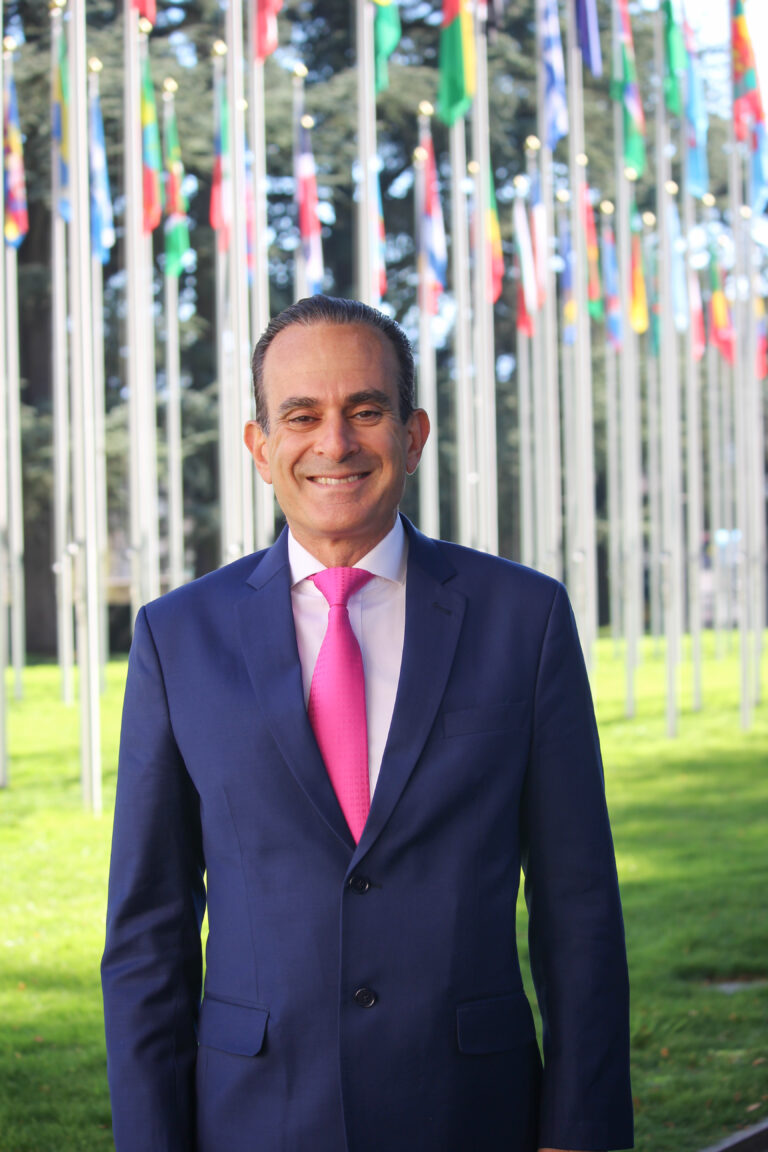
The Ambassador of the Dominican Republic, H.E. Carlos de la Mota

His Excellency Mr. Carlos de la Mota presented his Letters of Credence to His Majesty King Willem-Alexander of the Netherlands on 26 March 2025, at Noordeinde Palace in The Hague, formally assuming his duties as Ambassador of the Dominican Republic to the Kingdom of the Netherlands.

In his role, Ambassador De la Mota is committed to strengthening bilateral relations between the Dominican Republic and the Netherlands, promoting economic cooperation, and advancing Dominican interests in Europe and the wider Kingdom of the Netherlands.

Diplomatic Priorities

Among his key objectives are the protection and promotion of the rights and well-being of Dominican citizens residing in the Netherlands, the promotion of Dominican exports and foreign investment, and the defense of democratic values, which constitute a central pillar of the Dominican Republic’s foreign policy.

Before his appointment as Ambassador, Carlos de la Mota served as Deputy Minister of Foreign Affairs for Dominican Communities Abroad, from 2020 to 2025, where he developed initiatives to strengthen the socioeconomic and cultural ties between the diaspora and the Dominican Republic. His work included cooperation with sports associations, foundations, and prominent members of the Dominican community abroad.

Professional and Academic Background

Ambassador De la Mota is an architect, having graduated from the Pontificia Universidad Católica Madre y Maestra (PUCMM) in the Dominican Republic. He began his professional career in architecture at the Santo Domingo Water and Sewer Corporation (CAASD), where he worked as an architectural draftsman and construction supervisor.

In 2001, he served as Third Secretary at the Embassy of the Dominican Republic in Mexico. He also graduated as an actor at Televisa’s Centro de Educación Artística (CEA) in Mexico, and has worked as an actor, singer, producer, and television host.

Ambassador de la Mota has performed in more than 18 Televisa soap operas, participated in numerous television productions, films, and theatrical works in the Dominican Republic and Mexico. He has received multiple awards and distinctions and his work has been recognized at international festivals.

Ambassador De la Mota lived during his early years in New York City and later in La Vega, Dominican Republic. He is fluent in Spanish and English and is married, with three daughters.

Lu Kang Leads CPC Delegation to Strengthen Ties with Norway, Denmark, and the UK

From March 3rd to 11th, Lu Kang, Vice Minister of the International Department of the Communist Party of China (CPC) Central Committee, led a CPC delegation to Norway, Denmark, and the United Kingdom (UK) upon invitation.

During the visit, the delegation engaged in high-level discussions with government officials, political leaders, scholars, and representatives from think tanks and academia.

! Foto Hasse Ferrold at the Embassy of China in Denmark.

In Norway, meetings were held with Foreign Minister Espen Barth Eide, Ine Eriksen Søreide, Chair of the Standing Committee on Foreign Affairs and Defence, and key figures from major political parties and think tanks. Discussions focused on deepening bilateral cooperation and an exchange of views on diplomacy, with an emphasis on President Xi Jinping’s foreign policy vision.

Foto Hasse Ferrold: CSCD at China Embassy 6 03 2025 with Vice Minister LU KANG , International Department , Central Committee , Communist Party of China and The Ambassador of China in Denmark.

In Denmark, the delegation met with Magnus Heunicke, Minister for Environment and Gender Equality, and Jeppe Tranholm-Mikkelsen, Permanent Secretary of State for Foreign Affairs. Conversations centered on governance, global security, and enhancing partnerships in green development and multilateral cooperation.

In the UK, Lu Kang’s delegation held talks with Jenny Chapman, Minister of State in the Foreign, Commonwealth & Development Office, and Nick Catsaras, Deputy National Security Advisor to the Prime Minister. The delegation also met Members of Parliament, political party leaders, media representatives, and think tank scholars. The visit included engagements with universities and the Eric Liddell Community, where discussions highlighted China’s approach to global initiatives.

! Foto Hasse Ferrold CSCD at China Embassy 6 03 2025 w LU KAng

Leaders in all three countries expressed interest in strengthening inter-party exchanges, enhancing cooperation in trade, cultural affairs, and sustainable development, and fostering stronger ties between their respective nations, China, and the broader European Union (EU).

The delegation’s visit underscored a shared commitment to multilateralism and collaboration in addressing global challenges.

60 Years of Malta-Netherlands Diplomacy

0

A Vision for the Future

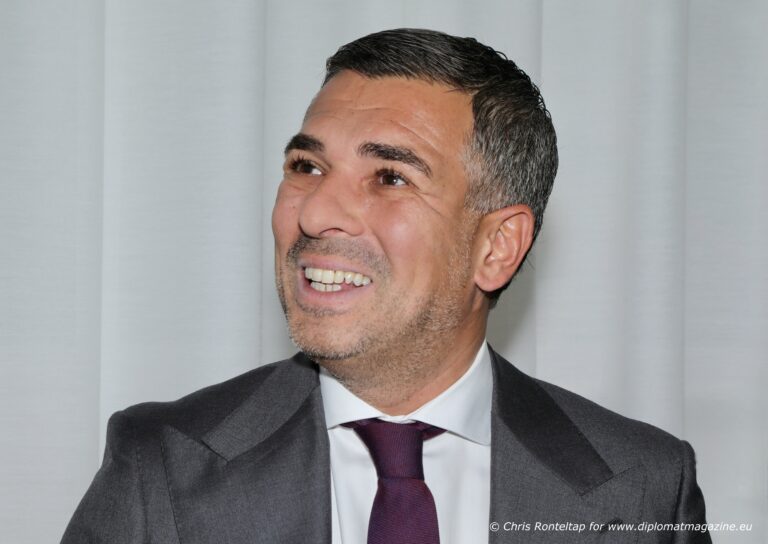
Diplomat Magazine had an insightful conversation with H.E. Mr. Jeffrey Curmi, Ambassador of the Republic of Malta to the Kingdom of the Netherlands on the occasion of the 60th anniversary of diplomatic relations between Malta and the Netherlands. The discussion highlighted the evolution of bilateral ties, Malta’s role in multilateral diplomacy, and the country’s commitment to international peace and security.

How would you describe the key milestones in Malta-Netherlands relations over the past 60 years?

This year, we are marking the 60th anniversary since Malta and the Netherlands established Diplomatic relations in 1965.

Since the very beginning, Malta has always demonstrated a strong commitment towards establishing close relations with the Netherlands. Whereas our diplomatic ties were officially recognised just a few months after Malta gained its Independence, for the last twenty years Malta has also been cooperating closely with the Netherlands as a fellow EU MS.

What are the main priorities for Malta’s engagement with the Netherlands and international institutions in The Hague?

As Malta’s Ambassador to the Netherlands, I am honoured to be serving in a country with whom we share common values and priorities. The 60th anniversary instils in us a sense of responsibility which will hopefully push both countries to continue to enhance our bilateral relations while working closely on a wide range of files.

Besides our bilateral relations with the Netherlands, as an Embassy, we also cover several International Courts and Tribunals, while also serving as Malta’s Permanent Representation to the Organisation for the Prohibition of Chemical Weapons (OPCW).

In the last couple of years, Malta has played a key role in the multilateral field. Our country has proudly served as an elected member of the UN Security Council between 2023-2024, while also Chairing the OSCE in 2024. In both endeavours, Malta has successfully demonstrated its strong credentials in serving as an honest broker and bridge builder, through the adoption of concrete resolutions. This is obviously a manifestation of the hard work and dedication which has been undertaken by Deputy Prime Minister and Minister for Foreign Affairs and Tourism Ian Borg and all officials at our Ministry and Missions, especially those which have been dealing directly with these files.

Malta’s UNSC term continued to reinforce Malta’s commitment towards multilateralism, peace and security. It is worth mentioning that although the current international political climate is not very conducive towards cooperation due to several ongoing wars, two Malta led UNSC Resolutions; a resolution on Children and Armed Conflict and a resolution on the Israel-Gaza war, were successfully adopted.

Within the OSCE, we are proud of Malta’s achievements in providing the organisation with the stability it needs to continue to serve as a forum for dialogue and trust building between participating States. Despite the challenging times during which Malta assumed the Chairpersonship, Malta successfully managed to achieve continuity and to steer the organisation forward by securing a decision on the top four positions within the organisation, and a decision on the 2026 Chairpersonship.

Malta has been actively involved in multilateral diplomacy—what do you see as the biggest challenges and opportunities in today’s global political climate?

Our Embassy and Permanent Representation in the Hague is inspired to take full advantage of Malta’s positive global reputation and the trust we enjoy at the International Level, to continue to promote multilateral initiatives which are aimed at restoring trust, cooperation, and justice.

In our capacity as Permanent Representation to the OPCW, Malta will continue to call for the full implementation of the Chemical Weapons Convention, in an effort to safeguard humankind from Chemical Weapons. Within this context, we attach great importance towards addressing past injustices while also mitigating against future risks. In particular, Malta has been raising awareness on the possible negative implications of AI across Weapons of Mass Destruction Categories, in an effort to consider mechanisms through which insights on AI can be shared across all international fora dealing with Weapons of Mass Destruction.

Regrettably, efforts to raise doubt about the impartiality of the Technical Secretariat politicises the organisation and could potentially hamper its effectiveness. Conscious of the challenging environment in which the OPCW is operating, Malta underscores its full trust in the professionalism of the OPCW Director General and Technical Secretariat.

In view of the ongoing challenges which the global community is facing, lately at the ICJ we are witnessing a proliferation of cases. In addition, the ICC is also dealing with several delicate cases. Within the global multilateral framework, Malta attaches great importance towards full adherence with international law. In this regard, in our engagements with all Courts and Tribunals in the Hague, I would like to reiterate Malta’s unwavering support to the Courts and their staff, who despite their commitment towards international peace and justice, are facing considerable outside pressure and threats.

In addition to the current international legal framework, the Embassy is also participating in efforts to ensure accountability for crimes of aggression. Following the establishment in The Hague of the Register of Damage for Ukraine in 2024, we are now engaged in efforts to set up a Claims Commission for Ukraine. In a similar vein, this year, we are also looking forward for the upcoming ICC Special Session on the review of the amendments on the crime of aggression, where Malta will be supporting efforts to extend the ICC’s jurisdiction in an effort to ensure harmonisation between all crimes.