
The Final of the 2026 “Culture China · Water Cube Cup” Chinese Song Contest, Netherlands Division was recently held in the Netherlands. On 21 May, in connection with the United Nations World Day for Cultural Diversity for Dialogue and Development, the organizing committee released a special feature entitled “Voices of Civilizations”, using Chinese songs as a cultural medium to engage in dialogue and share perspectives on international public themes such as civilizational exchange, cultural diversity, and youth cross-cultural expression.
The United Nations World Day for Cultural Diversity for Dialogue and Development calls attention to the importance of understanding, respect, and dialogue among different cultures and civilizations. As an important cultural extension of this year’s Netherlands Division, “Voices of Civilizations” explored how music — an art form capable of transcending language, geography, and cultural boundaries — can create deeper connections through genuine interaction, shared listening, and emotional resonance.
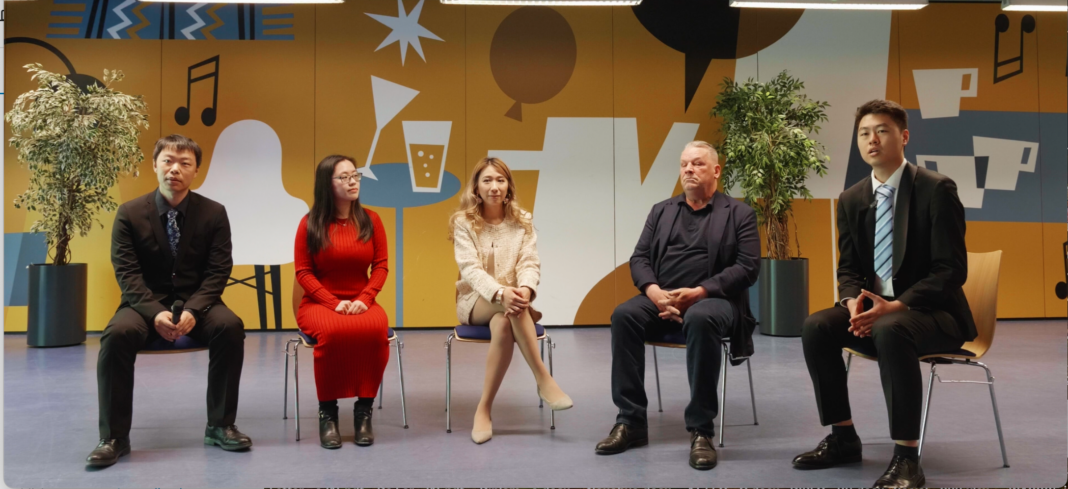
The special dialogue brought together Peter van Bergen, Dutch contemporary music PhD owner and researcher; Hanqing Zhou, European-based Chinese baritone, and Vice President of the European Chinese Students Entrepreneurship Foundation; Shen-Ai Ho, young pianist and performing artist from Taiwan, China; Viola Cheung, soprano from Hong Kong, China; and Xige, music producer from Inner Mongolia, China. Drawing on their respective backgrounds in vocal performance, piano, music production, contemporary music, and cross-cultural artistic practice, the guests shared reflections on how music connects hearts, supports the growth of young people, and advances dialogue among civilizations.
The guests noted that genuine civilizational exchange should not remain at the level of displaying cultural symbols. Rather, it should be built upon mutual listening, understanding, respect, and long-term emotional connection. As a universal language, music enables people from different cultural backgrounds to resonate through shared listening experiences. It also helps overseas youth rediscover their own cultural roots in multicultural environments and develop more open, confident, and inclusive forms of expression.
The guests further observed that Chinese songs carry not only the beauty of the Chinese language, but also rich cultural emotions, life experiences, and aesthetic traditions. In an era of increasingly frequent global cultural exchanges, the international dissemination of Chinese songs is not only an artistic pathway for the global expression of Chinese culture, but also an important means of enhancing mutual understanding among civilizations and expanding the space for public dialogue.
The event was organized by the Organizing Committee of the 2026 “Culture China · Water Cube Cup” Chinese Song Contest, Netherlands Division. The organizing committee stated that it will continue to connect its cultural activities with international public themes such as the United Nations World Day for Cultural Diversity for Dialogue and Development and the International Day for Dialogue among Civilizations. Through Chinese songs and artistic exchange, the committee aims to further promote people-to-people exchanges between China and the world, encourage mutual learning among civilizations, and allow music to play a positive role in connecting emotions, deepening understanding, and building consensus in cross-cultural communication.