In an era where global shipping underpins international trade, the movement of maritime professionals remains one of the industry’s most complex logistical challenges. At the forefront of addressing this challenge is Peter Smit, CEO of BCS Group, a company that has established itself as a key player in facilitating crew mobility worldwide.
With tens of thousands of visas processed annually—including an impressive 40,000 for Filipino crew members alone—BCS Group operates at a scale where efficiency is not merely an advantage, but a necessity. Yet, as Smit emphasizes, the real challenge lies not in volume, but in variability.
A Fragmented Global System
“Every jurisdiction has its own rules, documentation standards, and interpretations,” Smit explains. While the Schengen system offers a degree of harmonization, it does not extend seamlessly to other regions such as the United Kingdom, the United States, or Asia. The result is a fragmented regulatory landscape where requirements can shift with little notice.
Among the most pressing operational challenges are fragmented regulations, unpredictable processing times, and the need for absolute data accuracy—often under intense time pressure due to last-minute crew changes.
To address this, BCS Group has invested significantly in standardization and digitalization. By centralizing data, automating document checks, and maintaining real-time regulatory intelligence, the company ensures both speed and compliance. As Smit notes, these are not competing priorities: “The more structured and controlled your process is, the fewer errors you make, and the faster you can move.”
The Need for Structural Reform
Despite operational advancements, Smit underscores that the broader issue lies in outdated visa frameworks. Current systems, he argues, are largely designed for tourism or migration—not for highly mobile professionals such as seafarers.
He advocates for reforms at both European and international levels, including the formal recognition of maritime professionals as a distinct mobility category, standardized documentation across Schengen states, and the introduction of priority visa channels. Greater digitalization and data-sharing between countries would further enhance efficiency.
“Shipping is a global industry,” Smit notes. “The regulatory framework supporting it should reflect that reality, rather than remain fragmented along national lines.”
Efficiency with a Human Focus
Beyond systems and regulations, Smit places strong emphasis on the human dimension of crew logistics. Each visa processed represents an individual—often someone who has spent months at sea and is navigating a critical moment of transition.
BCS Group’s “one-stop shop” model is designed to reduce stress and uncertainty by ensuring that all documentation and logistics are prepared in advance. This enables seafarers to maximize their limited time ashore, whether for rest or onward travel.
“Efficiency, in this context, is part of the human solution,” Smit explains. “The smoother the process, the more meaningful time a seafarer has.”
Retention: The Industry’s Defining Challenge
While recruitment into the maritime sector remains steady, retention has emerged as a structural concern. According to Smit, the underlying issues are clear: unpredictable rotations, administrative delays, isolation at sea, and limited visibility on long-term career paths.
Addressing these challenges requires a shift in mindset. Reliable crew change planning, better regulatory alignment, investment in onboard connectivity, and clearer career development pathways are all essential.
“At its core, this is about treating the maritime professional not just as an operational resource, but as a long-term professional,” Smit emphasizes. “If the industry wants sustainability, it needs to offer predictability, respect, and a viable career path.”
A Strategic Industry at a Crossroads
As global trade continues to depend on maritime transport, the efficiency of crew mobility systems will remain a critical factor. Through innovation, advocacy, and a strong human-centered approach, BCS Group is not only responding to today’s challenges but also helping to shape the future of maritime logistics.
In a world increasingly defined by interconnectedness, the ability to move people as seamlessly as goods may well become one of the defining challenges—and opportunities—of the global economy.
From 17 to 19 June, 150 young people from around the world will gather at The Hague University of Applied Sciences for the Youth Peace Summit, a three-day programme of workshops, dialogue sessions and hands-on peacebuilding activities. The summit will conclude with the creation of the Youth Peace Charter, an action-oriented document outlining practical next steps for future peace initiatives.
‘’Young people are not waiting for peace, they create it! ‘’
Anastasia – YPS Volunteer
The event is organised by a team of young volunteers who have spent months creating a programme designed by youth, for youth, in collaboration with a broad network of partners.
On Thursday, 18 June at 16:00, more than 25 local, national and international peace-related organisations will come together for an activity market, offering participants and visitors the opportunity to engage with a wide range of peace initiatives. These include peacebuilding projects, local community programmes and dialogue-based organisations, with participating partners including UNOY, The Hague Humanity Hub, Dialoog in Den Haag and Young Atlantics, among others.
On Friday, 19 June at 16:00, the summit will conclude with the presentation and formal handover of the Youth Peace Charter to Ambassador for Youth, Education and Work Jurriaan Middelhof and The Hague Mayor Jan van Zanen.
Following the ceremony, guests, stakeholders and members of the press will be invited to speak with organisers and participants of the Youth Peace Summit 2027.
The 2026 Africa Day celebration marks a significant milestone as we commemorate the 63rd anniversary of the founding of the Organization of African Unity (OAU), now recognized as the African Union (AU).
“Sixty-three Years of Unity, Integration, and Development: Let’s Celebrate Together!”
This year’s celebration was centered on the important theme, “Assuring Sustainable Water Availability and Safe Sanitation Systems to Achieve Agenda 2063,” aligning with the African Union’s vision for 2026.
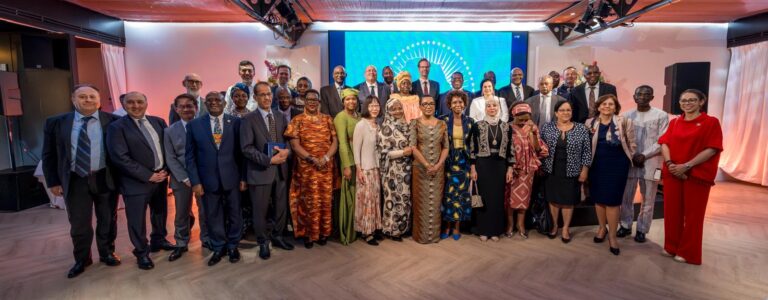
On May 26, 2026, a diverse crowd gathered to honor this momentous occasion, celebrating the AU’s 63rd anniversary. The event, organized by the African embassies accredited to The Hague, commenced with a powerful rendition of the AU Anthem, setting a tone of pride and solidarity.
During the celebration, a poignant message from H.E. Evariste Ndayishimiye, President of the Republic of Burundi and African Union Chairperson for 2026, was shared. He emphasized Africa’s unwavering commitment to tackling its challenges, seizing its opportunities, and fostering unity among its people. Together, we can build a brighter future for our continent!
The Diplomatic Community in the Netherlands came together for a lively and joyful celebration of Africa Day 2026! Attendees included ambassadors and diplomats, representatives from various countries, international organizations, UN agencies, civil society, and the vibrant African diaspora.
Everyone enjoyed delicious African food, refreshing drinks, and lively music, all in a warm atmosphere that truly highlighted Africa’s traditions of hospitality and generosity.
The program featured engaging speeches, including one from H.E. Ambassador Vusi Madonsela of the Republic of South Africa, who serves as the Dean of the African Diplomatic Corps in the Netherlands,followed by the Netherlands Minister of Foreign Trade and Development Cooperation, Mr Sjoerd Sjoerdsma, the Guest of Honour. We also heard from H.E. Ms. Caroline Chipeta, the Ambassador of the United Republic of Tanzania, who read a heartfelt letter from H.E. Evariste Ndayishimiye, the President of the Republic of Burundi and the African Union Chairperson for 2026. The letter conveyed a strong message about Africa’s dedication to overcoming challenges, embracing opportunities, and working together in unity. It was a wonderful reminder of the strength and spirit we share as a community!
Here follow the “Welcome remarks by the Dean of the African Diplomatic Corps, H.E. Ambassador Vusi Madonsela of the Republic of South Africa on the occasion of the celebration of Africa Day 2026.
Your Excellency Minister Sjoerd Sjoerdsma, Your Excellencies, Your Excellencies, Ambassadors & Heads of International Organizations, Distinguished Guests & Friends of the African continent:
In my capacity as Dean of the African Diplomatic Corps accredited to the Kingdom of the Netherlands, I am deeply honoured to be able to sayto you: Karibuni sana, and a very warm welcome to you all here today!
We gather here today to celebrate Africa Day, 24 hours after the actual date that marked the historic founding of the Organisation of African Unity— now the African Union, because May 25 this year coincided with Whit Day which was a public holiday in the Kingdom of the Netherlands.Africa Day marks the continent’s decades of resilience, unity, and shared progress against countless odds. But more than a historical milestone, today is a testament to the dynamic, forward-looking partnerships we are building right here in the Netherlands.
We are deeply honoured to have the Dutch Minister of Foreign Trade and Development Cooperation, Mr Sjoerd Sjoerdsma in our midst as our Guest of Honour.Honourable Minister, Your presence here this evening highlights and the engagement you had with the African Diplomatic Corps accredited to the Kingdom of the Netherlands earlier today are indicative of an essential evolving relationship between your country and the African continent.
To all my fellow African Ambassadors and all their diplomatic staff here present, your tireless work bridges cultures and fosters dialogue across borders. This celebration today reflects your hard work and the vibrant diversity that defines our diaspora in the Netherlands.
Honourable Minister, Excellencies, Ladies and Gentlemen, I invite you to use this Africa Day not only to reflect on our continent’s rich heritage, but to cast your sights into the future—a future filled with opportunities for collaboration to cultivate favourable conditions for smart partnerships for inclusive economic growth, mutual respect, and enduring human solidarity.
Thank you all for being here to celebrate with us. In advance, following the formal programme, I kindly invite you all to experience the spirit of our continent through our music, our arts,,and to to partake of the potpourri of our culinary delights, designed to suit a whole tapestry palate.
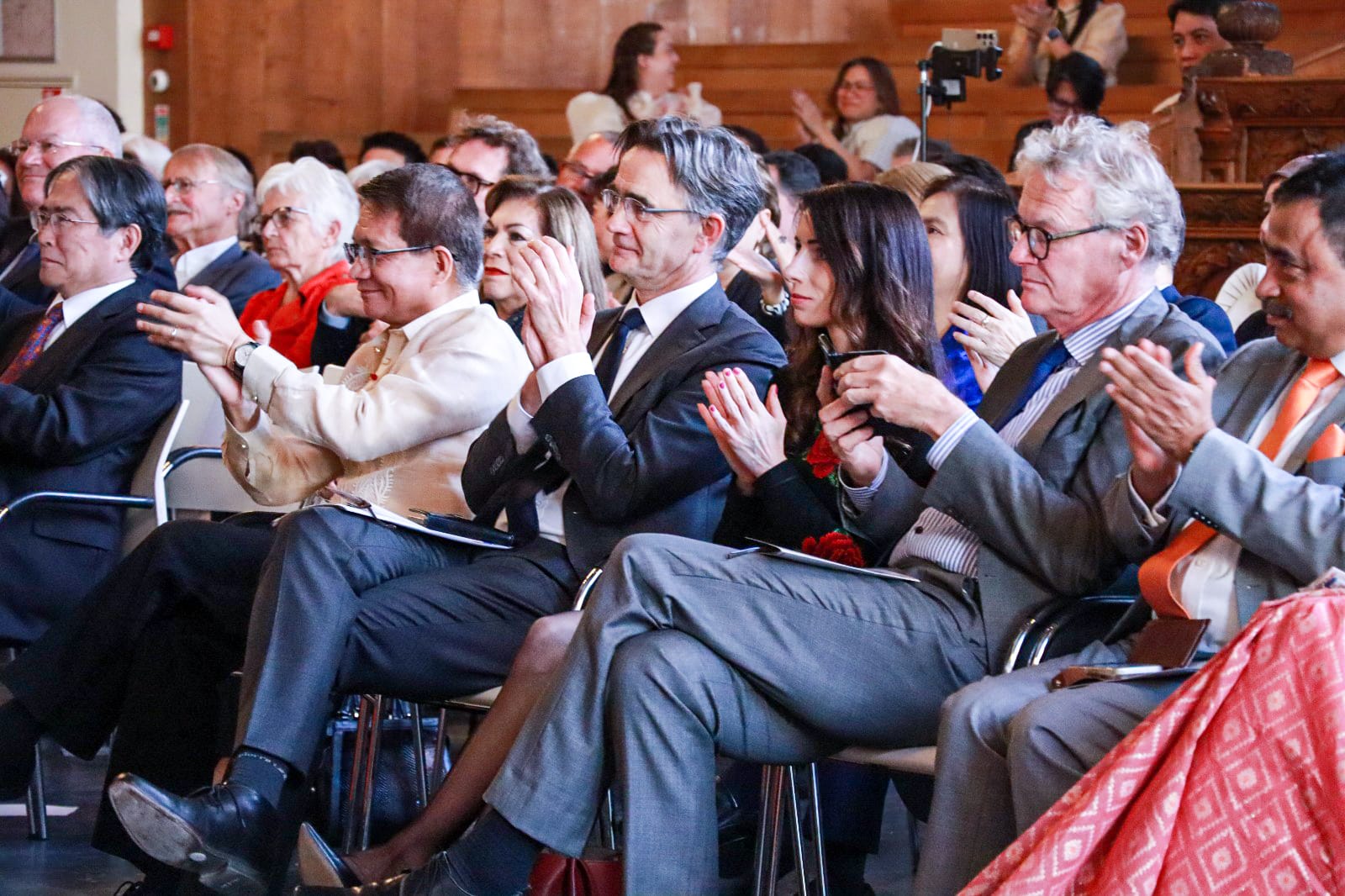
On May 21, 2026, the Embassy of the Philippines, in collaboration with Diplomat Magazine, proudly hosted a concert to commemorate the 75th anniversary of Philippine-Netherlands diplomatic relations. This remarkable evening was held at the historic Nieuwe Kerk (1656) in downtown The Hague, featuring the renowned soprano Ms. Rachelle Gerodias, who captivated the audience with her powerful voice, accompanied by the talented pianist Shermaine Velasco.
The event was further enriched by a special performance from baritone Mr. Byeong In Park, providing a remarkable cultural experience.
Philippines Soprano Ms. Rachelle Gerodias.
The concert drew a distinguished audience, including ambassadors; Permanent Secretary Christiaan Rebergen, ICJ President Yuji Iwasawa and Madame Iwasawa, CFC Managing Director Sheikh Mohammed Belal and his spouse; ambassadors from ASEAN countries; respected judges of the ICJ and ICC, the Secretary General of the Hague Academy, Mr. Jean Mark Thouvenin, and representatives from esteemed international organizations in The Hague.
Mr. Christiaan Rebergen, Permanent Secretary of the Netherlands Ministry of Foreign Affairs.
The highlight of the evening was a compelling speech from the guest of honor, Permanent Secretary Mr. Christiaan Rebergen of the Netherlands Ministry of Foreign Affairs. Speaking on behalf of the Dutch government, he emphasized, “This week, marked by high-level exchanges and collaboration across various fields, showcases the strength of our ties.”
Rebergen went on to say, “an anniversary like this signifies not just history, but also our cooperation in trade, education, and culture—most importantly, it’s about the people and the connections we forge. Let us honor these connections in the most beautiful way possible: through music. Music transcends language; it resonates with everyone, tells our stories, honors our memories, and touches our hearts.”
Featuring on the program, Rachelle Gerodias-Park treated the audience with a well-appreciated rendition of the Dutch song “Maria, schone vrouwe” (Maria, fair lady), composed by the renowned Dutch composer Hendrik Andriessen
In his welcome remarks, Philippine Ambassador to the Netherlands J. Eduardo Malaya stated that the commemoration’s theme “aptly characterizes the bilateral relations, which covers a multitude of areas, notably trade and investment, smart agriculture, water management, semi-conductors, sustainable development, renewable energy, academic exchanges, and the list continues to grow.”
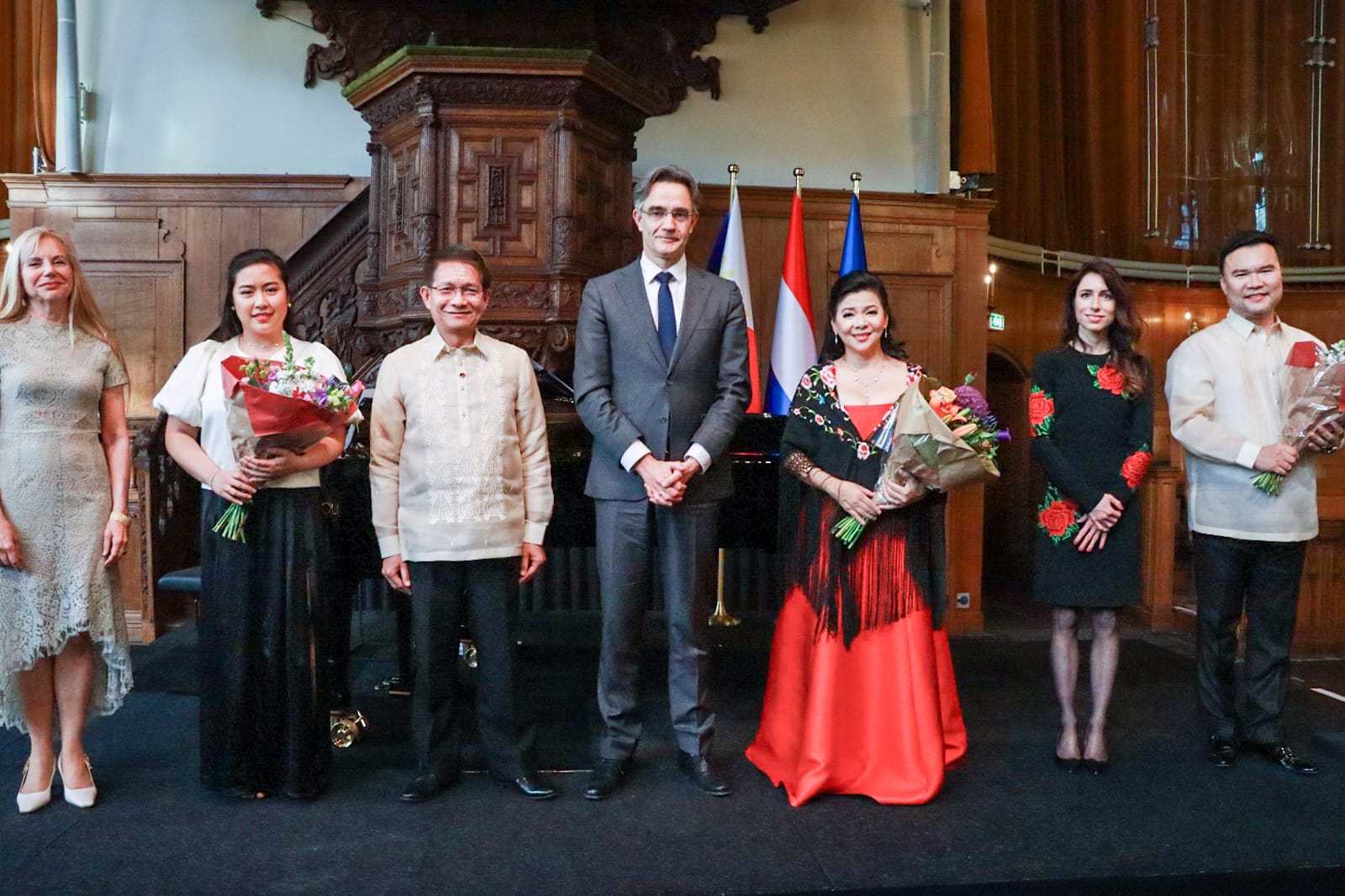
Dr Mayelinne De Lara, Diplomat Magazine’s Publisher, pianist Shermaine Velasco, H.E. Ambassador Jose Eduardo Malaya, Permanent Secretary Mr. Christiaan Rebergen, Soprano Ms. Rachelle Gerodias and baritono Mr. Byeong In Park.
“As we navigate an increasingly complex global landscape, our close relations have equipped us to confidently address challenges, including sustainability, reliable energy supply chains, and maritime security. Our shared commitment to international law, the law of the sea, and democracy serves as a solid foundation for our collaboration,” the Ambassador added.
Ambassador J. Eduardo Malaya and Foreign Secretary Ma. Theresa P. Lazaro.
The 75th anniversary celebration was further amplified by the significant visit of Foreign Secretary Ma. Theresa P. Lazaro to the Netherlands, which took place from May 17 to 19, 2026, the first visit by a Philippine Foreign Affairs Secretary in 33 years., marking an important moment in the Philippines- Netherlands diplomatic journey.
During the visit, Secretary Lazaro met with Dutch Foreign Minister Tom Berendsen and high-level officials of international organizations based in The Hague. Earlier, in March 2026, Trade and Industry Undersecretary Allan Gepty visited the Netherlands, while Dutch Minister for Foreign Trade and Development Aukje de Vries traveled to Manila in February for meetings with Trade and Industry Secretary Ma. Cristina Aldeguer-Roque.
The evening opened with a rendition by Gerodias of “Quando men vo,” the aria from La Boheme, accompanied by Velasco, an Amsterdam-born pianist of Filipino heritage. Gerodias and Park did duets of “Libiamo,” “Papageno Papagena,” and “Lippen Schweigen,” then Park had a solo performance of “Largo al Factotum.”
The Philippines Foreign Secretary, Ma. Theresa P. Lazaro and H.E. Ambassador J Eduardo Malaya together with Philippines diplomats at the embassy in The Hague.
Their performance of Filipino classics including “Katakataka” (How Surprising!), “Sa Kabukiran” (In the Farmland), “Mutya ng Pasig” (Muse of Pasig), and “Dahil Sa Isang Bulaklak” (Because of a Flower) delighted the audience, followed by a duet performance of the Korean song “A Fine Day in October.” Park, the spouse of Gerodias, is of Korean descent.
The concert concluded with the Broadway favorites “Some Enchanted Evening,” “Think of Me,” “All I Ask of You,” and “Tonight, tonight.”
Ambassador Malaya at the piano performing with soprano Rachelle Gerodias.
Ambassador Malaya surprised the audience when he accompanied on the piano Ms. Gerodias in performing “Payapang Daigdig” (Peaceful World).
Responding to the request of the audience for an encore, Ms. Rachelle and Mr. Byeong In sang Celine Dion’s “The Prayer.”
The exhibition “The Italian Art of Film Costumes” at the Benaki Museum is a unique cultural event that brings together cinema, fashion, theatre, and opera through the iconic figure of Maria Callas. It is a tribute not only to the legendary soprano but also to the power of costume as a vehicle of memory, aesthetics, and storytelling.
At the heart of the exhibition are the costumes from the film Maria (2024), directed by acclaimed Chilean filmmaker Pablo Larraín and starring Angelina Jolie as Maria Callas. The costumes were created specifically for the film by internationally renowned Italian costume designer Massimo Cantini Parrini, one of the most distinguished contemporary costume designers in cinema and theatre. His work is characterized by meticulous historical accuracy, extensive research, and a profound understanding of character psychology—qualities that are vividly reflected throughout the exhibition.
Parrini’s curatorial approach seeks to reveal the many dimensions of Maria Callas’s personality. Through the costumes, visitors follow the transition from the grandeur of the celebrated diva to the more intimate and vulnerable side of the woman behind the legend. Iconic opera costumes, luxurious evening ensembles, elegant everyday attire, and authentic references to the fashions of the 1950s, 1960s, and 1970s create a compelling visual and emotional journey through the life of the world-renowned soprano.
The exhibition also highlights the significance of Italian costume design and the “Made in Italy” aesthetic, which shaped the global fashion landscape throughout the twentieth century. Through haute couture fabrics, intricate handcrafted details, and carefully researched historical references, visitors gain insight into Italy’s rise as an international center of creativity, craftsmanship, and elegance. Costume is presented not merely as clothing, but as a cultural document reflecting the social transformations, artistic movements, and aesthetic values of each era.
Of particular interest is Massimo Cantini Parrini’s collaboration with students from the renowned Polimoda fashion school in Florence, where he is both an alumnus and mentor. This partnership gives the exhibition a strong educational and intergenerational dimension, highlighting the transmission of knowledge, expertise, and artistic vision to a new generation of designers.
Organized by the Embassy of Italy in Athens and the Benaki Museum, under the auspices of the National Chamber of Italian Fashion, the exhibition strengthens the cultural dialogue between Greece and Italy. Its inclusion in the “Days of Italian Fashion in the World” initiative further underscores its international significance and its role as a bridge between art, cinema, and fashion.
Beyond its aesthetic appeal, the exhibition serves as a tribute to the enduring legacy of Maria Callas. Her image emerges as a symbol of artistic excellence, personal strength, and timeless elegance. Through the costumes created for the film, “La Divina” is brought to life once again as an emblematic figure who continues to inspire the worlds of music, fashion, and culture.
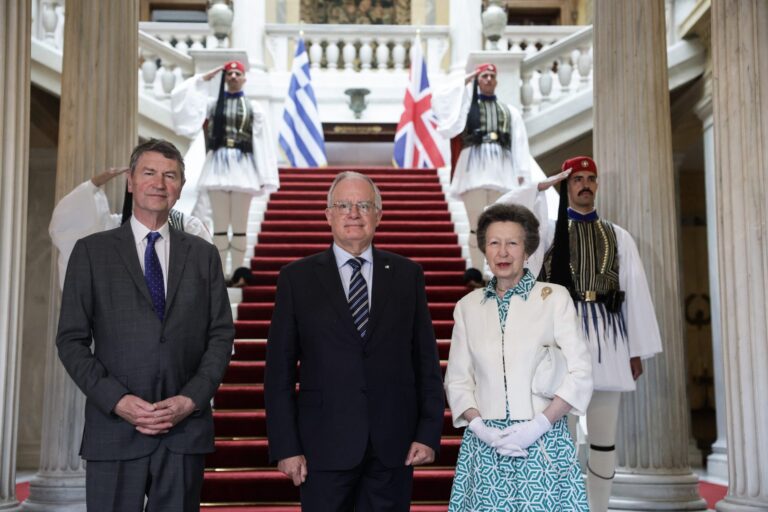
Princess Anne’s visit to Greece marked an important moment in Greek-British relations, combining historical symbolism, diplomatic cooperation, and the preservation of historical memory. The daughter of Queen Elizabeth II and sister of King Charles III visited Athens and Chania, accompanied by her husband, Sir Tim Laurence, to participate in commemorative events marking the 85th anniversary of the Battle of Crete.
During her stay in Athens, Princess Anne met with President of the Hellenic Republic Konstantinos Tasoulas at the Presidential Palace. According to the British Embassy, the meeting reaffirmed the long-standing friendship between the two countries and the strong ties that unite their peoples. She also visited the National Crisis Management Coordination Centre, where she was briefed on civil protection planning, national preparedness, and emergency management.
Her presence in Chania carried particular emotional significance, as she took part in the commemoration ceremonies for the Battle of Crete. The visit began at the RAF Memorial in Maleme, a site of great historical importance where some of the most critical clashes of the German airborne invasion of 1941 took place. In the presence of descendants of British servicemen, veterans, and local authorities, a memorial service was held and wreaths were laid in honor of the fallen.
During the historical tribute presented at the ceremony, reference was made to the determined resistance of the Allied forces and the people of Crete against the German invasion. It was noted that the Battle of Crete was the first large-scale airborne operation in military history and resulted in heavy losses for the German paratroopers. Although the island was ultimately captured, the courage of its defenders and the participation of the local population left an enduring mark on Europe’s collective memory.
Later in the day, Princess Anne attended the traditional commemorative ceremony at the Souda Bay Allied War Cemetery, where soldiers of the Allied forces who lost their lives during the battle were honored. Her presence once again underscored the importance of historical remembrance and the preservation of bonds between nations that stood together during some of history’s most challenging moments.
Through her public engagements and continued participation in international commemorative events, Princess Anne continues to represent the United Kingdom with a strong commitment to historical continuity, diplomacy, and international cooperation.
French President Emmanuel Macron was welcomed at Athens International Airport “Eleftherios Venizelos” by Deputy Prime Minister Kostis Hatzidakis.
The French president’s visit comes at a time of heightened international challenges, with the agenda of the talks in Athens focusing on the renewal of the defense agreement, armament programs, and the role of Europe in the evolving security environment.
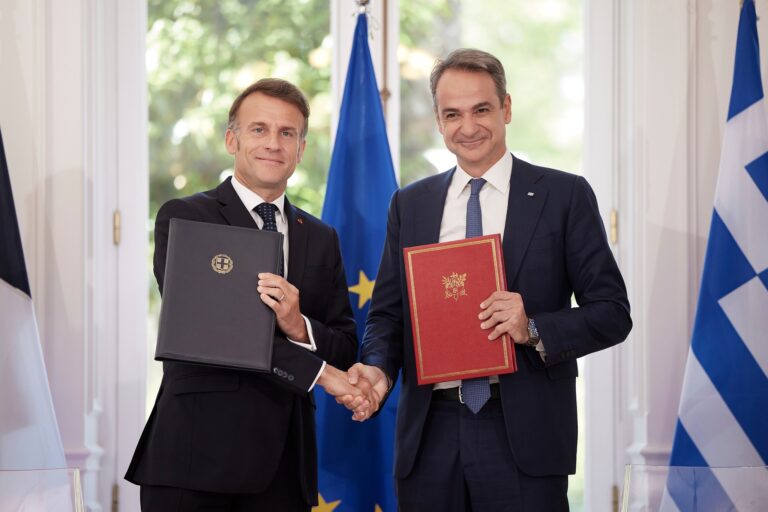
At the Maximos Mansion, a new chapter in Greek-French relations was sealed as Prime Minister Kyriakos Mitsotakis and President Emmanuel Macron signed a series of agreements of strategic importance, expanding cooperation between the two countries in critical sectors.
Central to the discussions was the renewal of the strategic partnership for defense and security, reaffirming the close geopolitical alignment between Athens and Paris during a period of growing international uncertainty.
At the same time, agreements were signed that open new avenues for cooperation in diplomacy, higher education, scientific research, and technological development. Particular attention was drawn to the joint declaration on cooperation in the field of nuclear technology—a development that further elevates the strategic nature of Greek-French relations.
Special importance was also attached to the defense industry, with the signing of an agreement for the technical support of MICA IR/RF missiles through cooperation with MBDA France, further strengthening the operational capabilities of the Greek Armed Forces.
These agreements reflect the determination of both countries to build a multidimensional alliance focused on security, innovation, energy, and Europe’s strategic autonomy.
Overall, the agreements demonstrate that Greece and France are pursuing a comprehensive strategic partnership with depth in: defense and deterrence; technology and innovation; education and research; energy and digital infrastructure.
French President Emmanuel Macron Makes Historic Visit to Nicosia
French President Emmanuel Macron visited Cyprus in what marked the first visit by a French president since the establishment of the Republic of Cyprus.
In a particularly warm atmosphere, Macron and President Nikos Christodoulides reaffirmed their strategic partnership, with the French leader sending a strong message that any attack on Cyprus would be considered an attack on Europe itself.
“True friends reveal themselves in difficult times,” said President Christodoulides as he welcomed Emmanuel Macron on the first official visit of a French president to Cyprus.
Christodoulides praised France’s support, particularly regarding efforts to resolve the Cyprus issue. He noted that France is the only European Union member state that is both a permanent member of the United Nations Security Council and a key supporter of Cyprus. He also highlighted Macron’s visit on March 9 following the attack on the Akrotiri base as a powerful demonstration of solidarity with Cyprus.
Referring to the friendship and strategic cooperation between the two countries, the Cypriot president told his French counterpart: “True friends are seen in difficult times, and you have proven this in practice.”
Defense Agreement to Strengthen French Presence in Cyprus
The new Cyprus-France defense agreement focuses on humanitarian missions and on strengthening Cyprus’s role in the Eastern Mediterranean, while deepening strategic cooperation with Paris and fostering defense-related synergies.
President Christodoulides recalled that Cyprus and France signed an upgraded strategic cooperation agreement last December, emphasizing that France is the European Union member state with which the Republic of Cyprus maintains “the strongest cooperation at all levels.”
According to the Cypriot president, this partnership begins with defense and security and extends across a broad spectrum of bilateral relations. Nicosia attaches particular importance to its relationship with Paris, given that France is the European Union’s only nuclear power and a permanent member of the United Nations Security Council.
Synergies in the Defense Industry
President Christodoulides also linked the new agreement to efforts aimed at utilizing European financing mechanisms in the defense sector. He made special reference to the SAFE framework and the €1.2 billion allocated to the Republic of Cyprus.
According to the Cypriot president, the objective is to create synergies between French companies and the Cypriot defense industry, which he described as “highly promising.”
This approach demonstrates that Nicosia seeks to expand cooperation with Paris beyond the military and operational spheres by linking it to the development of domestic defense capabilities.
The new agreement comes at a time when Cyprus is seeking to strengthen its role as a European Union member state in the Eastern Mediterranean, with a focus on security, defense, humanitarian crisis management, and cooperation with partners that possess substantial capabilities for intervention and support in the region.
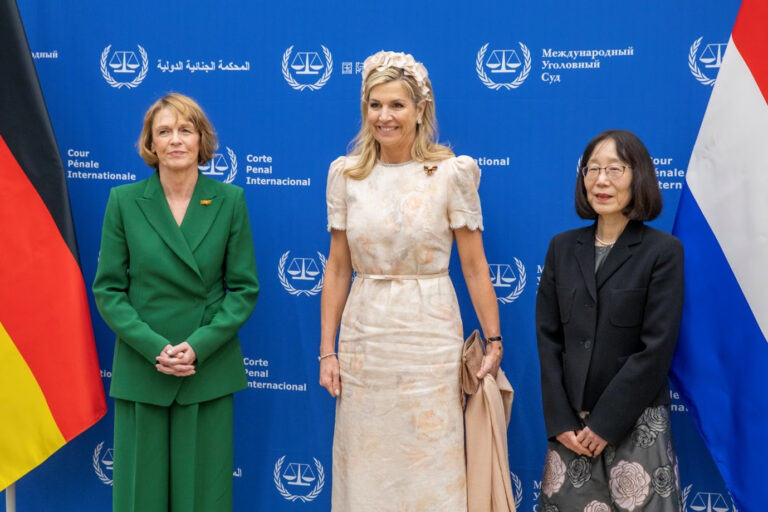
On 10 June 2026, Her Majesty Queen Máxima of the Netherlands and Ms Elke Büdenbender, spouse of the President of the Federal Republic of Germany, Frank-Walter Steinmeier, visited the International Criminal Court (ICC) in The Hague. During their visit, they met with ICC President Judge Tomoko Akane and Registrar Osvaldo Zavala Giler.
The visit formed part of the official state visit to the Netherlands by President Steinmeier and Ms Büdenbender, held from 9 to 11 June 2026 at the invitation of His Majesty King Willem-Alexander.
As the world’s first permanent international criminal court, the ICC plays a central role in promoting accountability for genocide, crimes against humanity, war crimes, and the crime of aggression. The visit by Queen Máxima and Ms Büdenbender highlighted the importance both Germany and the Netherlands attach to the rule of law and international justice.
Their presence at the Court also underscored the longstanding commitment of both countries to supporting international efforts aimed at combating impunity and ensuring accountability for perpetrators of the most serious crimes of concern to the international community.
The Netherlands, as host nation of the ICC and numerous international legal institutions, and Germany, as a strong supporter of the Court’s mandate, continue to work closely in advancing the principles of justice, accountability, and respect for international law.
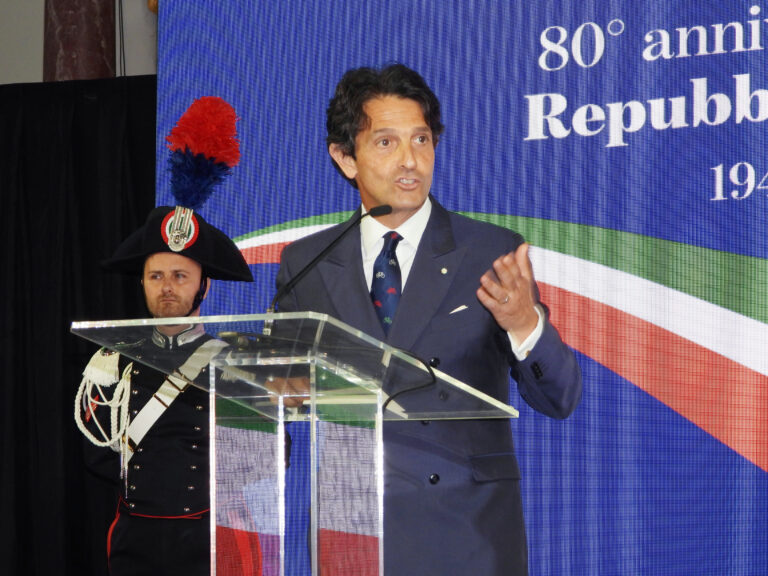
In celebration of the National Day of the Italian Republic, H.E. Mr. Augusto Massari, the Ambassador of Italy in the Netherlands, and Mrs. Silvia Massari hosted an engaging reception in The Hague on June 2, 2026. This special evening combined history, culture, gastronomy, and diplomacy in a remarkable way.
The celebration commenced with a compelling video message from Foreign Minister Antonio Tajani, who delivered a message: achieving peace, prosperity, and stability hinges on cooperation—between countries, people, and within Europe itself.
A highlight of the evening was the captivating flag performance by the Sbandieratori di Assisi, which demonstrated the beauty of Italian tradition.
Olympic champion Francesca Lollobrigida, at Italian National Day in The Hague.
Additionally, the audience was truly inspired by Olympic champion Francesca Lollobrigida, who eloquently shared how her success is closely tied to her training in the Netherlands, a country known for its exceptional support in her sport. This served as a powerful reminder of how collaboration across diverse systems can elevate individual talent.
Equally memorable were the national anthems, “Il Canto degli Italiani” and the “Wilhelmus.” Together, these anthems represented two nations, two cultures, yet underscored a vital truth: that cooperation triumphs over division, and together, we can achieve great things!
It was inspiring to connect with those fostering relations between the Netherlands and Italy, including representatives from the Italian Chamber of Commerce, the Dante Alighieri Society, and companies like Eni and SMEG Nederland. Their commitment to enhancing trade, culture, education, and collaboration is commendable.
The evening celebrated Italian identity, demonstrating rich culture and traditions. From the flag-throwers of Assisi to the recognition of Italian restaurants in the Netherlands, every moment highlighted Italian products as symbols of quality and heritage. What set this celebration apart was its ability to transform a diplomatic event into a cultural experience shared by thousands.
The Dutch Minister of Defence, Dilan Yeşilgöz-Zegerius and the Ambassador of Italy, H.E. Augusto Massari.
Italy’s 80th anniversary festivities reached distant corners of the world. In Niamey, capital of the Republic of Niger, the official reception blended seamlessly with the Niger River Afro-Urban Music Festival, creating meaningful connections. Italy’s Ambassador, H.E. Roberto Orlando, delivered a message that resonated with both diplomats and festival-goers, amplified through social media broadcasts.
The welcome speech by H.E. Mr. Augusto Massari, the Ambassador of Italy in the Netherlands.
“Madam Minister of Defence,
Dear Ambassadors, Dutch authorities and MP,
Our Champion Francesca Lollobrigida,
dear guests, cari connazionali,
It is a great pleasure to welcome you all to the celebration for the 80 years of the Italian Republic!
A year has passed since I took office as the Italian Ambassador to the Netherlands.
In these twelve months, I have developed a few fundamental certainties:
– Never underestimate the wind when cycling;
– Understand that bitterballen can be dangerously addictive, even for Italians;
– and… most importantly, realizing that there must be a serious reason if our Dutch friends do not talk anymore about football with us…, but only mention tennis…
Today, we gather to celebrate a pivotal moment in our history. June 2nd represents for the Italian people the choice to turn the page after the disaster of World War II. It was the choice for a path of hope for our nation; a path to be travelled together with other European nations and the historic allies who liberated Italy from Nazi-Fascism. The images of Rome liberated by American soldiers became an icon for our nation.
The Netherlands is clearly an integral part of this friendship, as founding nation of the European Union and being integral part of our Western identity. Europe and West. We often take for granted these two words. But it is impossible to plan any future without knowing who we are. This applies to individuals and applies to nations.
Today, our future faces extraordinary tests. The war in Ukraine is a stark reminder. We stand together in support for the Ukrainian people and in our commitment to defending NATO: Madam Minister, your presence here today underscores this vital imperative. Simultaneously, we are witnessing concerning escalations in the Middle East, an area traditionally linked to Italy that we usually call the “Great Mediterranean”. Recent developments in Lebanon deeply worry us.
In this complex landscape, Europe must step up. We must take greater responsibility or our own defence, our energy independence, and our economic competitiveness, as the Draghi and Letta reports suggest us.
Our bilateral engagements reflect this shared ambition. Earlier this year, the SG of Minbuza visited Rome. Crucially, Minister Tom Berendsen will be in Rome next week. Scheduled visits to Italy by the Dutch ministers of Immigration and Asylum and Economy are taking place in the coming days and weeks. In The Hague we will soon welcome our DGs for political affairs and for Europe.
Furthermore, we are working closely with our Dutch friends to organize the sixth edition of the Van Wittel strategic dialogue, which will focus on security, trade, innovation and competitiveness. Beyond those sectors, our relationship flourishes on profound cultural exchanges.
More and more Dutch people are learning Italian.
In the Dutch universities, studies on the history of Italian art remain vitals. There is a growing interest in the history of ancient Rome: during my term, I have had the pleasure of engaging in this interest, especially regarding the incredible Roman archaeological site in Herleen (in the province of Limburg) and regarding the Dutch Archaeological excavation in Satricum, just south of Rome, carried out since 1977, by the Netherlands Institute in Rome, the University of Groningen and the University of Amsterdam.
Our relationship is also about people and shared passions.
Here, I must mention the visit to Italy of King Willem-Alexander and Queen Máxima on the occasion of the Milan-Cortina Winter Olympics. And, with a heavy but respectful heart, I must congratulate the Netherlands on their incredible success—bringing home more medals than us Italians!
Italian National Day in The Hague, 2026.
Speaking of the Milan-Cortina Games, let me express our immense joy at having Italian two-time Olympic champion Francesca Lollobrigida here, as the patroness of this evening! We know having her with us today is truly special. Tomorrow, together with the Dutch Skating Federation, we are hosting a conference in Rotterdam on the value of sport for society, featuring an ice-skating clinic by Francesca with young Dutch athletes.
We also strengthen our bilateral relations through an Italian vibrant community in the Netherlands. A year into my tenure, I became fully aware of the enormous contribution the Italian community living in the Netherlands gives to those relations.
Sbandieratori di Assisi
Agli imprenditori, ai professori, ai ricercatori, ai professionisti che lavorano presso le agenzie europee, agli studenti, vorrei dire che siete una risorsa straordinaria per la nostra Ambasciata.
I would also like to extend a very special welcome to the famous flag-wavers of Assisi. Their presence here is deeply exciting, as this year Italy proudly commemorates the 800th anniversary of the passing of Saint Francis. As a patron saint of Italy, his enduring legacy of peace, humility, and fraternity remains a cornerstone of our cultural identity.
Participants chefs on the National Day of Italy in The Hague, version 2026.
Let me also warmly thank the colleagues of my Embassy who prepared this event; a special thank goes to the economic&trade office, with Jacopo and his staff, and to Diego Marchiello, who is behind all this.
And finally, I express my huge gratitude to the sponsors. A special appreciation to the Federation of Italian Chefs: 25 Italian chefs left their restaurants around the Netherlands and gather here, for free, to prepare this event): a big round of applause to you all.”
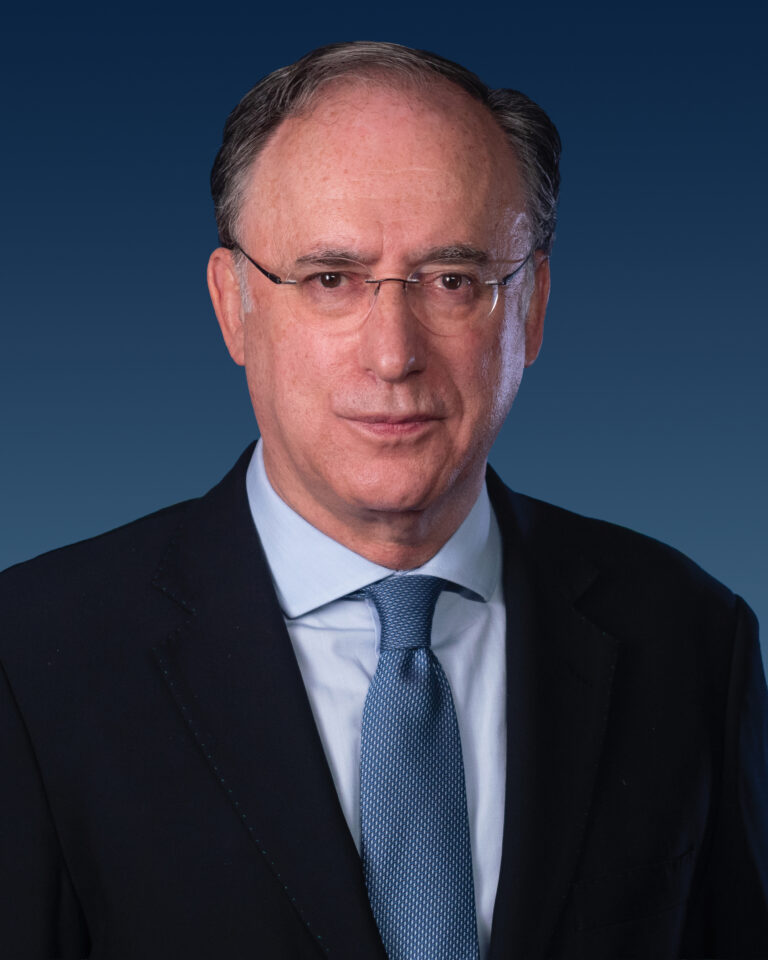
As his eight-year tenure as Director-General of the Organisation for the Prohibition of Chemical Weapons (OPCW) draws to a close, H.E. Ambassador Fernando Arias offers his final reflections to Diplomat Magazine. One of the most senior and respected figures within The Hague’s diplomatic community, Ambassador Arias has dedicated more than a decade of service in the Netherlands, including four years as Ambassador of Spain and eight years leading one of the world’s most critical multilateral institutions.
Elected by the Conference of the States Parties representing 193 member states, his leadership has coincided with a historic milestone: the verified destruction of all declared chemical weapons stockpiles worldwide. Yet, as he underscores, the mission is far from complete. In an era marked by geopolitical tensions, emerging technologies, and evolving security threats, the OPCW remains at the forefront of safeguarding international peace and security.
In this exclusive final interview, Ambassador Arias reflects on the Organisation’s achievements, the persistent risks of chemical weapons, and the challenges that lie ahead—offering a compelling perspective on why the OPCW’s work is more essential today than ever before.
H.E. Fernando Arias and King Willem Alexander of the Netherlands.
As the head of the OPCW, could you explain the key successes of the Organisation over the past 30 years?
One of the OPCW’s most notable achievements is its near-universal membership: 193 States Parties, equal to that of the United Nations.
As a Nobel Peace Prize laureate, the Organisation has made a significant contribution to international peace and security through its extensive efforts to eliminate chemical weapons. This has been one of its greatest achievements.
By July 2023, all 72,000 metric tonnes of declared chemical weapons worldwide had been irreversibly destroyed by the possessor States Parties under stringent verification by the OPCW.
Hundreds of international cooperation activities have been conducted by the OPCW over the past 30 years. These initiatives have spanned broad areas, including assistance and protection in case of use of chemical weapons or chemical incidents, technical capacity building on national implementation of the Chemical Weapons Convention (the Convention), and the promotion of peaceful uses of chemistry.
The programmes for enhancing the expertise of customs officials, first responders, investigators and laboratory analysts have been especially valued by States Parties, as has our dedicated Africa Programme, tailor-made to meet the needs of African Member States.
These achievements are the result of the collective vision of the States Parties of a world free of chemical weapons, and of their commitment to the Convention and the OPCW. The Technical Secretariat of the OPCW has played its crucial role by effectively and professionally implementing its mandate.
You mentioned that all declared chemical weapons stockpiles had been irreversibly destroyed by 2023. What issues is the OPCW currently addressing? What are the remaining risks and challenges in achieving a world free from chemical weapons threats?
Although the stockpiled chemical weapons declared by possessor States Parties have all been destroyed, that does not mean that chemical weapons no longer pose a threat to international peace and security.
Currently, we are working with the new Government of Syria on the comprehensive identification and destruction of all components of the Syrian chemical weapons programme left behind by the Assad regime. We are also working together with relevant States Parties to destroy the old and abandoned chemical weapons from the First and Second World Wars, which continue to be discovered in several places.
Apart from that, to provide collective assurances of the adherence to the Convention by all States Parties, we monitor nearly 5,000 chemical research and industrial facilities all over the world, to verify that these facilities are used exclusively for peaceful purposes. We are also working with partners in the international community to prevent chemical terrorism, among other things.
The main challenges fall into two categories: those related to proliferation and re-emergence of chemical weapons; and those related to the emergence of new disruptive technologies.
The Convention bans an entire category of weapons of mass destruction.
Yet, recent conflicts and escalating geopolitical tensions have heightened concerns over continued possible use of chemical weapons on the battlefield.
At the same time, new and emerging technologies present significant challenges, as many of them can be misused in ways that undermine the object and purpose of the Convention, making it possible to acquire, weaponise and use toxic chemicals as weapons, in a faster, easier and more effective way.
Recognising that the Chemical Weapons Convention was negotiated 40 years ago, and that the political and security dynamics as well as the scientific and technological landscape have shifted so much since then, do you believe that the Convention remains effective and sufficient in curbing the chemical weapons threat? Has the OPCW taken any steps to adapt to these developments?
The OPCW is the international organisation tasked with ensuring a chemical weapons‑free world. It is undisputed that chemical weapons are stigmatised and considered abhorrent by the international community. No State has contested the Convention or legitimised the use of chemical weapons. Consequently, there is widespread political support for the work of the Organisation. In spite of the challenges I have mentioned, the Convention remains resilient and technically sound, with a rigorous verification regime.
However, more than 35 years have passed since the Convention was negotiated, and the text is showing its age. The global political tensions make it extremely difficult to introduce substantive amendments to the Convention. Nevertheless, there have been successful efforts to keep pace with scientific developments. For instance, in response to the use of a variant of the novichok nerve agent in 2018, the States Parties decided to amend the schedules of chemicals subject to OPCW verification, to incorporate a number of new novichok-related chemicals in the coverage of the Convention. I believe more technical changes of this nature will be needed in the future.
More broadly, the Secretariat and the States Parties continue to assess the implementation of the Convention every five years at a Review Conference. The Scientific Advisory Board also provides advice to me on ways that the Convention can be adapted and strengthened. Such mechanisms have proven effective at keeping the Convention fit for purpose in a changing world.
Could you elaborate on new technologies and their implications for the OPCW? How might technological advancements affect the Organisation’s work in the future?
New and emerging technologies have a direct impact on the functioning of the Organisation. AI, in particular, improves our laboratory capabilities at the OPCW Centre for Chemistry and Technology, and also has uses in various inspections, investigations, forensics and sampling techniques involving sophisticated scientific methods.
However, these benefits co-exist with risks. To cite some examples, formulas for new and extremely toxic chemicals can now be generated quickly, easily and cheaply, without the need for extensive manual research and laboratory capacity. Fortunately, for the time being, the step between obtaining the formula and the material production of the chemicals remains complicated. Nonetheless, we must be alert to the reality that these technologies could make it easier for malicious actors to develop and deploy new toxic chemicals as weapons. Equally concerning are technologies such as drones, which can be used as delivery systems for toxic chemicals, extending their reach and causing harm on a wider scale.
New technologies also enable the design of new and powerful laboratories in a small space, making detection difficult in case of illegal activities. 3D printing allows the manufacturing of equipment to take place locally, thereby avoiding the scrutiny usually performed by control regimes that regulate international trade.
Automation enables laboratories to operate with minimal staff, reducing the risks of information leaks and making clandestine illegal activities harder to detect.
These are but a few examples, and there are many more that affect the threat spectrum the Organisation faces.
In this context, could you share insights about the recently inaugurated OPCW ChemTech Centre? What kind of activities are conducted there?
The Centre for Chemistry and Technology (the ChemTech Centre), which was inaugurated in the presence of His Majesty King Willem-Alexander of the Netherlands in May 2023, was the Organisation’s response to challenges posed by scientific and technological developments as well as the evolving political context. Its state-of-the-art facilities and capabilities bolster our ability to monitor and react to any potential risk of the re-emergence of chemical weapons. The Centre also serves as a hub for maintaining and improving the skills and knowledge of our experts.
Today, the ChemTech Centre is an invaluable platform where we conduct the technical work and training programmes I have mentioned. It also constitutes a powerful tool at the disposal of the States Parties, with significant potential to further enhance national implementation of the Convention in all its aspects.
Given everything you have mentioned, what are your thoughts on the future of the OPCW in this turbulent age?
When the Convention was being negotiated, some founding fathers of the Organisation thought with good reason that the OPCW would have completed its most fundamental role with the completion of the destruction of declared stockpiles. They anticipated that, upon reaching this milestone, the Organisation could be reduced to a very small Secretariat, or even be closed. The unexpected reality is that with rising geopolitical tensions and the risks posed by new and emerging technologies, this Organisation’s work will continue well into the future. In effect, the OPCW is now more necessary than ever.